
TIMARU
Botanic Gardens
Find a tree that could pre-dates the Timaru Botanic Gardens
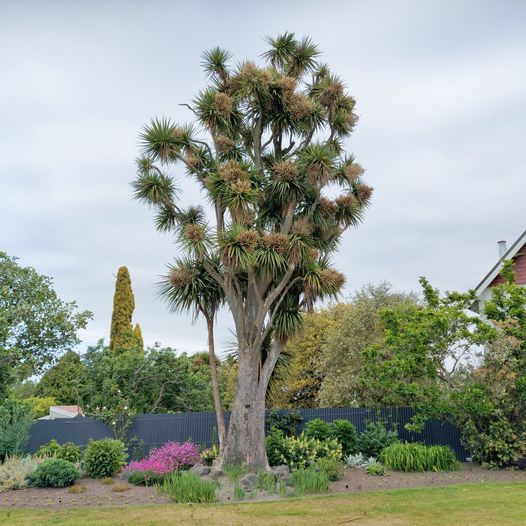
Tī Kōuka New Zealand Cabbage Tree, Cordyline australis
The Timaru Botanic Gardens is located on 19 hectares of land in south Timaru - and dates back to 1864, when the site was first set aside as a public reserve. making it one of the oldest Botanic Gardens in New Zealand.
Did you know this Tī Kōuka cabbage tree at the Timaru Botanic Gardens is so old, it could be pre date the arrival of Europeans to Timaru. The tree by the entrance of the Timaru Botanic Gardens has a hollow trunk, and at one point had a swarm of bees living inside. Apparently cabbage tree's like this made excellent chimneys in the first European immigrants homes.
As tī kōuka grow old and stems die, shoots can grow from the trunk. When this happens they can form a grove of trees. Tī kōuka can grow up to 20 metres in height, with tufts of long, sword–like leaves up to a metre long. They produce white, sweetly scented flowers in late spring and fruit in late summer with a small, whitish berry. The fruit is popular with birds such as korimako (bellbird), tui and kererū (wood pigeon), and latterly introduced birds. The trunk of the cabbage tree resembles cork with a spongy yet tough texture. During the years of settlement, they were often used to line the chimney space on early dwellings as they were quite fire resistant.
How Tī Kōuka was used by Māori
The cabbage tree was a significant food source for early Māori and provided a fibre resource prized for its strength. Māori lived in their pā where whānau groupings were the basic economic unit for supporting their way of life. Each group was allocated an area where they would be able to harvest the resources available from the lakes, rivers, coastlines and forests in their local takiwā(area). Each whānau or pā would have designated places where tī kōuka grew and was available to be harvested for food resources.
Tī Kauru (Food)
A good stand of tī Kōuka trees was commonly known as a para–kauru, with kauru being the name given to the food that is processed from the cabbage tree. Sometimes these para were just a collection of trees, but they may also have been treated as a regular area to harvest the kauru. Each year there was a regular season for kauru which went from November through to March. After a first cut in November, there was still time for a second cut and cook session before the onset of winter in March. The other part of the tī kōuka that was used for food was the taproot. It was shaped like a 2 to 3 foot long carrot. Harvesting of the taproot was done during the flowering season when the saccharine (sugar) content in the root was at its highest.
Raranga (Fibre)
Tī kōuka proved a useful source of fibre for early Māori. It was strong, durable, did not shrink in water and was used for making a range of daily items.
Fishing Haika (anchor) ropes and kupenga (fishing lines) were constructed of tī kōuka which were especially good in seawater.
Food Kete (baskets) were made for collecting and storing food and cooking mats for preparing food on.
Clothing Paraerae (sandals), kakahū (cloaks) and pake (waterproof rain capes) are just some of the clothing items that were made with tī kōuka. A great deal of work was involved in collecting and preparing the fibre. It is hard for us to imagine what it was like to live in the South Island in those times, especially when we consider that all garments to keep people warm during winter would have to be made from flax or cabbage tree plants. When early Ngāi Tahu set off on a long hikoi (trek) to Tai Poutini on the West Coast for pounamu, they would need to make many pairs of paraerae that were carried along with the walkers. When these sandals were no longer useful, new ones would have to be made before the walkers could set off again on their journey.
Rongoa (Medicine) Tī kōuka (Cordyline australis) was used to make a range of medicinal treatments:
It was pounded into a paste.
Growing tip (kōata) was eaten raw as a blood tonic or cleanser.
Leaves provided juice used externally for cuts, cracks and sores.
Infusions prepared by boiling leaves were drunk to treat diarrhoea.
Leaves rubbed until soft were applied as an ointment to cuts, skin cracks and sore hands.
Nursing mothers chewed the young shoots and gave them to their children for colic.
Shoots were boiled and the liquid taken to treat stomach pains.
Seeds have been shown to be high in linoleic acid — an essential fatty acid.
my.christchurchcitylibraries.com/ti-kouka-the-cabbage-tree
The Cabbage Tree is noted as one of the Significant Trees in the Timaru District Plan: Swamp Cypress x2, Dutch Elm, Dawn Redwood, Common Oak, Monterey Pine, Willow-silver Pear, Common Limes x 3, Cabbage Tree, Smooth Arizona Cypress, Tulip Tree, Cork Oak
Taxodium distichum x2, Ulmus x hollandica, Metasequoia glyptostroboides, Quercus robur, Pinus radiata var radiata, Pyrus salicifolia "Pendula", Tilia x europaea x 3, Cordyline australis, Cupressus arizonica var glabra, Liriodendron tulipifera, Quercus suber, Buddleja cordata, Photinia serrulata, Pinus radiata var binata