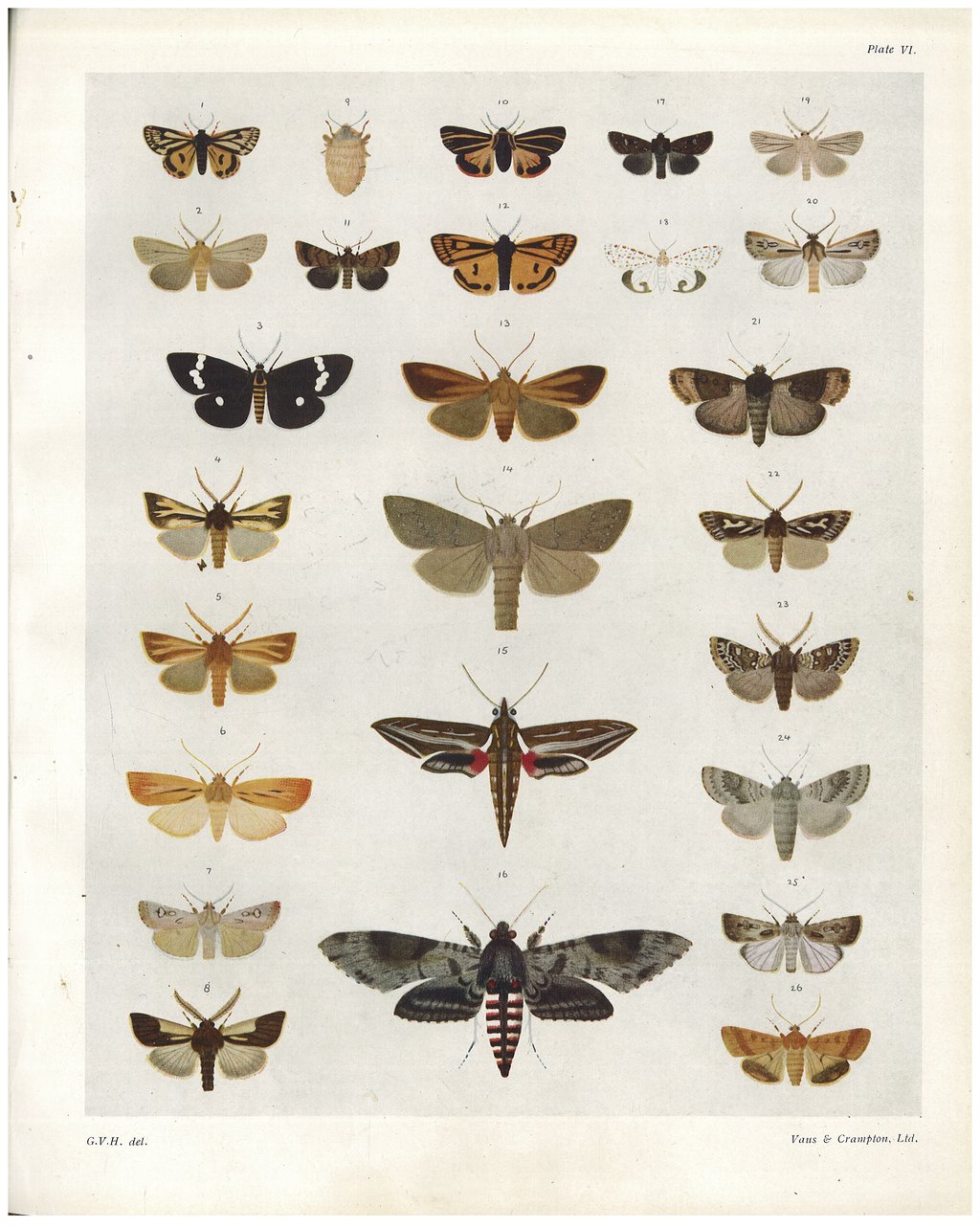
Plate VI from The Butterflies and Moths of New Zealand (1928), illustrated by New Zealand entomologist George Vernon Hudson. The plate includes the native moth Agrotis innominata. Hudson’s beautifully detailed illustrations remain an important visual record of New Zealand’s moth fauna. Wikimedia Commons. George Vernon Hudson, The Butterflies and Moths of New Zealand, 1928. Plate VI. Public domain. Via Wikimedia Commons. https://commons.wikimedia.org/wiki/File%3APlate_VI_The_butterflies_%26_moths_of_NZ.jpg

When we think of pollinators, we usually think of bees. But after dark, moths are still visiting flowers. Scientists are still working out exactly how important moth pollination is in New Zealand, but experiments have shown that native moths can transfer pollen between flowers. They are part of a much older pollination story that also includes native bees, flies, beetles and birds.
Moths can move pollen. New Zealand researchers used fluorescent powder as a pollen substitute and found moths could transfer it between flowers of mānuka and Pimelea prostrata. That does not mean every moth visiting a flower is pollinating it, but it proves moths are capable of moving pollen from flower to flower.
A moth needs more than flowers. Before a moth had wings, it was a caterpillar, and many native caterpillars rely on particular plants for food. Helping moths therefore means protecting their whole life cycle, not simply planting nectar-rich flowers. Timaru District Council biodiversity information, drawing on work by entomologist Brian Patrick, records 84 moth and butterfly species associated with pōhuehue, Muehlenbeckia; 49 with small and thin-leaved native tree daisies; and 23 with native Pimelea. These are host-plant relationships, not evidence that all those insects pollinate those plants.
One South Canterbury tree supports at least 22 moths. Hector's tree daisy, traditionally known as Olearia hectorii, occurs in South Canterbury, and DOC records at least 22 moth species associated with it. A surviving stand was rediscovered at Craigmore after the tree had been considered extinct in Canterbury. One moth associated with small-leaved native tree daisies is the exquisite olearia owlet, Meterana exquisita. It is found only in New Zealand, has been recorded in South Canterbury and the Mackenzie Country, and is classified At Risk – Relict. Its caterpillars depend on small-leaved native tree daisies.
Green does not always mean habitat. A landscape can still look green after the plants native insects depend on have disappeared. Introduced grasses, broom and wilding pines can replace native vegetation without providing the same food and habitat for specialist caterpillars.
An 82% decline at two Canterbury sites. Moths were sampled at two sites at Cass in inland Canterbury in 1961–63, 1987–89 and 2020–21. Across those sites, moth abundance fell by about 82% between the first and most recent surveys. That does not mean moth numbers have fallen 82% everywhere in Canterbury, but the study is important because very few insect populations have records stretching across 60 years.
231 assessed species are Threatened or At Risk. New Zealand's latest conservation assessment examined 493 native moth and butterfly species. Of those, 79 were Threatened, 152 were At Risk, 154 were Not Threatened and 100 were Data Deficient. That means 231 of the assessed species were Threatened or At Risk.
Pollination is bigger than bees. Honeybees are extremely important pollinators, especially for many crops, but they are only part of the story. Moths, native bees, flies, beetles and birds also form part of New Zealand's pollination networks. Moths remind us that pollination depends on more than flowers. If the caterpillar loses its food plant, there may never be an adult moth to visit the flower.
Meet your own night shift
On a mild evening, head outside after dark and look around flowering plants, windows and outside lights. Photograph the moths you find and try identifying them through iNaturalist NZ. Your observations can help build a better picture of where New Zealand's moths live, and you may discover there is far more happening in your garden after dark than you realised.
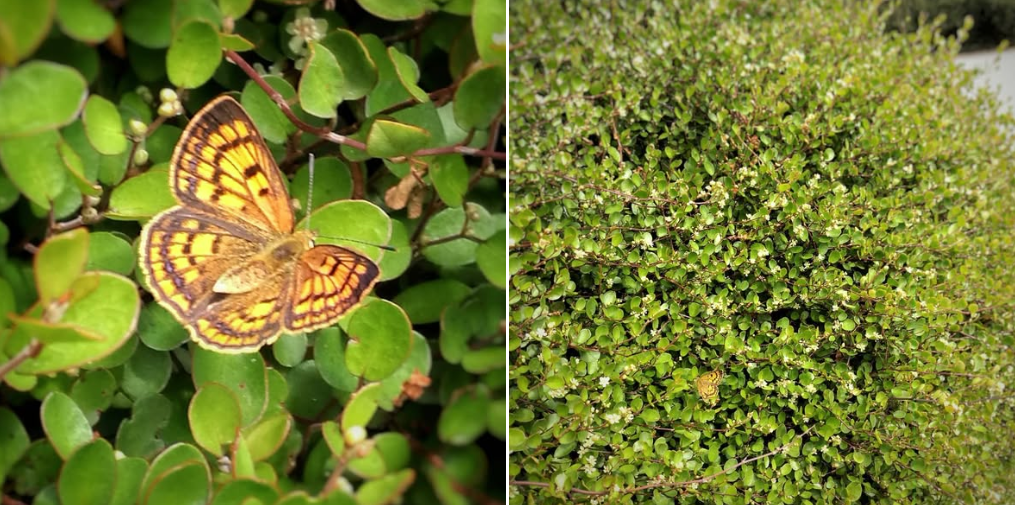
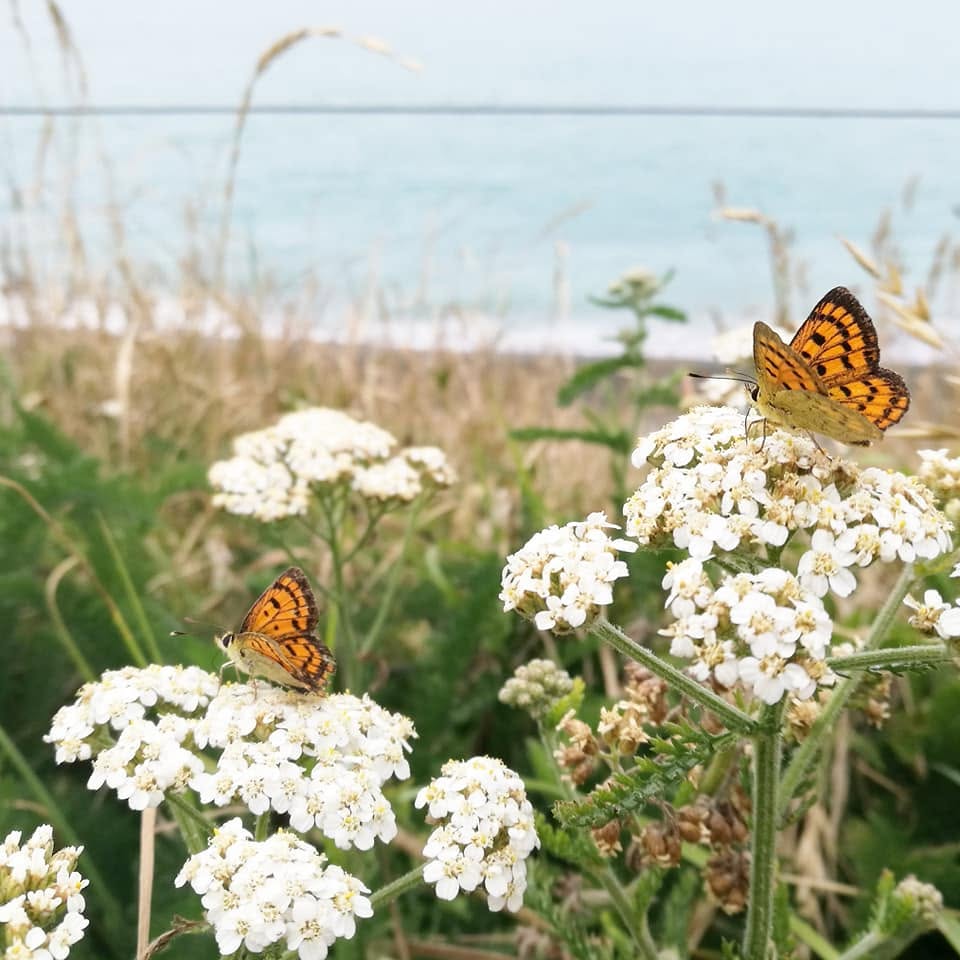
Copper butterfly, feeding on muehlenbeckia. At only 28mm across, these short-lived native creatures find their way from the coast through our backyards to lay eggs on shrubs. The populations don't always flourish, and I am told by the South Canterbury Musuem that introduced wasps can wipe out the caterpillars.