
By Roselyn Fauth

I feel like I have about fifty tabs open in my brain at the moment... after a year of pushing a decade of Facebook posts into something more permanent, more thoughtful, more connected, I am realising just how many tabs I have had open at once. the problem is I dont think I can close them, because I need to find out something more, to make something else make sense. I have come to realised that maybe my blogs wont always feel finished, and that the learning might be a life long work in progress... Lately, I have been thinking about Timaru’s relationship with the sea. Shipwrecks. Surfboats. The Landing Service. The evidence left behind in cemeteries. Names on headstones that seem, at first glance, to belong somewhere else.
It was standing in Timaru Cemetery with my father-in-law, Paul, who lives in Greymouth, that I noticed them properly. Graves with West Coast connections. Men whose lives began, or ended, far from where they were buried. Paul spotted the place names quickly because they were familiar to him. I had walked past them before without really taking much notice.
He had a valid question, why were Greymouth men buried in Timaru? The answer, once you begin to follow it, runs like a seam beneath the ground... and no, not always gold... this time.. Coal.

Coal as the engine of a nation
From the 1860s onwards, coal was the energy source that powered New Zealand’s industrial growth. It drove steam engines in factories and mills. It fuelled locomotives and coastal steamships. It heated homes, fired brick kilns, and fed gasworks that lit streets long before electricity arrived.
Coal was essential to transport, manufacturing, port operations, and domestic life. Continuous coal supply was considered vital to the prosperity of the young colony.
South Canterbury has no coal seams of its own. Like many regions, Timaru relied heavily on coal mined elsewhere, particularly from the West Coast. The Grey Valley, and Brunner in particular, became critical suppliers of high-quality bituminous coal, coke, and fire bricks.
Coal from Brunner was produced not only for local use but for export around the country. Waka, river barges, and later rail carried coal down the Grey Valley to the coast, linking Māori transport knowledge, early river systems, and industrial infrastructure into a single evolving supply chain.
From Greymouth, coal was loaded onto coastal steamers and colliers bound for ports on the east coast, including Timaru. Greymouth was a bar harbour, meaning vessels could enter and leave only at suitable tides. The bar limited ship size and made departures hazardous. Coal was usually carried in small to mid-sized coastal vessels rather than large ocean-going ships. Once those ships reached Timaru, the work was far from over.

Timaru and the landing of coal
Before Timaru had a fully sheltered harbour, all cargo was landed offshore. Coal included. Ships anchored beyond the breakers, and the Timaru Landing Service took over.
Surfboats, lighters, and later steam lighters transferred cargo through difficult surf conditions to the beach or wharf. Coal was one of the most demanding cargoes handled. It was heavy, bulky, and urgently needed.
Delays in landing coal due to weather could disrupt steam shipping, rail operations, industry, and essential services. Coal was often prioritised because shortages affected everything.
The physical labour was relentless. Timaru boatmen, beachmasters, wharf labourers, railway workers, seamen, and collier crews were all part of the same supply chain that began underground at Brunner.
A delay or loss at Greymouth could echo in Timaru days later. Shipwreck history, harbour development, and energy supply are not separate stories. Coal links them.

Coal, coke, and fire bricks
At Brunner, coal was not just extracted and shipped. It was transformed.
Some coal was turned into coke, a refined fuel produced by heating coal in the absence of oxygen. Coke burned hotter and cleaner, making it essential for foundries, ironworks, gas production, and certain industrial processes.
The famous beehive coke ovens at Brunner were built using British technology suited to the strongly swelling Grey Valley coal. These ovens required specialised fire bricks capable of withstanding extreme heat.
The pale fire bricks at Brunner were made from clay drawn from beneath the coal seam itself. They were shaped, fired, and stamped with the mine’s name. Even now, among abandoned kilns and coke platforms, those stamped bricks remain as quiet signatures of industrial labour.


The price paid underground
By the 1890s, Brunner was one of New Zealand’s most productive coal mines. But this output came at a terrible human cost.
Coal miners worked in darkness, heat, dust, and constant danger. Poor ventilation, explosive gases, rock falls, lung disease, and unsafe practices were part of everyday life underground.
Then, on the morning of 26 March 1896, everything stopped. They should have taken notice of the pony's they were not keen at all to enter the pits. I wonder if they sensed something because at approximately 9.30 am, a massive explosion tore through the Brunner Mine. A flame roared out of the entrance, followed by thick, choking smoke. Coal dust intensified the blast, sweeping through a large part of the workings.
All 65 men and boys working underground were killed. Nothing below the surface survived. The disaster remains New Zealand’s worst industrial accident.
In that instant, 42 women were widowed and 112 children lost their fathers. The cost of coal became impossible to ignore.

The aftermath and New Zealand’s first welfare response
The Brunner disaster was not only a mining tragedy. It became a national social crisis.
Thirty-three victims were buried in a mass grave at Stillwater, as many families could not afford individual graves and some bodies were burned beyond recognition.
The disaster left at least 37 widows, 186 dependent children, and 14 dependent elderly people without support. In a company town where housing was often owned by the mine, some widows faced eviction because homes were needed for replacement workers.
Across New Zealand, public sympathy was immense. Donations of money, clothing, food, and goods poured in. Around £33,000 was raised, an extraordinary sum at the time.
This relief effort was one of the earliest large-scale examples of organised social support for working families in New Zealand. Long before the modern welfare state, Brunner forced the country to confront the reality that industrial labour created widows and orphans overnight, and that charity alone was not a sustainable system.
In this way, Brunner became part of the long pathway toward state responsibility for workers and families, contributing to the strengthening of unions, labour politics, and the eventual development of social security and workplace compensation systems in the decades that followed.

Welfare was temporary. Survival was long term.
What is harder to trace, but just as real, is the work women did after the headlines faded. Women did not simply grieve. They organised households, negotiated survival, moved families across regions, found work where they could, took in washing, sewing, cooking, boarding, and childcare. Older daughters often left school early to earn wages.
Some widows pursued compensation through the courts. Others relied on informal support networks of neighbours, churches, and women’s communities that operated quietly beyond official records.
When company-owned houses were reclaimed, it was women who had to decide what came next. Whether to stay or leave. Whether to return to relatives or begin again somewhere new. Whether to follow coal, ports, or whatever work might keep children fed.
Some may have crossed regions again, ending up in places like Timaru. Their names did not always travel in neat archival lines, but their lives did.
Women carried the long aftermath of coal.

Back among the graves
Standing in Timaru Cemetery now, it makes sense. Why West Coast men lie buried here. Why Greymouth and Brunner appear among South Canterbury names. Coal did not just travel by river, rail, and ship. It carried lives with it. It bound regions together in ways that were economic, physical, and human. Learning about Brunner has already begun to sharpen other stories I am working on. Timaru’s street lighting, gasworks, and the later switch to electricity.
And then there is the present.

I turn on a light switch without thinking. Without gratitude. It feels like my right. The story of Brunner has reminded me that it is not. It is a privilege, our power might be generated from the energy off water but it evolved and was built on human effort and, too often, human cost. Perhaps these blogs will never fully round off their stories. Perhaps that is the point...
The side quests matter. The unanswered questions matter. The act of looking more closely matters.
Because learning where our power came from helps us understand who paid for it. And recognising that cost might just make us pause, even briefly, the next time we flick a switch.
So speaking of side quests... here are a few:
Side Quest: Brunner 1896 and the shifting idea of state responsibility
The Brunner Mine disaster on 26 March 1896 killed 65 men and boys working underground.
What is sometimes lost in the retelling is what happened next. The disaster was immediately treated as a national crisis, not just a local tragedy. Relief was organised at speed, and a disaster relief fund was established, raising over £32,000 from towns across the country.
Brunner’s impact is measurable in the scale of dependency it created overnight. NZ History notes the effect on families was enormous, including widows, fatherless children, and dependent elderly parents.
This matters for welfare history because Brunner makes one thing painfully clear: when a wage earner dies, it is not only grief that follows, but housing insecurity, hunger, disrupted schooling, and the sudden fragility of whole households. Public donations helped, but relief funds were still temporary and uneven. Brunner did not invent the idea of welfare, but it hardened public understanding that industrial prosperity created predictable, recurring need.
That sits directly beside the broader reform mood of the 1890s. Only two years later, New Zealand passed the Old-age Pensions Act (1898), a landmark law funded from general taxation and built on the principle that the state had a responsibility to support “respectable” older people who could no longer provide for themselves.
It is important to be precise here: the 1898 pension was not a response to Brunner alone. It grew from wider concerns about poverty, ageing, inequality, and the Liberals’ broader reform programme.
But Brunner belongs in the same arc. The disaster’s dependents included elderly parents who lost their financial support overnight, and the national relief response demonstrated both the public will to help and the limits of relying on charity during crises.
Brunner did not cause the Old-age Pensions Act, but it sharpened public awareness of how quickly working families could fall into hardship, strengthening the wider late-1890s shift toward state responsibility for social security.

Side Quest: From early pensions to 1938 Social Security: the long build of a welfare state
New Zealand’s welfare system did not arrive in one dramatic leap. It was built in layers over decades, and the Social Security Act 1938 was the moment those layers were reorganised into something far more comprehensive. NZ History describes it as the cornerstone of the First Labour Government’s welfare programme, overhauling pensions and extending benefits for families, invalids, and the unemployed.
Te Ara’s 1966 history of the Act is very blunt on this point: the 1938 legislation was built on schemes developed over roughly 40 years, but it went further by increasing benefits, easing restrictions, and creating new classes of benefits. That 40-year build takes you back directly to the reform era that produced the 1898 old-age pension.
What does Brunner have to do with that trajectory? Well, again, not as a single “cause”, but as one of the events that made the need visible. Brunner showed that industrial accidents created:
- widows and children without income overnight
- dependent elders suddenly without support
- a national scramble for donations and local committee organisation
That is the social pattern that later welfare policy tries to replace with predictable rights and entitlements.
Then came the 1930s, when the Great Depression exposed widespread hardship far beyond mining towns: unemployment, relief camps, soup kitchens, and public shock at the scale of need. The National Library’s schools resource explicitly links the Great Depression’s impacts to the political and social conditions that produced Labour’s reforms and the Social Security Act.
So the honest, historically accurate “through line” looks like this:
- 1890s: growing acceptance that the state should address certain forms of hardship (including old age), culminating in the tax-funded old-age pension (1898).
- 1896 Brunner: a high-profile industrial catastrophe that illustrated the sudden vulnerability of families and dependents, and the limits of charity.
- 1930s Depression: mass hardship makes piecemeal assistance politically and morally inadequate.
- 1938 Social Security Act: consolidates and expands earlier schemes into a broader welfare state framework.
Brunner was not the only turning point, but it sits in the long chain of events that pushed New Zealand from emergency charity toward the idea of social security as a shared public responsibility, culminating in the 1898 pension and, decades later, the 1938 Social Security Act.

Side Quest: The Beehives That Didn’t Make Honey
I did not set out looking for coke... To be honest I didn't even know what it was and had to read some informaiton signs, ask Google and then my father in law... I learned that at Brunner, on the Grey River, the word beehive means something very different.
These are not hives for bees. They are ovens... Dome shaped kilns built from specially made fire bricks, designed not for sweetness but for heat so intense it could melt iron.
Coke, I learn, is made by heating coal to high temperatures until the water and volatile gases are driven off, leaving behind something close to pure carbon. Around 90%. The kind of fuel that produces an immediate, fierce heat, essential for blast furnaces and metalwork. The kind of heat that powered industry.
And Brunner coal, it turns out, was famous.
“It will beat anything I have seen in a furnace,” declared Joseph Kilgour in 1891.
“The best in the Southern Hemisphere.”
The Grey Valley mines produced high grade bituminous coal with a reputation as excellent coking coal. And for a long time, the fine slack left over from screening was treated as waste, tipped into the Grey River itself.
Until someone realised waste could become a product. Coke production began here in 1868, feeding local foundries on the West Coast goldfields. By the mid 1870s, shipments were even being exported across the Tasman to Melbourne ironworks. For a short time, even New Zealand’s steam locomotives ran on Brunner coke.
The first six beehive ovens were built in 1875–76, alongside the brickworks. Demand surged in the 1880s and 1890s with the smelting industry, and the ovens multiplied. By 1890 there were twenty five beehives here, built back to back, sharing flues, conserving heat. And then the sign invites you to imagine...
It is 1890. Above each bank of ovens runs a rail gantry. Coal slack is tipped into tubs, rolled into position, released through the charging hole. A leveller rakes the charge flat to ensure even burning. Then the oven is sealed. Thick black smoke begins to rise. Offensive, sulphurous. The coking has started. The oven burns from the top down over three days, air supply reduced as the charge nears completion. And then, finally, the entrance bricks are pulled away and two to three tons of glowing coke is quenched with water and drawn out carefully with a special rake.
“It took about one and a half hours to draw an oven,” recalled Harry Roberts in 1912.
“A big red handkerchief was helpful to mop the brow.”
Eight men worked here, doing heavy physical labour for ten shillings a day. The foreman carried the responsibility for quality, earning an extra two shillings. Even the tools had their own engineering poetry. The coke rakes were supported by iron bars across the oven fronts, with a pulley in the centre so the rake could swivel. And when the coke was ready, it was piled in metallic mounds along these very platforms, silvery with lustre, before being bagged, railed across the bridge, and shipped out through the port of Greymouth.
For a moment, Brunner seemed poised for global markets. Exports were pinned on Noumea nickel and Australian silver smelters. But competition arrived, contracts fell through, and shipments collapsed. From around 5000 tons exported in 1892 to just 68 tons a year later. By the early 1890s most Brunner coke was sold locally. A small market survived in Nelson for malting barley and drying hops. But by the turn of the twentieth century, the industry was in decline. Coal slack was once again being tipped into the river.
The last coke was drawn from these ovens in 1936. Today, what remains is rare.
Brunner’s beehive coke ovens are of international significance, with few other examples surviving worldwide. The sign asks quietly, firmly, that they be treated with the respect they deserve.
And standing there, rain falling, grass bright at my feet, it is impossible not to feel the weight of it.
A beehive that made no honey.
A river that carried both waste and wealth.
A place where heat, labour, ambition and decline are still written into the bricks.
Side quest complete... sort of, only just.
Side Quest: The Coal That Travelled

Brunner, in the Grey Valley, feels like its own world. A mining settlement tucked into bush and river country, shaped by hard labour, danger, and the deep seams that powered an industrial nation. Timaru, meanwhile, sits on the other side of the island, facing the Pacific, telling its stories through surfboats, breakwaters and the long determination to build a harbour. And yet, the more closely you look, the more you realise they were connected. Because Brunner coal did not stay in Brunner... It travelled, it powered the country.
Coal cut from the Grey Valley seams was hauled down to Greymouth, loaded onto small coastal colliers that had to time their departures with the tide, and then carried around the coast to places like Timaru. This was not a neat or effortless supply chain. Greymouth was a bar harbour, and every crossing carried risk. Ships were small because they had to be. Delays were common. Wrecks were not unheard of.
And Timaru was waiting. Coal was not just another cargo. It powered steamships calling at the port. It fed railway locomotives. It kept industries running. It warmed homes. If coal did not land, the town felt it. Before Timaru’s harbour was fully sheltered, coal arrived offshore and had to be brought in the hard way, through the surf. The Timaru Landing Service, with its surfboats and lighters, handled all cargo, but coal was one of the most demanding of all. Heavy, dirty, urgent. Landed basket by basket, load by load, in a town that depended on it more than most people ever noticed.
When we tell the story of Brunner, we often picture miners underground. When we tell the story of Timaru, we picture boatmen at the beach. But coal links them. It passed through more hands than almost any other commodity before it ended up in a Timaru coal yard or a household fire.
Miners. Railwaymen. Greymouth wharf labourers. Collier crews. Timaru beachmasters. Surfboat men. Port workers. Families waiting for warmth and fuel.
Brunner’s story didn’t end at the pithead. Some of it arrived, on a landing service especially established for coal at Timaru's shore.
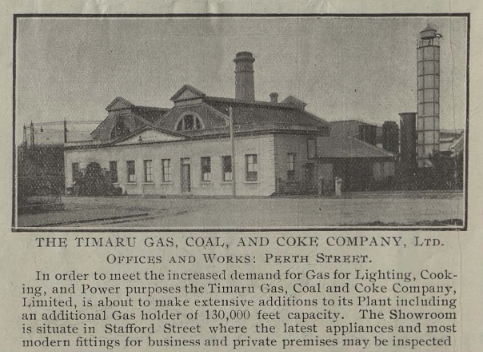
Promotional guide book to Timaru put out by the Caroline Bay Association. Has information and advertising for local accommodation, recreational activities, public amenities and local industries. Includes information about the Mackenzie District, Temuka and Mt Cook. Official Guide: Timaru and surrounding districts. Aoraki Heritage Collection, https://aorakiheritage.recollect.co.nz/nodes/view/8923
Side Quest: Brunner Suspension Bridge
I stopped at the Brunner Suspension Bridge above the Grey River and realised that this is not just a scenic crossing. It is a surviving piece of major industrial infrastructure from the coal mining boom on the West Coast.
The construction of the Greymouth to Brunner railway and the Brunner Suspension Bridge in 1876 was a turning point for industrial expansion at Brunner. Efficient transportation of coal from mine to port was crucial, and the bridge effectively became an extension of the railway.
In the 1870s, Julius Vogel pushed through funding as part of a large scale public works scheme. The promotion of “profitable coal mines” was high on the government’s priority list and Brunner was in the spotlight. Engineers and geologists proposed “a light inexpensive suspension and truss bridge for small coal mine wagons and foot and horse traffic”. The Public Works Department accepted the challenge to design and build its first suspension bridge. It was intended to be more solid, “cater for a crowd”, and resist the strong Brunner gorge winds while carrying up to 60 tons.
But, Before it could even open, disaster struck.
At 4 am on 28 July 1876, the almost completed Brunner bridge collapsed into the Grey River. Nobody was injured. The southeast cable anchor failed partly due to the size and design of the anchor plate and partly because the anchor plate was not properly set with concrete, an apparent miscommunication between the two engineers on the job. Rebuilding took eight months and involved twenty bridge workers. In the meantime, coal from the Brunner mine was brought across the river to the newly opened railway via a wire rope and cage.
The failure of the first bridge provided an opportunity to widen the carriageway and redesign the anchor plates. On 11 April 1877, the bridge was officially opened for horse drawn coal and goods wagons and pedestrian traffic. Horses hauled ten ton coal wagons across the bridge decking, which sloped slightly to help move coal more easily to the railway marshalling yards.
As coal output and population grew, congestion increased. Pedestrians, goods carts, and coal wagons competed for space. Just eight months after opening, the Railways Department introduced a goods toll to reduce interruptions to industrial traffic. Residents reacted strongly, calling it “a very disgraceful and obnoxious tax imposed upon us”.
The bridge was also part of everyday life. Local children dodged coal wagons on their way to school. In 1883, special by laws were passed preventing pedestrians from using the bridge at the same time as coal trucks. Offenders faced a £10 fine, although it was always overturned by the local magistrate. Locals petitioned for years for a footbridge, and in 1885 a pedestrian way was finally built along the top of the bridge.
By 1892, one full coal truck crossed the bridge every five minutes, not including those carrying coke and bricks. Another railway bridge was proposed as coal output peaked but was never built. Safety concerns led to increasing numbers of by laws until the Brunner Suspension Bridge became known as the most regulated bridge in New Zealand.
The bridge continued to evolve. Parts of the structure were renewed and strengthened in 1927. Between 1962 and 1969, alterations included strengthening and widening, and in 1965 timber towers were replaced with steel towers.
In 1978, the Stillwater Bridge opened upstream and Brunner Bridge closed to vehicles.
Restored in 2004 and 2005, Brunner Bridge is now an important physical and historical link to one of New Zealand’s most significant coal mining sites and to the local communities who fought vigorously for its retention.


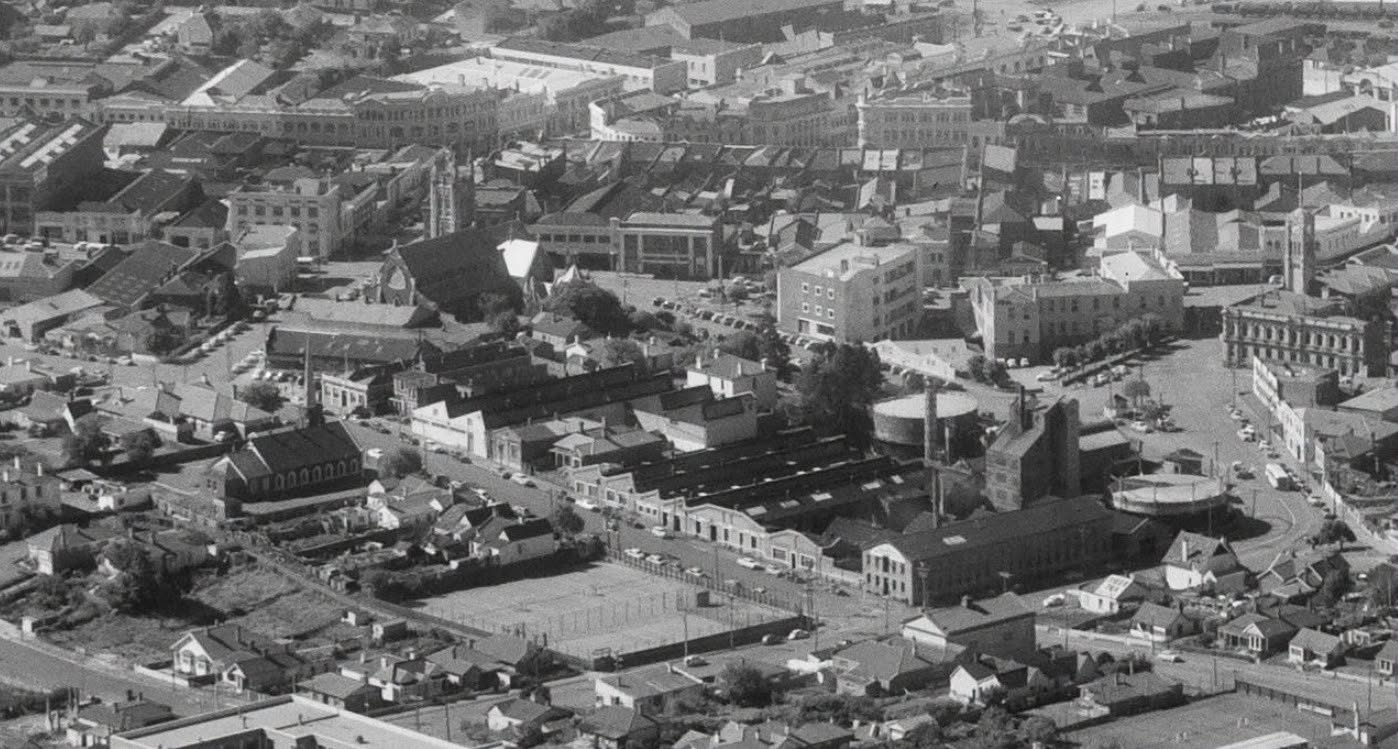
19 March 1959 Gas works Timaru Whites Aviation Alexander Turnbull Library Ref WA-49671 32241121