
There is a photo from 1873 that shows the beaching of "The Lady of the Lake" at Timaru Landing and Shipping Company/George Street Service site. She sprang a leak off Oamaru, but could not return, she made for Timaru. The crew of eight were bailing and pumping all night, and was beached to save her from sinking.
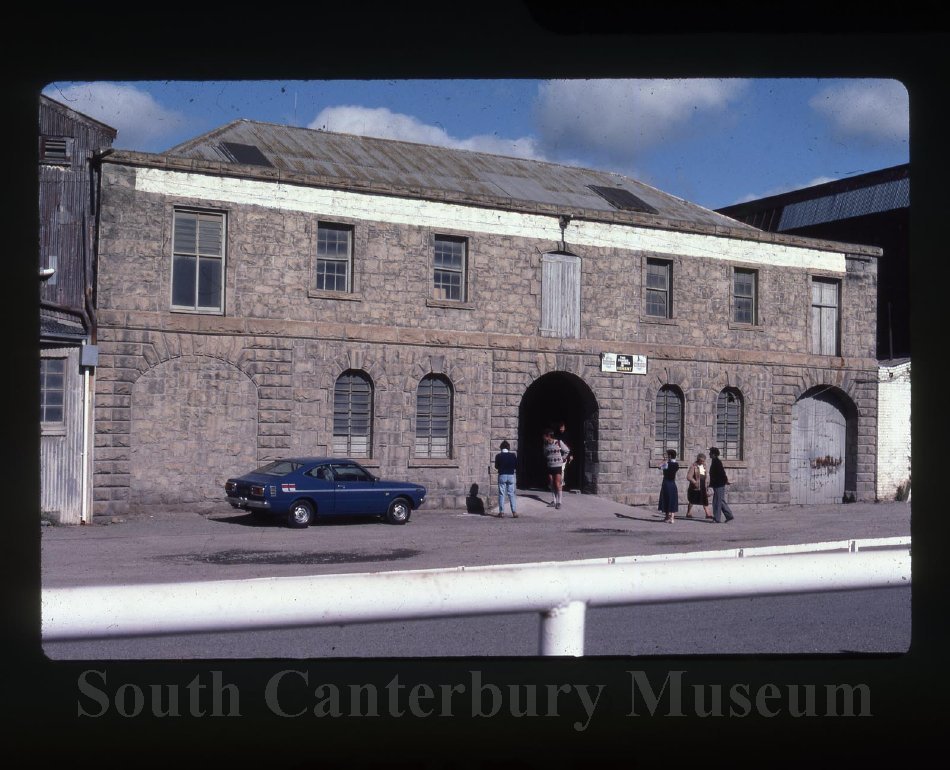
We love this photo because it also shows at the far right, the Landing Service Building. This photo was taken after the original Rhodes Cottage was demolished. This was Timaru's first European house where George and Elizabeth Rhodes lived, and then later Samuel Williams and Anne Manry. It was Timaru's first pub, the home of Timaru's first European baby and the first edition of the Timaru Herald was printed in the kitchen. There is another photo on the Heritage Sign from 1871 showing the house still standing.
Read the article from: Timaru Herald p2. 12 September 1873
"On Wednesday morning, at about 11 am, a steamer flying signals of distress was seen making for this port from the southward, and no little specialties was indulged in as to the name of the vessel and what was wrong with her. The sea at the time was running high, a heavy south-west gale having blown for some days previously. A gun was fired from the Government flagstaff station to call together the lifeboat's crew.
The signal had also the effect of drawing a large crowd to the beach. As the vessel approached she was perceived to be in a partly unmanageable state, and a boat was placed in readiness on the beach in case of need, it being thought that the vessel would be brought up in the roadstead by her anchors. This was not the case, however, for, to the surprise of all, the steamer's head was steered direct for the channel leading to the Landing and Shipping Companies service, with the evident intention of breaching her. When near the shore she bumped rather heavily on a reef, but after hanging a moment on the rock, a heavy sea lifted her clear, and the vessel was then run onto the beach opposite the George Street Landing Service.
On touching the beach her stern immediately swung to the northwards, and the vessel lay broadside onto the breakers completely blocking up the boat ways. A very short time after the breaching of the vessel, she was thrown up high enough to be boarded easily by means of a rope hanging over her side. It then transpired that the steamer was the Lady of the Lake, ss, 66 tons, Gall master, and that having sprung a leak off Oamaru, and not being able to make the beach there her course had been shaped to Timaru, this being the only port she had any chance of reaching. The steamer it appears was a regular trader between Oamaru and Otago southern ports, and that while lying at anchor at the former place on Tuesday last (having just discharged a cargo of 37,000 feet of timber from the Bluff), the sea and weather became so boisterous that the cable had to be slipped between ten and eleven pm, and the vessel ran to sea with the intention of making the Molyneuz, where she was under orders to take in a cargo of coal.
Shortly after slipping, it was seen to the consternation of all on board that the steamer had from four to five feet of water in the hold, evidently the result of a large leak. An attempt was made to return to Oamaru, but unsuccessfully, the gale being too strong to allow for the vessel facing it. She was then put before the wind, and her course shaped for Timaru. As the coals were nearly covered with water, a quantity were removed from the hold to supply the engines, the hatches battened down, the engines attached to the pumps, and a number of men set out to work baling. The pumps from this time until just before she was breached were dept continually going, and the size of the leak can therefore be imagined when we state that the pumping did not at all diminish the volume of water in the hold. It is evident, therefore, that had any accident happened to the pumps, the steamer would either have foundered or it would have been necessary to beach her elsewhere on the coast.
The water found its way into the engine-room, and had the fires been extinguished it would have been very awkward, for not only would the pumps have been stopped but the vessel would have had to trust to her sails, under which, judging from the build of the craft, she would have stood a poor chance of weathering the gale which afterwards came on. The steamer only reached our roadstead in the nick of time, for the coals taken out of the hold for the fires had all been used some little time previously to her being beached, and those in the hold were covered with water, and therefore impossible to get out. While the steamer was coming towards the shore, it was noticed that some difficulty was being experienced in steering her, and upon her striking the reef the cause was apparent.
The boat was originally used in a river, and was fitted with a small rudder in the bow. The apparatus by which this rudder was worked had been broken, consequently the fore rudder swung about from side to side at times neutralising the affect of the after rudder. The steamer took the ground at about low water, and a corner of one of the Landing and Shipping Companies ways had to be cut to allow her nose to pass: she was then washed up the beach with the rising tide without meeting with any impediment. At about half flood, arrangements were made between the agents of the Insurance companies and the Landing and Shipping and George Street Companies for the latter to haul the vessel up high and dry for 200 pounds the money not to be paid if the undertaking was not accomplished. Wire ropes and hawsers were then attached to the vessel from the two engines, skids place under her keel, and by the time the tide began to recede the vessel's forepart had been hauled up out of danger, and although the stern was still exposed to the breakers it was anticipated that no injury would in inflicted.
The Lady of the Lake is an iron boat, built in 1862 on the Clyde, and imported piecemeal to Port Chalmers, where she was used as a paddle boat till six months ago, when she was converted into a screw steamer. She is insured in the South British for 1000 pounds, the New Zealand for 1000 pounds, and the Victoria for 500 pounds. She was yesterday abandoned to the underwriters."