
By Roselyn Fauth
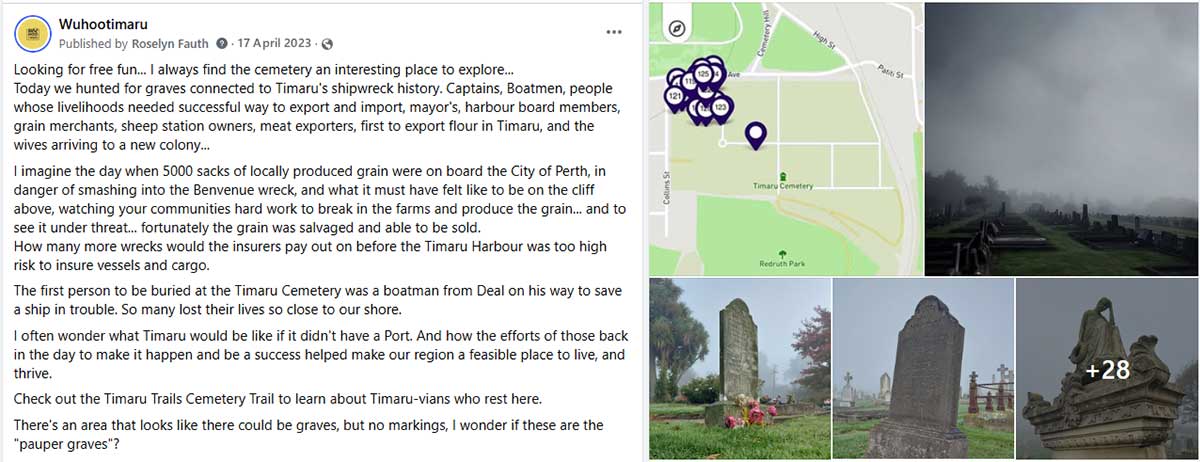
Facebook has made it much harder now to find those very early posts. I am so glad I had already started copying some of them and rewriting them into blogs, because otherwise a lot of those first thoughts and discoveries might have slipped away completely.
Each day Facebook offers up a memory, and this time it took me back to 23 April 2023, to a post I had written after visiting Timaru Cemetery.
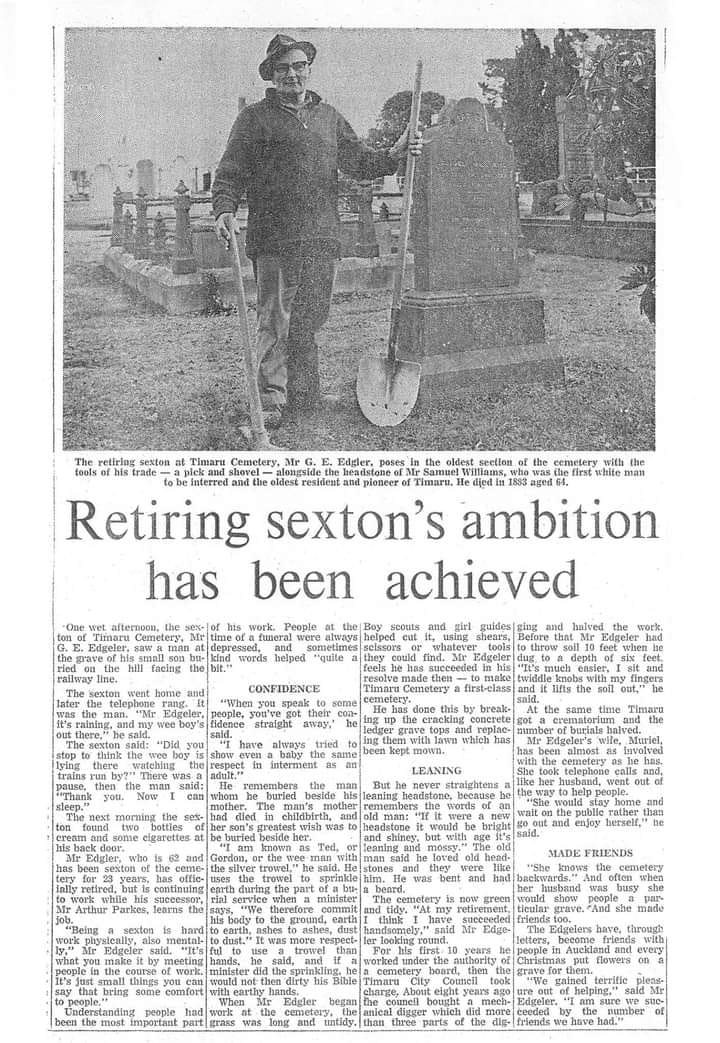
I remembered the day and the feeling of walking through that older part of the cemetery, reading names, wondering about their lives. But then I looked through the comments of my old post I realised I had missed something. In the comments on that old post, Jason Westaway had shared a fascinating newspaper clipping. Somehow, at the time, I had not properly seen it. Reading it now felt like being handed a key to a door I had walked past years earlier without opening.
The article was about retiring Timaru Cemetery sexton G. E. Edgeler, a man who had spent decades caring for the cemetery and the people in it. It was not just a piece about his retirement. It was really about care, memory, dignity, and the quiet human work that happens in places like cemeteries...
This is such a lovely article, which recognises the Sexton's 23 years of service at the cemetery on his retirement aged 62. He helped to train up his successor, Mr Arthur Parkes.
Gordon Edgeler was known as Ted to many. In this article he could have rattled off facts, and details of the technical aspect of his work, but instead he recalls the deeply human part of his role caring for the deceased at Timaru's cemetery. I imagine it would have been at times a quiet task, moving around the cemetery carrying out maintenance.
Through this article I thought about the tough work, both mentally and physically of being a sexton. But Ted doesn't focus on this, instead he focused on the people and talked about how he came to learn about understanding grief. Ted recalled it wsa the small things that could make a big difference, and bring people comfort. "Understanding people had been the most important part of his work. People at the time of a funeral were always depressed, and sometimes kind words helped ‘quite a bit.’"
There is a section in this article that is a lovely read... “One wet afternoon, the sexton of Timaru Cemetery, Mr G. E. Edgeler, saw a man at the grave of his small son buried on the hill facing the railway line. The sexton went home and later the telephone rang. It was the man. ‘Mr Edgeler, it’s raining, and my wee boy’s out there,’ he said. The sexton said: ‘Did you stop to think the wee boy is lying there watching the trains run by?’ There was a pause, then the man said: ‘Thank you. Now I can sleep.’ The next morning the sexton found two bottles of cream and some cigarettes at his back door.
The article quotes gordon... ‘I am known as Ted, or Gordon, or the wee man with the silver trowel,’ he said. He uses the trowel to sprinkle earth during the part of a burial service when a minister says, ‘We therefore commit his body to the ground, earth to earth, ashes to ashes, dust to dust.’ It was more respectful to use a trowel than hands, he said, and if a minister did the sprinkling, he would not then dirty his Bible with earthy hands.
"When Mr Edgeler began work at the cemetery, the grass was long and untidy. Boy scouts and girl guides helped cut it, using shears, scissors or whatever tools they could find. Mr Edgeler feels he has succeeded in his resolve made then - to make Timaru Cemetery a first-class cemetery.
He has done this by breaking up the cracking concrete ledger grave tops and replacing them with lawn which has been kept mown.
But he never straightens a leaning headstone, because he remembers the words of an old man: ‘If it were a new headstone it would be bright and shiny, but with age it’s leaning and mossy.’ The old man said he loved old headstones and they were like him. He was bent and had a beard.
The cemetery is now green and tidy. ‘At my retirement, I think I have succeeded handsomely,’ said Mr Edgeler looking round.
For his first 10 years he worked under the authority of a cemetery board, then the Timaru City Council took charge. About eight years ago the council bought a mechanical digger which did [more than three parts / three-quarters] of the digging and halved the work. Before that Mr Edgeler had to throw soil 10 feet when he dug to a depth of six feet.
‘It’s much easier. I sit and twiddle knobs with my fingers and it lifts the soil out,’ he said.
At the same time Timaru got a crematorium and the number of burials halved.
Mr Edgeler’s wife, Muriel, has been almost as involved with the cemetery as he has. She took telephone calls and, like her husband, went out of the way to help people.
‘She would stay home and wait on the public rather than go out and enjoy herself,’ he said."
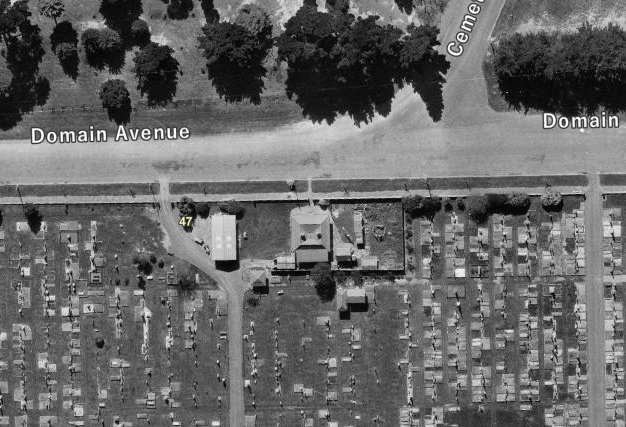
Sexton House 1970-1974 - Timaru Cemetery - Canterbury Maps
Since that 2023 Facebook post, I have learned much more about the cemetery and its early burials.
Back then, I probably accepted too easily the idea of certain people from my early research because that was how older captions, reports and local accounts framed them.
The clipping Jason shared was photographed beside Samuel Williams’s headstone and repeated the belief that he was the first white man buried there. Samuel Williams remains an important part of early Timaru’s story, but the cemetery’s history is more complex than that. The first recorded burial was a Deal boatman, and two of the boatmen were buried side by side.
Over the last few years I have learned that local history is built in layers, corrections, and overlooked details. I have had to work hard to find the women in the story, and make a conscious effort to pull them from the margins and onto the page. It can be a lot harder to learn about women's history because of the way we have recorded history. But it is there is you are prepared to go hunting.
It also made me think again about the pauper graves. I wrote this post when I didn't even know where they were buried. Their graves ask us to look beyond the most familiar names and remember that a cemetery holds the story of a whole community, including people who were given little space in history with or without a monument.
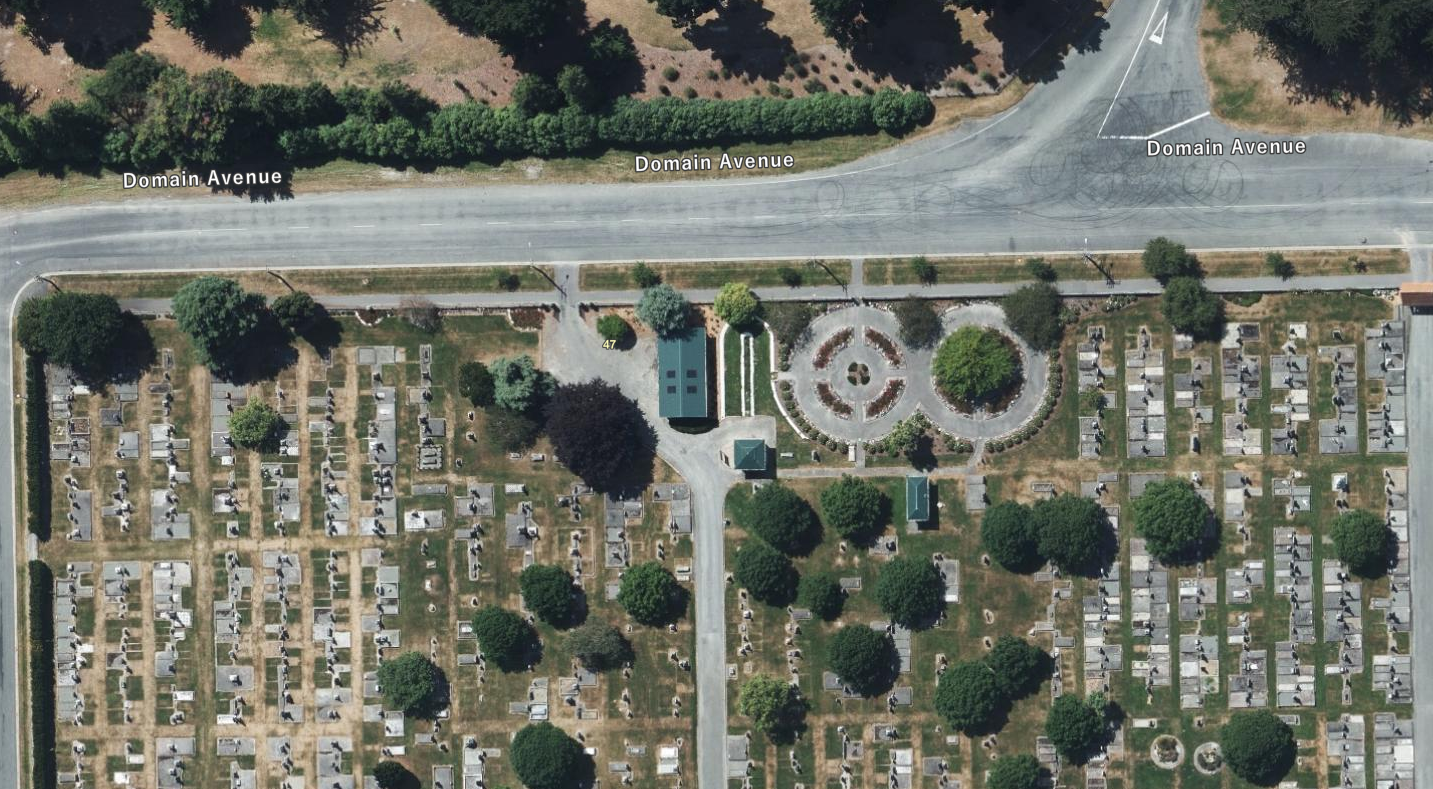
Sexton House is now a cremation area. 2015-2019 - Timaru Cemetery - Canterbury Maps
That is why Gordon Edgeler’s article feels so meaningful, and I am so pleased to have come across it.
He understood that every burial deserved dignity, and that caring for a cemetery grounds was really about caring for people.
What began as a Facebook memory became a reminder that history is never quite finished. Sometimes the real story begins when we look again. Thank you Jason Westaway for sharing this newspaper clipping. Gordon was his grandfather.
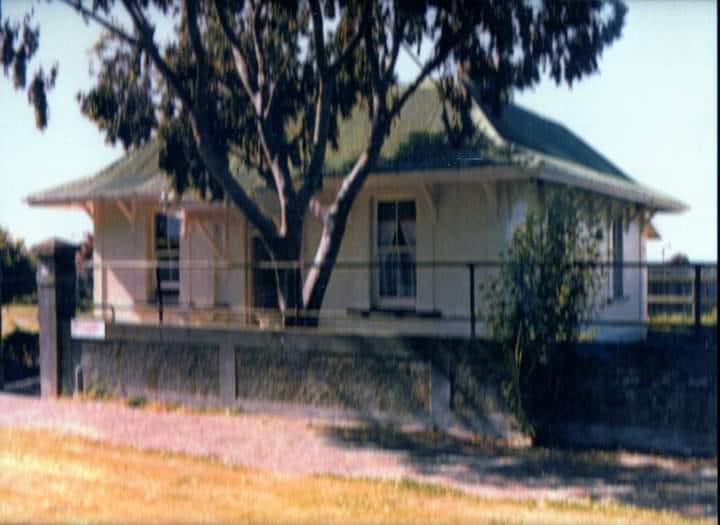
Caretakers house courtesy of Jason Westaway - please seek permission to reuse.
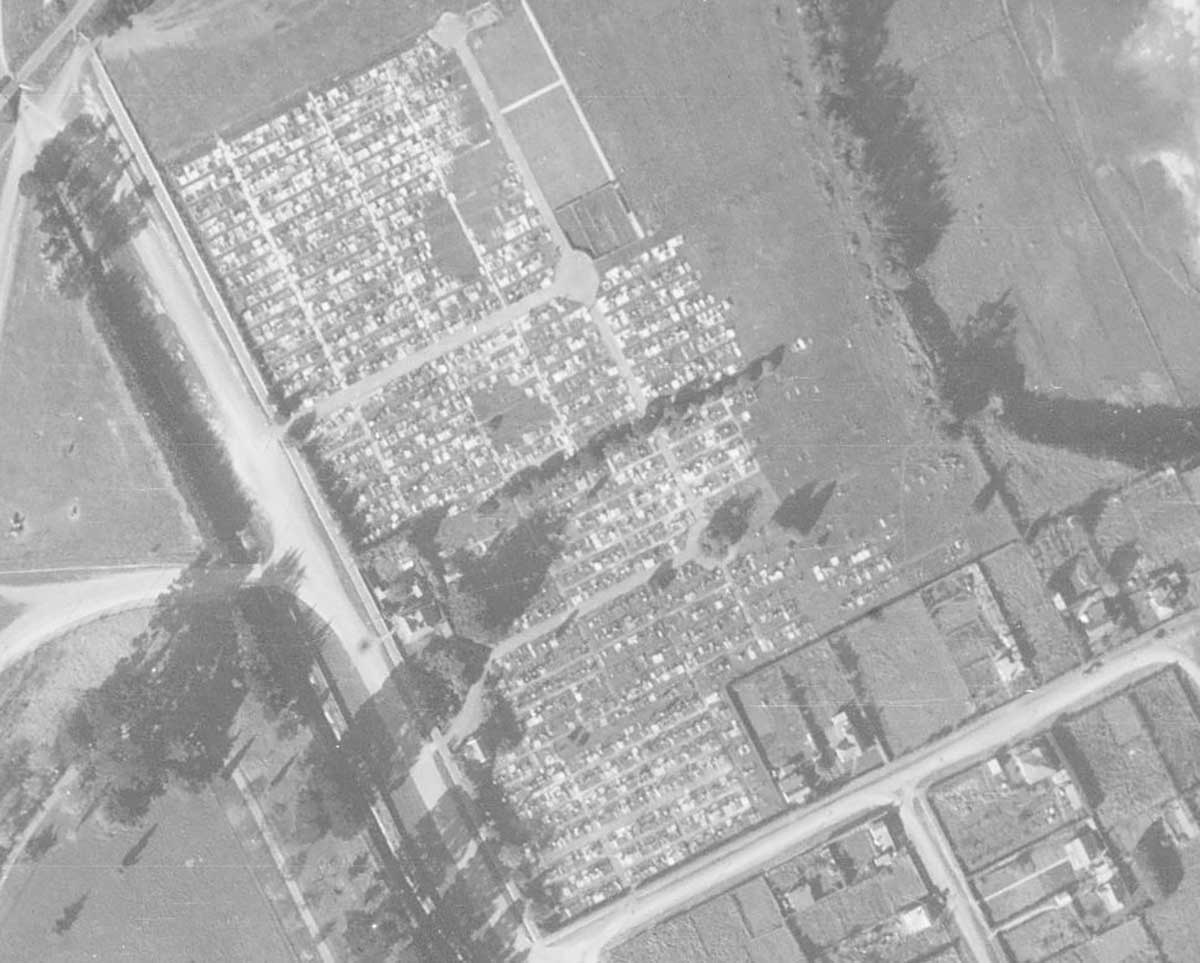
Timaru Cemetery 1938 Retrolens
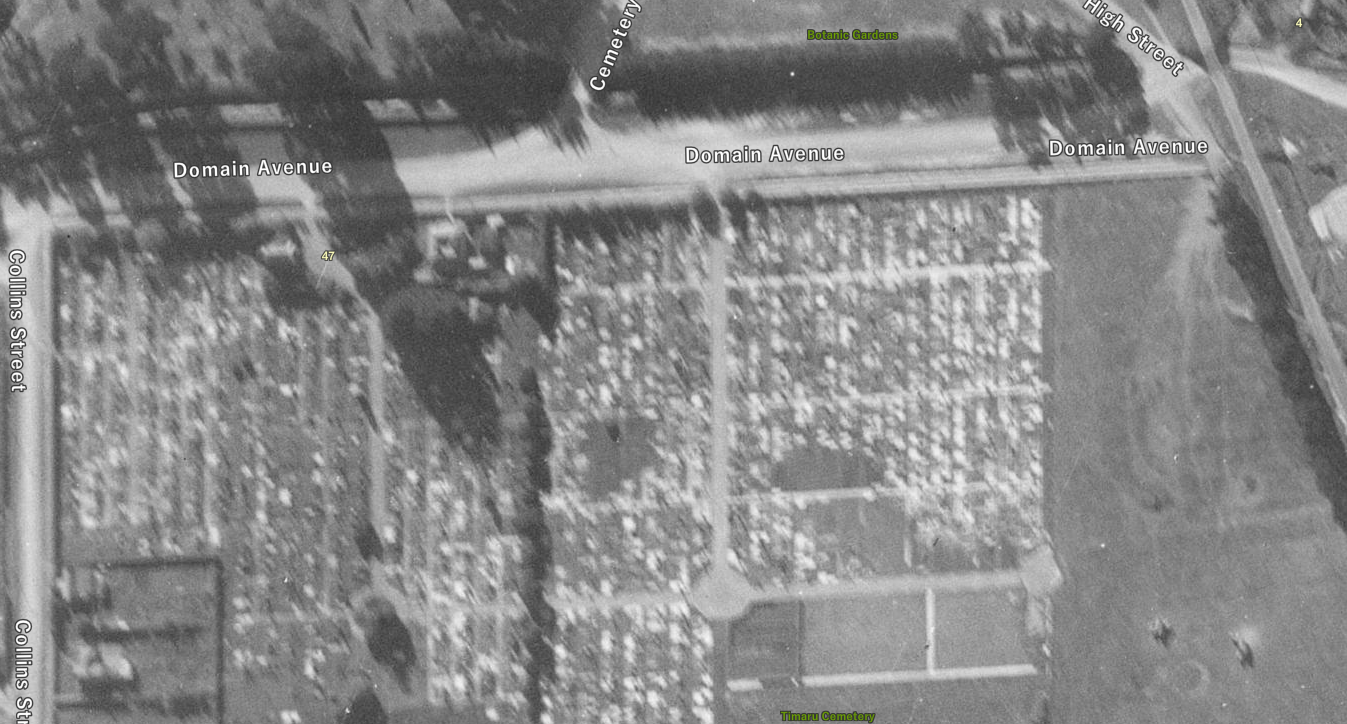
Sexton House 1935-39 Timaru Cemetery Canterbury Maps
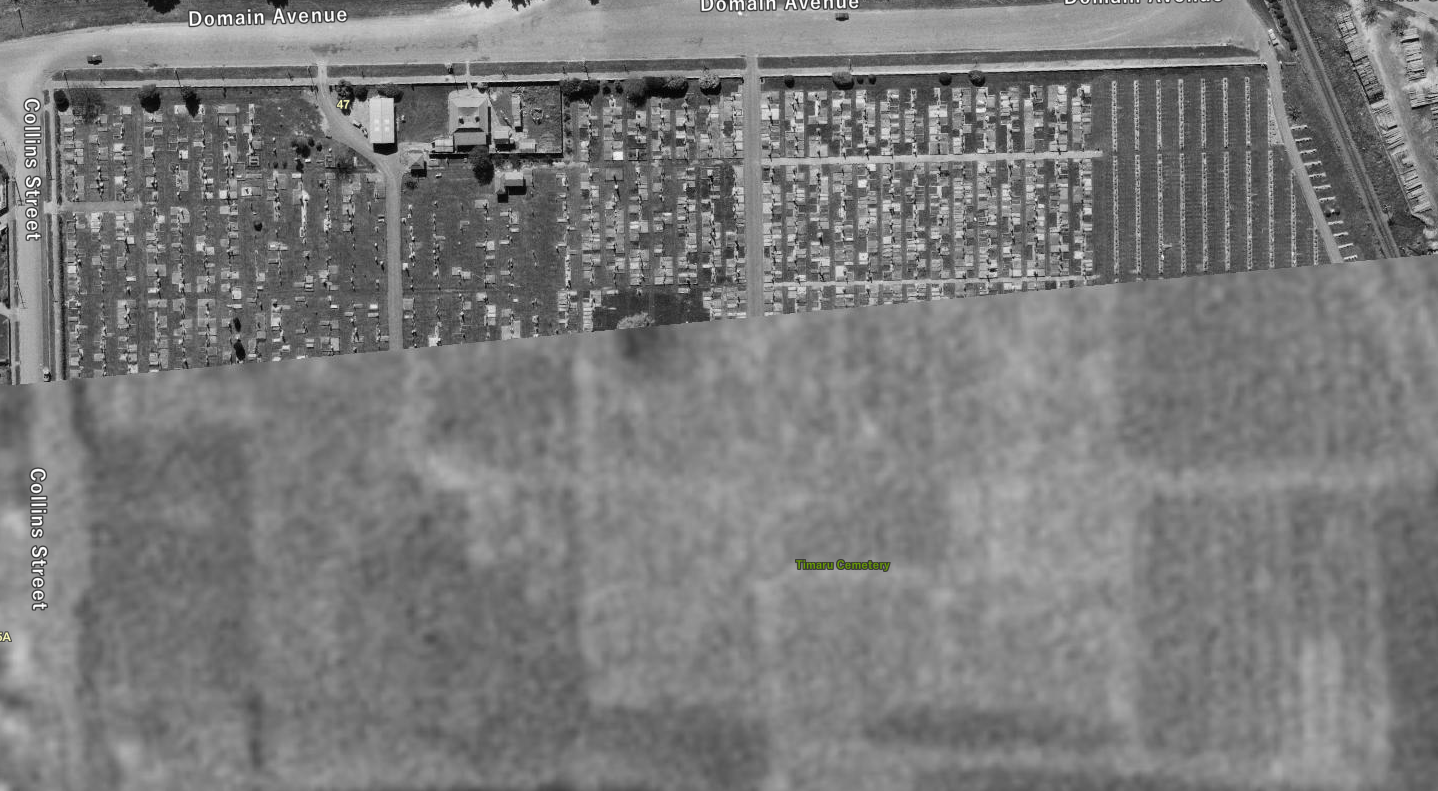
Sexton House 1970 74 Timaru Cemetery Canterbury Maps
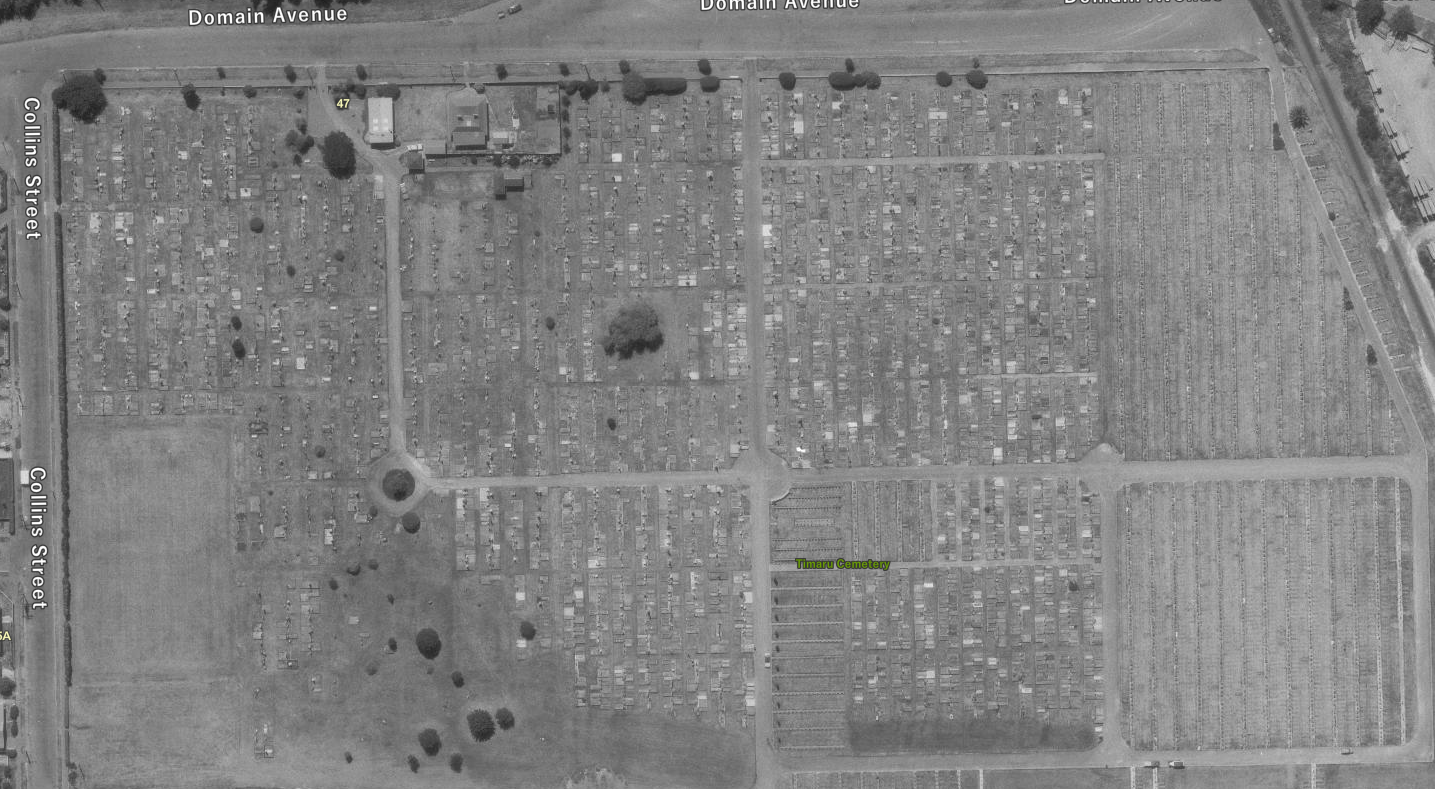
Sexton House 1980-84 - Timaru Cemetery -Canterbury Maps
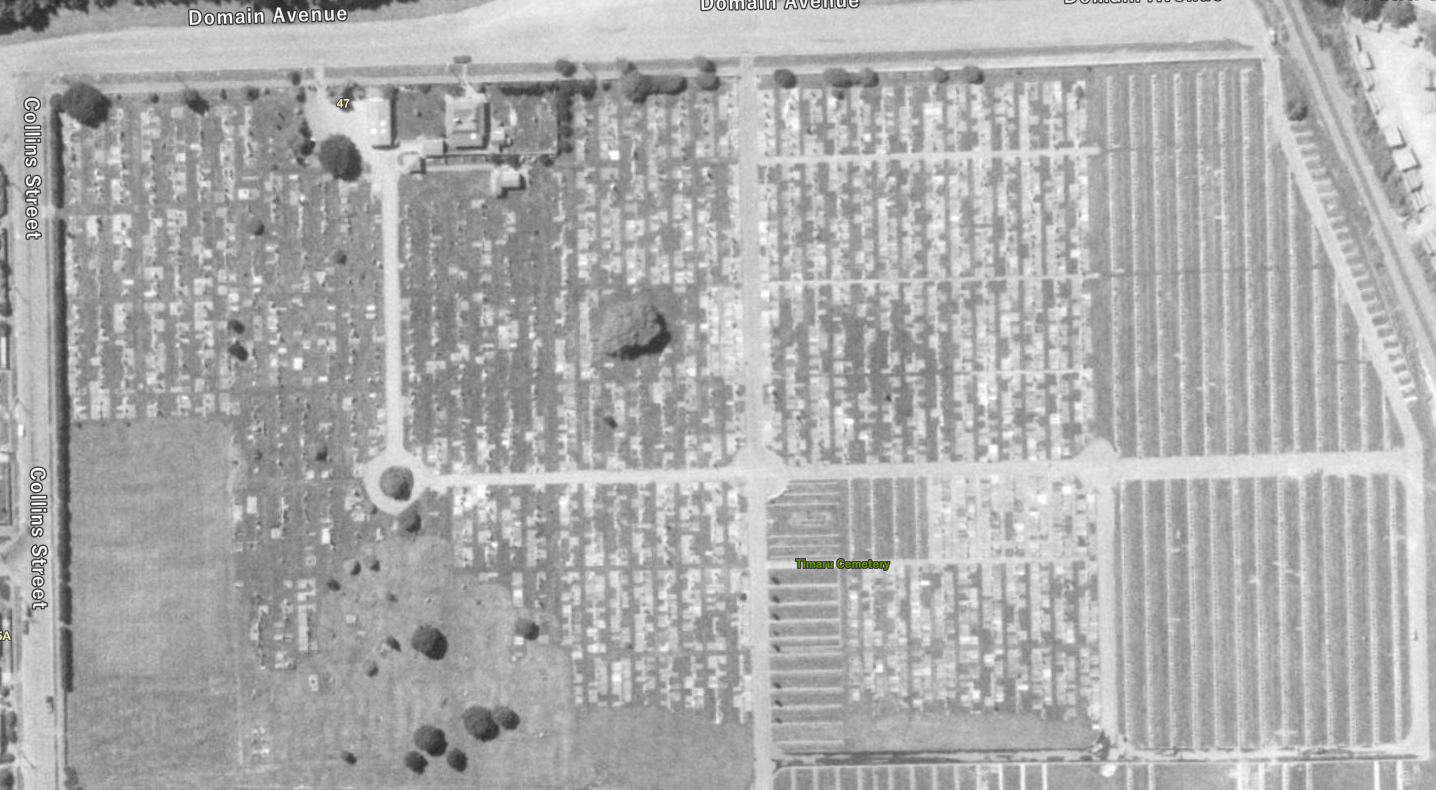
Sexton House 1985-89 - Timaru Cemetery - Canterbury Maps
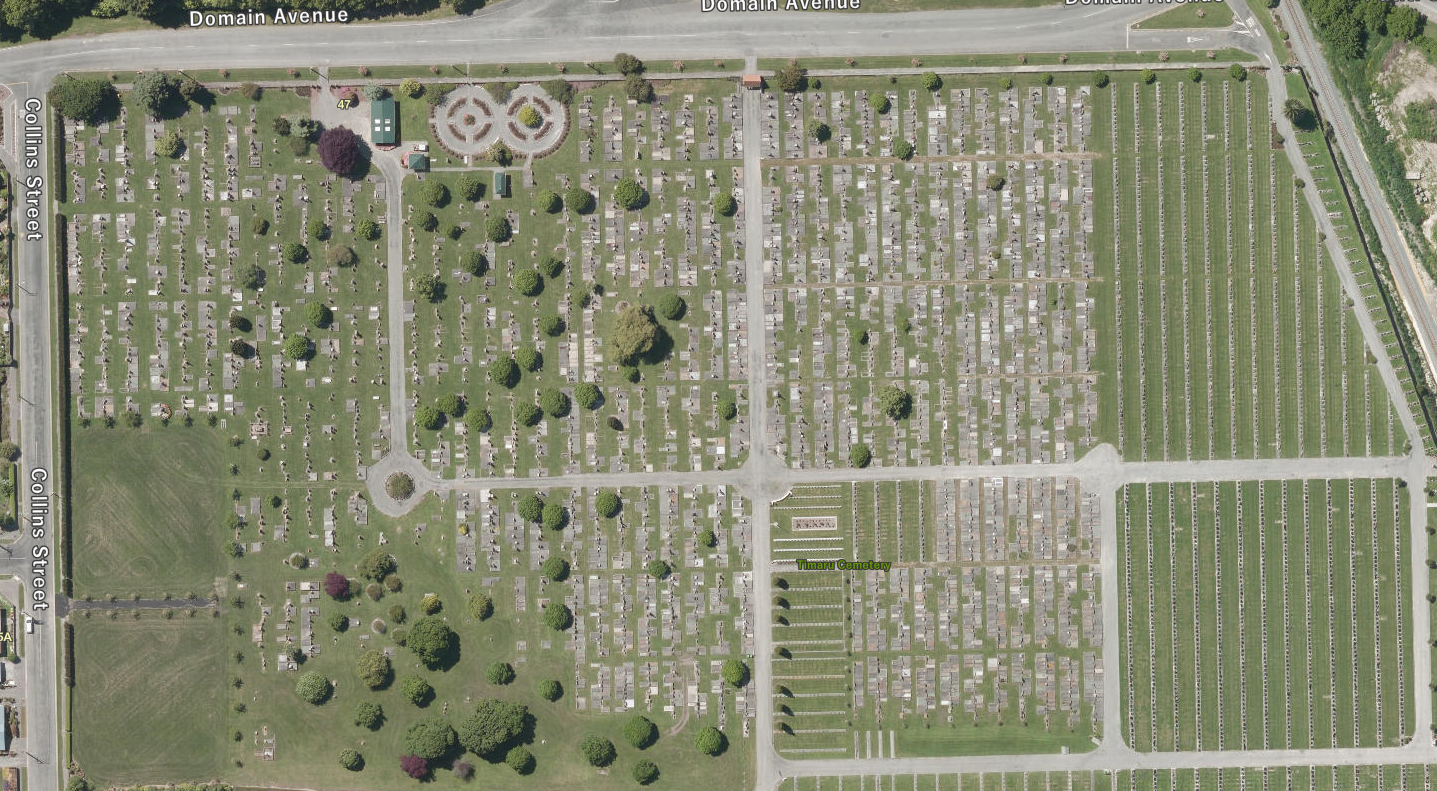
Sexton House 2010-2014 - Timaru Cemetery - Canterbury Maps