
By Roselyn Fauth
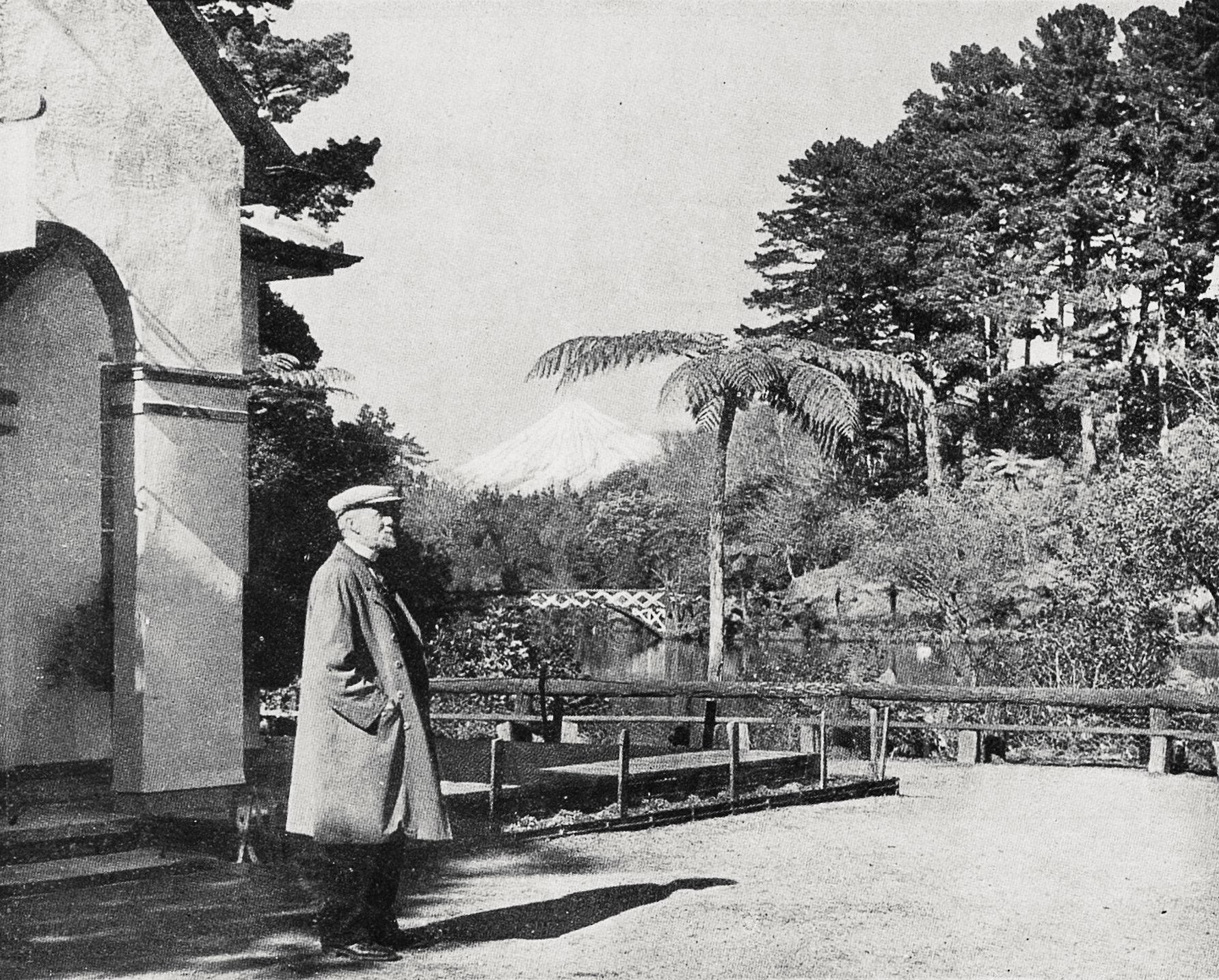
Pukekura Park in 1933: "The park is regarded as one of New Zealand's most picturesque domains. On the left is Mr. W. W. Smith, a well-known Dominion authority on natural history and a former curator of Pukekura Park.". By Auckland Weekly News; Oakley Studios - https://kura.aucklandlibraries.govt.nz/digital/collection/photos/id/281544Auckland Libraries Heritage Collections AWNS-19330524-46-01"No known copyright restrictions".
W. W. Smith, Mary Foreman Smith, and the South Canterbury story of a bird that was seen, collected, studied and lost
I started with an owl... That is often how my history hunts begin. I was learning about the Huia and thought I would then learn about the laughing owl whēkau. This was a bird with a call people once described as eerie, shrieking, almost crazed. It was larger than a morepork, long legged, a hunter of the dark. It ate beetles, worms, birds, bats, lizards, frogs, rats and mice. It lived across Aotearoa New Zealand, but its final confirmed record belongs here, to South Canterbury.
The last known laughing owl was found dead on a road at Blue Cliffs Station, near Timaru, in 1914.
The more I looked, the more the story shifted. This was not only a story about an extinct bird. It became a story about Albury limestone, early science, collecting, family life, women left in the margins, and the uneasy beginning of conservation in New Zealand.
And at the centre of it was a gardener...
In 1881, in the limestone country around Albury, William Walter Smith spent his day off trying to smoke an owl out of a cliff.
Smith was not a professor, museum director or wealthy gentleman scientist. He was a Scottish born gardener, trained in the practical world of country house gardens. He came to New Zealand in the 1870s and found work on Canterbury estates, including Mt Peel and Albury.
His authority did not come from a university, it came from looking carefully. Smith noticed things. Native plants. Birds. Ants. Earthworms. Beetles. Moa bones. Māori artefacts. Rock shelters. Stone tools. The small movements and traces in a landscape that other people might pass without seeing. And in the limestone cliffs of South Canterbury, he noticed the laughing owl.
It was good to read about someone who didn't come from an institutional background. He reminded me that you can be curious by just looking carefully, recording patiently, and noticing what others might walk past.
At Albury, the whēkau was not just a rumour in the dark. It was not just a bird passing through on its way to extinction. It was breeding there.
Smith found laughing owls living in the crevices of the limestone cliffs. In 1881, he obtained five birds from those rock shelters. One was sitting on an egg with a well grown chick inside.
There were a few places to find the bird at the time:
- There is Albury, where Smith found the birds in the cliffs.
- There is Raincliff, near the Opihi River, where Cuthbert and Oliver Parr photographed a young laughing owl at its nest beneath limestone in 1909.
- There is Owl Rock, still carrying the memory of boys, birds and a place where the owls had once bred.
- There is Blue Cliffs, where the last confirmed bird was found on the road in 1914.
Why does this matter for South Canterbury?
Because South Canterbury was not just the place where the last confirmed laughing owl was found. Albury, Raincliff, the Opihi River and Blue Cliffs are all part of the final chapters of this bird’s story. I want to help people who are curious like me to see our limestone country differently. These places are not just scenic backdrops. They held habitat, memory, science, Māori history and extinction history.
But... before we turn Smith into another lone man of science, Mary Foreman Smith needs to be put back into the picture.
Mary was a dressmaker. She married William in Ashburton in 1880, the year before those Albury owl records. Together they had at least seven children. Sadly three died in childhood.
When I picture Smith at Albury, peering into limestone cracks, writing to scientists, collecting specimens and recording the habits of the laughing owl, I do not want to imagine him floating above ordinary life. He was a working man with a family, uncertain income, grief, responsibility and ambition.
Mary’s labour, like so much women’s labour, sits in the margins of the history page. It was important to me while learning about Smith, that Mary Foreman Smith was included in this blog. Because history so often gives us the man with the public legacy and leaves the woman as a sentence in the background.
Smith was not wandering around as a romantic naturalist. There was a family behind this work, with grief, income pressure and women’s labour holding so much together.
The formal biographies give us only a few facts about Mary. Dressmaker. Wife. Mother. Later proprietor of a maternity home in Ashburton. But those words matter. They place her in the intimate world of clothing, birth, care, household economy and women’s work.
While William’s name travelled through scientific papers, museum records and natural history circles, Mary’s life reminds us how often women are reduced to the background scaffolding of men’s public stories.
The laughing owl was not the only thing history nearly failed to notice. Smith’s own story is fascinating because it sits on a hinge between two worlds.
In one world, rare birds, eggs, bones and artefacts were things to be collected. A disappearing species could become valuable because it was disappearing. Scientists and collectors paid Smith for laughing owls from Albury. The payment could be up to three guineas per bird, worth several weeks’ wages.
This was not just curiosity. It was also economics. Rare birds had a market. Museum specimens had value. Field knowledge had value. And for a working gardener supporting a family, that value mattered too.
In the other world, which was only beginning to take shape, native birds, bush, scenery and historic places were starting to be understood as something that should be protected.
Smith moved uneasily between those worlds, as a collector who observed. He sent notes to journals. He supplied material to major figures such as Julius von Haast and Walter Buller. He recorded rock paintings in the Opihi and Totara Valley areas and excavated rock shelters and cave floors.
Today, we would talk about those places and taonga very differently, with much greater attention to mana whenua, authority, consent and protection. But in Smith’s time, this was part of the collecting culture of colonial science.
That is what makes him complicated, and therefore more useful to us.
He was not simply a hero. He was not a villain either. He was a man of his time, but also someone beginning to see that a country could not keep treating its living world as an endless supply of specimens.
I learning that early conservation was messy.
Smith collected birds, bones and artefacts, but he also became someone who argued for native species and landscapes to be protected. He sits right on that uncomfortable line between collecting nature and conserving it.
The uncomfortable thing about the laughing owl is that it was not lost because nobody noticed it. It was seen, named, studied and collected. Sent to museums and private collections. Its eggs were kept. Its skins were preserved. Its habits were written down... but even with this effort, it disappeared.
By the late nineteenth century, the laughing owl was already becoming rare. The decline of the bird was caught in a chain of changes.
Land was cleared. Farms spread. Habitats were altered. Rabbits were introduced. Then stoats, ferrets and weasels were brought in to control rabbits, as if one introduced problem could be tidily solved by another. Cats also moved through the landscape.
Those predators found eggs, chicks and birds that had evolved in a world without mammalian hunters of that kind.
Am I blaming early settlers or farmers? No. I am not interested in blame.... but it it is interesting to better understanding systems. Rabbits were introduced, predators were introduced to control rabbits, land use changed, specimens were collected, and a slow breeding native bird had no defence against that chain of change.
This is not about pointing fingers at people in the past. It is about asking what we can learn now, while there are still things left to protect.
The laughing owl seems to have been especially vulnerable at the nest. A bird that nested in rock crevices, holes and boulder sites could not easily defend its eggs and young from animals able to enter those spaces. By 1903, Smith returned to the Albury district and found old castings, but no fresh sign. The cliffs were still there. The limestone crevices were still there. The shape of the bird’s life remained in the landscape, but the bird itself had nearly gone.
Local people told him they rarely heard the call anymore. A sound that had once belonged to the night was becoming something people remembered.
Eleven years later, in 1914, the last confirmed laughing owl was found dead on a road at Blue Cliffs Station, near Timaru. The laughing owl might be extinct, but its story doesn't have to be silent.
Like other owls, it swallowed prey and later cast up pellets of the parts it could not digest: bones, fur, feathers, beetle cases and other hard remains. Over time, these pellets gathered around roosts and nest sites. In dry, sheltered limestone crevices and caves, those fragments were preserved.
Some sites were used for generations. A cave site at Takaka Hill is thought to have been used by laughing owls for around ten thousand years.
Those pellets became natural archives. Scientists have used them to reconstruct parts of an older New Zealand world: birds, bats, lizards, frogs, fish, insects and even tuatara. The owl that vanished left behind evidence of what else once lived.
That is haunting idea that a predator becomes an archivist by accident. The lost bird now helps reveal a lost world.
Smith, too, left an archive of noticing.
His observations were taken seriously by scientists, despite his lack of formal scientific training. He sent notes to colonial and English journals. He stood up for the value of field observation. Later writers described him as one of New Zealand’s important field naturalists, the kind of person whose knowledge came from being outside, looking, recording and checking again.
His life also turned more openly towards preservation.
In 1894, Smith became resident custodian of the Ashburton Domain, a role that gave him more stability after years of precarious work. He laid out gardens, became involved in beautifying and horticultural societies, and wrote about native birds and bush scenery as a national heritage worth protecting.
After the Scenery Preservation Act of 1903, he served on the commission charged with recommending scenic and historic places for reservation. The work was not just botanical or picturesque. The commission inspected forests, rivers, lakes, waterfalls, historic places and Māori sites. Smith spoke against the loss of ancient forests and the practice of burning them off.
Later, at Pukekura Park in New Plymouth, he developed the park, planted native trees and ferns, and successfully bred kiwi. In 1931, the New Zealand Native Bird Protection Society made him an honorary life member.
That is the larger story hiding that I went huntin for inside the owl story.
A working gardener who had once collected rare birds became part of the early conservation movement. A man who had taken specimens from limestone cliffs also helped argue that native species and landscapes were worth protecting.
His life does not give us a simple moral... just a glimpse of the transition of a changing time.
From collecting to conservation... From curiosity to responsibility and ultimately from noticing to protection.
After William moved north, he and Mary appear to have lived separate lives. Mary remained connected with Ashburton, where she prospered as the proprietor of a maternity home, before later moving to Masterton to live with a son. She died in 1922 and appears to be buried at Ashburton Public Cemetery. William died twenty years later in New Plymouth and appears to be buried at Te Henui Cemetery.
His name sits in scientific records, conservation histories and species lists. Hers sits closer to the domestic and community world of birth, care, grief and women’s work.
The laughing owl’s story asks us to listen differently.
For me, the lesson is that noticing is not enough. We can admire something, study it, photograph it and still lose it. The real question is whether noticing changes what we protect.
The laughing owl was not the only thing history nearly failed to notice. Mary Smith, the children, the limestone places, the old ecological relationships, they all ask us to listen more carefully.
The whēkau cannot return because we finally care about it.
But its story can still change how we notice what remains.
In South Canterbury, the laughing owl is no longer heard in the limestone gullies of Albury, Raincliff or Blue Cliffs. Yet the story has not gone quiet. It remains in museum specimens, old photographs, scientific papers, family memories, rock shelters, owl pellets and the life of a gardener who looked closely enough to see a world changing around him.
Perhaps that is where conservation begins... With attention.
But it cannot end there. Because the real question left by W. W. Smith, Mary Foreman Smith, and the lost laughing owl of South Canterbury is not simply, “What did we lose?”
It is this: What is the point of noticing, if noticing does not change what we protect?
Timeline: Laughing Owl / Whēkau and W. W. Smith
Before human arrival in Aotearoa New Zealand
The laughing owl, or whēkau, lived across Aotearoa New Zealand in a bird rich ecosystem that had evolved without land mammals such as stoats, ferrets, weasels and cats. It hunted beetles, birds, lizards, frogs, bats and other small animals. Its roosting and nesting places later preserved extraordinary evidence of what lived in earlier New Zealand landscapes.
Thousands of years before extinction
Some laughing owl roost and nest sites were used for many generations. A cave site at Takaka Hill is thought to have been used by laughing owls for around ten thousand years. These long used sites built up layers of pellets, bones and other remains, creating natural archives of past ecosystems.
After the arrival of settlers from Eastern Polynesia
Kiore, or Pacific rats, began to appear in laughing owl roost deposits. The owls ate kiore, and their pellets show how the food web changed as new species arrived. Kiore changed ecosystems, but it is safest not to present them as the main cause of the laughing owl’s final extinction, as kiore and laughing owls coexisted for centuries in the South Island.
Early to mid nineteenth century
The laughing owl was still present in parts of New Zealand, especially the South Island. It was remembered as larger than a morepork, with long legs, a haunting call and a habit of nesting in bluffs, rock outcrops and crevices.
1852
William Walter Smith was born on 14 September 1852 at Hawick, Roxburghshire, Scotland.
1875 or 1876
Smith emigrated to New Zealand and found work with J. B. A. Acland at Mt Peel Station, Canterbury.
1880
William Walter Smith married Mary Foreman, a dressmaker, in Ashburton on 30 September 1880. They had at least seven children, three of whom died in childhood.
1881
While working at Albury estate near Timaru, Smith found laughing owls living in limestone crevices. He obtained five birds in this way. One was sitting on an egg with a well grown chick inside. This is a key South Canterbury detail because it shows the birds were breeding here, not merely passing through.
Late nineteenth century
Habitat clearance, farming, introduced predators and collecting all placed pressure on the laughing owl. The species became part of the nineteenth century world of scientific collecting, museum specimens, private collections and overseas trade.
1894
Smith was appointed resident custodian of the Ashburton Domain. He laid out gardens, became involved in beautifying and horticultural societies, and continued writing on natural history and preservation.
1903
Smith wrote that the laughing owl was almost extinct in Canterbury. Around Albury on the Tengawai River, he found old castings but no fresh signs of the bird. Local residents told him they rarely heard the owl’s call by then.
1903 to 1906
After the Scenery Preservation Act 1903, Smith served on the Scenery Preservation Commission, which inspected scenic and historic places and recommended sites for protection.
1909
A young laughing owl was photographed at its nest beneath a limestone boulder at Raincliff Station, near the Opihi River in South Canterbury, by Cuthbert and Oliver Parr.
1914
The last confirmed laughing owl was found dead on a road at Blue Cliffs Station, near Timaru.
1922
Mary Foreman Smith died. She appears in cemetery index material as buried at Ashburton Public Cemetery, Area 26, Plot 16. This should still be checked against official council cemetery records before publication.
1931
The New Zealand Native Bird Protection Society made Smith an honorary life member.
1942
William Walter Smith died in New Plymouth on 3 March 1942. Find a Grave lists him as buried at Te Henui Cemetery, New Plymouth. This should also be checked against official cemetery records before publication.
Today
The laughing owl is extinct, but its specimens, photographs, roost sites, pellets and bones continue to teach us about lost ecosystems, extinction, introduced predators, collecting, and the importance of noticing what is still here before it disappears.
Sources and useful links
Dictionary of New Zealand Biography: William Walter Smith
Used for: Smith’s birth, Scottish background, work at Mt Peel and Albury, marriage to Mary Foreman, children, collecting, Ashburton Domain, Scenery Preservation Commission, Pukekura Park, kiwi breeding, later life and death.
https://teara.govt.nz/en/biographies/3s27/smith-william-walter
New Zealand Geographic: Laughter in the Night
Used for: South Canterbury laughing owl details, Albury, W. W. Smith, Raincliff, Opihi River, Owl Rock, Blue Cliffs Station, later rumours and the importance of South Canterbury in the final records of the species.
https://www.nzgeo.com/stories/laughter-in-the-night/
Te Papa: The Laughing Owl’s Extinction
Used for: last known bird at Blue Cliffs Station near Timaru in 1914, extinction causes, habitat clearance, stoats, ferrets and cats, human collecting, pellet deposits, Takaka Hill, middens and prehistoric fauna.
https://collections.tepapa.govt.nz/topic/1450
New Zealand Birds Online: Laughing Owl / Whēkau
Used for: species description, size, colour, call descriptions, habitat, diet, breeding, decline, last confirmed South Canterbury record, post 1914 reports, kiore caution and taxonomy references.
https://www.nzbirdsonline.org.nz/species/laughing-owl
Te Ara: Laughing Owl
Used for: public facing summary, size, long legs, bluffs and rock outcrops, calls, prey, early South Island abundance and later informal reports.
https://teara.govt.nz/en/photograph/9956/laughing-owl
Wingspan: Extinct Birds of Prey, New Zealand Laughing Owl
Used for: 1909 Raincliff Station photograph of a young laughing owl at its nest beneath a limestone boulder and conservation reflection.
https://www.wingspan.co.nz/extinct_birds_of_prey_new_zealand_laughing_owl.html
Te Papa Blog: Laughing Owl, Long Gone but Not Forgotten
Used for: photograph reference and the young bird with rodent at Raincliff Station, Opihi River, South Canterbury, 1909.
https://blog.tepapa.govt.nz/2015/11/28/laughing-owl-long-gone-but-not-forgotten/
National Library of New Zealand: Last of the Laughing Owls
Used for: educational framing, extinction through habitat loss, introduced predators such as stoats, and overseas trade by bird collectors.
Holdaway and Worthy, 1996: Diet and Biology of the Laughing Owl Sceloglaux albifacies on Takaka Hill, Nelson, New Zealand
Used for: scientific basis for diet, fossil deposits, pellet evidence and laughing owl prey accumulation.
Worthy and Holdaway, 1996: Taphonomy of Two Holocene Microvertebrate Deposits, Takaka Hill, Nelson, New Zealand, and Identification of the Avian Predator Responsible
Used for: microvertebrate deposits formed from owl pellets and identification of laughing owl as the likely predator responsible for the deposits.
Wood et al., 2016: Phylogenetic Relationships and Terrestrial Adaptations of the Extinct Laughing Owl, Sceloglaux albifacies
Used for: modern taxonomy, ancient DNA, support for Sceloglaux being nested within Ninox, and relationship to morepork and other boobook owls.
Find a Grave: William Walter Smith
Used cautiously for: possible burial at Te Henui Cemetery, New Plymouth. Check against New Plymouth District Council cemetery records before publication.
https://www.findagrave.com/memorial/203702666/william_walter-smith
New Plymouth District Council Cemetery Search
Useful for: verifying William Walter Smith’s burial details.
https://www.npdc.govt.nz/services/cemeteries/cemetery-search/
Find a Grave: Mary Foreman Smith
Used cautiously for: possible burial at Ashburton Public Cemetery, Area 26, Plot 16. Check against Ashburton District Council cemetery records before publication.
https://www.findagrave.com/memorial/207254593/mary-smith
Ashburton District Council Cemetery Records
Useful for: verifying Mary Foreman Smith’s burial details.
https://infoservices.adc.govt.nz/Cemeteries/