By Roselyn Fauth
Last time we went to Woodbury we spread a picnic by the St Thomas’s Anglican Church gate. Two tūī played above our heads in the trees, darting and calling, completely unbothered by us.
After our visit back yesterday, I found myself scrolling through my phone, digging out old photos of St Thomas’s.
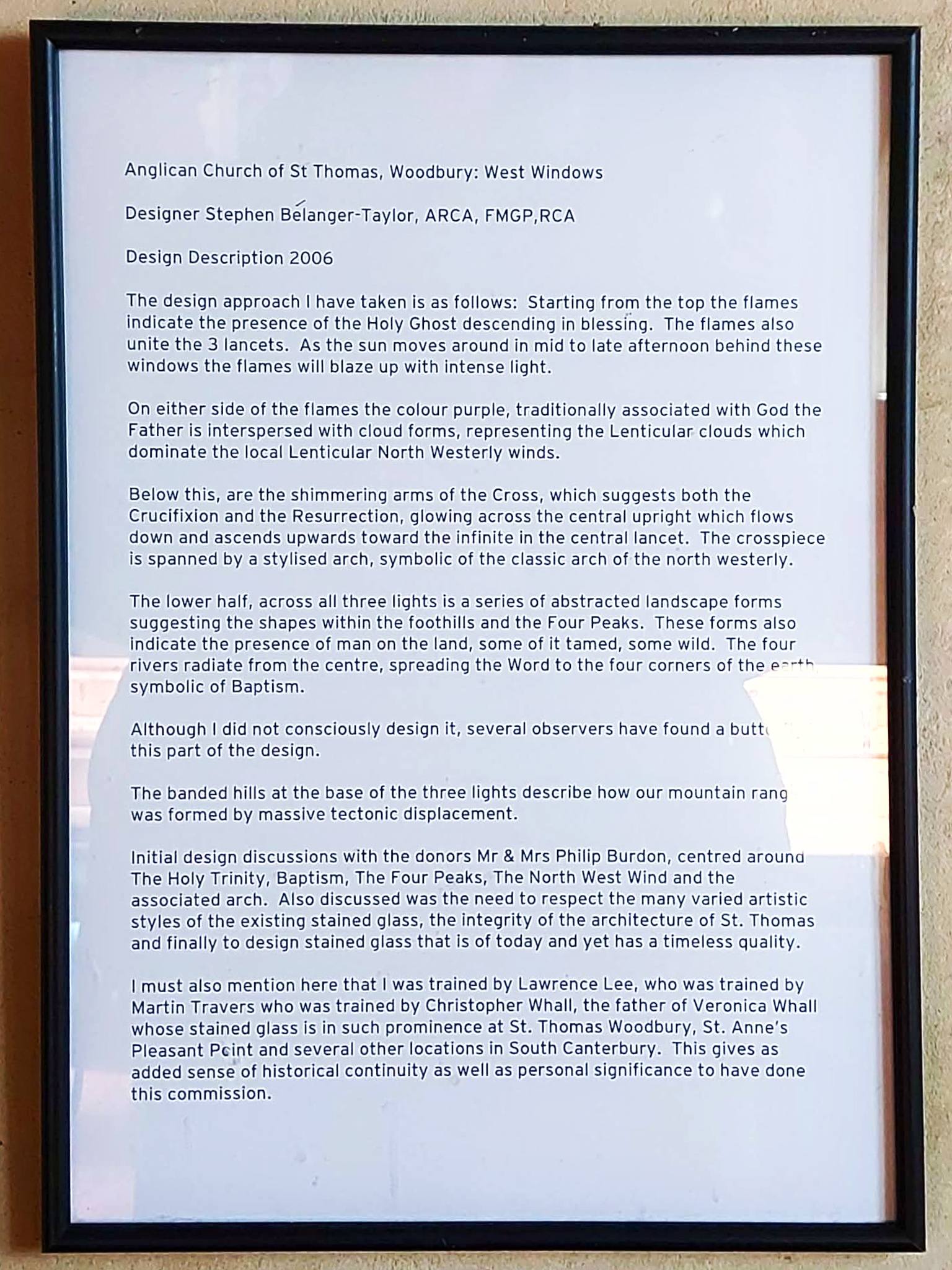
Inside was a helpful write up of the history of the place, and so I thought I would share this in a blog for you.
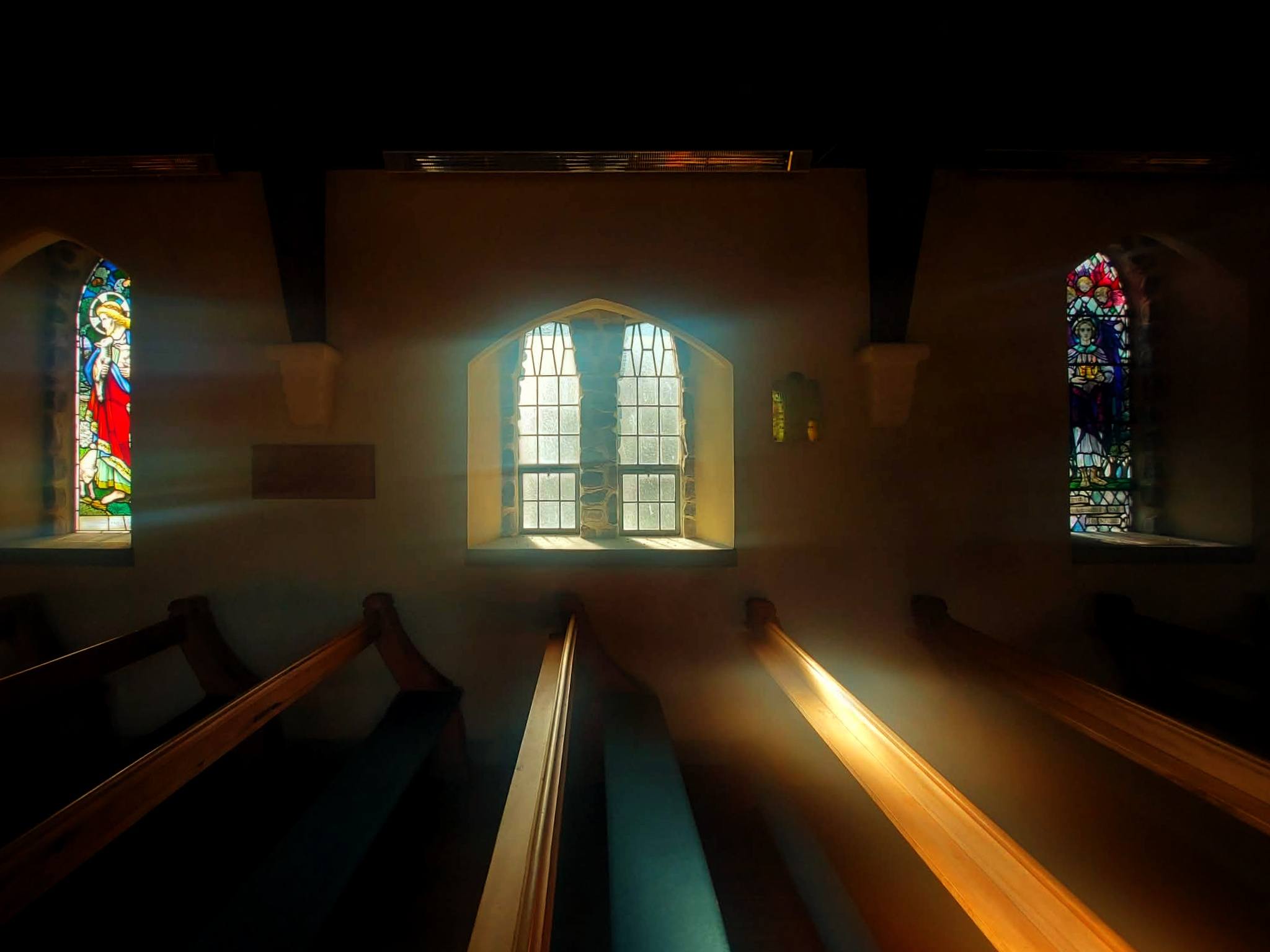
The stillness. The light. It's lovely.
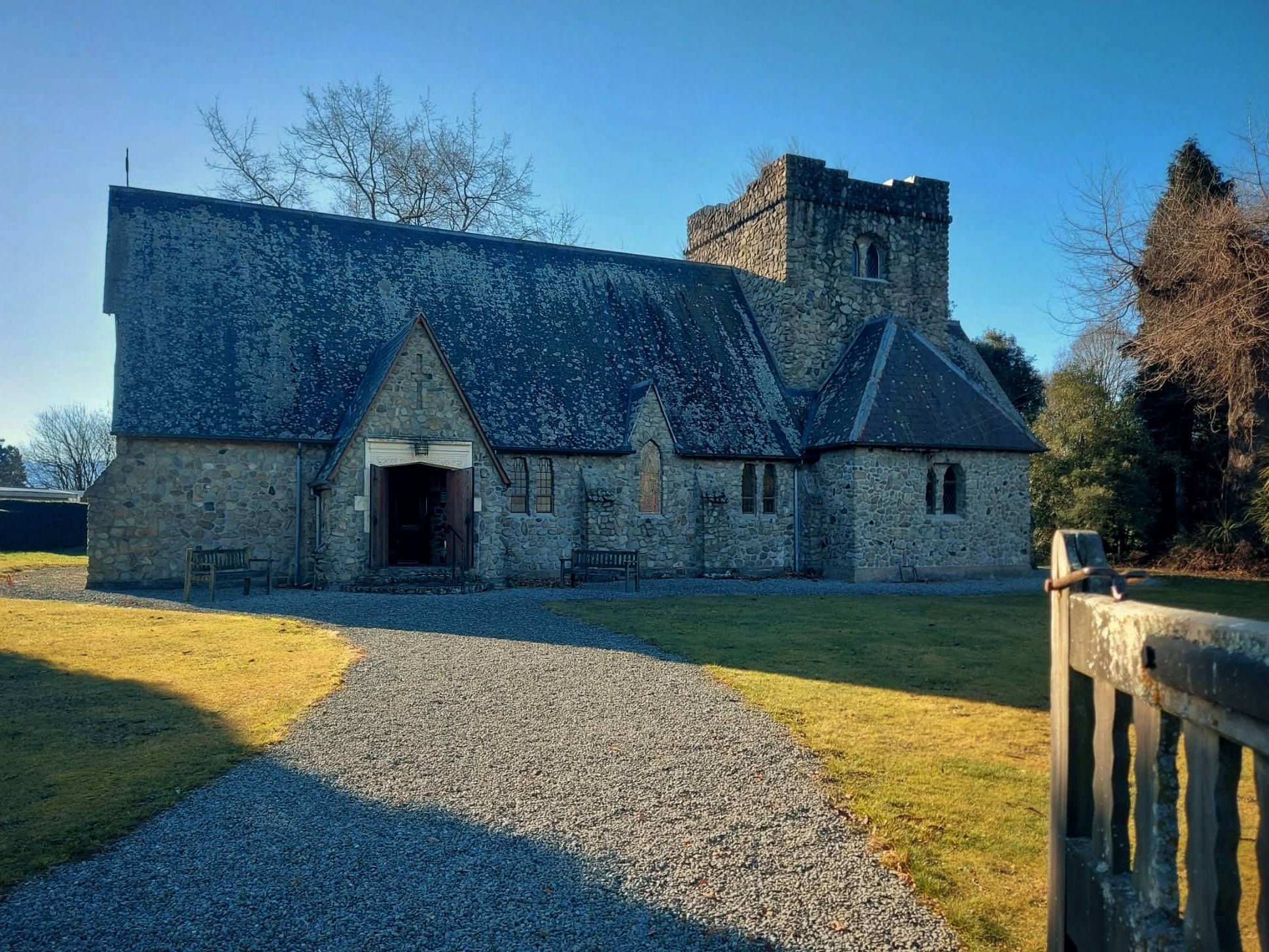
St Thomas’s stands at the corner of Church Street and Burdon Road, set within hedging and stone boundaries that give it a gentle sense of arrival. The church is aligned on a traditional east to west axis and has served as a place of Anglican worship in Woodbury since the late nineteenth century.
The story of the church is not one of a single build, but of layers added over time as the community grew and as remembrance took shape in stone, timber and glass. A public meeting to consider building a church was held in November 1877, and land was gifted by Flatman and Taylor. A small timber church was erected soon afterwards and St Thomas’s was consecrated in March 1879.
For several decades, that modest timber church served the district. During this time, the Tripp family of Orari Gorge Station became closely associated with St Thomas’s, a connection that would shape the church’s future in lasting ways.
In 1925 and 1926, significant additions were made. A new chancel, sanctuary and vestry were constructed, along with a tower over the crossing.
These works were gifted by the Tripp family in memory of Charles and Ellen Tripp, and the tower was dedicated in June 1926. From this point on, St Thomas’s became clearly a memorial church, with remembrance expressed not just in plaques, but through architecture itself.
The final major stage came in 1937 and 1938, when the original timber nave was removed and replaced with the stone nave seen today. The completed church was consecrated in April 1938 by Bishop West-Watson. This phase commemorated Eleanor Howard Tripp and Charles Howard Tripp, continuing the family’s long relationship with the church and the district.
The stone nave is attributed to Christchurch architect Cecil Wood, one of New Zealand’s leading Arts and Crafts architects of the interwar period. His design draws on English parish church traditions, particularly those of Devon and Norman architecture, while using local materials and craftsmanship. The result is a building that feels solid and grounded, perfectly suited to its rural setting.
The church is constructed from field stones and boulders, with Oamaru stone detailing and a Welsh slate roof. Inside, the craftsmanship continues in timber fittings and carved elements. Some of the interior timber came from oak at the Tripp homestead at Orari Gorge, a tangible link between family, land and place.
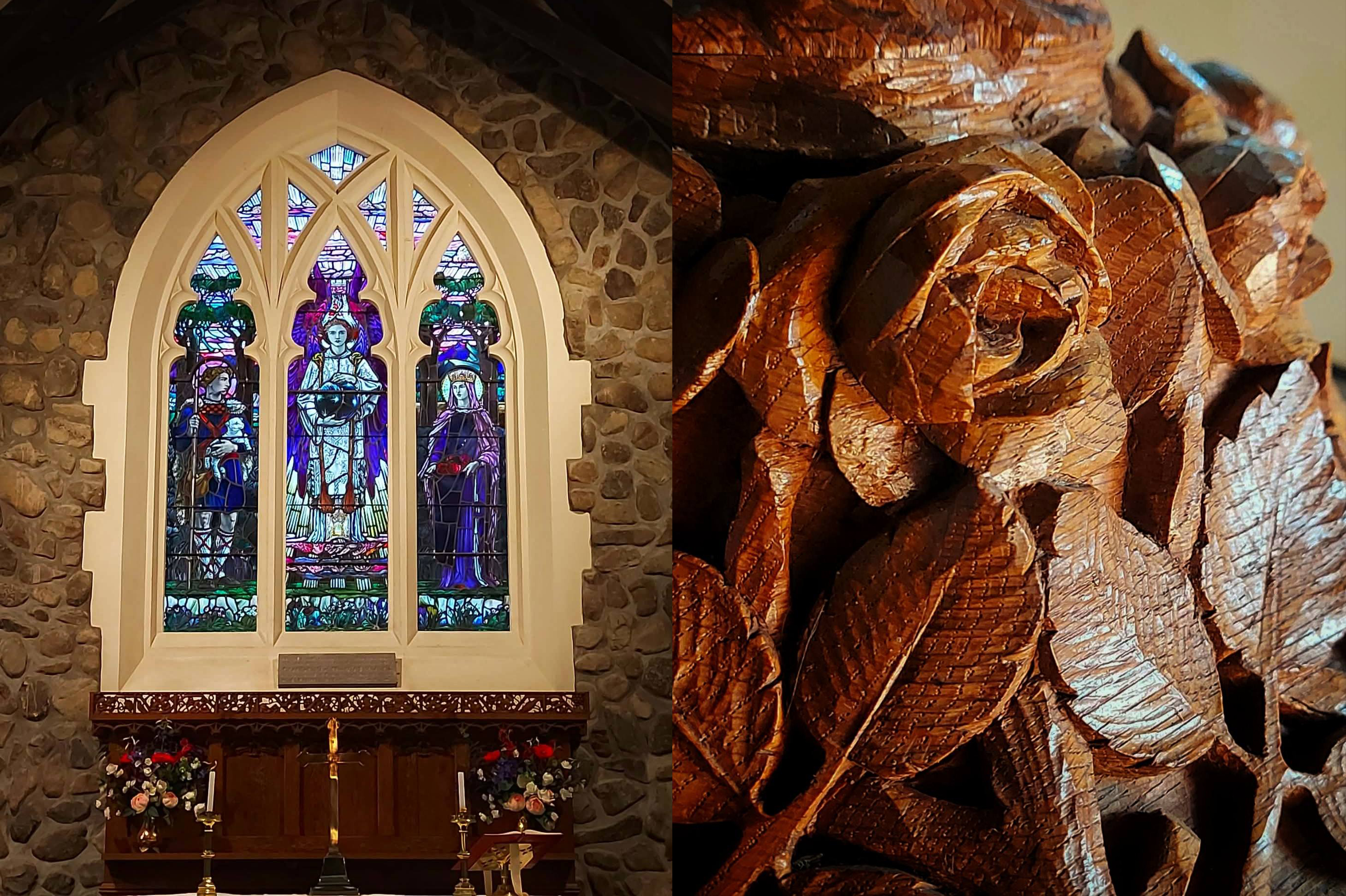
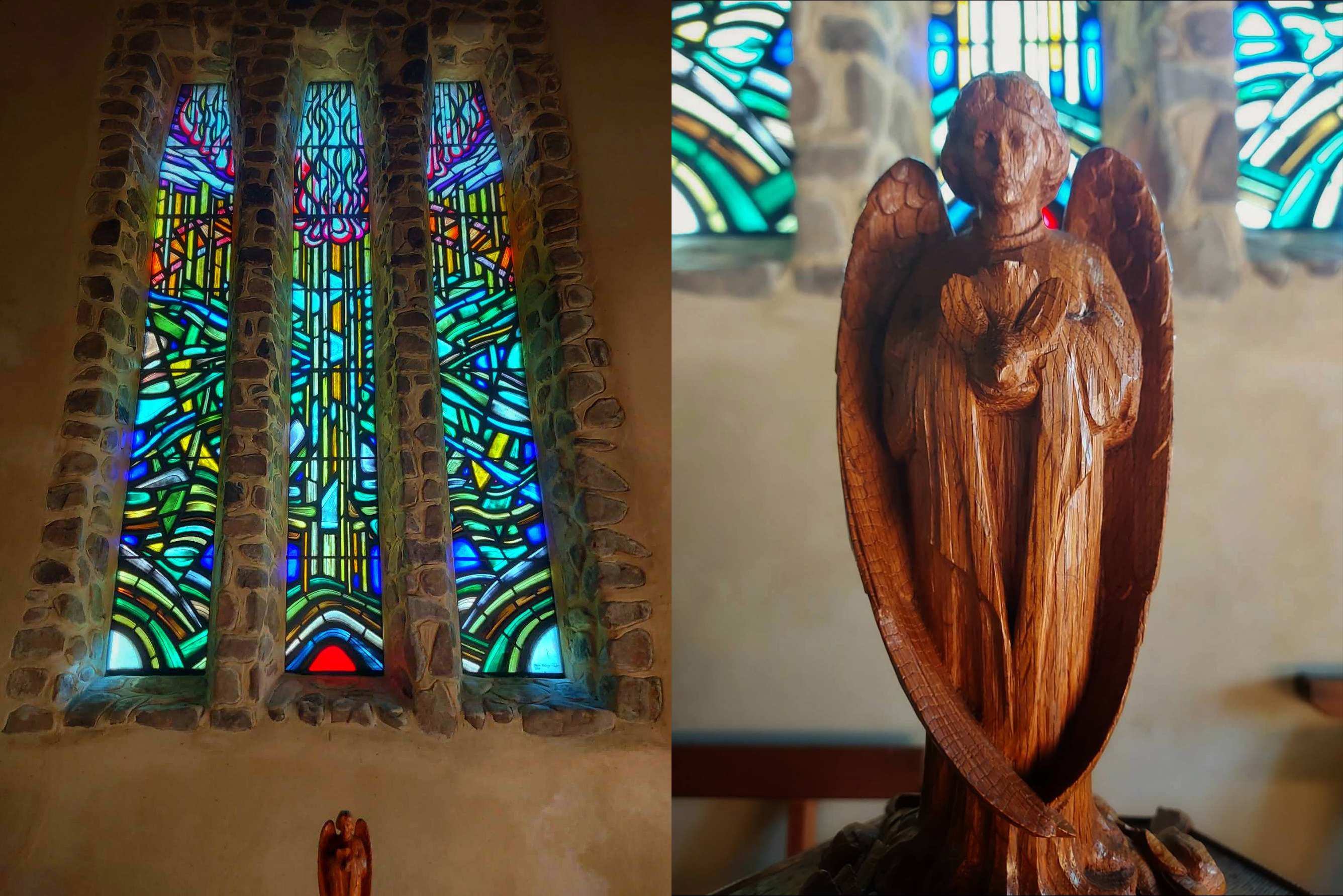
St Thomas’s also holds an exceptional collection of stained glass for a small rural church. Among them is a St Thomas window attributed to Joseph Nuttgens, installed in 1927 in memory of Frederick Flatman, and sanctuary lights by Veronica Whall, also installed in 1927. Additional windows by Whall and others, along with windows retained from the original church, add layers of colour and meaning to the interior.
Memorial plaques within the church commemorate members of the Tripp family and others connected to the district, including two sons of John and Mary Tripp who died during the Second World War. These reminders sit within the space, part of the church’s ongoing story rather than its focus.
Today, St Thomas’s remains an active church within the Geraldine Anglican parish. It continues to be used for services, weddings and funerals, carrying forward a tradition of worship and community that began nearly 150 years ago.
Sitting inside, even briefly, you feel that continuity. This is not a museum piece. It is a living place, shaped by generations, with care, and still offering a moment of calm to anyone who steps through its door. I’m glad we stopped. Glad we lingered. And glad those tūī were there to remind us that some places simply ask you to be curious, and even if you dont share the religion, you can still enjoy and learn from them.