
By Roselyn Fauth

Collage of portraits of the New Zealand House of Representatives, [1860–1869]. Copy photograph of a collage showing members of the New Zealand House of Representatives, photographed by an unknown photographer in the 1860s. Albumen print, 7 x 6 cm, mounted on cardboard. Mantell, Walter Baldock Durrant: Family photograph albums. Ref: PA1-o-328-48. Alexander Turnbull Library, Wellington, New Zealand. /records/22313978. Used under Alexander Turnbull Library terms: may be copied, shared, and posted online for non-commercial use with credit; commercial use requires permission. https://tiaki.natlib.govt.nz/#details=ecatalogue.531698
Most Timaru people know Stafford Street.
We walk it, drive it, shop along it, meet people there, remember the old stores, notice the empty windows, complain about the parking, admire a cornice if we are in the right mood, and still think of it as the spine of town.
But how often do we stop and ask: Stafford who? According to Timaru District Council heritage material, Stafford Street was known as the Great North Road until September 1889, when it was renamed in honour of Edward William Stafford, former Member of Parliament for Timaru and Premier of New Zealand. That sounds, at first, like a standard colonial street-name story. Important man. Public office. Name attached to map. End of matter. Except it is not the end of the matter at all... because Edward Stafford’s story opens a much larger and more interesting question. It is a question that still sits behind every school gate, every council table, every public meeting, every budget debate and every argument about what children should learn...
Is education a private privilege, or a public responsibility?
That is the real story hidden inside the name on the street sign. A street is never just a street
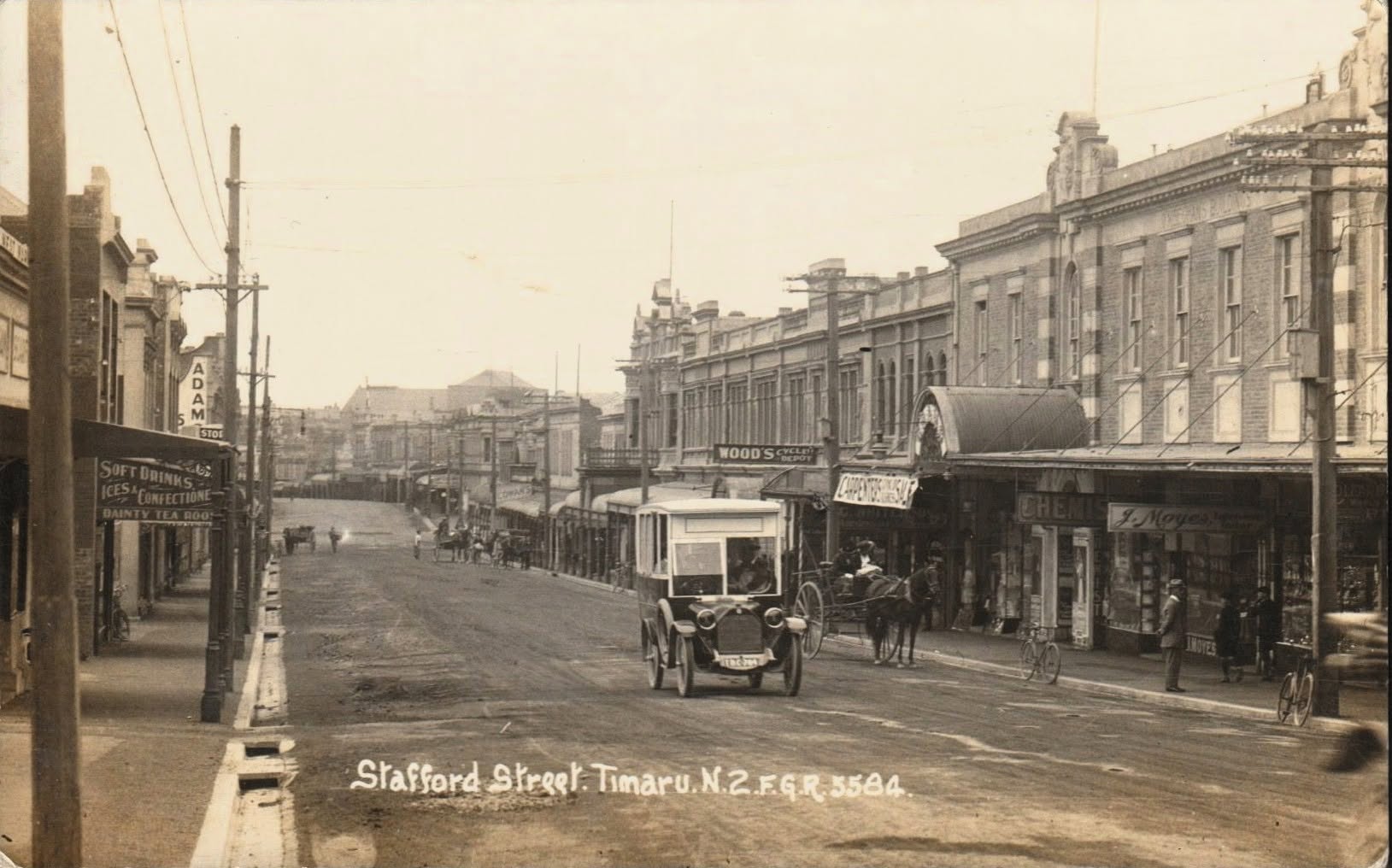
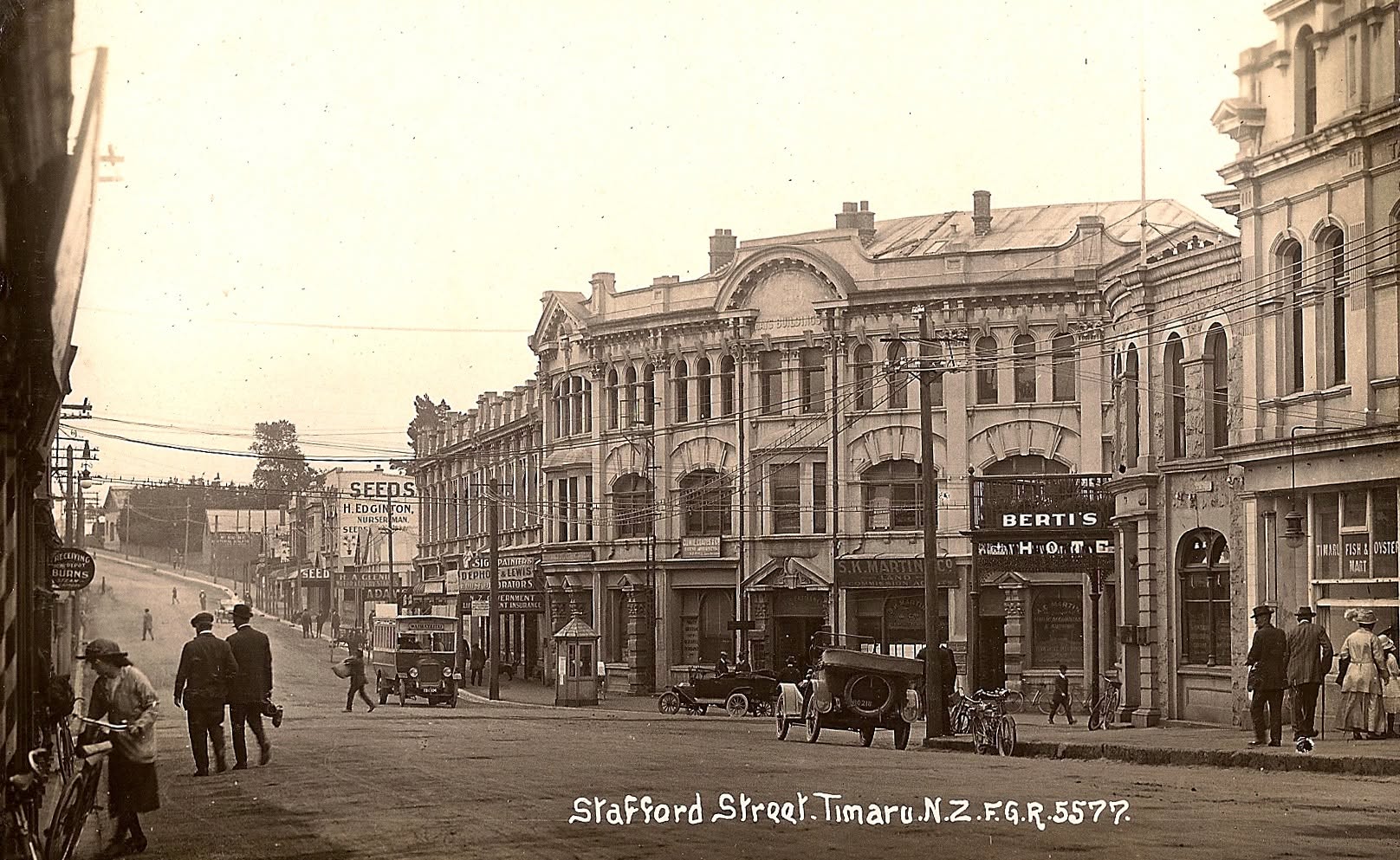
Stafford Street is not only a route through the middle of Timaru. It is one of the town’s most visible pieces of civic memory. Te Ara notes that at the turn of the twentieth century, Timaru’s wealth and progress were reflected in Stafford Street, where older wooden buildings were replaced by masonry structures, and that Stafford Street now has one of the best collections of late nineteenth and early twentieth-century buildings in the country.
The Timaru District Council heritage assessment describes the Stafford Street historic heritage area as having high overall historic heritage significance. It identifies historical, social, architectural, aesthetic, technological, craftsmanship, contextual, archaeological and scientific values. In less official language: this street is a layered record of what Timaru thought was worth building, keeping, improving and showing to the world.
And that is why Edward Stafford matters here. Not because every person with a street named after them deserves uncritical admiration. They do not. But because names can act like trapdoors. Lift one, and you find decisions, power, public money, local ambition, conflict, progress and silence underneath.
Stafford’s name takes us from Timaru’s main street to Nelson’s early education system, to Parliament, to Māori representation, to public works, to the first local government meetings held in hotels, and eventually back to a simple question: how do communities decide what kind of future they are building?
So, who was Edward Stafford?
Edward William Stafford was born in Edinburgh, Scotland, on 23 April 1819. The Dictionary of New Zealand Biography says he grew up in an Anglo-Irish gentry world and attended Trinity College, Dublin, where he became an ardent supporter of Chartist causes, including universal male suffrage, the secret ballot, annual parliaments and no property qualifications for MPs.
That matters, because Stafford arrived in New Zealand with a head already full of arguments about representation and political rights. He came to Nelson in 1843, became involved in settler politics, helped found Nelson’s Constitutional Association in 1848, and supported a memorial to the British government in December 1850 demanding immediate representative government with universal suffrage.
In 1853, he became Nelson’s first superintendent. In 1856, he became Premier of New Zealand. He later represented Timaru in Parliament after resigning his Nelson seat in 1868. Te Ara describes him as premier for a total of nine years and as a pragmatic, effective political manager with a strong constitutional vision.
But for Timaru, the important part is not just that Stafford held high office. It is that he sat at the intersection of two things that shaped everyday life: education and local government.
And both of those are still with us.
The education experiment
In 1853, as Nelson’s first superintendent, Stafford helped create a provincial education system that Te Ara describes as “free, secular and compulsory” and says later became a model for New Zealand.
That phrase sounds tidy. It is not.
“Free, secular and compulsory” is one of those historical phrases that behaves like a polished stone. Smooth on the outside. Much more complicated once you turn it over.
The key law was the Nelson Education Act of 1856, passed “to promote Education in the Province of Nelson”. The Act allowed the Superintendent to create educational districts, which meant schooling could be organised across the province rather than left only to churches, private schools or individual family arrangements.
Then came the money.
To fund district schools, the Act required every householder in the province to pay a yearly rate of £1, plus five shillings for every child aged between five and fourteen. No person had to pay for more than four children, and local committees could excuse people who were too poor to pay. The same clause stated that schools established under the Act were to be open to all children.
There is the civic puzzle in miniature.
The schools were “free” in the sense that they were publicly organised and open, but they were not costless. The community paid. The rates were collected. The money was accounted for. The public benefit was built out of private contribution.
That is not just a school story. That is how civic life works.
Roads, libraries, streetlights, drains, parks, museums, swimming pools, footpaths, archives and schools all ask a version of the same question: what should we pay for together?
Who got to decide?
The Nelson Act did not only raise money. It created a system of local education governance.
Each educational district elected a committee of nine householders. These committees supervised the working of schools, appointed teachers, and helped shape instruction and discipline, subject to wider control. A Central Board of Education was also created, made up of one person elected by each local committee and one person appointed by the Superintendent.
The Central Board could distribute education money, create new districts, supervise local committees, build and maintain schools, provide books and maps, build or repair teachers’ houses, pay teachers, and appoint teachers if a local committee failed to do so. It could also examine teaching candidates and grant certificates of competency.
So Stafford’s education system was not just about children learning lessons. It was about creating a public machine: districts, committees, boards, teachers, inspectors, accounts, reports, rates, exemptions and rules... it was education as infrastructure.
Just as roads needed surveying and bridges needed timber, public schooling needed law, money and administration. A classroom might look like a simple room with desks, but behind it sits an entire civic system. Secular, but not simple
The Nelson system was also described as secular. That did not mean religion vanished from schools. The Act allowed religious instruction, but stated that it had to be free from controversial character and given at times when parents who objected could withdraw their children.
The Education Gazette notes that Nelson was the first province to initiate free public education and that the 1856 Act was modelled on Matthew Campbell’s school system. It also gives a useful explanation of the secular principle: if every settler was to be called on to pay for education, whatever their religious opinions, then the system needed to rest on a secular basis.
This is an interesting piece of civic logic... If everyone pays, the system cannot belong to only one group.
We still wrestle with versions of that today. What should be public? What should be private? What values should a school hold? How does a community include families with different beliefs, cultures and histories? Who decides what is fair?
The nineteenth-century answer was imperfect, and it sat inside a colonial society with many exclusions. But the question itself has not gone away.
A warning label on the word “all” The Nelson Education Act said schools maintained by rates were to be open to all children. That phrase is important, but it needs careful handling.
“All children” sounds wonderfully inclusive. But who actually attended? How far did children have to travel? What did girls experience? What happened for Māori children? What about families who needed children at home for work? What did “open” mean in practice, rather than on paper?
The Act also stated that nothing in it made any “aboriginal native” liable to pay the education rate. That small clause opens a larger set of questions about Māori communities, colonial taxation, public schooling, Te Tiriti, and who was being imagined as part of this provincial education system.
The later national Education Act 1877 established free, compulsory and secular education for Pākehā children. NZ History notes that the 1877 Act did not apply to Māori children, although they could attend free schools if their parents wished, and that primary education became compulsory for Māori in 1894.
That matters when we tell the story today. Public education expanded opportunity, but it did not do so evenly. Access is not only about opening a door. It is also about who knows the door is there, who feels welcome walking through it, who can afford the shoes, who controls the timetable, who writes the rules and whose language and history are respected once they enter.
Where are the women?
Stafford’s public record is full of men: governors, premiers, superintendents, councillors, ministers, committee members and political rivals.
But women were there, even when the records make them faint.
Stafford married Emily Charlotte Wakefield in Wellington on 24 September 1846. She was the daughter of William Wakefield, a major New Zealand Company figure. Te Ara records that Emily died in 1857 aged 29 and that there were no children from the marriage. Stafford then married Mary Bartley in Auckland on 5 December 1859, and he and Mary had three daughters and three sons.
Emily and Mary are easy to reduce to family details. Wife one. Wife two. No children. Six children. Dates and names.
But that is exactly where we need to pause... as women in political households often lived close to power without holding formal power themselves. They managed homes, relationships, correspondence, social obligations, relocations, reputations and family networks. They appear in the margins of public records, not because they were unimportant, but because the official record was not built to centre them.
For a girls’ school audience, and for anyone interested in civic life, this matters. If we only read the minutes, Acts and parliamentary biographies, we risk mistaking visibility for importance. We see the people allowed to speak in the room. We miss the people who made the room function.
And we certainly miss the schoolgirls. The Nelson Act may say “all children”, but the lived experience of girls in early provincial schools still needs careful source work. Were girls taught the same subjects? Did they attend as regularly as boys? How did family expectations shape their schooling? When did secondary education become realistic for girls in places like Timaru? Those questions move us from law into lived life.
That is where local archives become powerful.
Te Ara says Stafford believed Māori should be involved in parliamentary politics because Māori, like settlers, paid customs duties and, in towns, rates. It also says he opposed Māori being forced to sell land, although he wanted more land to encourage immigration.
In 1867, four Māori electorates were established on Stafford’s initiative, although Donald McLean formally moved for their introduction. Stafford had suggested there should be seven.
That is significant. Representation is one of the key questions of civic life: who gets a voice in decisions that affect them?
But this cannot be told as a simple tale of enlightenment. Stafford’s career took place inside the colonial government during years of war, land conflict and confiscation. He criticised the New Zealand Settlements Act of 1863, which confiscated Māori land, calling it an “enormous crime”, and described 1863 as the year New Zealand “went mad”.
H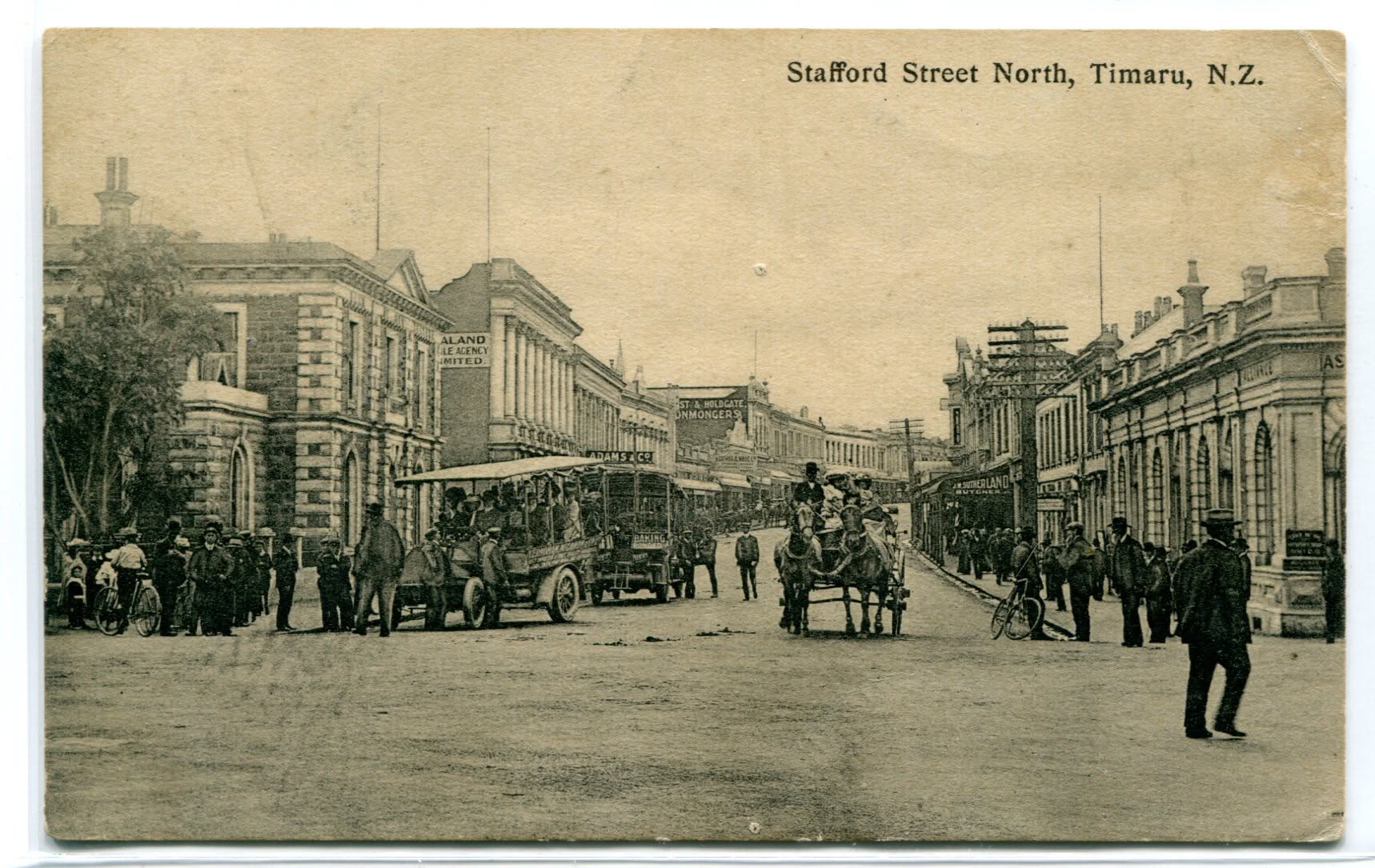 ere is the uncomfortable part: a person can hold views that look progressive in one direction and still be embedded in a system that causes harm in another. That is why Stafford is useful for learning. Not because he gives us an easy moral. Because he does not.
He makes us ask better questions.
What did representation mean when power was still unequal? What does it mean to oppose forced sale while still wanting more land for immigration? How do we judge a political figure whose ideas shifted, clashed and compromised inside a colonial system?
Those are not just history questions. They are citizenship questions.
Meanwhile, Timaru was learning to govern itself
Stafford Street North Timaru South Canterbury New Zealand 1910s postcard
Now return to Timaru.
In November 1865, before Stafford became MP for Timaru, the newly formed Timaru Municipal Council held its first meeting at the Royal Hotel. The meeting took place on 20 November at seven o’clock in the evening. The councillors chose Mr Hewlings as chairman, appointed a temporary clerk, discussed legal support, opened a bank account, arranged who could sign cheques, accepted the assets and liabilities of the Road Board, and began creating the machinery of local government.
This is wonderfully ordinary history.
There is no grand statue moment here. Just people working out how to govern a town. Who chairs the meeting? Who keeps the books? Who has authority to sign cheques? How much will the solicitor cost? What powers does the council have? Who is responsible for Strathallan Street?
That is civic life in its raw form: rules, money, trust, argument and procedure.
The former Royal Hotel still matters as built heritage because it connects Timaru’s early commercial, social and civic life. Timaru District Council’s heritage record describes the former Royal Hotel as the oldest hotel in Timaru, associated with the commercial development of the town centre since 1859, altered and added to in 1862, 1872 and 1890, and later converted to office space after hotel use ended in 2010.
So yes, hotels served drinks and beds. But in early Timaru they also served politics.
Before purpose-built civic chambers, the town’s decision-making happened where the town already gathered.
The Board of Works: Timaru’s public-work engine
Stafford’s more direct built-heritage link with Timaru comes through the Timaru and Gladstone Board of Works.
In the 1867 session, according to Te Ara, Julius Vogel’s provincialists defeated Stafford’s Local Government Bill. Stafford then used particular Acts to make Westland an independent county and to give Timaru a Board of Works.
The Timaru and Gladstone Board of Works Act 1867 created a body for the district at a time when South Canterbury was pushing for more local control. Timaru District Council’s heritage assessment for the former Timaru and Gladstone Board of Works Building says the board first met in December 1867 and had power to spend revenue from land sales and other sources on public works including roads, bridges and the harbour.
That is the missing bridge between national politics and everyday town life.
A law passed in Wellington could affect whether roads were built, bridges maintained and harbour works advanced in South Canterbury. These were not abstract matters. Roads determined whether people, goods, letters, doctors, teachers, livestock and schoolchildren could move. Harbours shaped trade. Bridges connected communities. Public works were not decoration. They were the skeleton of civic life.
The former Timaru and Gladstone Board of Works Building at 95 Stafford Street makes that history tangible. The building was erected in 1874 to the design of the board engineer, Thomas Roberts, and the heritage assessment says it has high historical significance for its association with the semi-autonomous board that undertook public works in Timaru and the wider district between 1867 and 1876.
This is where built heritage becomes more than a pretty façade. The building is evidence. It tells us that Timaru wanted more control over its own infrastructure. It tells us that South Canterbury was developing a stronger regional identity. It tells us that public money needed offices, records, staff, meetings and accountability.
A Board of Works building may not sound romantic, but it is one of the places where a community learned to turn complaints into policy.
The later municipal buildings: the city learns to present itself
Stafford did not build Timaru’s later municipal buildings, but they belong in this story because they show what local government became after the hotel meetings and the Board of Works years.
Heritage New Zealand’s report on the Timaru Council Offices and Former Public Library façade says the building was constructed in stages between 1908 and 1933. The public library was completed in 1908 and opened in 1909, helped by Mayor James Craigie securing Andrew Carnegie funding, while the municipal buildings were built in 1911 to 1912.
By then, local government was no longer borrowing rooms in hotels. It had a public face: stone steps, clocktower, library, council offices, chambers, and a building that announced civic confidence.
The same Heritage New Zealand report describes the building as the front-facing presence of the council, with the clocktower as a centre point of civic life, and notes that territorial local authorities became established decision-makers for a wide range of regulatory and social functions.
And here, quietly, another woman steps into the story.
The report identifies Everlyn Culverwell as New Zealand’s first female chief librarian, noting that she was at the helm of the library for 23 years from 1913 and was highly regarded in the community and national library circles.
That is not a side note. It is a reminder that civic life is not only councils and Acts. It is also libraries, knowledge, access, reading, women’s professional leadership, and the slow widening of who gets to shape public institutions.
A public library beside municipal offices is a perfect symbol for this whole story. Government and knowledge, side by side.
Why does this matter now? Because democracy is not only what happens on election day.
It happens when a town names a street. When a council opens a bank account. When someone asks who may sign a cheque. When a law decides who pays for schooling. When parents ask what is being taught. When Māori representation is debated. When girls’ education moves from possibility to expectation. When a library opens its doors. When a Board of Works turns land revenue into roads, bridges and harbour works. When a building is kept because a community decides its memory matters.
The current New Zealand Social Sciences curriculum says students explore how societies work and how people can participate and take action as critical, informed and responsible citizens. Aotearoa New Zealand’s histories asks young people to understand how our histories have shaped present-day lives.
But adults need this too as we all inherit systems we did not build: schools, roads, councils, rates, laws, libraries, archives, street names, land arrangements, public expectations. Knowing where those systems came from helps us use them more wisely.
The Stafford story reminds us that public education was not inevitable. Local self-government was not inevitable. Māori representation was not inevitable. Girls’ education was not inevitable. Libraries, public works, town planning and civic accountability were not inevitable.
People argued them into being... people also left gaps.
That is why we should not read Stafford Street as a frozen tribute. We can read it as a question.
Who had access? Who paid? Who decided? Who was represented? Who was missing? What did public responsibility look like then? What should it look like now?
A useful way to walk Stafford Street
Next time you walk down Stafford Street, try seeing it as a timeline.
Start with the street name itself: Edward Stafford, former Timaru MP and Premier.
Look for the commercial buildings that show Timaru’s confidence at the turn of the twentieth century.
Remember the Royal Hotel, where early local government met before the town had proper municipal chambers.
Think of the former Timaru and Gladstone Board of Works Building at 95 Stafford Street, where public works became administration, and administration became stone.
Then look beyond the street to the schools, libraries, roads, harbour, churches, homes, archives and civic buildings that make a town more than a cluster of private properties.
A community is not built by one person. It is built by many decisions, made over time, by people with different levels of power, voice and visibility.
Edward Stafford gives us one way into that story. Not because he explains everything, but because his life connects so many of the questions that still matter: education, representation, public money, local control, infrastructure, land, law, women’s hidden labour, and the long argument over who gets a voice.
So the next time someone says “Stafford Street”, maybe the answer to “Stafford who?” is not just a name.
It is a civic lesson hiding in plain sight.
Questions this story leaves us with
- Who should pay for public education, and who should benefit?
- When a school or council says something is “for everyone”, how do we test whether that is true in practice?
- Who had formal power in early Timaru, and who influenced decisions without appearing clearly in the records?
- What do Stafford Street, the Royal Hotel, the former Board of Works Building and the municipal buildings tell us about how a town learns to govern itself?
- How do we remember public figures without turning them into heroes or villains too quickly?
- What choices are we making now that future Timaru people will read in our streets, buildings and archives?
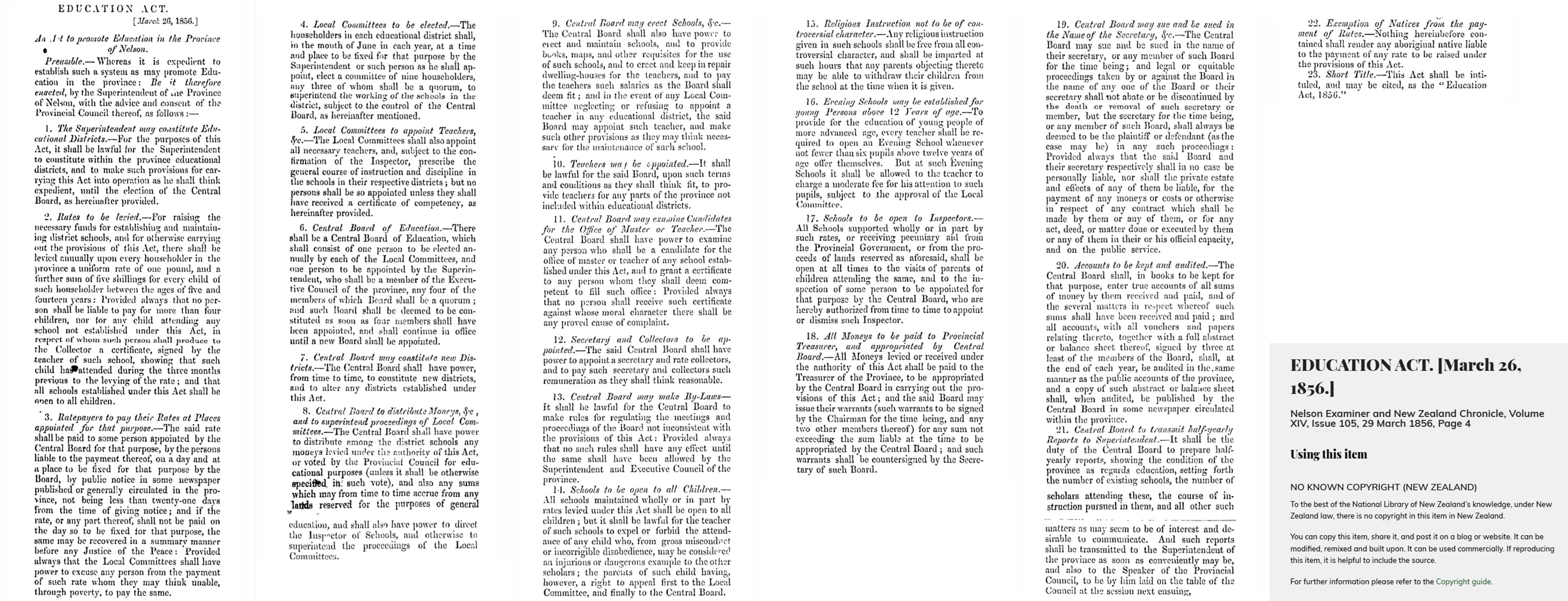
Education Act, 1856. Printed text of the Education Act “to promote Education in the Province of Nelson”, passed on 26 March 1856 and published in the Nelson Examiner and New Zealand Chronicle, Volume XIV, Issue 105, 29 March 1856, page 4. National Library of New Zealand. No known copyright in New Zealand. This item may be copied, shared, posted online, modified, or used commercially. If reproducing it, include the source. This 1856 Act was created by the Superintendent and Provincial Council of Nelson to establish and support a public education system in the province. It set out how educational districts, local committees, teachers, inspectors, the Central Board of Education, school funding, rates, and reporting would operate. The Act was passed on 26 March 1856 and was published a few days later, on 29 March 1856. Its purpose was to make schooling more organised and widely available by raising local education rates, appointing teachers, opening schools to children, and placing oversight in the hands of local committees and a Central Board. https://paperspast.natlib.govt.nz/newspapers/nelson-examiner-and-new-zealand-chronicle/1856/03/29/4
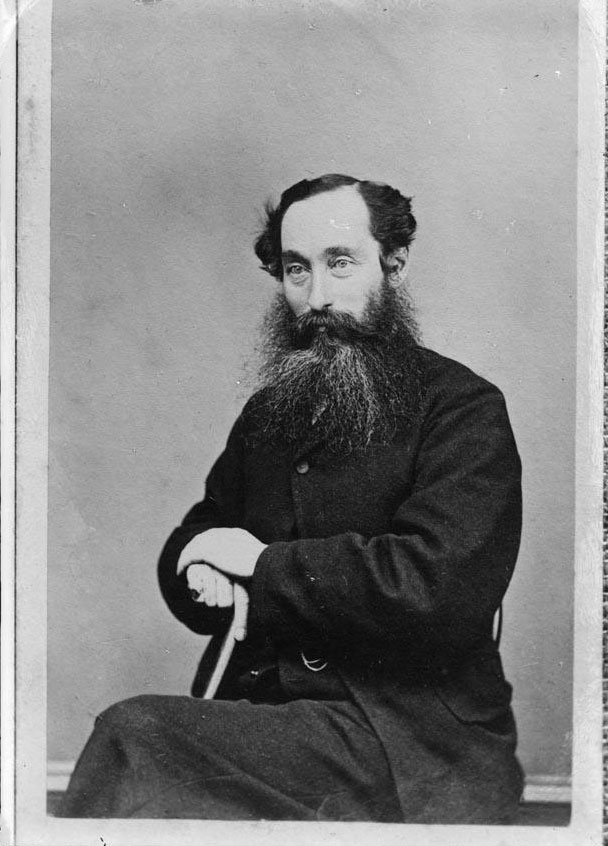
Sir Edward Stafford, seated portrait. Glass plate negative from the Tyree Studio Collection. Nelson Provincial Museum, Tyree Studio Collection: 69332. https://collection.nelsonmuseum.co.nz/objects/79444/stafford-sir-edward
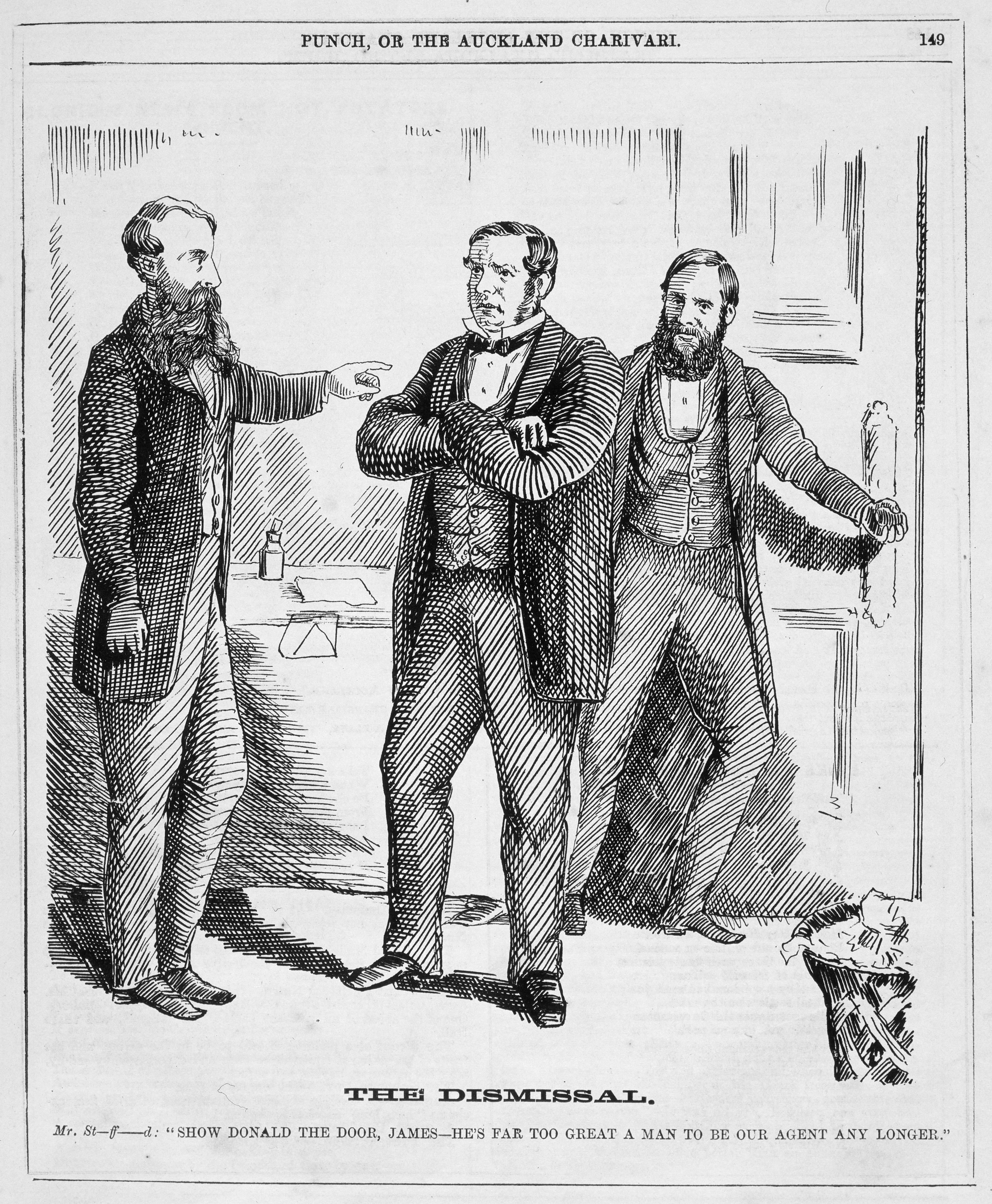
The Dismissal, 1869. Political cartoon by an unidentified cartoonist, published in Punch, or the Auckland Charivari, [3] April 1869. The cartoon shows Edward Stafford asking James to “show Donald the door”. Credit / copyright: Auckland punch (Periodical). Unidentified cartoonist: The dismissal. Punch, or the Auckland Charivari, [3] April 1869. Ref: H-686-012. Alexander Turnbull Library, Wellington, New Zealand. /records/22881093. Used under Alexander Turnbull Library terms: may be copied, shared, and posted online for non-commercial use with credit; commercial use requires permission. https://natlib.govt.nz/records/22881093

TIMARU MUNICIPAL COUNCIL Timaru Herald Volume II Issue 80 25 November 1865 Page 3
This first meeting of the Timaru Municipal Council shows a town learning how to govern itself.
The first meeting took place on 20 November 1865 at seven o’clock in the evening. At that time, Timaru did not yet have dedicated municipal chambers, so important civic meetings were often held in hotels, which acted as social, political and business centres for the growing settlement.
The Royal Hotel where the first Timaru Municipal Council met in November 1865 was located on the site of the present-day Royal Hotel at 30 Cains Terrace, Timaru. The building standing today is later than the original 1859 structure, as the hotel was altered and rebuilt over time, but it occupies the same historic site associated with Timaru’s earliest civic and commercial life.
The new councillors had to turn a recently formed municipal body into a working institution. They confirmed members, chose Mr Hewlings as chairman, appointed a temporary clerk, discussed legal support, opened a bank account, arranged who could sign cheques, and began drafting an ordinance to give the council proper powers.
The Council agreed to take over the assets and liabilities of the Road Board, including responsibility for repairs to Strathallan Street, marking a shift from managing roads and basic infrastructure to broader civic responsibility.
Money was a central concern. Councillors asked what legal work would cost, whether the solicitor would be paid or honorary, how council funds would be handled, and what support might come from the Provincial Government. Even at this first meeting, there was an expectation that public money should be questioned, recorded, authorised, and protected.
The Council also looked beyond immediate bookkeeping and wanted confirmation of its property, access to reserves, a grant for the coming year, and clarity over the landing service. This shows how was Timaru becoming more than a settlement with needs and was a growing town with public assets, shared responsibilities, and growing expectations of local control.
This article captures civic life at the moment of formation in the era where Stafford would be prominant in politics. The meeting shows that local government is built through procedure, trust, debate, and responsibility, one decision at a time.
Timaru's Hundred Years of Self Government - Creation of Municipality Ended Town's Long Struggle for Control Key Milestones
- 1864: The Timaru Herald began publication and quickly advocated for local self-government, arguing that Timaru had the burdens of a town without the benefits. A public meeting was held on 30 June to discuss forming a municipal council, and a committee was appointed to pursue municipal control.
- 1864 to early 1865: The campaign stalled at times. The Herald criticised delays, questioned what had happened to the committee, compared Timaru’s position with Kaiapoi, and kept pressure on residents and officials to act.
- March to May 1865: A petition had gone forward, but government action was slow. On 20 May, the Herald announced that the Government had agreed to constitute Timaru as a municipality.
- June to July 1865: A public meeting was held on 20 June to elect council members, but it became stormy and inconclusive. On 1 July, the Herald again criticised the lack of organised public action and warned that Timaru risked losing its chance for independence from provincial control.
- October 1865: Nine candidates were nominated for the nine seats on the Timaru Municipal Council. Polling was held at the Courthouse on 26 October, and the first councillors were elected: H. J. Le Cren, G. Healey, R. Turnbull, J. Inglis, F. W. Stubbs, S. Hewlings, J. Ellis, F. Le Cren and Dr McLean.
- November 1865: The inaugural meeting of the Timaru Municipal Council was held at the Royal Hotel on 20 November. Mr Hewlings was elected chairman, Mr F. Le Cren became temporary clerk, the council accepted the assets and liabilities of the Roads Board, and it began setting up the practical machinery of local government.
- 24 November 1865: The council was due to receive the draft ordinance from its solicitor, giving it a legal framework for its future powers.
- 1965: Timaru marked 100 years of self-government, tracing its municipal beginnings to the creation of the Timaru Municipal Council in 1865.
Timaru's Hundred Years of Self Government - Creation of Municipality Ended Town's Long Struggle for Control (27 Nov 1965). Aoraki Heritage Collection, https://aorakiheritage.recollect.co.nz/nodes/view/7224
Timaru’s first Municipal Council was mainly concerned with roads, reserves, money and local authority. These early civic decisions helped to create the conditions for schools and education to grow.
By taking responsibility for roads, reserves, money, legal powers and public works, Timaru’s first Municipal Council helped create the organised civic environment in which schools could operate. Roads made it easier for children to get to school. Public reserves and land decisions shaped where community buildings and institutions could develop. Financial systems, such as bank accounts, treasurers and authorised payments, showed that the town was learning how to manage public money responsibly.
Most importantly, self-government strengthened Timaru’s local voice. The same community that argued it should manage its own streets, harbour, reserves and finances could also argue for better educational facilities. Schools became part of the town’s wider growth, identity and ambition.
So, while the first council did not directly run education, it helped build the civic foundations that made education possible: access, organisation, local advocacy, public accountability and belief in the future of the community.
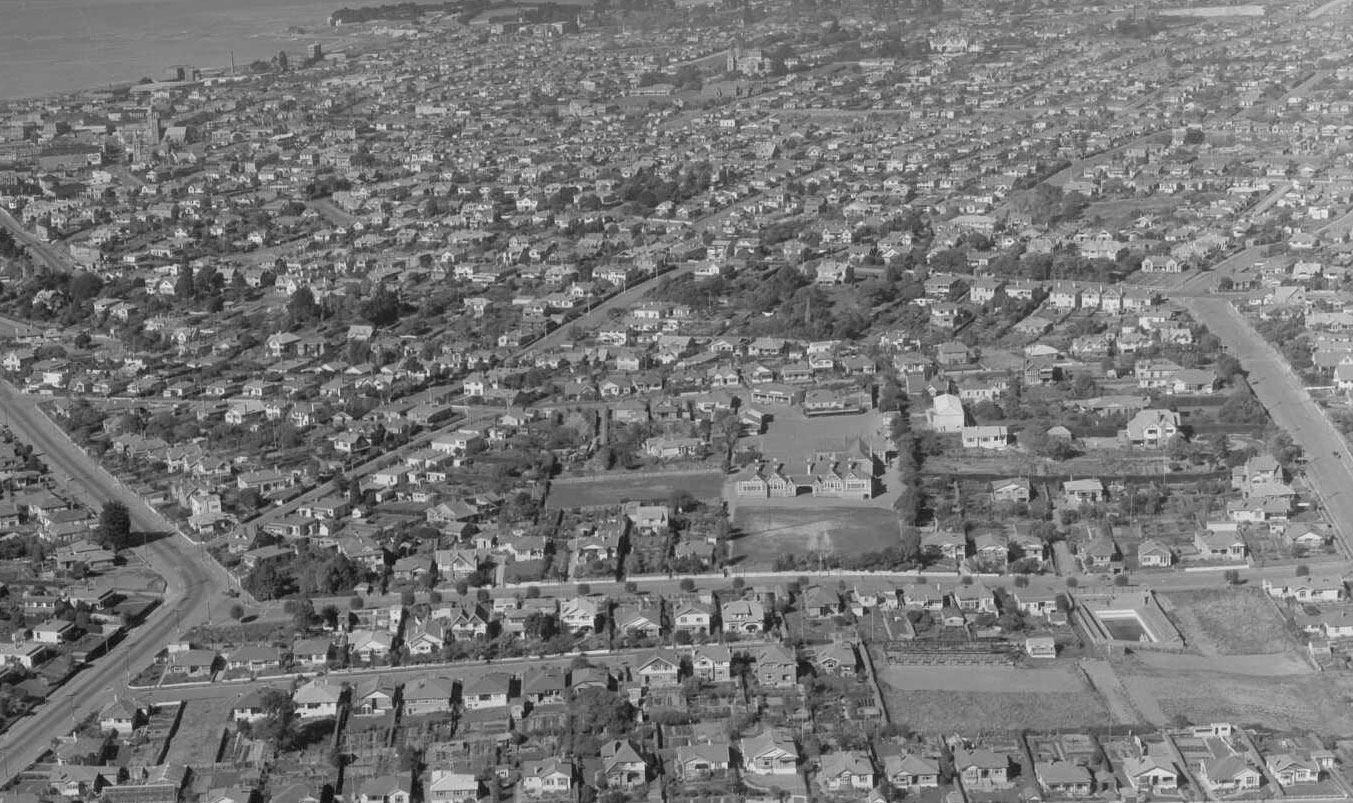
1947. Looking south to Waimataitai School and the Aigantighe Art Gallery - View to the town of Timaru with Evans Street in foreground looking south to Caroline Bay and the Timaru CBD, South Canterbury Region. Aerial photograph taken by Whites Aviation. National Library 720136
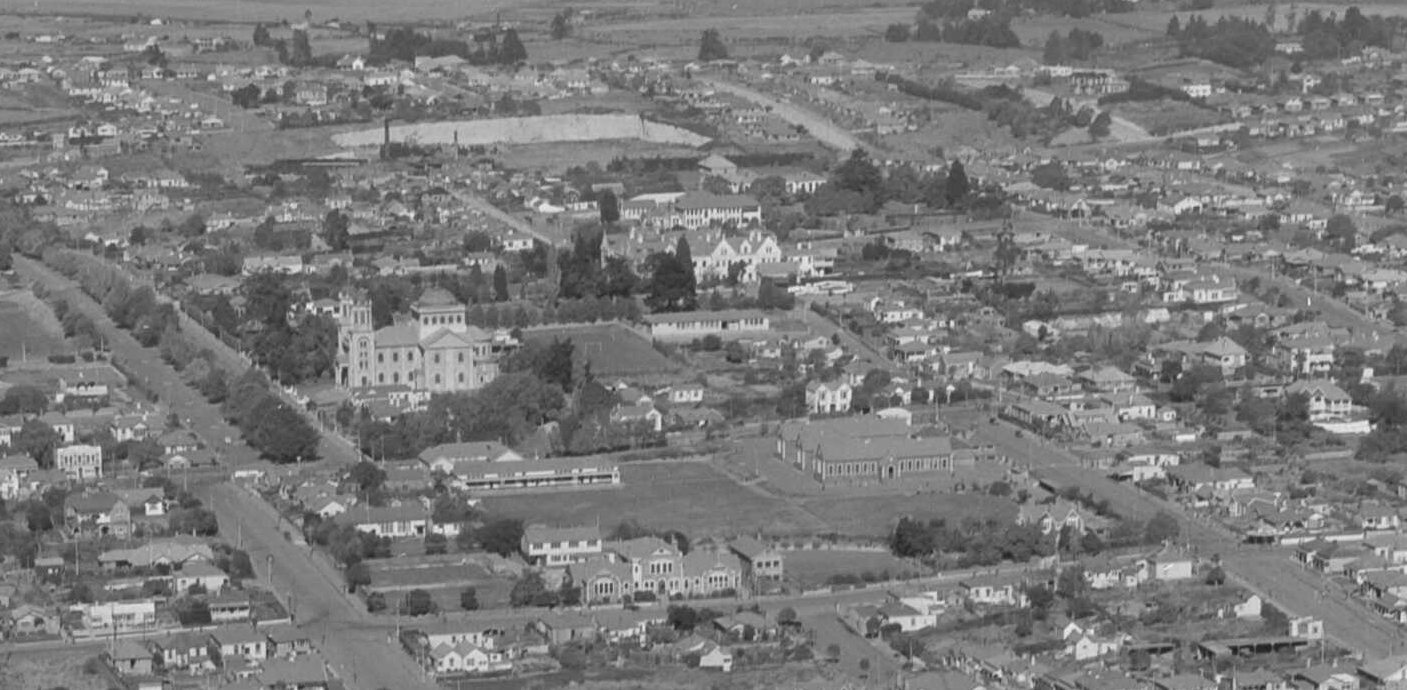
1947. Looking south to Roncalli and Timaru Girls High School - View to the south Canterbury town of Timaru with Caroline Bay in foreground, looking south to the Sacred Heart Basilica Catholic Church. Aerial photograph taken by Whites Aviation. National Library 720134
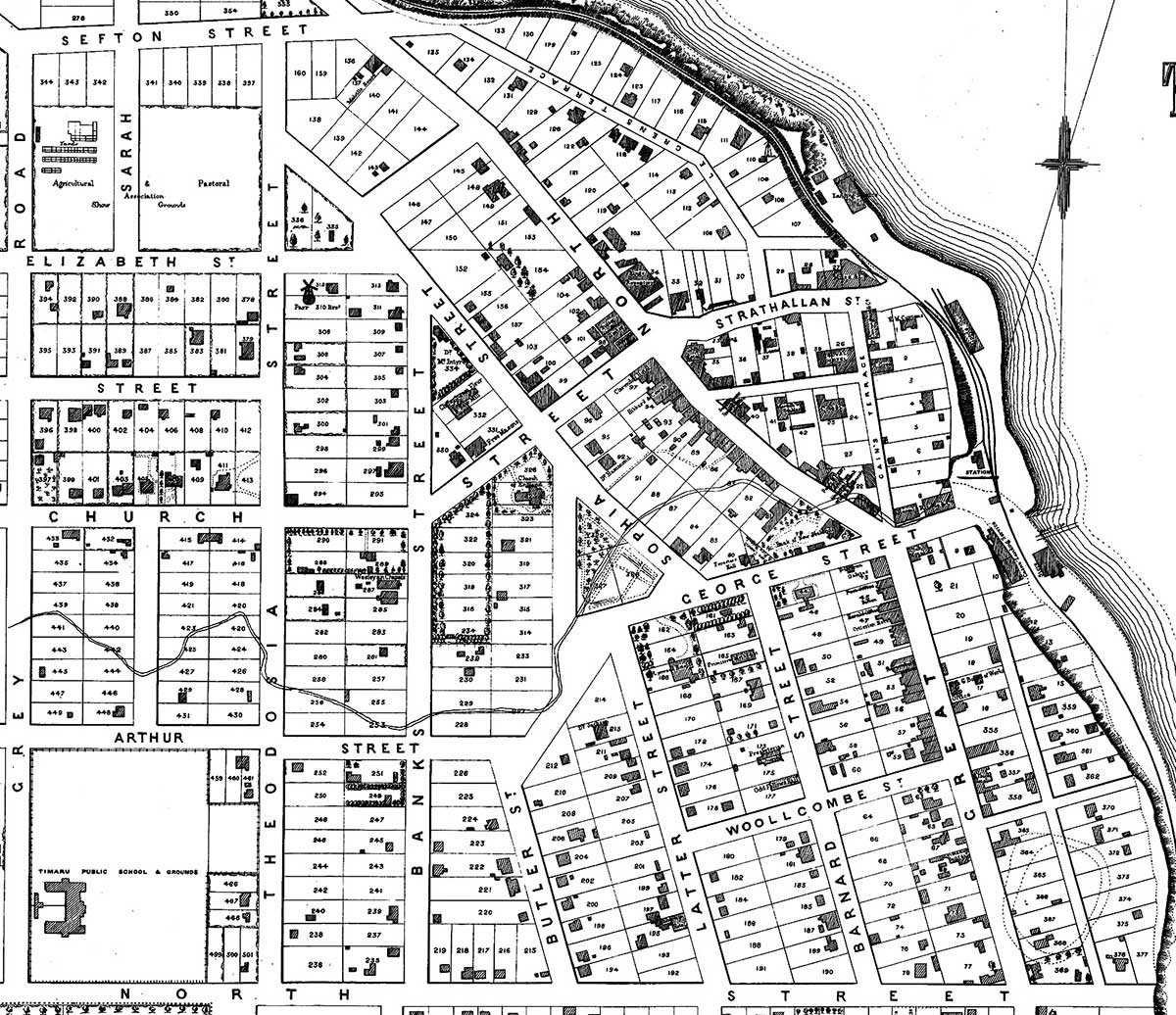
Plan of Timaru Townships, Canterbury, N.Z., 1875. Scale 3 chains to an inch. Lithographed at the Lyttelton Times Office, Christchurch, N.Z. - Courtesy of the Timaru District Council
An original dirt bullock trail was referred to as the Great North Road. In 1889 at a Council meeting it was proposed and carried "that the Main road from Whale's Creek to its junction with King Street be named Stafford Street." Named after Sir Edward Stafford, formerly M.H.R., for Timaru (he was also Nelsons first super intendant). His free, secular and compulsory education system became the model for New Zealand. At the 1855 election he became a member of the House of Representatives for Nelson, a seat he held until 1868 when, after local disputes, he resigned and became member for Timaru. Learn more here

Timaru town. NZ Heritage Maps Platform, https://maps.recollect.co.nz/nodes/view/1138
Roll of members of the New Zealand House of Representatives, 1854 onwards with Timaru connection
Prior to self-government there were two “unofficial ministries” led by James FitzGerald (14 June – 2 August 1854) and Thomas Forsaith (31 August – 2 September 1854). They were neither Premiers nor Colonial Secretaries.
Francis Jollie 1815-1870. Timaru 1861-1866. Gladstone 1866-1870. Retired.
Alfred Cox 1825-1911 Heathcote 1863-1866. Timaru 1866-1868. Waipa 1876-1878 Resigned.
Edward William Stafford (1819-1901) was Prime Minister 16 October 1865 – 28 June 1869. Town of Nelson 1855-1860. City of Nelson 1860-1868 Resigned. Timaru 1868-1878 Resigned.
Richard Turnbull 1826-1890. Timaru 1878-1890 Died
William Hall-Jones 1851-1936. Timaru 1890-1908 Retired. Liberal
James Gragie 1851-1935. Timaru 1908-1922. Retired. Liberal
Francis Joseph Rolleston 1873-1946. Timaru 1922-1928 Defeated R.
Clyde Leonard Carr 1886-1962. Timaru 1928-1962 Resigned. Labour.
Sir Basil Malcolm Arthur 1928-1985. Timaru 1962-1985, died. Labour.
Maurice Patrick McTigue 1940- Timaru 1985-1993. Defeated National.
James Robert Sutton 1941- (CNZM 2007). Represented Waitaki 1984-1990 Defeated. Timaru 1993-1996. Aoraki 1996-2005 and a List 2005-2006 Resigned.
- Sources: New Zealand Parliamentary Record, Newspapers, Political Party websites, New Zealand Gazette, New Zealand Parliamentary Debates (Hansard), Political Party Press Releases, Appendix to the Journal of the House of Representatives, E.9.
Edward William Stafford: shortened chronological timeline
23 April 1819: Edward William Stafford was born in Edinburgh, Scotland, the eldest son of Berkeley Buckingham Smith Stafford and Anne Tytler.
Early life and education: Stafford grew up in an Anglo-Irish gentry family linked to the Dukes of Buckingham and, through his mother, to the Edinburgh Tytlers, a family known for lawyers, judges and constitutional historians. He attended Trinity College, Dublin, where he became an ardent supporter of Chartist causes including universal male suffrage, the secret ballot, annual parliaments and no property qualifications for MPs.
1841 to 1842: Stafford travelled in Australia.
12 January 1843: At David Monro’s suggestion, Stafford arrived in Nelson, New Zealand.
1843: Stafford joined his Tytler cousins at Aldourie, which he managed, established his own property at Upton Downs, explored an inland route to the Wairau, imported sheep and horses from Australia, agitated for sheep pasturing licences on unused New Zealand Company settler lands, and in September moved Nelson’s vote of no confidence in Governor Robert FitzRoy’s actions after the Wairau affray.
1845 to 1846: During the war in the north, Stafford joined the Nelson Volunteers.
24 September 1846: Stafford married Emily Charlotte Wakefield, daughter of William Wakefield, in Wellington.
1848: Stafford helped found Nelson’s Constitutional Association to work for responsible government.
December 1850: Stafford’s memorial to the British government demanded immediate representative government with universal suffrage.
1853: Stafford became Nelson’s first superintendent, opened the provincial council on 3 November wearing a cocked hat, and began reforms including free, secular and compulsory education, roads legislation, steamer services, and a public works programme funded by customs duties and a land tax rather than loans.
1854: Stafford did not join the first General Assembly because he considered it inappropriate to hold both provincial and colonial office, although Henry Sewell and Isaac Featherston tried to persuade him to enter Parliament.
1856: Stafford was elected to the House of Representatives for Nelson, refused to form the first responsible ministry at the start of the session, then became premier on 2 June after the brief ministries of Henry Sewell and William Fox. That year the Compact defined financial relations between central and provincial governments, settled the New Zealand Company debt issue, and 36 acts were passed.
1856 onwards: Ministers began meeting privately as a working cabinet, while Stafford increased the number of portfolios and strengthened ministerial representation in the House.
1856 to 1868: Stafford held the Nelson seat in the House of Representatives.
1857: Emily Stafford died aged 29.
1858: Stafford’s government passed a further 86 acts, including the New Provinces Act, which allowed outlying districts to become independent provinces.
1858 to 1859: Stafford travelled in Europe and Britain, developed railway plans after seeing overseas railway and telegraph systems, tried unsuccessfully to negotiate a Panama mail service, had little success with military settlement plans, prevented the New Provinces Act from being disallowed, and arranged for John Morrison to become New Zealand’s first London agent.
1859: Stafford warned colleagues to be cautious over Taranaki land disputes, opposed forcing Māori to sell land, believed Māori should be involved in parliamentary politics because they paid customs duties and, in towns, rates, and on 5 December married Mary Bartley in Auckland.
1859 onwards: Edward and Mary Stafford had three daughters and three sons.
Around 1860: While returning to New Zealand, Stafford learned of the Waitara purchase and was appalled by it on economic and moral grounds. He offered his resignation but eventually stayed loyal to his colleagues and to ministerial responsibility.
By July 1861: Economic recession, war mismanagement and provincial resentment weakened Stafford’s ministry.
12 July 1861: Stafford’s first ministry ended after being defeated by 24 votes to 23.
After July 1861: Stafford won the Canterbury Cup, the Queen’s Plate and the Forced Handicap riding his brother Hugh’s horse Ultima.
July 1861 to October 1865: Stafford remained out of office while a new ministry came into office each year. He was offered a place in each ministry but declined.
1861 to 1865: Stafford built up his business and farming interests, imported deer, birds, horses and sheep, and continued to race horses successfully.
1862: Stafford declined office in Alfred Domett’s ministry because he disliked Governor George Grey’s Māori policies and considered Domett politically weak.
1863: Stafford condemned Whitaker and Fox’s New Zealand Settlements Act as an “enormous crime”, also condemned the New Zealand Loan Act, and described 1863 as the year New Zealand “went mad”.
1864: Stafford denounced Frederick Weld’s self reliance policy and what he saw as wasteful administration.
1864 to 1865: War expenditure reached £886,259, while the colony’s total revenue was £738,721.
16 October 1865: Stafford formed his second ministry.
1865: Stafford became colonial secretary, treasurer and postmaster-general, reduced Weld’s estimates, adopted much of Weld’s legislative programme, and passed 72 out of 90 bills.
1865 onwards: Stafford personally supervised the small civil service, regarded the wars as imperial rather than settler wars, supported retaining some imperial troops as a buffer, and oversaw improvements to colonial forces, the militia, military settlements, and commissariat and transport systems.
July 1865: John Morrison wrote to Stafford from London about changing imperial attitudes towards colonies.
1865 to 1868: War flared intermittently, linked to the Pai Mārire uprising and land confiscation policies.
1866: The new House defeated Stafford’s financial statement 47 to 14, after which he formed a more acceptable ministry including W. Fitzherbert, J. C. Richmond, J. Hall and J. L. C. Richardson.
1866 to 1867: Stafford and comptroller-general J. E. FitzGerald reduced war expenditure to £327,180, while general revenue rose to £1,058,029.
1867: Stafford allowed James Macandrew’s re-election as Otago superintendent to stand but withheld the usual goldfields powers. Julius Vogel and Macandrew created political turmoil over Otago, Vogel’s provincialists defeated Stafford’s Local Government Bill, and Stafford instead used separate acts to make Westland an independent county and give Timaru a Board of Works. Four Māori electorates were also established on Stafford’s initiative, although he had suggested seven, and he asked Governor G. F. Bowen to pardon some former “rebel” chiefs.
June 1868: Britain and New Zealand agreed to drop their competing financial claims over war costs and obligations.
1868: Stafford resigned the Nelson seat after local disputes, became member of the House of Representatives for Timaru, faced a major crisis caused by Tītokowaru’s campaigns in Taranaki and Whanganui, and concentrated forces on the west coast of the North Island.
November 1868: Te Kooti attacked Poverty Bay.
March 1869: Stafford sacked Donald McLean as Hawke’s Bay’s government agent.
24 June 1869: Stafford’s second ministry was defeated.
1869: The defeat was linked to criticism of war management, economic depression and reduced provincial powers. Stafford was bitter that Governor Bowen refused him a dissolution.
1870: As opposition leader, Stafford was not opposed to Julius Vogel’s public works ideas but opposed their administration and promotion. On 20 July, Stafford’s advice was incorporated into Vogel’s public works proposals, especially on borrowing levels and contractual safeguards.
1871: Stafford strongly attacked the ministry during the parliamentary session.
10 September 1872: Stafford formed his final ministry.
1872: Stafford’s final ministry pledged to administer public works and immigration policy better and to return more confiscated Māori land.
4 October 1872: Stafford’s final ministry was defeated by two votes. He again asked Governor Bowen for a dissolution, Bowen again refused, and Stafford resigned.
After 1872: Stafford struggled to sustain a unified opposition.
1873: Stafford bought Lansdowne, a property at Halswell.
Before the 1874 session: Stafford campaigned for the abolition of the provinces and refused Vogel’s offer of a place in the ministry.
Around 1876: Stafford was still being urged by colleagues and newspapers to lead another government of retrenchment.
Late 1870s: Stafford’s reluctance to return to office became genuine after about 20 years at the centre of politics. He was experiencing eye trouble, wanted the London agent-generalship, and was promised the role by Vogel, who then took it himself.
February, late 1870s: Stafford retired from politics.
Late 1870s: Stafford sold Lansdowne and returned to England.
1879: Stafford received a KCMG on his arrival in England.
After 1879: Stafford refused the governorships of Madras and Queensland, concentrated on family and business, and became director of several companies, including the New Zealand Loan and Mercantile Agency Company and the Whanganui and Manawatu Railways Company.
1886: Stafford was a commissioner for the Colonial and Indian Exhibition.
1887: Stafford received the GCMG.
1893: Stafford lost money in the Baring bank failure, and he and his fellow directors were accused of deception and harshly criticised in court by a hostile judge.
1899: Mary Stafford died.
14 February 1901: Edward William Stafford died in London.
Overall: Stafford was premier for a total of nine years. At the time the biography was written, his tenure had been exceeded only by Richard Seddon, William Massey, Keith Holyoake and Helen Clark. He was remembered as a pragmatic and highly effective political manager, and outside politics as a sportsman, jockey, judge of horses, pastoralist, countryman, forester and landscape gardener. He also laid out the Government House Gardens in Auckland and the gardens at Premier House in Wellington.
Who was his first wife: Emily Charlotte Wakefield Stafford: a short life at the centre of early colonial politics
Emily Charlotte Wakefield Stafford lived a short life, but she stood at the meeting point of two powerful early colonial stories: the Wakefield family’s role in organised settlement, and Edward William Stafford’s rise to national political leadership.
Emily was born in 1827, the only daughter of Colonel William Hayward Wakefield and Emily Elizabeth Shelley Sidney. Her mother died in 1827, the year of Emily’s birth. Through her mother, Emily was connected to the Sidney family of Penshurst Place; through her father, she was tied to one of the most influential and controversial colonial networks in early New Zealand. William Wakefield was the Chief Agent of the New Zealand Company, and Te Ara describes him as a powerful figure whose authority in the Wellington settlement at times rivalled that of the Queen’s Governor.
On 24 September 1846, Emily married Edward William Stafford in Wellington. Stafford had arrived in Nelson in 1843, taken up land, imported sheep and horses, explored inland routes, and become involved in settler politics. The marriage was politically significant as well as personal. Te Ara notes that Stafford’s marriage to Emily, daughter of Colonel Wakefield, made it difficult for him to identify fully with Nelson settlers’ grievances against the New Zealand Company, although he later became active in constitutional agitation for self-government.
Emily’s married years coincided with Stafford’s transformation from pastoral settler to public leader. In 1848, Stafford helped found Nelson’s Constitutional Association, and in December 1850 he supported a memorial demanding immediate representative government with universal suffrage. In 1853, he became Nelson’s first superintendent and introduced reforms including free, secular and compulsory education, roads legislation, steamer services, and public works funded through customs duties and land tax rather than loans.
By 1855, Stafford was representing the Town of Nelson in Parliament. In 1856, during Emily’s lifetime, he became New Zealand’s Premier on 2 June, after the brief ministries of Henry Sewell and William Fox. His first premiership began while Emily was still alive, placing her household close to the formation of responsible government in New Zealand. That year, Stafford’s government helped define the financial relationship between central and provincial government through the Compact of 1856, settled the New Zealand Company debt issue, and passed 36 acts.
Emily died in 1857, aged 29. The Dictionary of New Zealand Biography records that there were no children from her marriage to Stafford. The Dictionary of Australasian Biography gives her date of death as 18 April 1857.
Her death came before much of Stafford’s later public life. She did not live to see him represent the City of Nelson from 1860 to 1868, resign that seat, or become member for Timaru from 1868 to 1878. Nor did she live through his second premiership from 16 October 1865 to 28 June 1869, when New Zealand faced war, land confiscation issues, imperial troop withdrawal, public finance pressures and major constitutional change.
Emily Charlotte Wakefield Stafford is remembered mostly through the men around her: her father, Colonel William Wakefield, and her husband, Edward Stafford. Yet even from these brief records, her life opens a window into the intimate networks behind colonial power. She was born into the New Zealand Company world, married into provincial and national politics, and died just as Stafford’s career was becoming one of the most important in nineteenth-century New Zealand.
Emily and Edward had no children together.
Who was his second wife: Mary Bartley Stafford: a life beside power
Mary Bartley enters New Zealand’s public story through marriage, but is more than a footnote. She was the daughter of Thomas Houghton Bartley, Speaker of New Zealand’s Legislative Council, and on 5 December 1859 she married Edward William Stafford, one of the most significant political figures in early colonial New Zealand. A National Library record describes the Bartley family home on Auckland’s North Shore as the house from which Mary was married, placing her within one of Auckland’s early political households.
When Mary married Stafford, he was already a widower and a former superintendent of Nelson. His first wife, Emily Charlotte Wakefield, had died in 1857, and by the time of his marriage to Mary he had already served as New Zealand’s Premier from 2 June 1856 to 12 July 1861. Mary therefore married not a rising unknown, but a man already tested by the difficult politics of responsible government, provincial rivalry, finance, land policy and war. Stafford’s career had begun in Nelson, where he arrived in 1843, became the province’s first superintendent in 1853, and entered Parliament for Nelson in the mid 1850s.
Mary’s married life followed the movements of politics. Stafford represented Town of Nelson from 1855 to 1860, then City of Nelson from 1860 until his resignation in 1868, before becoming member for Timaru from 1868 until his resignation in 1878. After local disputes in Nelson, he resigned that seat and became member for Timaru, linking Mary’s household directly to South Canterbury’s early parliamentary story.
Her most politically intense years as Stafford’s wife came during his second premiership, from 16 October 1865 to 28 June 1869, when New Zealand was dealing with war, land confiscation, imperial military withdrawal, financial pressure and the balance between provincial and central power. Stafford’s government also oversaw important constitutional developments, including the establishment of four Māori electorates in 1867, although he had suggested seven.
Mary and Edward had six children together, three daughters and three sons. While her life was linked to political life, Mary also had an important domestic life. Behind Stafford’s public offices were years of relocation, correspondence, social expectation, family management and public visibility. Mary lived through his return to government in 1865, his shift from Nelson to Timaru in 1868, his political defeat in 1869, his brief final ministry in 1872, and his gradual withdrawal from New Zealand politics in the late 1870s.
After Stafford retired from politics, the family returned to England. In 1879 he received a KCMG, and in 1887 he was made GCMG. Mary died in 1899, two years before Sir Edward Stafford died in London on 14 February 1901.
Mary Bartley Stafford’s surviving public record is slim, but her life touched several important colonial networks: Auckland through the Bartley family, Nelson through Stafford’s first political base, Timaru through his final New Zealand electorate, and Britain through the Staffords’ later life. Her story is a reminder that women connected to early political leaders often appear only in fragments, yet those fragments reveal the households, relationships and social worlds that sat behind public power.
Side Quest: Where did Edward Stafford live? Edward Stafford at Lansdowne: a Canterbury home with a national story 132 Old Tai Tapu Road, Halswell, Christchurch 1873
Lansdowne, on Old Tai Tapu Road, is one of the places where Sir Edward Stafford lived. Edward purchased the property in 1873. By then, he was already a figure of national importance. He had served as Premier of New Zealand. His life was tied to the development of self government in New Zealand, and a link to the political story evolving in Canterbury.
Lansdowne was first created in the 1850s by William Guise Brittan, a prominent Canterbury settler. Brittan was connected with education, architecture, the arts, sport and cricket, and was later remembered as the “Father of Canterbury Cricket”. His ownership places Lansdowne in the first generation of European settlement in Canterbury.
Both Brittan and Stafford were associated with New Zealand’s move towards self government, but they were also linked by a shared interest in landscaping. Lansdowne was a cultivated estate, shaped by trees, lawns, river frontage and the nineteenth century ideal of a carefully ordered rural retreat. Lansdowne has had three main iterations, and the current homestead was designed much later, in 1961, by Canterbury architect Heathcote Helmore. This means Stafford’s strongest surviving connection is not the current building itself, but the historic property, its setting and the estate layout that carried his name and presence.
Stafford’s time remains at the entrance. The building now used as an Italian restaurant was once Edward Stafford’s gatehouse. It has been enlarged to about twice its original size. This is a clue to the way the property once functioned, with a main homestead, grounds, river boundary and formal entry.
The current Lansdowne homestead was designed in 1961, it is an Arts and Crafts style residence built from substantial traditional materials, including Halswell Quarry basalt, Welsh slate roofing and cedar framed windows. Although it belongs to a later period, its materials and architectural language were chosen to sit within a longer Canterbury heritage tradition.
The house was later transformed by Haydn Rawstron, an international opera impresario around 2012. That room became part of Lansdowne’s more recent cultural where it was used for more than 50 public concerts and could seat an audience of about 100 people. In that period, the private home took on a public role as a small arts venue, continuing the property’s long connection with Canterbury culture, patronage and community life.
The estate covers about three acres. In 2023, Lansdowne was placed on the market, with most of the sale proceeds intended for the John Robert Godley Memorial Trust. That trust supports Canterbury heritage and the arts, including culture, music and architecture. A home once associated with early political leadership and settler estate culture was used to support the preservation and celebration of Canterbury’s wider heritage.
For a Stafford story, Lansdowne helps us understand more about the man who lived within the social and physical world of nineteenth century Canterbury. His connection to the property helps place national political history into the landscape: a house site first shaped in the 1850s, occupied by Stafford in the 1870s, altered over generations, and still carrying traces of its layered past.
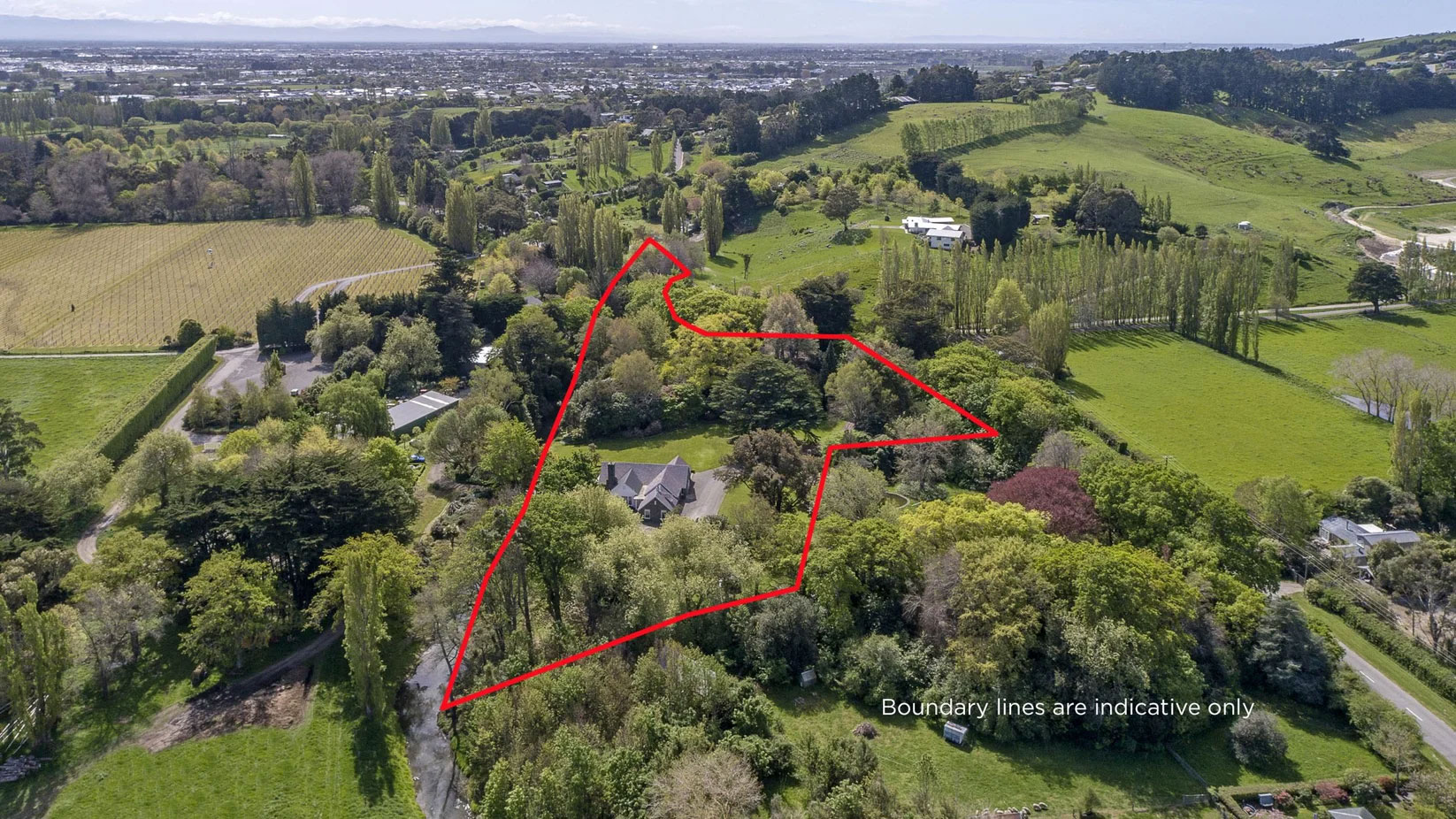
https://www.bayleys.co.nz/listings/lifestyle/canterbury/christchurch/132-old-tai-tapu-road-5521989
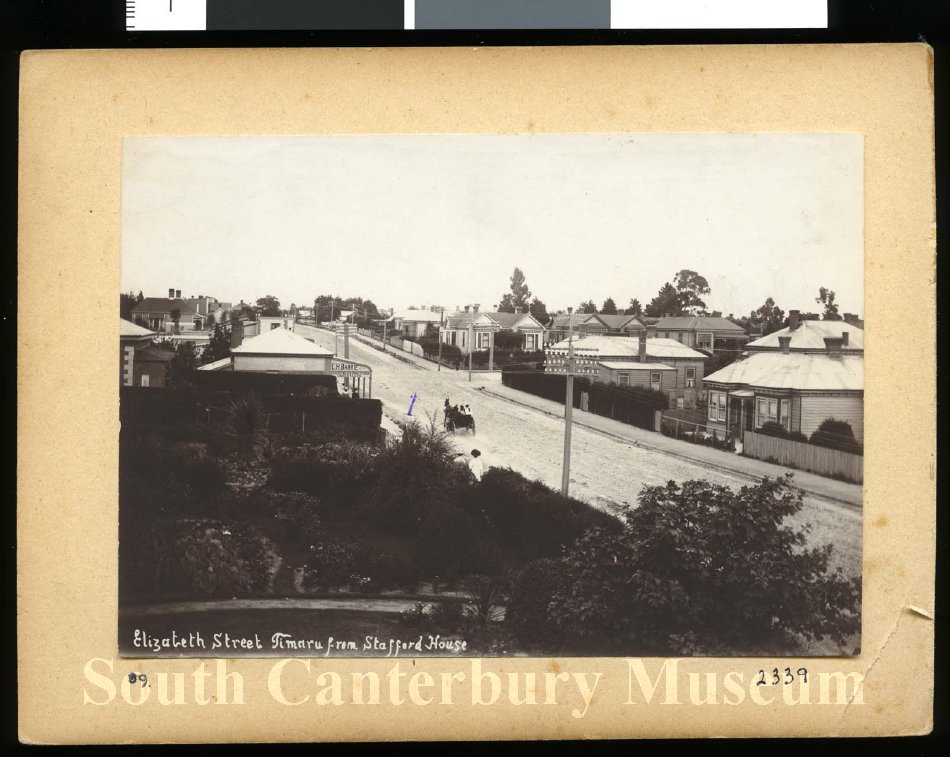
Elizabeth Street Timaru from Stafford House," dating from circa 1906. Stafford House was built in 1904 or 1905. CH Barrie's store, opened in March 1906, can be seen on the left. The intersection with Grey Road can also be seen. Te Kura Marumaru South Canterbury Museum 2339.
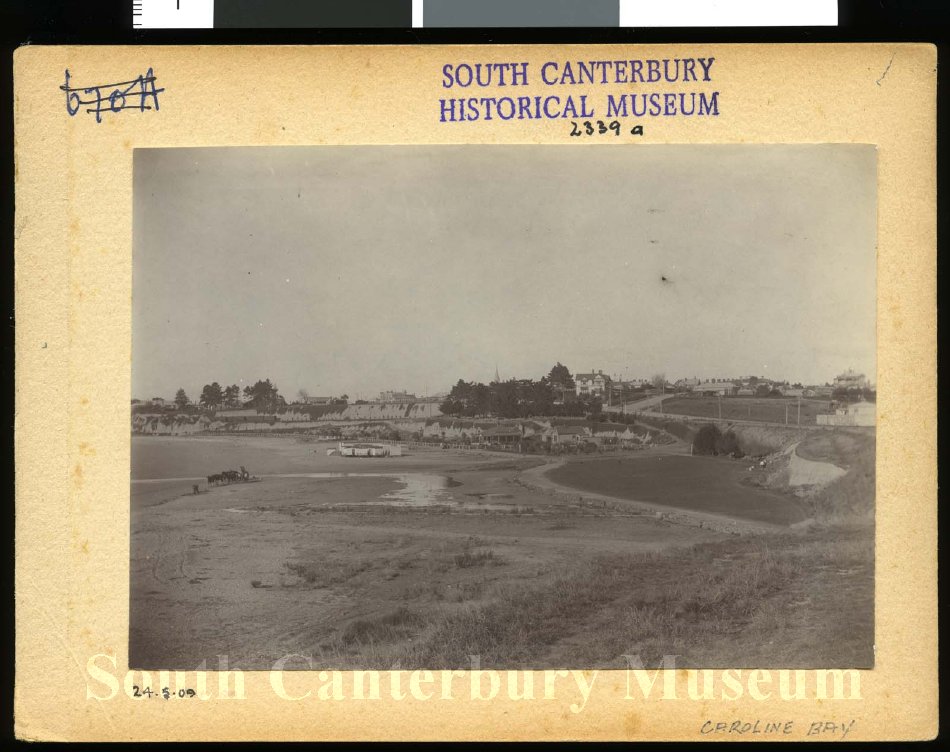
looks across the bay with the Hydro Grand Hotel, houses and buildings on the horizon. A horse cart team appears on the beach, as do the bathing sheds. A handwritten date on mount beneath the image reads "24.5.09". Te Kura Marumaru South Canterbury Museum 2339.
DEATH OF SIR EDWARD STAFFORD.
(Otago Daily Times 3-4-1901). Alexander Turnbull Library, Wellington, New Zealand. /records/33571080
DEATH OF SIR EDWARD STAFFORD.
HIS LAST MOMENTS.
APPRECIATIVE REFERENCES IN THE LONDON PRESS.
[From Our Own Correspondent.]
London, February 23.
Another of New Zealand’s great men of former days has passed to his rest, Sir Edward William Stafford, G.C.M.G., thrice Premier of New Zealand, whose death occurred on the 15th inst.
Mr E. Howard Stafford, the eldest son of the deceased New Zealand statesman, informs me that his late father seemed to be as well as usual up to within five days of his death. His mind was as clear and his memory as good as at any time during his life, and I may observe that Sir Edward was always famed for the curious exactness and retentiveness of his recollection on all subjects that interested him. One evening, however, he complained that he felt cold, and remarked that he hadn’t been able to walk quickly enough to keep himself warm in the severe weather which has prevailed during the current month. He sat before the fire and his hands were rubbed, but nothing seemed to warm him. At dinner he could not eat anything, and soon afterwards he went to bed. Mr Howard Stafford, who had recently returned to England from a tour in the East, proposed that they should go together to Cannes for the remainder of the winter, but it was feared that he would not be able to stand the long journey.
Next day Sir Edward persisted in rising as usual, but soon had to return to his bed, from which he never rose again. His medical adviser was promptly in attendance, and at once pronounced his ailment to be pneumonia, and formed a very unfavourable prognosis, owing to the patient’s advanced years, he being within a few weeks of completing his eighty-second year. The complaint made rapid progress in spite of all remedies and the constant and assiduous services of two trained nurses. Gradually Sir Edward became unconscious, and finally he passed away most peacefully and painlessly, 25 minutes after midnight on the 15th inst. Before unconsciousness set in, he did not appear to suffer at all; indeed, he remarked to those around him that his breathing sounded very bad, but he did not feel it at all troublesome.
On Monday afternoon the funeral of the late Sir Edward Stafford took place at Kensal Green Cemetery. Though an impressive, it was a strictly private function; in fact, only one mourning coach accompanied the hearse from 27 Chester square, S.W., where Sir Edward passed away, to St. Peter’s Church, Eaton square, where the first part of the service took place. The immediate mourners were: Mr E. Howard Stafford, son; Miss Stafford, daughter; Mrs Charles Wallington, daughter; Miss Stafford, sister; and Master Ronald Stafford, grandson. At the church, however, others had gathered, some of whom accompanied the remains to the cemetery. Among these were Lord Dormer, cousin; Sir Walter Buller; the Hon. W. Sidney; the Hon. W. P. Reeves, representing the New Zealand Government; Admiral Stewart; General Sir Archibald Alison, cousin, and Lady Alison; General Robinson and Mrs Robinson, cousin; General Hamley; Mr Fraser Tytler; Captain Stafford, cousin; Mrs Henry Trotter; Mrs Gustav Roos; Mr A. M. Mitchison, chairman of several companies of which Sir Edward had been a director, and Mrs Mitchison, daughter of Mr Thos. Russell; Mr Wakefield and Miss Wakefield; Mr and Mrs Wetherall, daughter of Mr T. Russell; Mr C. Russell and Miss Russell; Mr Wallington; Mr Frank Gore Browne; Mr and Mrs Allan Campbell, daughter of Sir Geo. Bowen; Mrs Harris; the Hon. Mrs Hunloke, cousin of Sir Edward Stafford’s first wife; the Misses Bowen, two, daughters of Sir George Bowen.
Many very fine wreaths were sent, at the head of the coffin being placed a choice one of orchids and lilies with “New Zealand to her Statesman” worked in mauve silk on white satin ribbon, similar to that sent to the late Queen’s funeral. This was from the New Zealand Government through the Agent-general. Other wreaths were from Messrs Howard, Humphrey, and Berkeley Stafford, sons; Miss Mary Stafford; Mrs Staveley Gordon and Mrs Charles Wallington, daughters; Mrs Howard Stafford; Mrs Berkeley Stafford, daughter-in-law; Lord Dormer, cousin; Sir Archibald and Lady Alison, cousin; Hon. Mrs Hunloke; Sir John and Lady Wallington; Mr and Mrs Arthur Mitchison; Captain F. Stewart, formerly A.D.C. to Sir Thomas Gore Browne; Mr and Mrs Thomas Russell, and Miss Russell; and the grandchildren of the deceased.
At St. Peter’s Church a most impressive choral service was held. The body was met by the clergy and choir at the western door, and, headed by the cross-bearer, a procession was formed to the altar rails, the opening sentences of the burial service being sung to Dr Croft’s music. Then was sung the 90th Psalm, after which the Lesson from Corinthians I, chap. xv, was read. Then hymn 693, A. and M., “God of the living,” was sung, after which followed “I heard a Voice from Heaven,” beautifully sung to Sir John Goss’s music. The rest of the service was then said, the hymn “Now the labourer’s task is o’er” concluding the service, the last two verses being given as the choir and clergy accompanied the coffin to the western exit. At the church the service was conducted by the Rev. J. Storr, M.A., assisted by the Rev. Aiken Sneath; at the graveside, by special request, the Rev. Frank Wallington officiated. As the mourners left the church the organist played Chopin’s “Funeral March.”
It would, of course, be “sending coals to Newcastle” and a month after date too, were I to give an account of Sir Edward Stafford’s political career. I presume, too, it will not be news to state that although born in Edinburgh he came of Irish parentage, being the eldest son of Mr Berkeley Buckingham Stafford, of Maine Castle, Bellingham, County Louth, and of Anne, his wife, who was third daughter of Lieutenant-colonel Patrick Duff Tytler, brother of Lord Woodhouselee, the famous historian; or that he was educated at Trinity College, Dublin, and emigrated to New Zealand in the year 1843, 58 years ago; or that he was twice married, first, in 1846, to Emily Charlotte, daughter of Colonel William Wakefield, and of his wife Emily, daughter of Sir J. Shelley-Sidney, Bart., and second, in 1859, to Mary, third daughter of the Hon. Thomas Houghton Bartley, then Speaker of the Legislative Council of New Zealand; or that he finally left the colony in 1878 to reside permanently in this country.
But it may, perhaps, be worth while to reproduce from the Sportsman a highly appreciative notice of Sir Edward in his capacity as a great sportsman. The writer says: “In addition to winning the distinction of being the most brilliant politician that the ‘Great Britain of the South’ has so far produced, Sir Edward achieved great fame as a sportsman. The eldest son of the late Berkeley Stafford, of Maine Castle, Bellingham, County Louth, he, on arriving at manhood, quickly gained the reputation of being the best all-round man in his county. At riding, running, boxing, and swimming he could more than hold his own with all-comers, and on his matriculation at Trinity College, Dublin, he passed first in Greek, hunted the draghounds, and won the two-mile race and the long jump, covering 25ft 4in in the latter event, a splendid leap for those days, when athletic training was far from being the science it has since become. On leaving college, Sir Edward hunted the Louth hounds for one season, owing to the illness of his father, the master. He then emigrated to Australia, where he stayed for three months only.
“In that short space, however, he bought, trained, and rode the winner of an important steeplechase, acted as judge at the first show of thoroughbred stallions held in Victoria, and, in conjunction with the late Mr ‘Jack’ Hunter and the late Mr Godolphin Arundel, marked out the famous Melbourne Cup course at Flemington.
“Going on to New Zealand, Sir Edward soon became the most prominent racing man in the colony. He rode and won numerous steeplechases, Springbok being, perhaps, the most famous of his many jumpers. On the flat he won several events on Queen Bee, and no fewer than 16 races in succession on his famous bay mare Symphony. He bred and rode Strop, winner of the Nelson Derby, in spite of some 22lb overweight. Strop afterwards proved one of the best horses in Australia, though Sir Edward always considered Potentate, whom he also bred, to be a superior animal. The Canterbury Derby fell to the ‘all scarlet’ carried by Opera in 1863, Bob Ray having the mount on the flying chestnut. It was in the Canterbury Cup, however, that Sir Edward achieved what was probably his greatest triumph. Ultima and Revoke, the two crack mares of their day, divided favouritism. The former belonged to Mr Hugh Stafford, brother of Sir Edward, and owing to a bad mouth and a worse temper it was almost impossible to manage her. How Sir Edward, who had been Premier for four years, during which time he had never ridden a gallop, and who was then 46 years of age, secured a brilliant victory by the shortest of short heads is talked of by old race-goers to this day.
“Sir Edward won his first steeplechase at the age of 14, his mount being Hambletonia, a daughter of Hambletonian, who had been the great match against Diamond. He was chosen with his brothers Hugh, who rode the winner of the Bellewstown Cup four years in succession, and Patrick, who won 54 races in India, to ride in the six of the Louth Hunt matched against six of the Westmeath. Cutts, the doyen of the New Zealand trainers, has always declared him to be the best jockey, amateur or professional, who ever rode in the colony, and as a judge of horses he has had few equals. Sir Edward witnessed numerous English Derbies, amongst others those in ’39, ’59, ’79, and ’99, an experience which has fallen to the lot of few.”
That is to say, he was present at four Derbies, each pair of which had 20 years’ interval between them! Sir Edward kept up his shooting to the end, and shot his last partridge no longer than four years ago at Mr George Fraser Tytler’s place, Keith Marischal, in Scotland.
It is not generally known in New Zealand, I believe, that Sir Edward was on two different occasions offered by the Conservative Government appointments to important posts. Such, however, is the fact, but Sir Edward did not care to accept them. He was a rich man when he left New Zealand, and having attained the highest distinction the colony could offer did not feel disposed to enter upon a new public career at that period of his life. For the same reason he declined to enter the House of Commons when, as happened on more than one occasion, he was offered a virtually safe seat. English party life would have involved beginning all over again in a new sphere which had little to offer that was attractive to a man who had already gone through a political life of vivid excitement and who had three times held the position of Premier in a British colony. So Sir Edward resisted all blandishments and devoted himself to London financial life on the one hand, being a valued director in several companies, and to his sporting enjoyments on the other. In these various occupations his life was very pleasantly spent.
I notice several errors in the references of English papers to his career. In the first place they make the mistake of giving his age as 80, and his birth-year as 1820, whereas Mr Howard Stafford informs me that his late father entered his eighty-second year in April last, so that had he survived until April next, two months hence, he would have begun his eighty-third year. Another error, or rather unfairness, consists in the “whole truth” not having been told. Several London papers state that Sir Edward Stafford visited England on a double mission, (1) to establish the Panama mail service, and (2) to arrange for military settlements in New Zealand, but that he failed in both respects.
This is distinctly unjust, as Mr Howard Stafford points out, seeing that the Conservative Government under Lord Derby had not only acceded to his representation touching the Panama service, but had actually called for tenders. It was only through the Derby Government being defeated and succeeded by Lord Palmerston, who refused to proceed with the matter, that the Panama scheme temporarily fell through. But this was no “failure” on Sir Edward Stafford’s part, although naturally he was much chagrined at the result of the change of Ministry. Indeed, he declared that the service should go on in spite of the withdrawal of the Imperial Government, and that if his own Government would not support him in this he was prepared to put his hand into his own pocket and pay the possible loss, which was estimated at £50,000. That was no vain utterance, for at that time he was quite in a financial position to do even this. However, the Panama project was subsequently carried out with complete success until it broke down through the contractors’ inability to carry it on. It should be mentioned in fairness to the deceased statesman that Sir Edward Stafford refused to draw any salary for the period during which he was absent from New Zealand on the important public missions mentioned above.
An interesting reminiscence connected with the last shooting expedition in which Sir Edward Stafford took part is that it was a reunion of old Australasians. Mr George Fraser Tytler and Mr James Fraser Tytler were actually in the same ship and fellow-passengers with Sir Edward Stafford when he went to the colonies. The last time that Sir Edward went abroad was in 1895, more than five years ago, when he went to stay with his daughter in Egypt, where, as already mentioned, her husband, Colonel Staveley Gordon, holds a high official post. I may note that Sir Edward Stafford was among the few people who could say that they had lived in the reigns of five English Sovereigns, viz., George III, George IV, William IV, Victoria, and Edward VII.
Sir Edward Stafford leaves a family of three sons and three daughters, all of whom are living. His eldest son, Mr E. Howard Stafford, has travelled a great deal. Indeed, he had only just returned from a tour in Egypt when his father’s fatal illness set in. He married Senorita Theresa Kruls, a descendant of the first Spanish Viceroy of South America. I hope I am not indiscreet in adding that Mrs Howard Stafford is famed for her remarkable personal beauty. Mr Humphrey Stafford is at present in Chili, and Mr Berkeley Stafford has been for some time sub-superintendent of the celebrated Waihi mine. He married Miss Banks, of Auckland. One of Sir Edward’s daughters married Colonel Wallington, who commands the Lancashire Fusiliers in South Africa, and who is a son of Sir John Wallington and a cousin of Sir Michael Hicks-Beach, Chancellor of the Exchequer. Another daughter married Colonel Staveley Gordon, who at present is acting-Sirdar at Cairo, in the absence of General Sir Francis Wingate, and who is a son of Sir Henry Gordon and a nephew of the renowned General Gordon, the hero and martyr of Khartoum. One daughter is still unmarried.
The following letter has been received by Mr Howard Stafford from the Agent-general for New Zealand: “My dear Mr Stafford, I am instructed by my Government to convey to the family and relatives of your late father the expression of their sincere sympathy at the sad loss you have all sustained. My Government, in expressing their deep regret on receiving the news of the death of Sir Edward, refer to the valuable services which he rendered to the colony, and remark that his good work will live after him and be kept green in the memory of the people of the colony whom he so faithfully served. I am, my dear Mr Stafford, yours sincerely, W. P. Reeves.”
A sympathetic letter of condolence has been received from Mr Chamberlain, Secretary of State for the Colonies, and a cable message from Lord Ranfurly, Governor of New Zealand.
Sources
This blog is based on the supplied chronological fact list and pasted biographical source for Edward William Stafford, supported by the text of the Nelson Education Act of 1856, the Dictionary of New Zealand Biography entry for Stafford, and later education-history sources. Useful supporting evidence for further TGHS and Timaru research could include school magazines, photographs, Board records, newspaper articles, yearbooks, oral histories, school publications, local government records, parliamentary papers, education records, Timaru Board of Works material, and mana whenua perspectives.
Edmund Bohan. 'Stafford, Edward William', Dictionary of New Zealand Biography, first published in 1990, updated May 2022. Te Ara - the Encyclopedia of New Zealand, https://teara.govt.nz/en/photograph/541/a-photographic-montage-of-members-of-the-house-of-representatives-1860-19 (accessed 17 May 2026).
https://www3.parliament.nz/en/visit-and-learn/mps-and-parliaments-1854-onwards/governments-in-new-zealand-since-1856/
TIMARU MUNICIPAL COUNCIL Timaru Herald Volume II Issue 80 25 November 1865 Page 3
https://paperspast.natlib.govt.nz/newspapers/THD18651125.2.5
TIMARU MUNICIPAL COUNCIL.
On Monday evening last the first meeting of the newly formed Municipal Council of Timaru was held at the Royal Hotel, at seven o’clock.
Present all the members.
Mr. H. J. LeCren said he would first read the names of the members of the Timaru Municipal Council from the Government Gazette, the members were Messrs. Hewlings, H. J. LeCren, Inglis, Turnbull, F. LeCren, Dr. McLean, Stubbs, Healey, and Ellis. He would also read an extract from the Municipal Ordinance, which provided that at the first meeting of the Council, the members should choose from amongst themselves some person to act as chairman. As he (Mr. LeCren) had had the privilege of acting as chairman in the preliminary meetings for the formation of this Council, he would claim the privilege of proposing a gentleman to fill the office of Chairman for the future. He would propose one of the oldest settlers in this district — Mr. Hewlings.
Mr. Hewlings said he thought the chair might be filled by some more competent person than himself, and he also urged that it was possible that he might not always be present.
Mr. Turnbull pointed out that the difficulty represented by Mr. Hewlings might be easily overcome, by the appointment of a deputy-chairman in his absence.
Mr. Hewlings then formally took the chair.
Mr. H. J. LeCren proposed that Mr. Cardale be requested to act as solicitor to the Council, pro. tem. They might almost ask Mr. Cardale to act as honorary solicitor, for they had then no funds. An act would have to be prepared, and other duties to be performed by the solicitor.
Mr. Ellis seconded Mr. LeCren’s motion.
Mr. Turnbull asked if Mr. LeCren would put it to the Council as a motion.
Mr. Inglis said before the motion was put he should like to know what Mr. Cardale was to be paid. He thought they should not jump into the lion’s mouth before they knew the consequence. A bill had to be drafted, but was it to cost £40, £100 or £200. Was the appointment to be temporary or permanent, honorary or paid.
Mr. F. LeCren thought the Government would frame a bill and carry it through the Provincial Council.
Mr. Cardale said the expenses of drafting a bill would probably amount to £40, but it was impossible for him to give an opinion, as the length of the bill would have some effect upon the charge.
Mr. Inglis proposed, and Mr. Stubbs seconded the motion that Mr. F. LeCren act as Clerk, pro. tem.
The Chairman (Mr. Hewlings) enquired of the chairman of the late Road Board, Mr. LeCren, when the duties of the Council commenced and those of the Road Board ended.
Mr. H. J. LeCren said that a meeting of the Road Board had been held that afternoon, and it had passed a resolution intimating that if the Municipal Council would accept the liabilities and the assets of the Board that that body should lapse. He apprehended that there would be no difficulty about the matter, as the only outstanding liability of the Road Board was the contract for repairs in Strathallan-street, which amounted to £674. Against that sum he would hand over a cheque to the Council for £304; and they were empowered to draw on the Government for any sum not exceeding £500, which would place £804 as assets, and £674 as liabilities.
Mr. Turnbull asked if the Government would keep faith to the extent of £500 with another body.
It was agreed that the Council should accept the liabilities and assets of the Road Board.
Mr. Stubbs rose to a point of order. It had been proposed and seconded that Mr. Cardale act as solicitor, but had not been carried.
The Chairman put the motion to the Council, which was carried.
A debate then ensued in reference to the Council having power to enforce the fines on the contractor for repairing Strathallan-street in case of need, but no motion was made.
Mr. Cardale, on a motion, then read the clauses of the Christchurch City Council Ordinance.
It was then proposed by Mr. Turnbull, seconded by Mr. Ellis, and carried, “That a Committee be appointed, consisting of Messrs. Healey, Inglis, and F. LeCren, for the purpose of meeting the Solicitor on Wednesday evening, to draw up an Ordinance to give certain powers to the Council.”
Mr. F. LeCren proposed “That the Chairman do write to the Government, asking them to indicate the property of the Council, and to ask for a grant of money for the use of the Council for the ensuing year.” There were several reserves, all of which the Council might not be aware of, and there was also the landing service to be handed over to the Council.
Mr. Healey seconded the resolution, which was carried unanimously.
Proposed by Mr. Inglis and seconded by Mr. F. LeCren, “That the Council do open an account with the Bank of New Zealand, Timaru.” Carried.
Proposed by Mr. Stubbs and seconded by Mr. Healey, “That the Chairman do act as Treasurer to the Council.” Carried.
It was proposed by Mr. Inglis, seconded by Mr. Stubbs, and carried, “That the Clerk be requested to intimate to the Bank Agent, that the Treasurer for the time being and one member of Council; or, in the Treasurer’s absence, any two members of the Council, countersigned in either case by the Clerk, are authorised to sign cheques on the Bank account.”
The Council then adjourned until Friday evening, when a meeting will be held for the purpose of receiving a draft of the proposed Ordinance from the hands of the Solicitor.
Source list and full links
Edward William Stafford biography, Dictionary of New Zealand Biography, Te Ara
Edmund Bohan, “Stafford, Edward William”, first published 1990, updated May 2022.
https://teara.govt.nz/en/biographies/1s22/stafford-edward-william
Timaru District Council, Stafford Street Historic Heritage Area Assessment Report
Used for Stafford Street’s historic name, September 1889 renaming, and heritage significance.
https://www.timaru.govt.nz/__data/assets/pdf_file/0006/674034/Historic-Heritage-Historic-Heritage-Area-Assessment-Report-HHA1-Stafford-Street-Historic-Heritage-Area.pdf
Te Ara, South Canterbury places: Stafford Street heritage streetscape
Used for the statement about Stafford Street’s late nineteenth and early twentieth-century buildings.
https://teara.govt.nz/en/photograph/11488/heritage-streetscape
Nelson Education Act 1856, Papers Past
Printed in Nelson Examiner and New Zealand Chronicle, 29 March 1856, page 4.
https://paperspast.natlib.govt.nz/newspapers/NENZC18560329.2.17
Education Gazette, “Ka mua, ka muri in Nelson”
Used for Nelson’s role as the first province to initiate free public education and the secular basis of the system.
https://gazette.education.govt.nz/articles/ka-mua-ka-muri-in-nelson/
NZ History, Education Act 1877
Used for the later national education context, including the distinction between Pākehā and Māori children under the 1877 Act and compulsory primary education for Māori in 1894.
https://nzhistory.govt.nz/page/education-act-passed-law
Timaru Herald, “Timaru Municipal Council”, 25 November 1865, via Papers Past
Used for the first meeting of the Timaru Municipal Council at the Royal Hotel.
https://paperspast.natlib.govt.nz/newspapers/THD18651125.2.5
Aoraki Heritage Collection, “Timaru’s Hundred Years of Self Government”
Used for the self-government milestone summary and municipal context.
https://aorakiheritage.recollect.co.nz/nodes/view/7224
Timaru District Council, Former Royal Hotel Heritage Assessment
Used for Royal Hotel built heritage significance, 1859 origins and later alterations.
https://www.timaru.govt.nz/__data/assets/pdf_file/0007/673864/Historic-Heritage-Assessment-Report-HHI41-Former-Royal-Hotel-Category-B.pdf
Timaru and Gladstone Board of Works Act 1867, New Zealand Legislation
Used for the legislative basis of the Board of Works.
https://www.legislation.govt.nz/act/public/1867/26/en/latest/
Timaru District Council, Former Timaru and Gladstone Board of Works Building Heritage Assessment
Used for the 1874 building, 95 Stafford Street, Thomas Roberts, and the board’s public works role.
https://www.timaru.govt.nz/__data/assets/pdf_file/0005/673880/Historic-Heritage-Assessment-Report-HHI57-Former-Timaru-and-Gladstone-Board-of-Works-Building-Category-A.pdf
Heritage New Zealand Pouhere Taonga, Timaru Council Offices and Former Public Library Façade, List Entry Review Report
Used for the municipal buildings, Carnegie Library, civic function, and Everlyn Culverwell.
https://hnzpt-rpod-assets.azureedge.net/hjfh42oz/2075-s78-review-timaru-council-library-final.pdf
New Zealand Curriculum, Social Sciences, Tāhūrangi
Used to align the story quietly with Social Sciences, civics and citizenship learning.
https://newzealandcurriculum.tahurangi.education.govt.nz/the-new-zealand-curriculum---social-sciences/5637209127.p
Aotearoa New Zealand’s Histories curriculum site
Used for the idea that histories help students understand how the past has shaped present-day life.
https://aotearoahistories.education.govt.nz/
Ministry of Education, new senior secondary qualifications
Useful background for future senior inquiry learning and the move from NCEA to NZCE and NZACE from 2028 onward.
https://www.education.govt.nz/parents-and-caregivers/schools-year-0-13/parent-portal/new-qualification-years-11-13
Bibliography
Belich, J. The New Zealand wars. Auckland, 1986
Bohan, E. Climates of War: New Zealand in conflict 1859–69. Christchurch, 2005
Bohan, E. Edward Stafford: New Zealand's first statesman. Christchurch, 1994
Dalziel, R. Julius Vogel. Auckland, 1986
Graham, J. Frederick Weld. Auckland, 1983
Sewell, H. The journal of Henry Sewell, 1853–7. Ed. W. D. McIntyre. 2 vols. Christchurch, 1980
Stafford, E. W. Stafford papers, 1846–1892. MS. WTU https://natlib.govt.nz/records/22799003
Wakefield, E. Sir Edward William Stafford. London, 1922