
By Roselyn Fauth
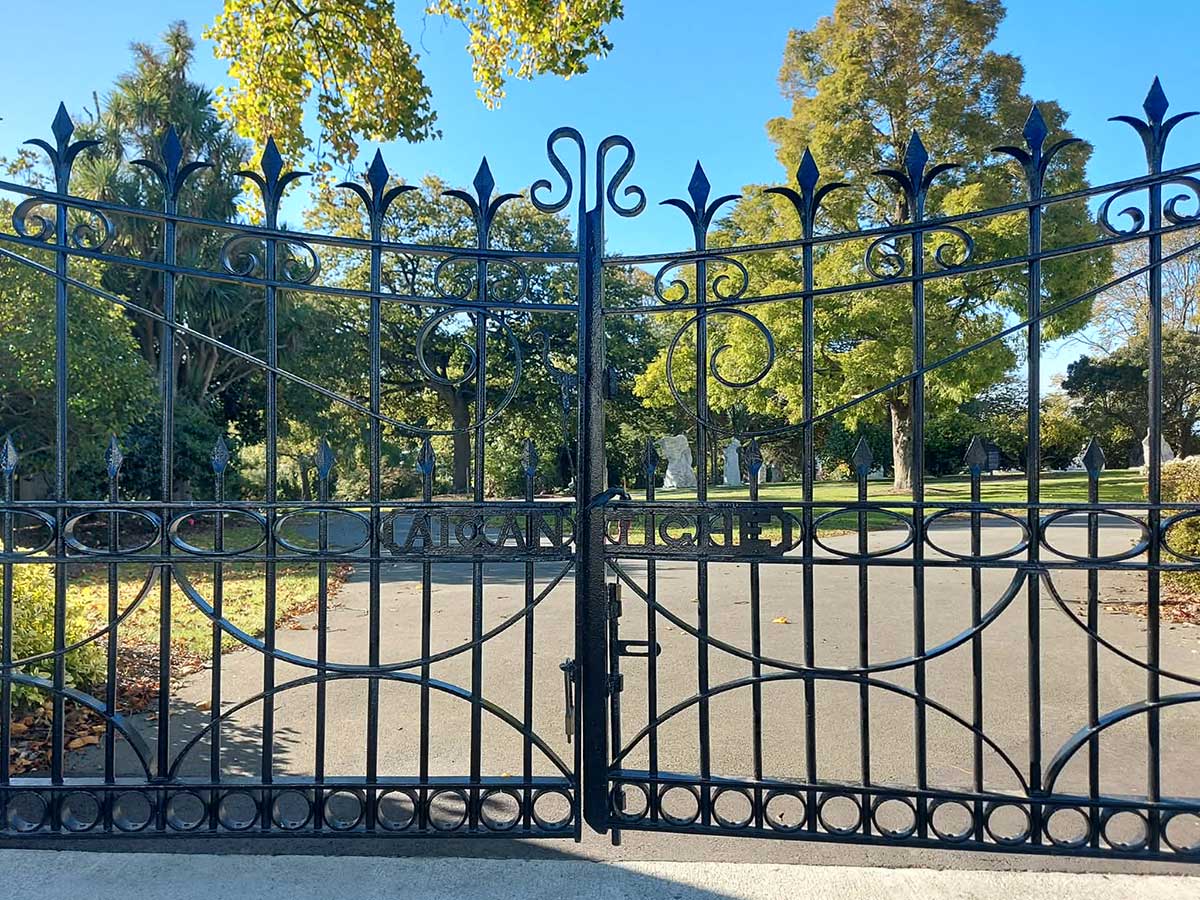
Aigantighe Art Gallery Gates - Photography By Roselyn Fauth
Well that was unexpected. I was admiring the gates at the Aigantighe the other day and spied a makers mark. I expected to plug the name into Google and not find much, but it turns out there's a good yarn here about the Faulkners and their gates. So here is today's blog inspired by the Aigantighe Art Gallery's gates.
Did you know that Aigantighe House was a private home before it became Timaru’s public art gallery with a modern extension? Maybe you too have walked past the Grant's home many times but not taken much notice of the gates?
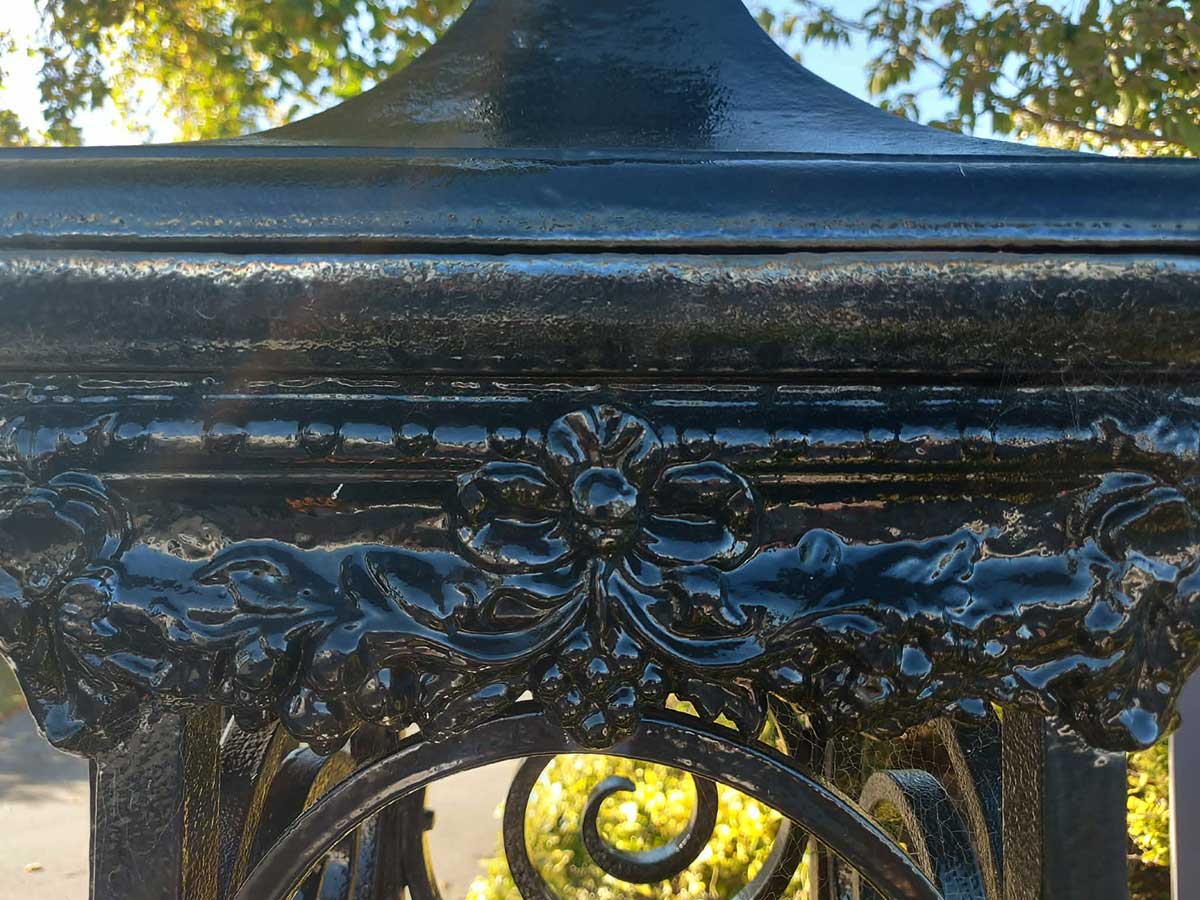
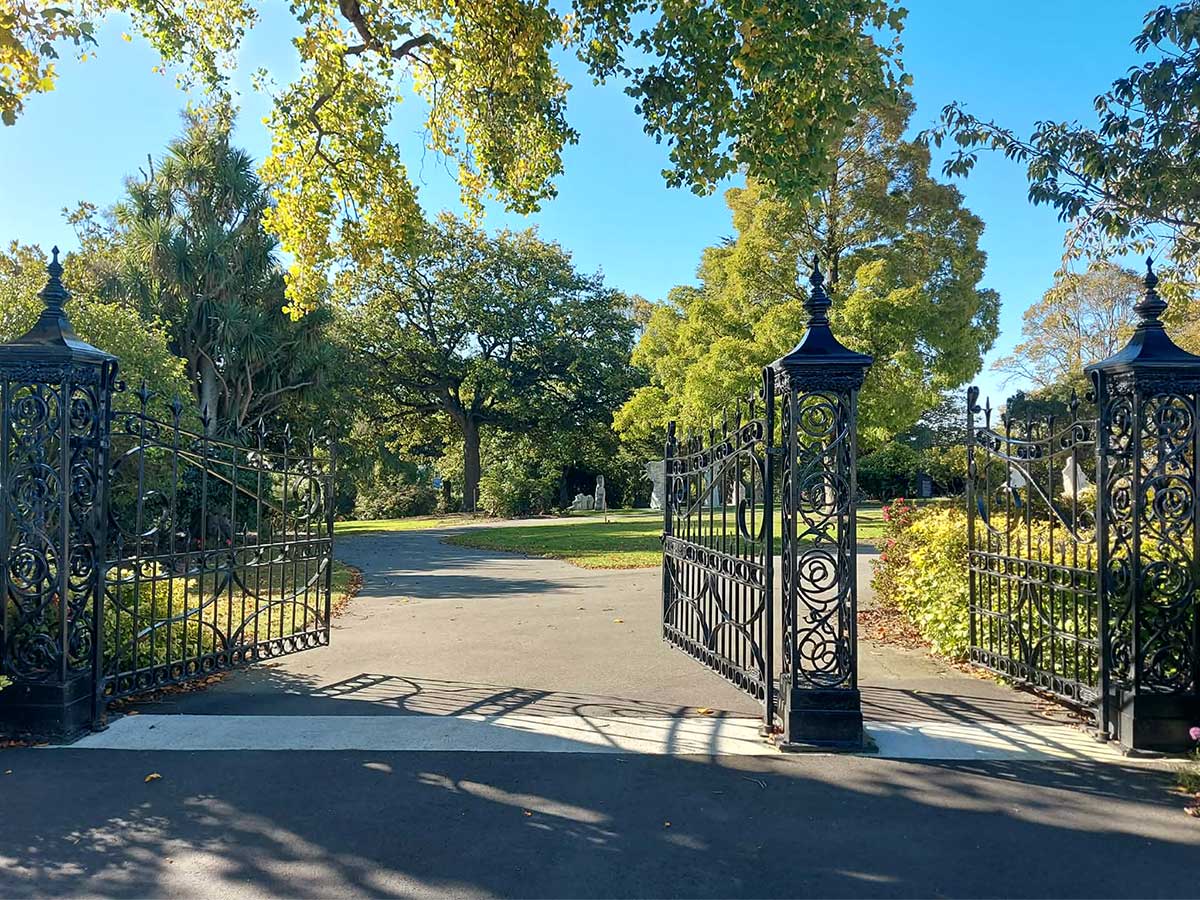
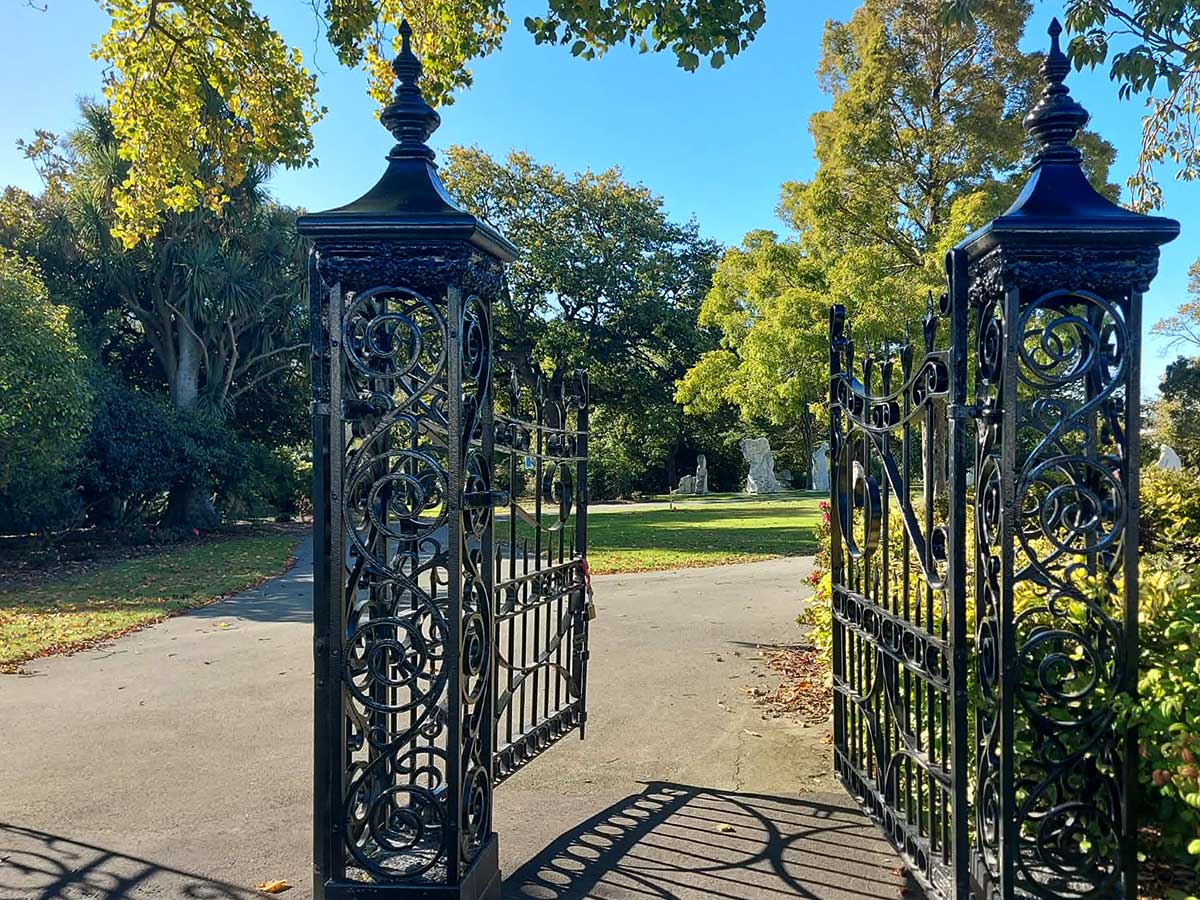
The look fantastic in their gloss black paint. There are three pillars. Between them is a wider gate, perhaps for vehicles, and to the right a smaller pedestrian gate. Where the two sections meet in the middle, the name Aigantighe is worked into the metal as part of the gate. On each gate there is also a maker’s mark: W Faulkner Maker Dunedin.
I think part of the reason gates matter is that they tell you how a house wanted to be met. They are practical, of course. They open, shut, swing, bear weight, keep boundaries. But they also set the tone. They tell you something about arrival, about privacy, about status, about whether a place wanted to make an impression before you even knocked at the door.

Aigantighe Art Gallery Gates - Photography By Roselyn Fauth
I think these gates do exactly that. They feel composed. Even before you know anything about who made them, or when, or for whom, you can tell they belong to a house that cared how it presented itself to the street.
That matters at Aigantighe because this was never just a plain dwelling tucked out of sight. The house was built for Alexander and Helen Grant and is generally dated to 1905, with James S. Turnbull attributed as architect. The Timaru District Council heritage assessment is a bit more cautious and gives the date as c.1905?, while noting that although some later accounts say 1908, Alexander Grant was already listed in Wai-iti Road in 1905 to 1906. That same heritage assessment specifically mentions the ornamental entrance gates on the road frontage. So whatever slight uncertainty remains around the exact date, the entrance itself is clearly part of the story of the house as a designed and self-aware place.
Aigantighe.
There is something confident about putting the name of the house into the gate itself. It introduced the property before a visitor even reached the front steps. That makes me think about all the people who must have passed through those gates when this was still a family home. The Grants themselves. Their children. Friends. Tradesmen. Delivery men. Gardeners. Visitors arriving on foot through the smaller gate. Vehicles coming through the wider opening. Later, gallery visitors instead of household guests. The gates have not had one life. They have had several.
And then if you look closely, you will spy the gate maker’s stamp, tucked down low in the iron. This small detail for me, at least, changes the whole scale of a story. One moment you are standing at the entrance to a Timaru house. The next, you are following a trail back to Dunedin workshops, catalogues, trade networks, and the people whose names do not usually make it into architectural histories.
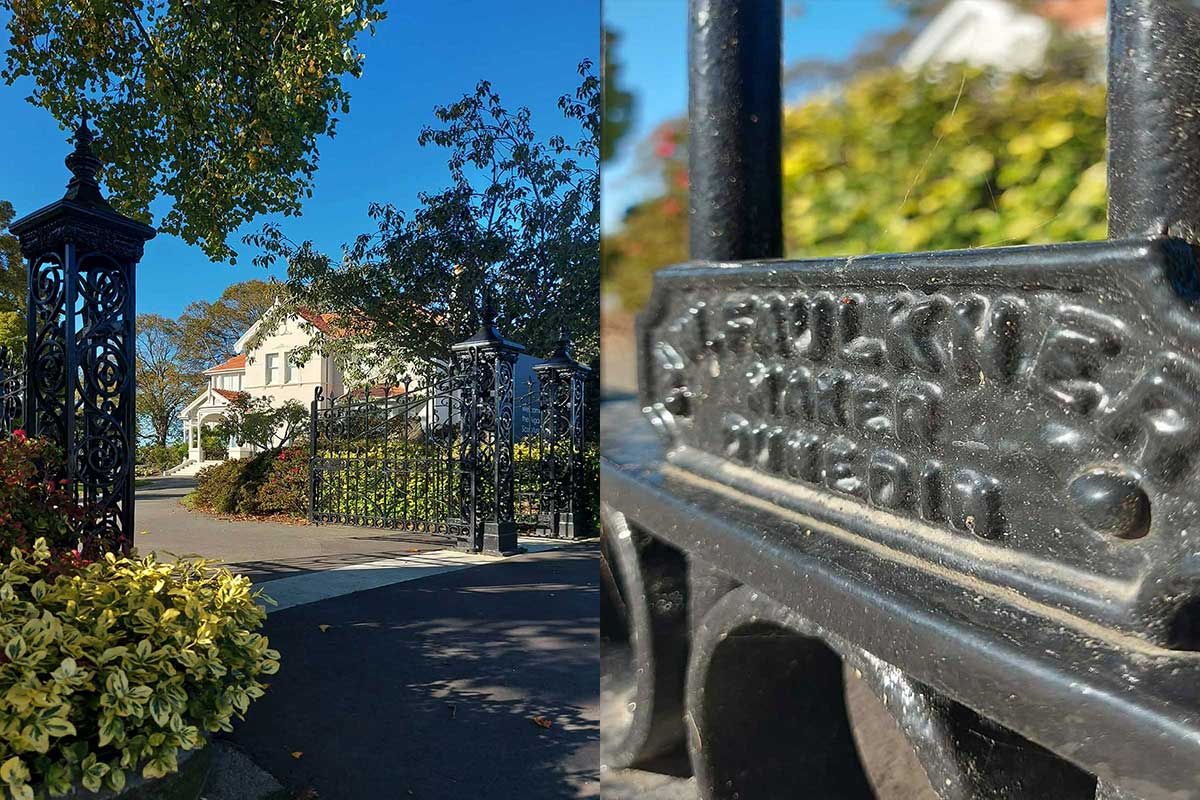
The Faulkner name turns out to have quite a story behind it.
J. W. Faulkner began advertising smithing and wirework services in Dunedin in 1887. The business was later incorporated as J. W. Faulkner & Sons Ltd, and by the early 1900s it had grown large enough to move from North East Valley to Cumberland Street and then to long-term premises at the corner of Castle and St Andrew Streets in Dunedin. Over time it became known not just for ornamental wirework and ironwork, but for a much wider range of manufactured goods. Gates and railings, yes, but also cast-iron fencing, bedsteads, hospital furniture, lift fittings, grilles, and all sorts of practical metalwork.
That wider story gives us an insight to the Faulkners. Where the maker’s stamp on the Aigantighe gates does not point to a tiny blacksmith’s shop making one lovely local gate. It points to a substantial Dunedin engineering and manufacturing firm.
One of the Hocken archival guides describes Faulkners as specialists in wrought-iron gates, fire escapes, railings, bedsteads and the like, and notes that the archive includes about 150 engineering drawings.
The firm was founded by James William Faulkner. After his death in 1913, responsibility passed to his wife Alice and their sons James Sydney and William Henry. A maker’s mark can sound industrial and impersonal until you begin to follow it. Then suddenly there are people. A founder. Sons. A widow stepping into management. Workers in a busy Dunedin factory. Draughtsmen. Pattern makers. People handling iron, finishing edges, meeting deadlines.
The object stops being anonymous and now has a personal touch.
The surviving catalogues make that even clearer. I was so excited to find them on hocken.recollect.co.nz. By 1916 Faulkner was producing illustrated catalogues showing gates, posts, fencing, cast-iron pillars, staircases, balustrades, finials, weather-vanes, porch brackets, lamps, grilles, screens, tomb railings, and garden furniture.
That raises the obvious question of James S. Turnbull... Aigantighe is generally attributed to him, and it is tempting to leap straight to the conclusion that he must have designed or specified these gates. Maybe he did. Maybe he selected them from a Faulkner catalogue. Maybe he designed an entrance scheme that required exactly this kind of formality, and Faulkner supplied the metalwork. The fit is plausible. The proof is still missing however.
What we do know is we have the maker’s mark. We have the date range for the house. We have the heritage record noting the ornamental entrance gates. We have a Dunedin firm known for exactly this sort of work. That is enough to say something worthwhile. I am also struck by what we have not found.
So far, there is no clear evidence that Faulkner had a Timaru branch. One of the Hocken summaries explicitly lists A. & T. Burt opening a Timaru branch in 1908, but does not do the same for Faulkner. So at this stage the Timaru link looks strongest as a supply and commission link rather than a local branch story.
A. & T. Burt was founded by Alexander Burt (1840-1920) and his brother Thomas Burt (1842-1884). This was a firm of plumbing and electrical engineers, metal founders and manufacturers. The business was established in Dunedin in 1862 by Scottish brothers Alexander and Thomas Burt and gained immediate impetus from the Otago gold rush and Dunedin's industrial boom. Following the death of Thomas Burt in 1884, Alexander continued to manage the growing firm, which by 1910 had seven branches - in Dunedin, Auckland, Wellington, Christchurch, Timaru, Invercargill, and London. 1920 Alexander Burt died, leaving his son William C. Burt as chairman of directors. In 1930 William Morley took charge, steering the company through the Depression. The firm opened a branch in Timaru in 1909 and Mr Douglas Hodgson was in charge. He was the son of Son of Jane Reid Hodgson (later Crow) and the late Thomas Hodgson, of 173, King Edward St, South Dunedin. WW100 profile records London died in an accidental railway accident while still on active service.
I would love to know if the Burt business made gates too, but for now all I can find is information about the Faulkners.
Later records show Faulkner was supplying hospital equipment and even fittings for the hospital ship Maheno during the First World War. By 1926 the firm had won a gold medal for hospital bed and furniture at the New Zealand and South Seas Exhibition in Dunedin. I find that unexpectedly moving. The same company that made handsome entrance gates also made objects tied to care, nursing, recovery, and daily human need. It reminds me that firms like this were rarely one thing only. Skill travelled. Iron moved from domestic display to institutional service without any sense that those worlds were separate.
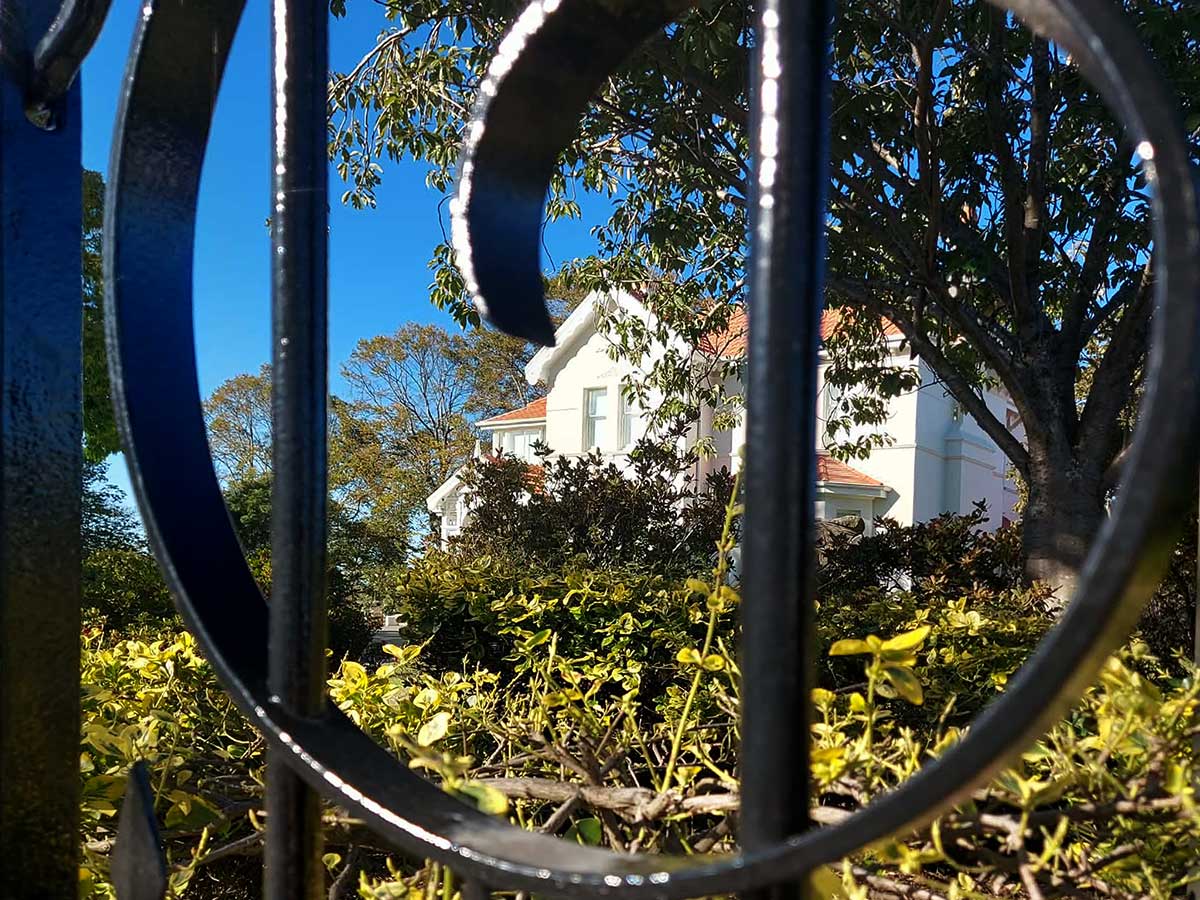
Still, here at Aigantighe, the gates remain what first caught my eye: working objects with presence.
They have been opened and shut for more than a century. They have stood through weather, repainting, changing fashions, different owners, and the shift from private home to public gallery. They are not museum pieces in a glass case. They are still doing their job. And maybe that is part of why they matter.
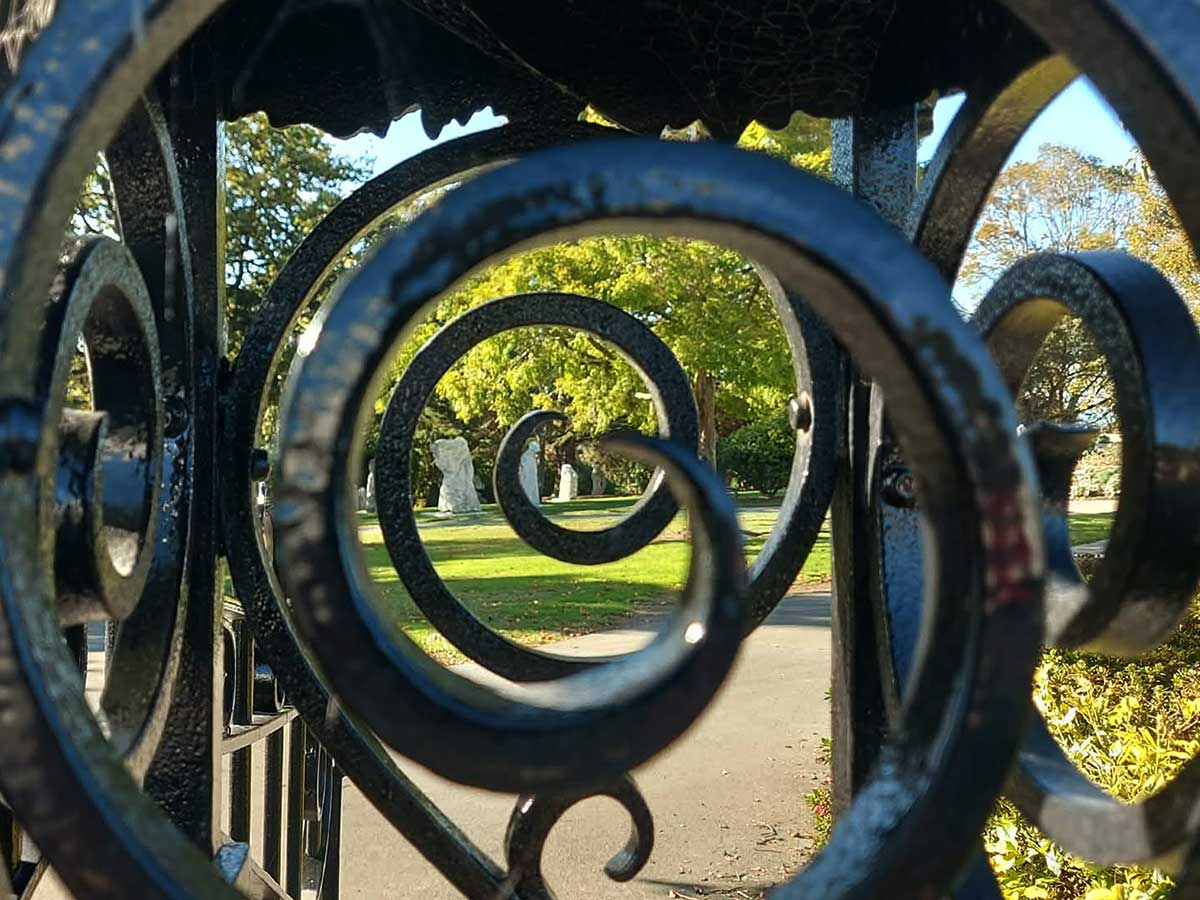
The house behind them has always been the bigger, more obvious story. Fair enough. But the gates tell us something real as well. They tell us that arrival mattered here. Naming mattered. Craft mattered. The edge of the property mattered. Somewhere in Dunedin, more than a century ago, somebody made sure that even the boundary would speak.
That seems worth noticing.
Sources
Aigantighe Art Gallery, “The History of Aigantighe”
https://www.aigantighe.co.nz/about/heritage-house-gallery/the-history
Timaru District Council, Historic Heritage Assessment Report, “Aigantighe, former Grant residence / Aigantighe Art Gallery”
https://www.timaru.govt.nz/__data/assets/pdf_file/0003/673851/Historic-Heritage-Assessment-Report-HHI28-Aigantighe-former-Grant-Residence-Aigantighe-Art-Gallery-Category-B.pdf
Hocken Digital Collections, “J. & W. Faulkner Limited : Records”
https://hocken.recollect.co.nz/nodes/view/68096
Otago Daily Times, Andrew Lorey, “Shaping how we cared”
https://www.odt.co.nz/lifestyle/magazine/shaping-how-we-cared
National Library of New Zealand, “J & W Faulkner & Sons: J & W Faulkner's newest designs of ornamental wrought-iron and wirework ... Catalogue no. 3, November 1916”
https://natlib.govt.nz/records/22901165
Papers Past, Otago Witness, 1 February 1894, advertisement for J. W. Faulkner and Sons
https://paperspast.natlib.govt.nz/newspapers/OW18940201.2.14.2
Papers Past, New Zealand Tablet, 13 August 1903, advertisement for J. & W. Faulkner
https://paperspast.natlib.govt.nz/periodicals/NZT19030813.2.17.3
Papers Past, Progress, 1 January 1914, advertisement for J. & W. Faulkner
https://paperspast.natlib.govt.nz/periodicals/P19140101.2.7.3
https://paperspast.natlib.govt.nz/newspapers/OW19120814.2.157.6

The J.&W. Faulkner building at corner of Castle and St Andrew Sts, Dunedin, photographer unknown, c.1960. J.&W. Faulkner Limited: records. MS-4914/293

J. & W. Faulkner Limited, J.W. Faulkner illustrated gates and railings (c.1888). Hocken Digital Collections, accessed 04/04/2026, https://hocken.recollect.co.nz/nodes/view/68168

J. & W. Faulkner Limited, Playground equipment manufactured by J. & W. Faulkner Ltd (1930s). Hocken Digital Collections, accessed 04/04/2026, https://hocken.recollect.co.nz/nodes/view/68169

J. & W. Faulkner Limited, Plan of proposed gates and fencing for Children's Rest Home, Otaki Beach, Wellington (23 June 1931). Hocken Digital Collections, accessed 04/04/2026, https://hocken.recollect.co.nz/nodes/view/68127

J. & W. Faulkner Limited, Plan of wrought iron gates for brick fencing (13 March 1931). Hocken Digital Collections, accessed 04/04/2026, https://hocken.recollect.co.nz/nodes/view/68126

J. & W. Faulkner Limited, Sketch of fencing for Cyclone Gate and Fence Co. (27 February 1956). Hocken Digital Collections, accessed 04/04/2026, https://hocken.recollect.co.nz/nodes/view/68161

J. & W. Faulkner letterhead (5 July 1928). Hocken Digital Collections, accessed 04/04/2026, https://hocken.recollect.co.nz/nodes/view/61591

J. & W. Faulkner billhead (25 February 1898). Hocken Digital Collections, accessed 04/04/2026, https://hocken.recollect.co.nz/nodes/view/70969
Very similar gates are at the Timaru Botanic Gardens. I assume they were once the key entry to the Caretakers Cottage. Photography By roselyn Fauth 2026.
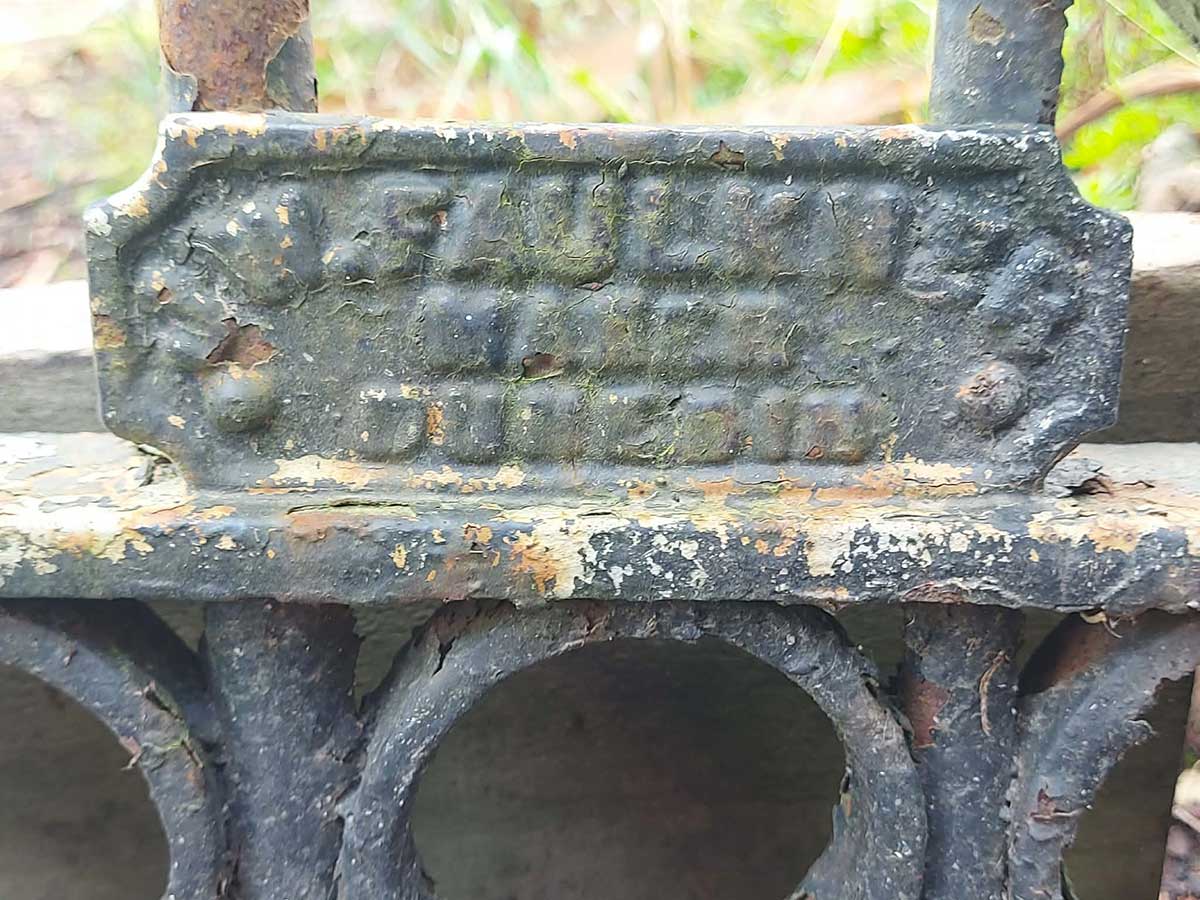
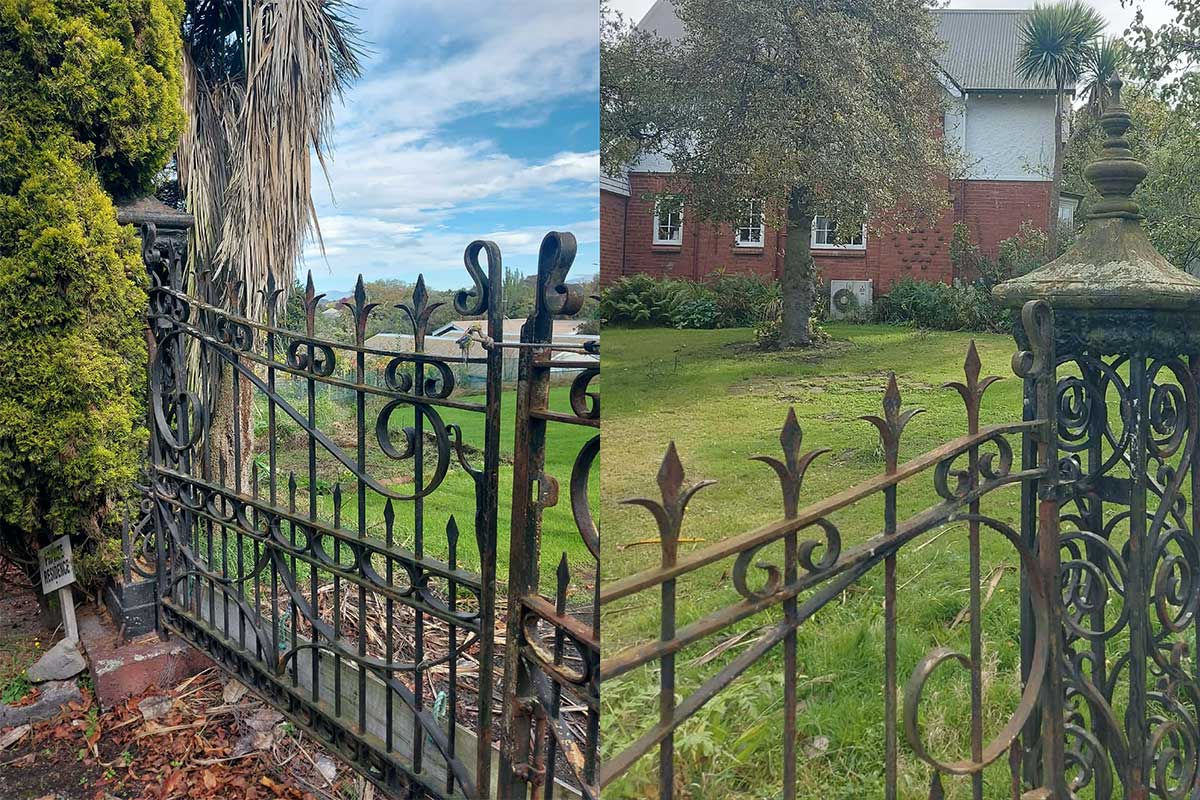
Left and Right sides of the gates at the Timaru Botanic Gardens. These are off to the side, as the boundary to the caretakers house, and are not usually noticed by the public.
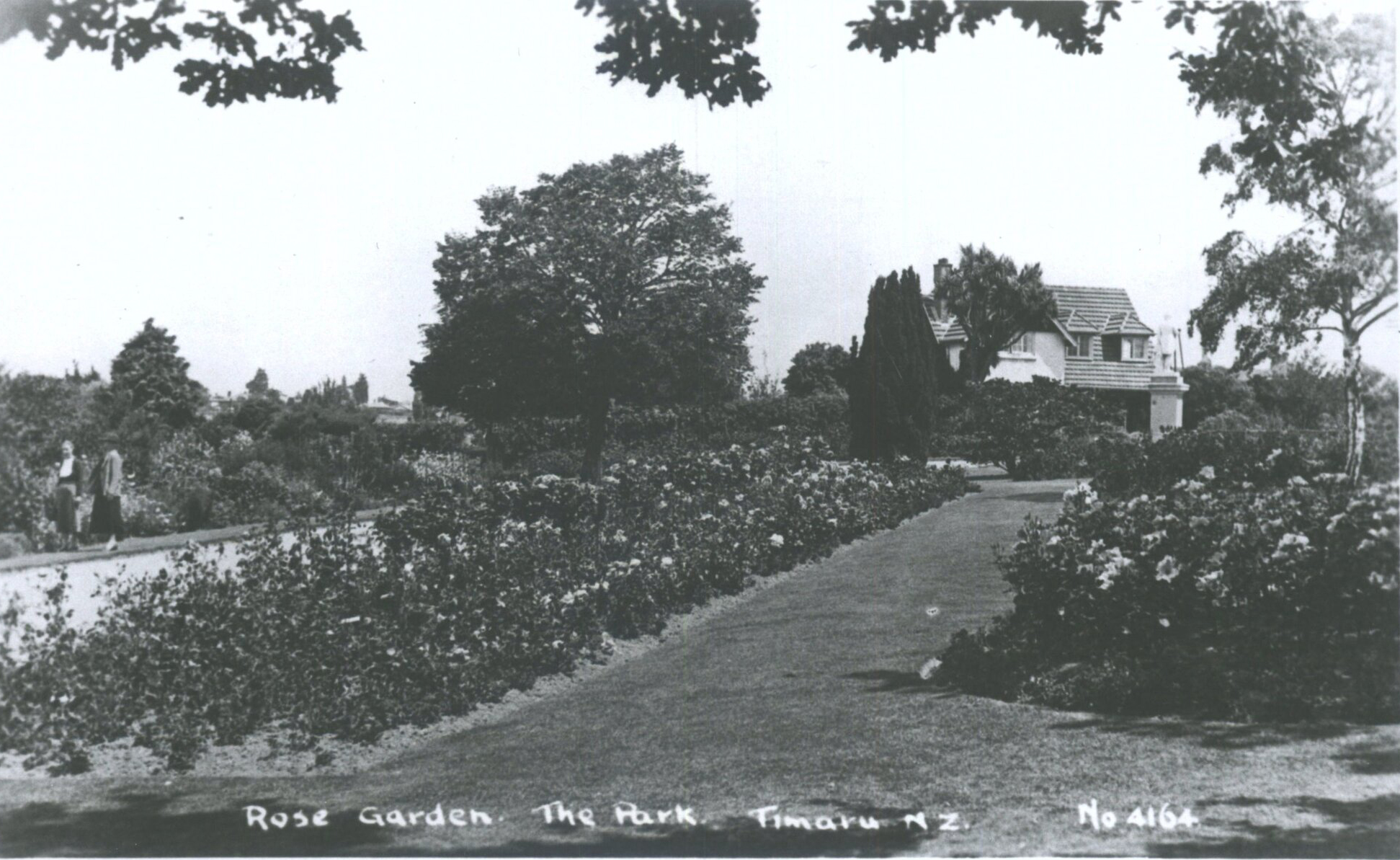
The Rose Garden at the Park in Timaru with a view to the Ti Kouka Cabbage tree that is said to predate the Botanic Gardens establishment. The Caretarkers house is in the distance. This is to the west of the Glouster Gates off Queen Street in Timaru - Hocken Library. Looking at the design of the house, I wonder if it could be a Turnbull and Rule artchitectual style. Which would be interesting if it could be confirmed, as the Aigantighe's design is attributed to James Turnbull. The gates below, I believe are a house also designed by James Turnbull, possibly Turnbull and Rule. I need to do some more research to nut this out.
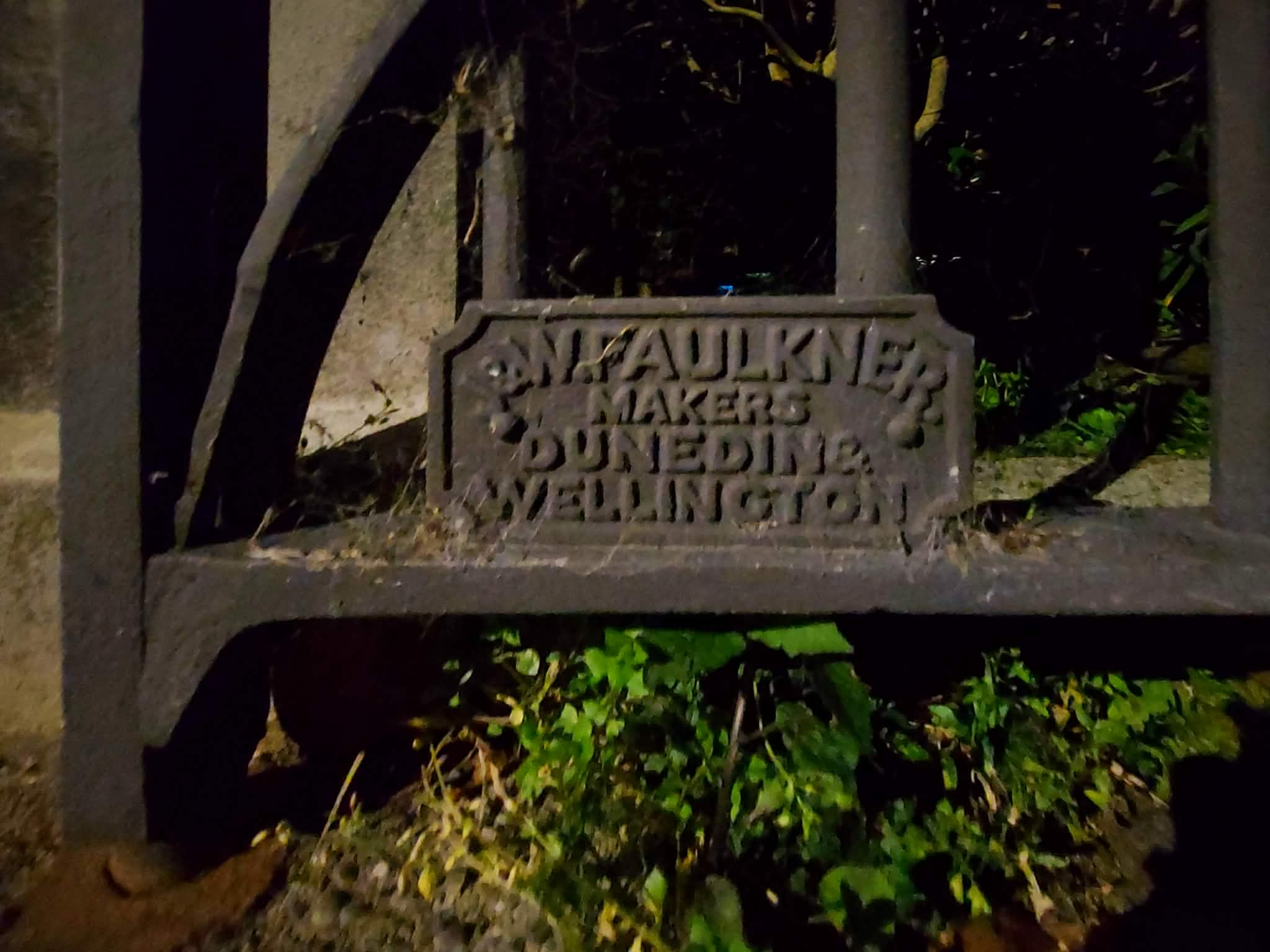
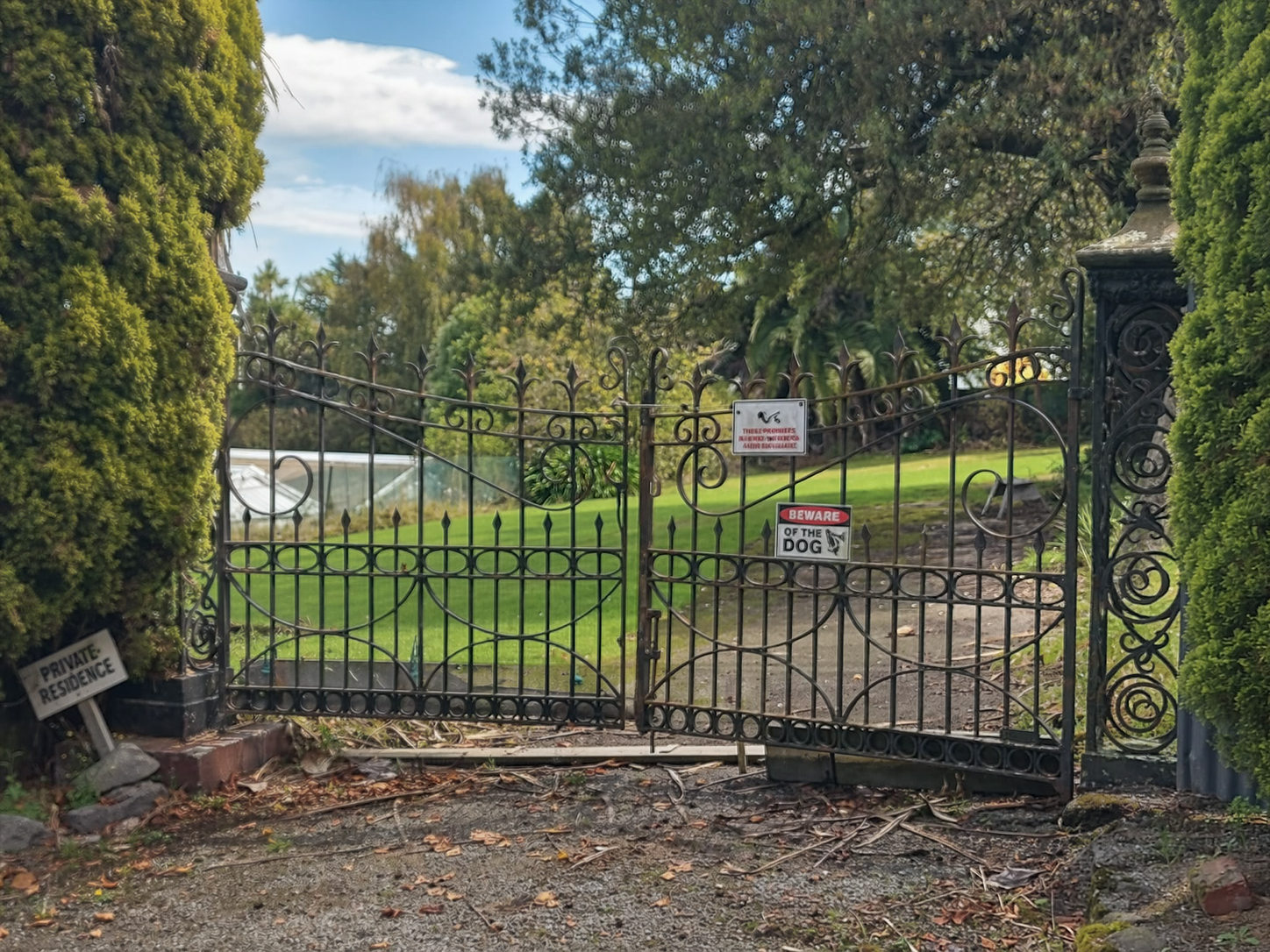
Gates at a house on Sefton Street. The property has a driveway entrance with a left and right gate. There is also a pedestrian gate to the West end of the street boundary.
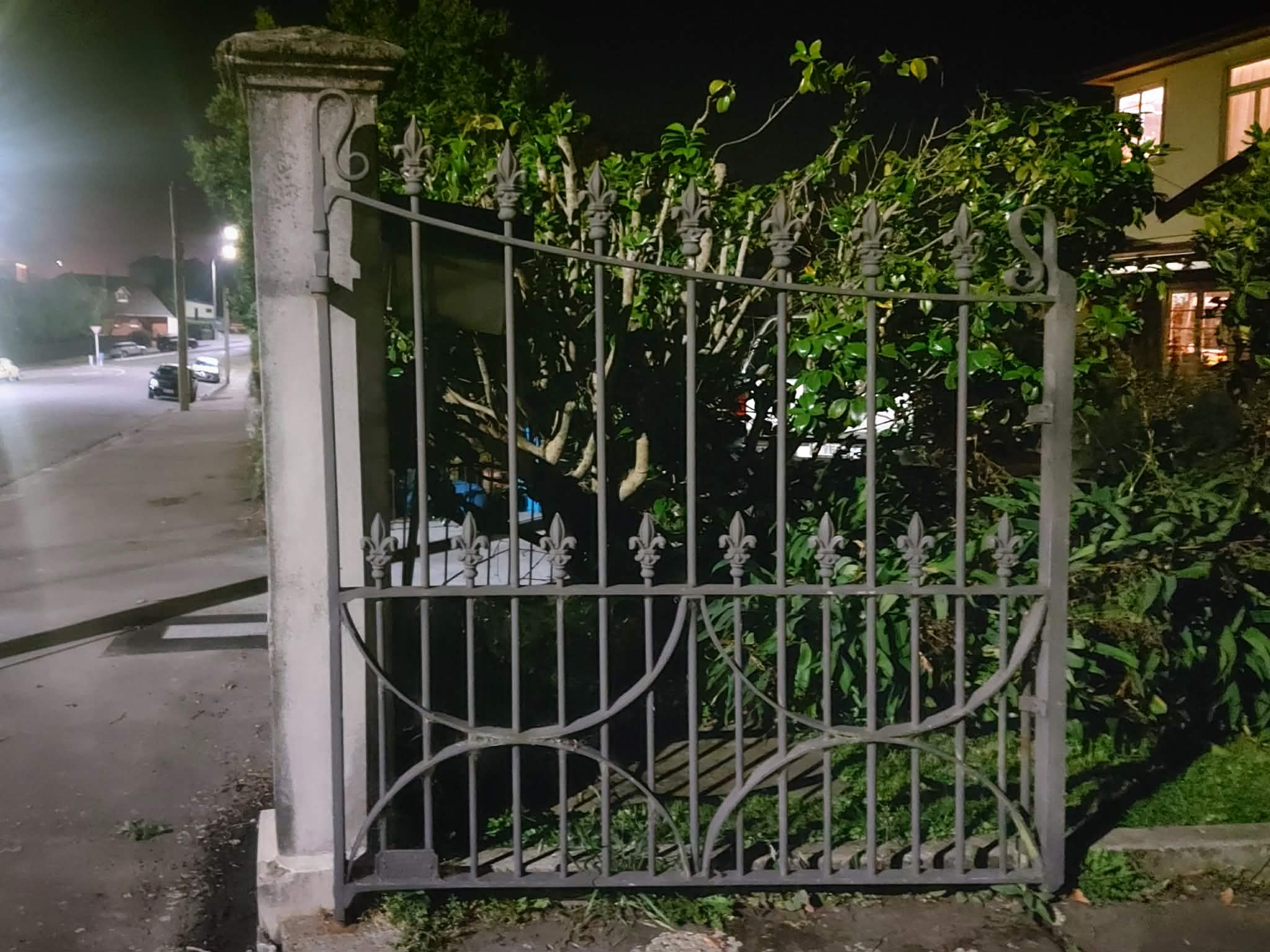
I wonder if the design includes a Fleur-de-lis.

This is a view over Dunedin. The view is probably Constitution Street. The Dunedin Railway Station can be clearly seen and the harbour beyond. The premises of J. & W. Faulkner (iron and brass bedstead manufacturers), J. & A. Wilkinson Limited (timber merchants) and Hudson's (confectioners) are visible. There is an advertising sign for L'Ustruss Paints down near the harbour. The Hanover Street Baptist Church can be seen.
Chance, George, 1885-1963, Dunedin (c.1942). Hocken Digital Collections, accessed 04/04/2026, https://hocken.recollect.co.nz/nodes/view/51639

Photography by Roselyn Fauth March 2026
Timeline
1887: J. W. Faulkner begins advertising smithing and wirework services in Dunedin.
1893: The business is operating as J. W. Faulkner and Sons.
1894: Faulkner advertisements promote front fencing, carriage gates, cottage gates, field gates, and wrought or cast-iron pillars.
1896: J. W. Faulkner & Sons Ltd is legally incorporated.
1897: The business begins styling itself J. & W. Faulkner.
1902: Faulkner moves to the corner of Castle and St Andrew Streets, Dunedin.
1903: Advertisements promote ornamental wrought and cast-iron railings, gates, pillars, and fencing.
c.1905: Aigantighe is generally dated to 1905 and attributed to James S. Turnbull.
1905 to 1906: Alexander Grant is already listed at Wai-iti Road, supporting an early date for the house.
1913: James William Faulkner dies; Alice Faulkner and sons James Sydney and William Henry continue the business.
1914: Faulkner advertises gates, memorial railings, and ironwork to architects’ designs.
1915: Faulkner helps supply fittings for the hospital ship Maheno.
1916: Faulkner publishes Catalogue No. 3, showing gates, pillars, railings, balustrades, lamps, grilles, and more.
1925 to 1926: The firm wins a gold medal for hospital bed and furniture at the New Zealand and South Seas Exhibition in Dunedin.
1934: Faulkners becomes a limited liability company.
1955: Jessie Wigley, with the support of James Grant, gifts the house and grounds to the people of Timaru.
1956: Aigantighe Art Gallery opens to the public.
1978: The Ronald Dohig extension is added.
1987: J. & W. Faulkner closes after takeover by Sharland & Co.