By Roselyn Fauth
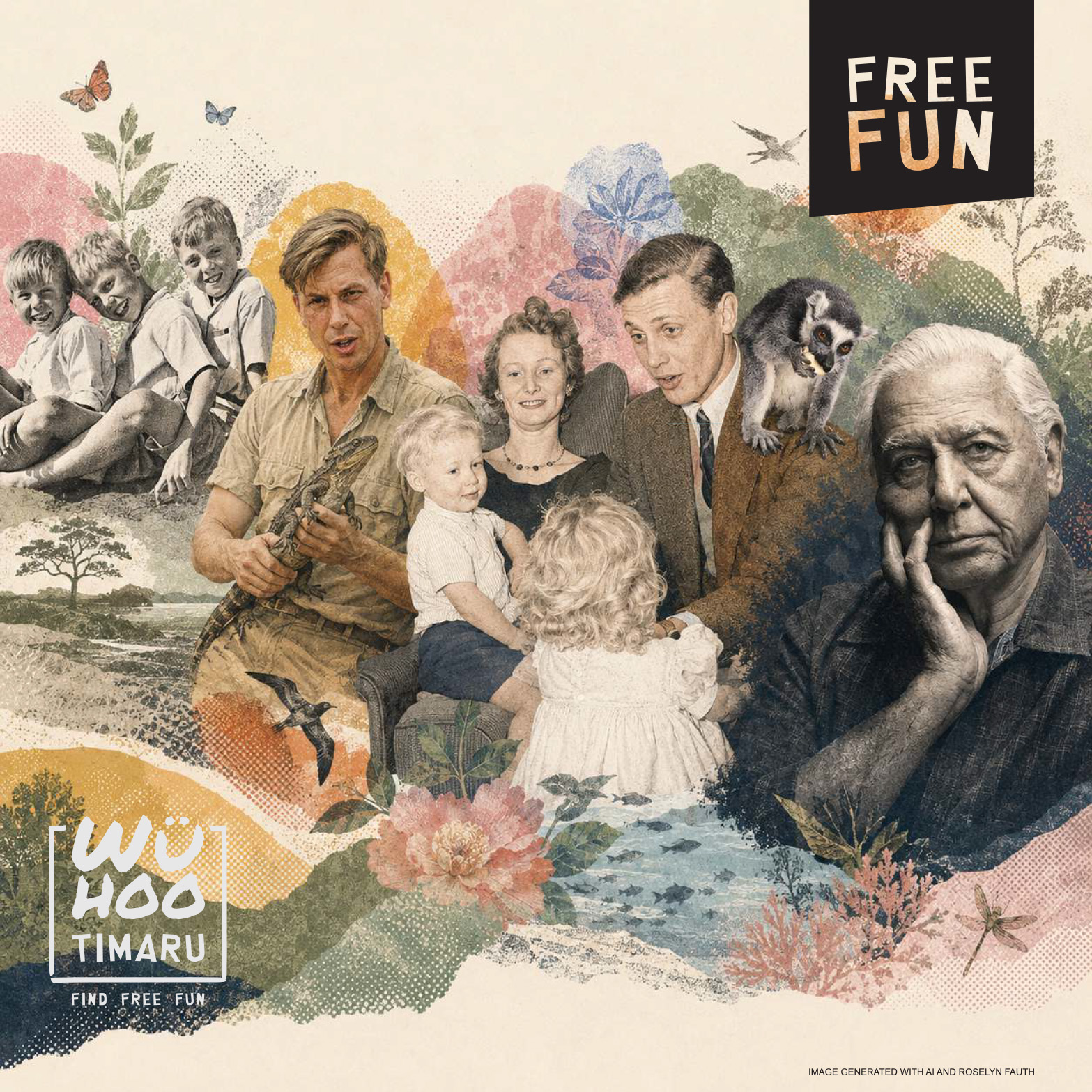
Sir David Frederick Attenborough is an English broadcaster, natural historian and writer. His presenting career began as host of Zoo Quest in 1954, and has spanned eight decades; it includes the nine documentary series forming The Life Collection, Natural World, Wildlife on One, the Planet Earth franchise, The Blue Planet and Blue Planet II. He helped transform wildlife television, reached millions of families around the world, won major awards including BAFTA, Emmy and Peabody recognition. He was knighted by Queen Elizabeth II. In 2022, he received an even higher royal honour, becoming a Knight Grand Cross of the Order of St Michael and St George for services to television broadcasting and conservation. But his greatest success might be harder to measure: he helped ordinary people, sitting on couches at home, look at the natural world with more curiosity,and in turn helped them take notice and care about the world around them. Image created by Roselyn Fauth with Ai - source images: https://www.thegentlemansjournal.com/article/david-attenborough-life-pictures
See your place. Tell your story... inspired by Sir David Attenborough turning 100 this week!
So, internet will be full of tributes today, and rightly so. There will be posts about the voice, the gorillas, the blue planet, the ground breaking camera work, and all those moments where he made the natural world feel enormous and so intimate. I am not going to lie, the beauty of our natural world in his documentaries blows me away, but also sometimes switched my awe for the natural world to a sad feeling in the pit of my stomach. David and many other explorers and conservationists have empowered me to see the little things I need to do to help. One simple step is just taking notice and understanding that while we may not be able to impact a solar flare or the forces of planets... the little things add up, how we consume, dispose, live with our land, even to how we spend out money is a vote in the direction of our impact on the world. So as well as writing this blog to help you find free fun, in honour of David's birthday today, I invite you to also think about the impact you make and the little things you do.
"No one will protect what they don’t care about, and no one will care about what they have never experienced.” - Sir David Attenborough
So... this is not another grand biography of David Attenborough... read on to find out what this blog is instead...not just a chunk of information... but a blog to help make curiosity something people can do together, for free, and to make it meaningful.
A family in Timaru learned to wonder together
I remember all six of us squeezed onto the couch as kids, watching David Attenborough on a television. For those who have the joy of a phone that enables you to play on demand... this was back in the 80s and 90s when we had to get up and push a button to turn the TV on. We didn't have a remote, the volume was a dial, and for a while we had the choice of two TV channels. If we wanted to watch a show, we had to plan to watch it. David's documentaries were usually on the TV after dinner, a prime time, between dinner and bed.
We sat quietly... if you missed something, you couldn't rewind if someone talked over the good bit. I remember my parents aghing and oohing when the camera caught something unbelievable. It was magical that a bird doing something fancy in the Amazon was on our screen in our Timaru lounge.
David Attenborough did not make me think wonder only lived in jungles, oceans and ice sheets. He made me more suspicious of the ordinary. He made me wonder what I was was in my backyard, local park, or DOC land...
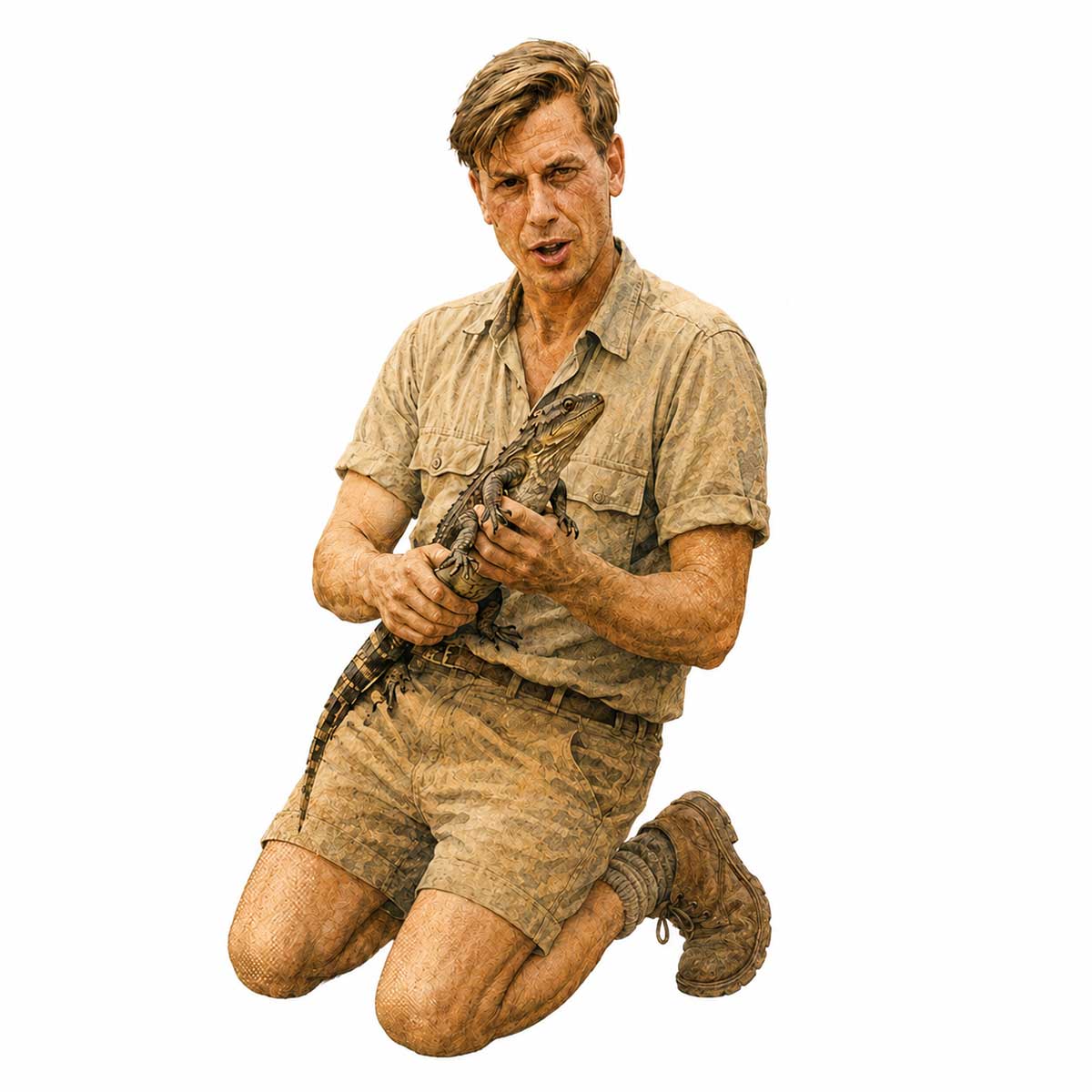
Nature is our biggest ally and our greatest inspiration - Sir David Attenborough. Image created by Roselyn Fauth with Ai - source images: https://www.thegentlemansjournal.com/article/david-attenborough-life-pictures
Behind the lone explorer was also a husband and dad
We often saw him alone on screen, crouched beside a nest, standing in a rainforest, or speaking quietly as some astonishing creature appeared. David's delivery was iconic.
He was also a husband and a father. He married Jane in 1950, and they had two children, Robert and Susan. In the early Zoo Quest years, while he was helping invent a new kind of wildlife television, he was also coming home to family life in Richmond, UK. Photos from the 1950s show him at home with Jane and the children, with books, babies, pets and the natural world somehow finding its way into the house as well as onto the screen.
The wildlife did not stay on the other side of the television. In those early years, some of it came home too, with tanks, vivaria and visiting creatures becoming part of family life/ Getty images has some wonderful shots of David's family life, but sadly I dont have the budget to buy the copyright, so you will have to hunt them out here: https://www.architecturaldigest.com/story/sir-david-attenborough-at-home
Most of us wouldn't have grown up with unexpected animals in the dining room like the Attenboroughs in the 1950s, but everyone can have curiosity live at home.
It can sit beside the bookshelf, come on a walk, follow a child’s question, and turn an ordinary family afternoon into a small expedition. We call these WuHoo's. finding free fun and making it meaningful.

“No one will protect what they don’t care about - Sir David Attenborough. Image created by Roselyn Fauth with Ai - source images: https://www.thegentlemansjournal.com/article/david-attenborough-life-pictures
I have learned through David that meaningful family fun can start with a question
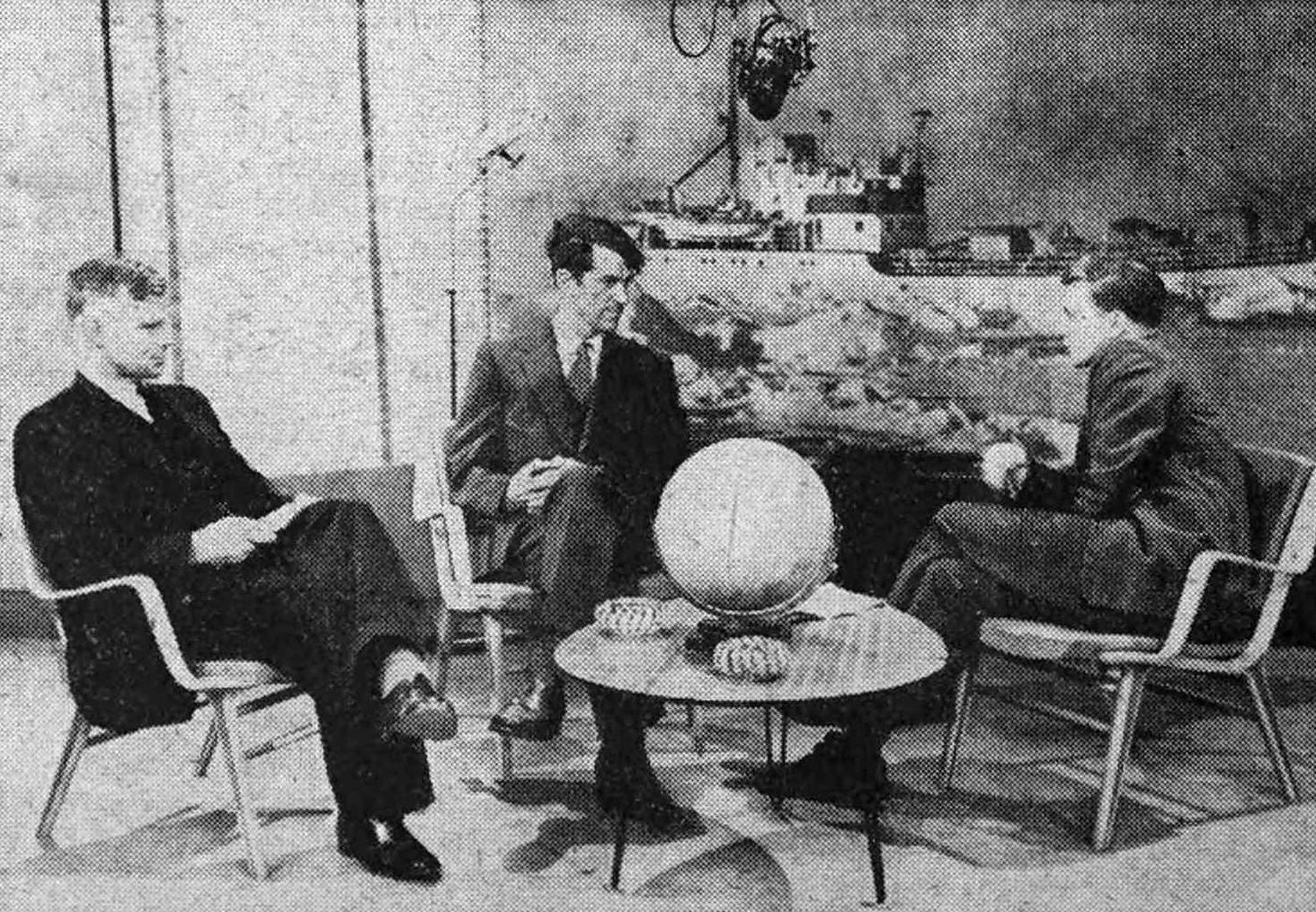
By Unknown author - Listener 1956-04-05: Vol 55 Iss 1410, Public Domain, https://commons.wikimedia.org/w/index.php?curid=185027925
“The natural world is the greatest source of excitement.” - Sir David Attenborough
David’s curiosity began with fossils, rocks and newts
David Attenborough did not start with gorillas, whales, rainforests or frozen oceans. He started much smaller. As a boy, he collected fossils, rocks and natural things. He made his own little museum. There is even the wonderful story of him, aged about 11, selling newts to a university zoology department for threepence each. I love that... it makes the Attenborough legend feel like one of us... Before the famous voice and the film crews, there was a child poking around a pond, curious enough to notice something most people would walk past.

No one will protect what they don’t care about and no one will care about what they have never experienced - Sir David Attenborough
Facts I learned about David Attenborough and his family life
-
David Frederick Attenborough was born on 8 May 1926 in Isleworth, London, and grew up in Leicester, where his father was principal of University College Leicester.
-
His parents were Frederick Attenborough and Mary Attenborough, née Clegg. Frederick was an academic, and Mary was a philanthropist and social activist who helped care for child refugees during the Spanish Civil War and Second World War.
-
David was one of three boys. His older brother Richard became the famous actor and film director, and his younger brother John later worked in the motor industry.
-
The Attenborough boys grew up in College House on the university campus, which meant books, students, specimens, museums and curious grown-ups were part of everyday life.
-
All three brothers went to Wyggeston Grammar School for Boys, just a short walk from the university, so even school was woven into that campus childhood.
-
David went on to Clare College, Cambridge, where he studied geology and zoology,
-
David Attenborough was not just the documentary voice in the rainforest. He was also a husband, dad, brother, book lover, collector and homebody.
-
He married Jane Elizabeth Ebsworth Oriel in 1950, and they had two children, Robert and Susan. In a 2017 interview with Louis Theroux, he said his work could take him away for three months at a time, and that missing parts of a child’s life was “irreplaceable”. ITV also reported that he credited Jane with carrying much of the load while he was away. Jane died in 1997 after suffering a brain haemorrhage while David was away filming The Life of Birds in New Zealand. He returned to be with her before she died. They were married for 47 years.
- He joined the BBC in the early 1950s and became known for innovative educational natural-history programmes, especially the long-running Life series.
-
In the early Zoo Quest years, while he was becoming famous for wildlife television, he was also coming home to family life with books, babies and pets around him. (I love that his home life and work life seemed to overlap)
-
After some Zoo Quest trips, animals came home too, and the family house gradually gained tanks, vivaria and visiting creatures. (Talk about bringing your work home!).
-
As a child, David collected fossils, eggshells and newts, so his curiosity started long before the cameras arrived.
-
He even sold newts to the university zoology department as a boy.
- David Attenborough is not known as a strict vegetarian or vegan, but he has spoken about changing his diet and eating much less meat as he became more aware of the impact of farming and food choices on the planet. In Planet Earth III, he also strongly encouraged moving away from meat and dairy towards more plant-based diets because of the amount of land used for animal agriculture.
-
The children grew up mostly out of the public spotlight. Robert Attenborough became an academic in bioanthropology, and Susan Attenborough is described as a former primary school head. Both seem to have kept much more private lives than their father.
- Life on Earth became a major international success, sold to more than 100 territories and watched by an estimated 500 million people worldwide.
-
His career includes Emmy recognition, BAFTA recognition, a Peabody Award and lifetime achievement honours.
- He received a knighthood in 1985 and was appointed Knight Grand Cross of the Order of St Michael and St George in 2022.
-
More than 40 species and even a constellation have been named in his honour, according to GBH. Kew also marked his 100th birthday by highlighting plants and fungi named after him.
- Around his centenary, new and special programmes were still being released or promoted, including projects looking back at Life on Earth and new work focused on wildlife close to home.
David shows us that wonder does not have to be far away. It can live at home, beside the bookshelf, in the garden, on a family walk, or in a child asking, “What’s that?"
I wanted to learn more about Jane, she seems to have lived a very private life, and most of what we know comes from David’s later interviews, memoir material, and family photos. That makes me think about the hidden work behind wonder. We saw the lone explorer on screen, but there was also a family at home. There was a wife, two children, a bookshelf, probably a lot of patience, and, at times, tanks and vivaria in places most of us would not expect them.
My parents taught me adventure could start close to home
My parents understood that too. They wrote a book about discovering the South Island, at a time when tramping was wilder, roads were rougher, and exploring meant heading out into weather, hills, rivers, tracks and the occasional bad decision. They taught us to look at our own back garden, public parks, beaches and conservation land as places worth noticing.
For me, while David Attenborough helped us look out at the planet... my parents helped us look down at our own feet. Somewhere between those two things, WuHoo Timaru began to make sense to me.
Timaru is full of things we are good at walking past
Over the last decade, helped along by National Geographic’s Explorer Mindset, Harvard’s Tangible Things course, my parents, my teachers, friends, and the generous people who work in our museum, gallery and library, I have found so much free fun in Timaru.
I have followed odd little clues. I have read plaques and wondered who was missing from them. I have dragged patient people to murals, cemeteries, playgrounds, beaches, old buildings, bits of lava, public gardens and signs they probably thought they had already seen.
The funny thing is, Timaru is not short of things to discover... we are just very good at walking past them.
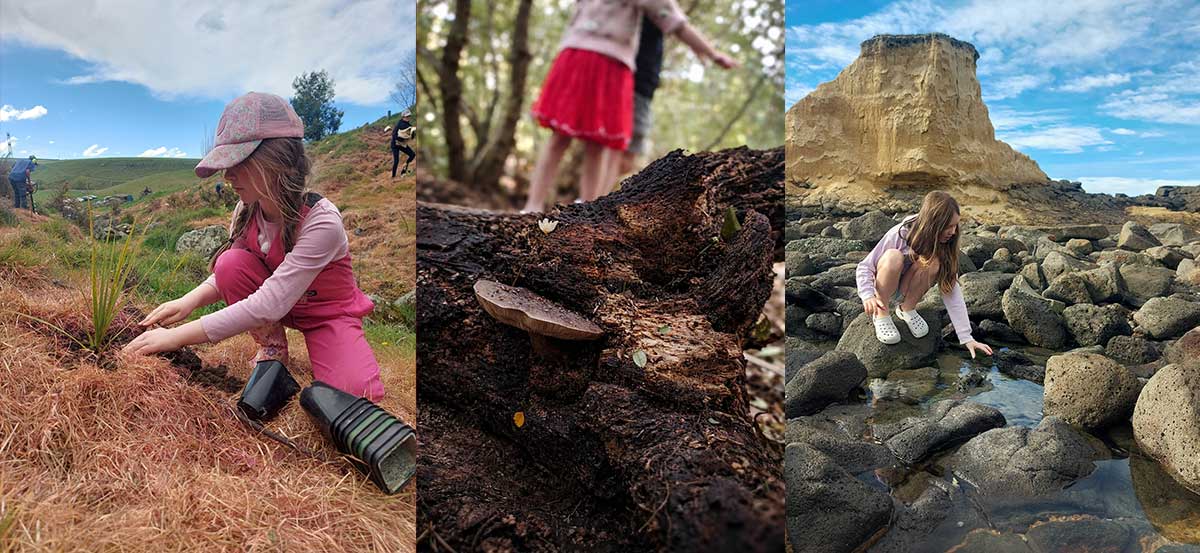
Support community planting days. Find fungi in the Native Bush at the Timaru Botanic Gardens. Crouch at a rock pool at dashing rocks and spy creatures. - Photography by Roselyn Fauth
Ordinary things become interesting when we ask better questions
A sandy shore can look like a beach until you notice tiny waterways carving little river systems through the sand. Then suddenly you are thinking about flow, gravity, erosion and why the same shapes turn up at different scales.
A stone can look like a stone until you ask why it is smooth, why it is that colour, how did it get here, and how long it has been travelling.
A building can look ordinary until you notice the facades details, brickwork, modifcations, the doorway, the old name ghosted on a wall, the new use, and the people who once worked, shopped, lived or waited there.
A tree can look like shade until you realise it is also habitat, memory, science, design, public health and someone’s long-ago decision to grow a tiny seed into a sprout to plant for the future for us.
A museum object can sit in a case until you ask who made it, who used it, who kept it, who forgot it, and why it survived when so many other things did not. Before you know it a dead stuffed bird can be the subject of an artist who takes her images and shares them a global art events in Venice.
“It’s surely our responsibility to do everything within our power to create a planet that provides a home… for all life on Earth.” - Sir David Attenborough
The Timaru Scenic Route gives us a local expedition
This was our attempt to help you find some inspiration. It is not just a drive around town, it was an inviation to slow down, find fun, and be curious. It connects free local places with art, culture, history, environment and everyday life, including Heritage Place, the Botanic Gardens, Pātītī Point, Ōtipua Wetlands and Saltwater Creek, Centennial Park, Waitarakao Washdyke Lagoon, Dashing Rocks, Blackett Lighthouse, Caroline Bay, Aigantighe Art Gallery and South Canterbury Museum.
We can complain that Timaru has nothing to do... or we can make the most of it, and make our own fun.
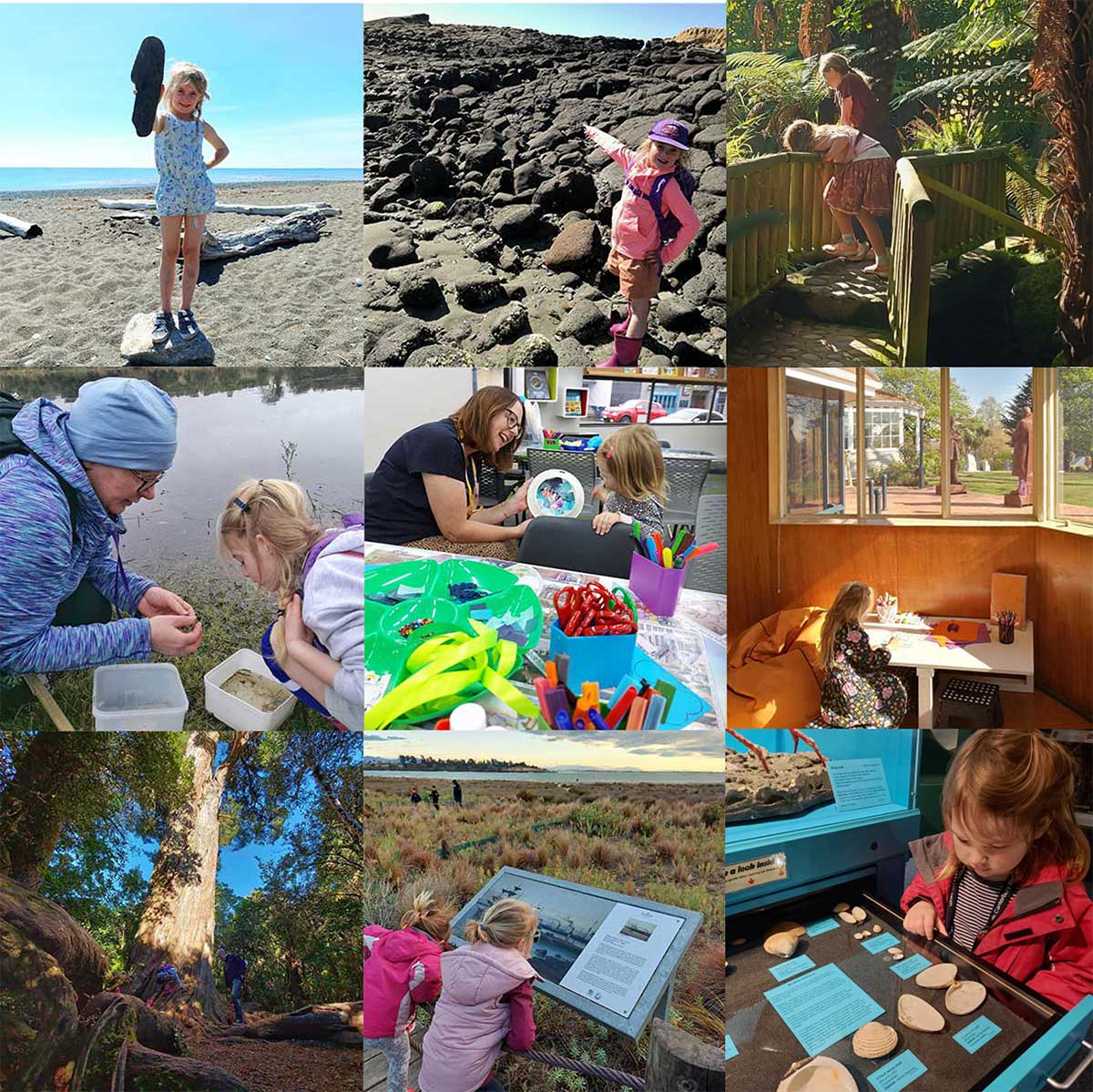
The library, museum and gallery help turn noticing into knowledge
The library is where one question can become a trail. You can walk in wondering about a bird, a building, a ship, a plant, a family name or an old photograph, and come out with something else to follow. I am always in awe how the library team know us by name, remember what we enjoy readings and often will lead us to a book they are proud to share from their shelf.
The museum is where objects, specimens, maps, photographs and memories help us understand land, life and people. It reminds us that history is not only found in big events. It is also in the small things someone kept. We are so lucky to have a museum that is championed by the community. Most wont realise it was established by a trust, gifts of a building and objects for the council to manage on our communities behalf. Delving into stories of our past people and place are critical to finding WuHoo's. They give us a base knowledge to know where we have come from to know who we are, to be able to make better choices for the future.
The gallery teaches another sort of looking. It slows us down. It asks us to notice shape, colour, material, feeling, place and point of view. Art can do something writing and history objects can't, it gives us a chance to think critically, and to feel something. Two people can stand in front of the same artwork and see, feel and think different things.

“Nature is our biggest ally and our greatest inspiration.” - Sir David Attenborough
Explorer Mindset and Tangible Things give us tools for looking
I have had all of these ideas bubbling away over my youth, but it was the two courses that I did that really helped me shape WuHoo Timaru. These are free courses on line that anyone can do.
- National Geographic’s Explorer Mindset helped me put words around this. It encourages people to observe, ask questions, build knowledge, think critically and creatively, and use what they learn to care for the world around them.
- Harvard’s Tangible Things course reminded me that objects are not just objects. Books, artworks, scientific specimens, artefacts, tools, signs, buildings and everyday things can open doors into history, science, memory, culture and human connection.
So instead of adding one more Attenborough tribute to the internet, I thought I would offer something local.
How to be a David Attenborough in Timaru.
No passport. No documentary crew. No khaki shirt required.
Just choose a place, stop for a moment, look properly, and ask the question that starts nearly every good adventure:
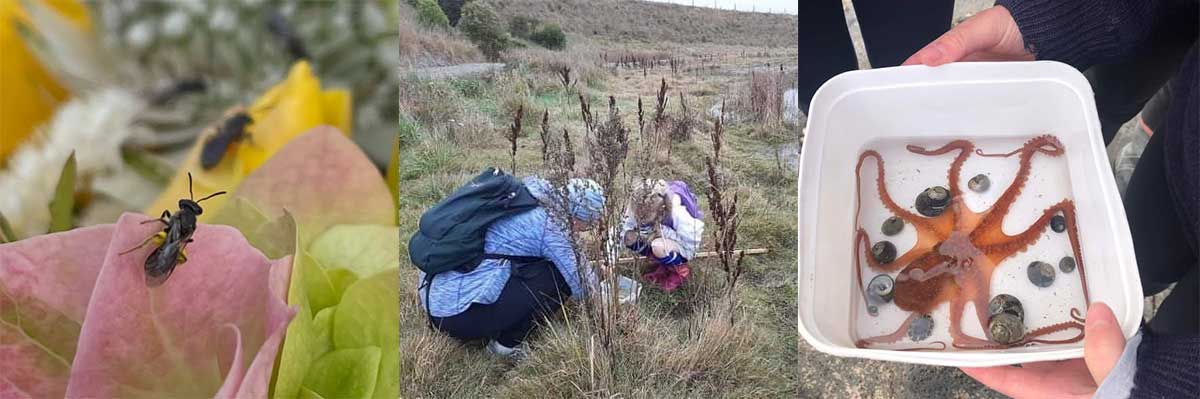
What’s that?
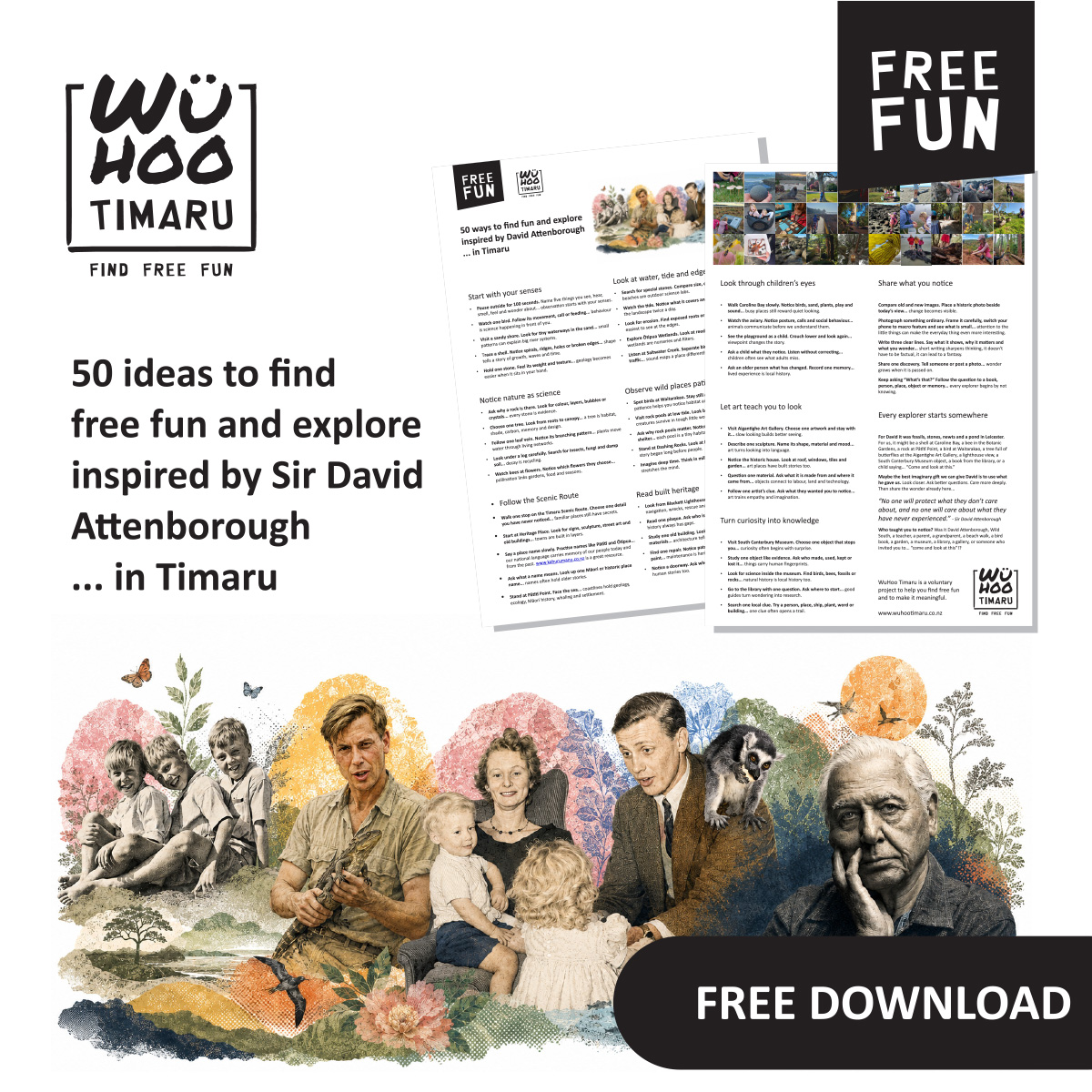
50 ways to be a David Attenborough in Timaru
Start with your senses
- Pause outside for 100 seconds. Name five things you see, hear, smell, feel and wonder about... observation starts with your senses.
- Watch one bird. Follow its movement, call or feeding... behaviour is science happening in front of you.
- Visit a sandy shore. Look for tiny waterways in the sand... small patterns can explain big river systems.
- Trace a shell. Notice spirals, ridges, holes or broken edges... shape tells a story of growth, waves and time.
- Hold one stone. Feel its weight and texture... geology becomes easier when it sits in your hand.
Notice nature as science
- Ask why a rock is there. Look for colour, layers, bubbles or crystals... every stone is evidence.
- Choose one tree. Look from roots to canopy... a tree is habitat, shade, carbon, memory and design.
- Follow one leaf vein. Notice its branching pattern... plants move water through living networks.
- Look under a log carefully. Search for insects, fungi and damp soil... decay is recycling.
- Watch bees at flowers. Notice which flowers they choose... pollination links gardens, food and seasons.
Follow the Scenic Route
- Walk one stop on the Timaru Scenic Route. Choose one detail you have never noticed... familiar places still have secrets.
- Start at Heritage Place. Look for signs, sculpture, street art and old buildings... towns are built in layers.
- Say a place name slowly. Practise names like Pātītī and Ōtipua... our national language carries memory of our people today and from the past.
- Ask what a name means. Look up one Māori or historic place name... names often hold older stories.
- Stand at Pātītī Point. Face the sea... coastlines hold geology, ecology, Māori history, whaling and settlement.
Look at water, tide and edges
- Search for special stones. Compare size, colour and texture... beaches are outdoor science labs.
- Watch the tide. Notice what it covers and reveals... the sea edits the landscape twice a day.
- Look for erosion. Find exposed roots or shifting sand... change is easiest to see at the edges.
- Explore Ōtipua Wetlands. Look at reeds, mud, water and birds... wetlands are nurseries and filters.
- Listen at Saltwater Creek. Separate birds, wind, water and traffic... sound maps a place differently.
Observe wild places patiently
- Spot birds at Waitarakao. Stay still and let them move first... patience helps you notice habitat and behaviour.
- Visit rock pools at low tide. Look before touching... small creatures survive in tough little worlds.
- Ask why rock pools matter. Notice water depth, weed and shelter... each pool is a tiny habitat.
- Stand at Dashing Rocks. Look at lava, cliffs and coast... Timaru’s story began long before people.
- Imagine deep time. Think in millions of years... geology stretches the mind.
Read built heritage
- Look from Blackett Lighthouse. Scan the bay... a view can hold navigation, wrecks, rescue and memory.
- Read one plaque. Ask who is named and who is missing... public history always has gaps.
- Study one old building. Look at roofline, windows and materials... architecture tells us what people valued.
- Find one repair. Notice patched stone, new timber or fresh paint... maintenance is heritage in action.
- Notice a doorway. Ask who passed through it... buildings are human stories too.
Look through children’s eyes
- Walk Caroline Bay slowly. Notice birds, sand, plants, play and sound... busy places still reward quiet looking.
- Watch the aviary. Notice posture, calls and social behaviour... animals communicate before we understand them.
- See the playground as a child. Crouch lower and look again... viewpoint changes the story.
- Ask a child what they notice. Listen without correcting... children often see what adults miss.
- Ask an older person what has changed. Record one memory... lived experience is local history.
Let art teach you to look
- Visit Aigantighe Art Gallery. Choose one artwork and stay with it... slow looking builds better seeing.
- Describe one sculpture. Name its shape, material and mood... art turns looking into language.
- Notice the historic house. Look at roof, windows, tiles and garden... art places have built stories too.
- Question one material. Ask what it is made from and where it came from... objects connect to labour, land and technology.
- Follow one artist’s clue. Ask what they wanted you to notice... art trains empathy and imagination.
Turn curiosity into knowledge
- Visit South Canterbury Museum. Choose one object that stops you... curiosity often begins with surprise.
- Study one object like evidence. Ask who made, used, kept or lost it... things carry human fingerprints.
- Look for science inside the museum. Find birds, bees, fossils or rocks... natural history is local history too.
- Go to the library with one question. Ask where to start... good guides turn wondering into research.
- Search one local clue. Try a person, place, ship, plant, word or building... one clue often opens a trail.
Share what you notice
- Compare old and new images. Place a historic photo beside today’s view... change becomes visible.
- Photograph something ordinary. Frame it carefully, switch your phone to macro feature and see what is small... attention to the little things can make the everyday thing even more interesting.
- Write three clear lines. Say what it shows, why it matters and what you wonder... short writing sharpens thinking, it doesn't have to be factual, it can lead to a fantasy.
- Share one discovery. Tell someone or post a photo... wonder grows when it is passed on.
- Keep asking “What’s that?” Follow the question to a book, person, place, object or memory... every explorer begins by not knowing.
Every explorer starts somewhere. Every David Attenborough starts somewhere. For him, it was fossils, stones, newts and a pond in Leicester. For us, it might be a shell at Caroline Bay, a bee in the Botanic Gardens, a rock at Pātītī Point, a bird at Waitarakao, a sculpture at Aigantighe, a lighthouse view, a museum object, a book from the library, or a child saying, “Come and look at this.”
So for Sir David Attenborough’s 100th birthday, maybe the best imaginary gift we can give him is simple. Use what he gave us. Look closer. Ask better questions. Care more deeply. Then share the wonder already here.
Who taught you to notice? Was it David Attenborough, Wild South, a teacher, a parent, a grandparent, a beach walk, a bird book, a garden, a museum, a library, a gallery, or someone who simply said, “Come and look at this”?
Side Quest: David Attenborough and New Zealand’s strange, wonderful birds
Sir David Attenborough has helped people around the world see Aotearoa New Zealand as a living laboratory of evolution. Through his wildlife documentaries, he introduced audiences to some of our most unusual birds, including the kiwi and the kākāpō.
New Zealand’s birds evolved in a land without native land mammals as predators. Over millions of years, some birds no longer needed to fly. Instead, they became ground-dwellers, night wanderers, forest browsers and island specialists. That is why birds like kiwi, takahē and kākāpō are so extraordinary, and also why they are so vulnerable.
Attenborough’s storytelling helped explain that conservation is not just about saving cute or rare animals. It is about understanding how everything is connected: islands, forests, predators, people, and time. The kākāpō, once almost lost, became a powerful symbol of what can happen when science, care, volunteers, iwi, rangers and communities work together.
David shows us that our free fun adventures can be close to home. They are hiding in the bush, calling at night, nesting on islands, or waiting for us to notice them.
What local species, place or story near Timaru might need us to notice it before it disappears?

www.wuhootimaru.co.nz/find-a-wuhoo-at-home/261-find-garden-birds-at-home

https://www.wuhootimaru.co.nz/colouring-sheets/106-bees

https://www.wuhootimaru.co.nz/colouring-sheets/83-the-long-tailed-bat
If you are feeling movitated to keep reading... here is my blog on the Explorer Mindset...
We love National Geographic's explorer mindset
WuHoo Timaru aims to help cultivate the “Explorer Mindset” in lifelong learners across the Timaru District.
The Explorer Mindset is a dynamic blend of curiosity, courage, critical thinking, and empathy that empowers learners of all ages to engage meaningfully with the world. WuHoo Timaru has been inspired by the National Geographic Society’s vision for education, we give our time to support educators, researchers, and community leaders with innovative learning experience inspiration that bridge science, art, history and storytelling, to spark curiosity, critical thinking and drive action. Through immersive, inquiry-based strategies and direct engagement with real-world explorers and changemakers, we aim to help our community grow outstanding future citizens by helping them develop the skills and attitudes needed to navigate complexity, nurture empathy, and contribute to a more sustainable and interconnected future.
When we know where we have come from, we can better know ourselves and where we are going. - Roselyn Fauth
Learning Through Play at Caroline Bay
One way we are putting this into action is through our involvement in the Caroline Bay playground project. Now that the playground is open, we are focused on activating learning in the space — bringing education into play. To guide our work, we completed a National Geographic education course focused on developing the Explorer Mindset and implementing the Explorer Mindset Learning Framework (EMLF). You can learn more here:
Designing for Education and Community Impact
Together with CPlay, WuHoo volunteers Roselyn and Christopher Fauth consulted with local educators in schools and at Council Facilities such as the Museum, Gallery and Libraries, and mana whenua and various cultural groups to ensure the playground aligned with the New Zealand curriculum, which emphasizes local and cultural learning. Key features include:
-
Interactive signage and exhibits that highlight local flora, fauna, and cultural stories, created in collaboration with the South Canterbury Museum and iwi representatives.
-
Nature-based play elements designed to promote inquiry, discovery, and sensory engagement with the environment.
-
Curriculum-aligned content to support teachers in using the playground as an outdoor classroom.
-
Community engagement initiatives that ensure the playground remains a living, evolving educational resource.
We referred to the New Zealand Curriculum at the time via nzcurriculum.tki.org.nz, now being replaced by tahurangi.education.govt.nz.
We continue to devlope digital, print and physical signage to help our community find free fun, and make it meaningful.
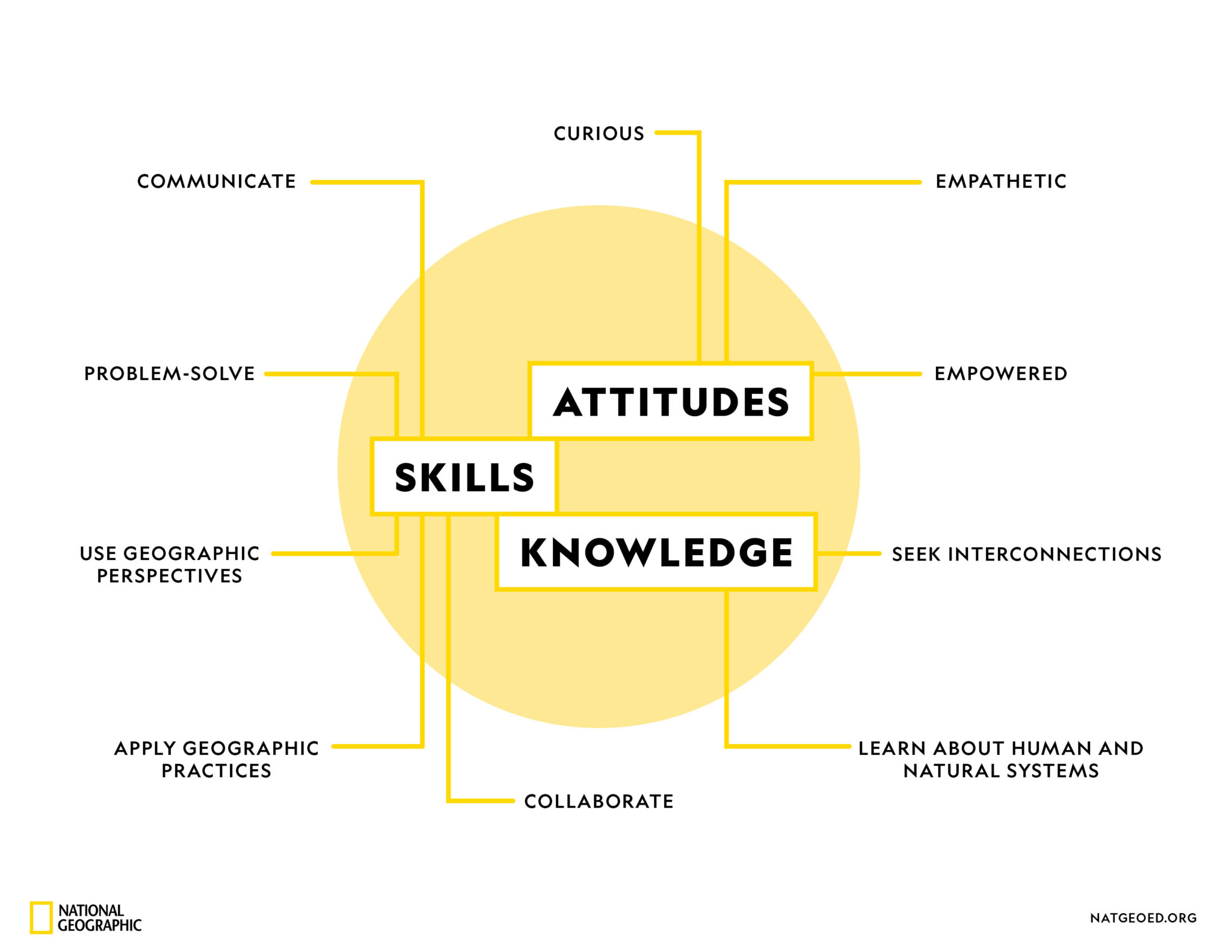
Explorer Mindset Learning Framework (EMLF)
(Source: natgeoed.org)
Attitudes
-
Curious
Explorers are curious and engage with the world around them. They observe, document, and ask questions about where things are and why they are there. -
Empathetic
Explorers care about other people, cultural resources, and the environment. They are respectful and committed to making the world a better place. They value and understand their own and others’ points of view, acknowledging differences. -
Empowered
Explorers recognize their ability to protect people, cultural resources, and the environment. They are leaders who use their knowledge, confidence, and ability to take action and make a difference.
Skills
-
Communicate
Explorers are storytellers who communicate their work using scientific, academic, and narrative methods and media. They aim to inspire others to protect and sustain the wonder of the world. -
Problem-Solve
Explorers seek solutions to protect and sustain our planet. They identify alternatives, weigh trade-offs, and make well-reasoned decisions based on facts. They pursue bold ideas and persist through challenges. -
Use Geographic Perspectives
Explorers analyze the world using diverse perspectives—geological, ecological, historical, economic, political, cultural, and spatial—across local to global scales. They model spatial patterns and change over time. -
Apply Geographic Practices
Explorers use mapping, inquiry, and citizen science to explore geographic questions and investigate problems. They think critically and generate new understanding. -
Collaborate
Explorers engage actively with communities. They foster global cooperation and support diversity, equity, and inclusion (DEI), working productively across cultures toward shared sustainability goals.
Knowledge
-
Seek Interconnections
Explorers strive to understand the complex and interconnected systems of our planet. They study how people and environments influence one another. -
Learn About Human and Natural Systems
Explorers deepen their understanding by studying the Earth’s physical properties, its natural and human systems, and the diverse organisms we share it with.
Source list for “How to be a David Attenborough in Timaru”
David Attenborough biography and childhood
Encyclopaedia Britannica: David Attenborough
Used for: birth date, general biography, career summary.
https://www.britannica.com/biography/David-Attenborough
Britannica confirms Attenborough was born on 8 May 1926 in Isleworth, London, and describes him as an English broadcaster, writer and naturalist known for innovative educational television programmes.
Leicester Museum and Art Gallery / Story of Leicester: Leicester Museum & Art Gallery
Used for: the importance of museums in Attenborough’s childhood and the link between fossils, curiosity and local museums.
https://www.storyofleicester.info/leisure-entertainment/leicester-museum-art-gallery/
This page includes Attenborough’s own reflection that, as a child finding fossils, he wanted to know what they were and brought them to the museum, which he called “a crucial element in any community.”
University of Leicester: Sir David Attenborough
Used for: his Leicester connection and University of Leicester association.
https://le.ac.uk/about/history/attenboroughs/david
This source supports the Leicester and university context around Attenborough’s life and later recognition.
Penguin Books: Life on Air: Memoirs of a Broadcaster
Used for: Attenborough’s own memoir as a primary-source lead for Zoo Quest and his broadcasting life.
https://www.penguin.co.nz/books/life-on-air-9781849900010
The publisher summary notes his move from Cambridge and the Navy into publishing, then the BBC in 1952, with Zoo Quest becoming the start of his major natural-history broadcasting work.
David Attenborough as husband, father and family man
Architectural Digest: “Sir David Attenborough at Home: See Personal Photos of the Centenarian’s Life Off-Camera”
Used for: family-home angle, Jane, Robert and Susan, photos at home in the 1950s, books, children, animals and the Richmond household.
https://www.architecturaldigest.com/story/sir-david-attenborough-at-home
This was also the text you pasted into the chat, and it describes Attenborough not only as a broadcaster, but as a husband, brother and father, including photos with Jane and their children Robert and Susan. The public article also summarises the same off-camera family-life angle.
People: “Who Is David Attenborough’s Late Wife? All About Jane Oriel and Their 47-Year Marriage”
Used for: Jane Elizabeth Ebsworth Oriel, marriage in 1950, children Robert and Susan, Jane’s death in 1997.
https://people.com/who-is-jane-elizabeth-ebsworth-oriel-david-attenborough-late-wife-8691137
This source gives the basic family facts: Attenborough married Jane in 1950, they had two children, and Jane died in 1997.
Evening Standard: “Who are David Attenborough’s wife and children and what do they do?”
Used for: cross-checking marriage and family details.
https://www.standard.co.uk/news/uk/david-attenborough-wife-children-family-background-birthday-b1226532.html
This source also confirms Jane Elizabeth Ebsworth Oriel, their marriage in 1950, and her death in 1997.
National Geographic Explorer Mindset
National Geographic Society: Explorer Mindset Learning Framework
Used for: observation, inquiry, knowledge-building, critical and creative thinking, and informed action.
https://www.nationalgeographic.org/society/learn/explorer-mindset-learning-framework/
National Geographic describes the framework as a way to foster curiosity, build knowledge and inspire informed action to protect the wonder of the world.
Harvard Tangible Things
Harvard University Professional and Lifelong Learning: Tangible Things
Used for: learning through objects, artworks, artefacts, scientific curiosities and everyday things.
https://pll.harvard.edu/course/tangible-things
Harvard describes the course as using art, artefacts, scientific curiosities and everyday objects to understand history, museum studies and curation.
edX: HarvardX Tangible Things
Used for: alternative course page and full course title.
https://www.edx.org/learn/art-history/harvard-university-tangible-things-discovering-history-through-artworks-artifacts-scientific-specimens-and-the-stuff-around-you
This page gives the fuller course title and reinforces the “learning through tangible things” framing.
Timaru Scenic Route and WuHoo local context
WuHoo Timaru Scenic Route text provided by you
Used for: Scenic Route stops and local activity prompts.
No public URL was visible in the pasted source, but the source text lists the Timaru Scenic Route stops: Heritage Place, Timaru Botanic Gardens, Pātītī Point, Ōtipua Wetlands and Saltwater Creek, Centennial Park, Waitarakao Washdyke Lagoon, Dashing Rocks, Blackett Lighthouse, Caroline Bay, Aigantighe Art Gallery and South Canterbury Museum.
WuHoo Timaru: Aigantighe Art Gallery Scenic Route
https://www.wuhootimaru.co.nz/timaru-scenic-route/334-9-aigantighe-art-gallery
Timaru library, museum and gallery
Timaru District Libraries
https://library.timaru.govt.nz/
Aoraki Heritage Collection
Used for: local heritage research, people, places and environment of South Canterbury.
https://aorakiheritage.recollect.co.nz/
The Aoraki Heritage Collection says it was established to capture the history of the people, places and environment of the South Canterbury region.
South Canterbury Museum
Used for: museum as a place of natural heritage, human history, land, life and people.
https://museum.timaru.govt.nz/home
The museum describes itself as a portal into the natural heritage and history of South Canterbury, focusing on “land, life and people.”
South Canterbury Museum Online Collections
Used for: museum collections and res earch angle.
https://timdc.pastperfectonline.com/
The online collections page says the museum focuses on South Canterbury’s natural heritage and history, and invites people to browse collections online or use the Research Room.
Aigantighe Art Gallery: About
Used for: gallery as a place for slow looking, collection, exhibitions and sculpture garden.
https://www.aigantighe.co.nz/about
The gallery describes itself as “The Home of Art in South Canterbury” and notes its exhibitions, rich collection and sculpture garden.
Aigantighe Art Gallery: Home
Used for: location and official gallery page.
https://www.aigantighe.co.nz/home
The home page gives the gallery’s current official web presence, address and visitor information.