
By Roselyn Fauth
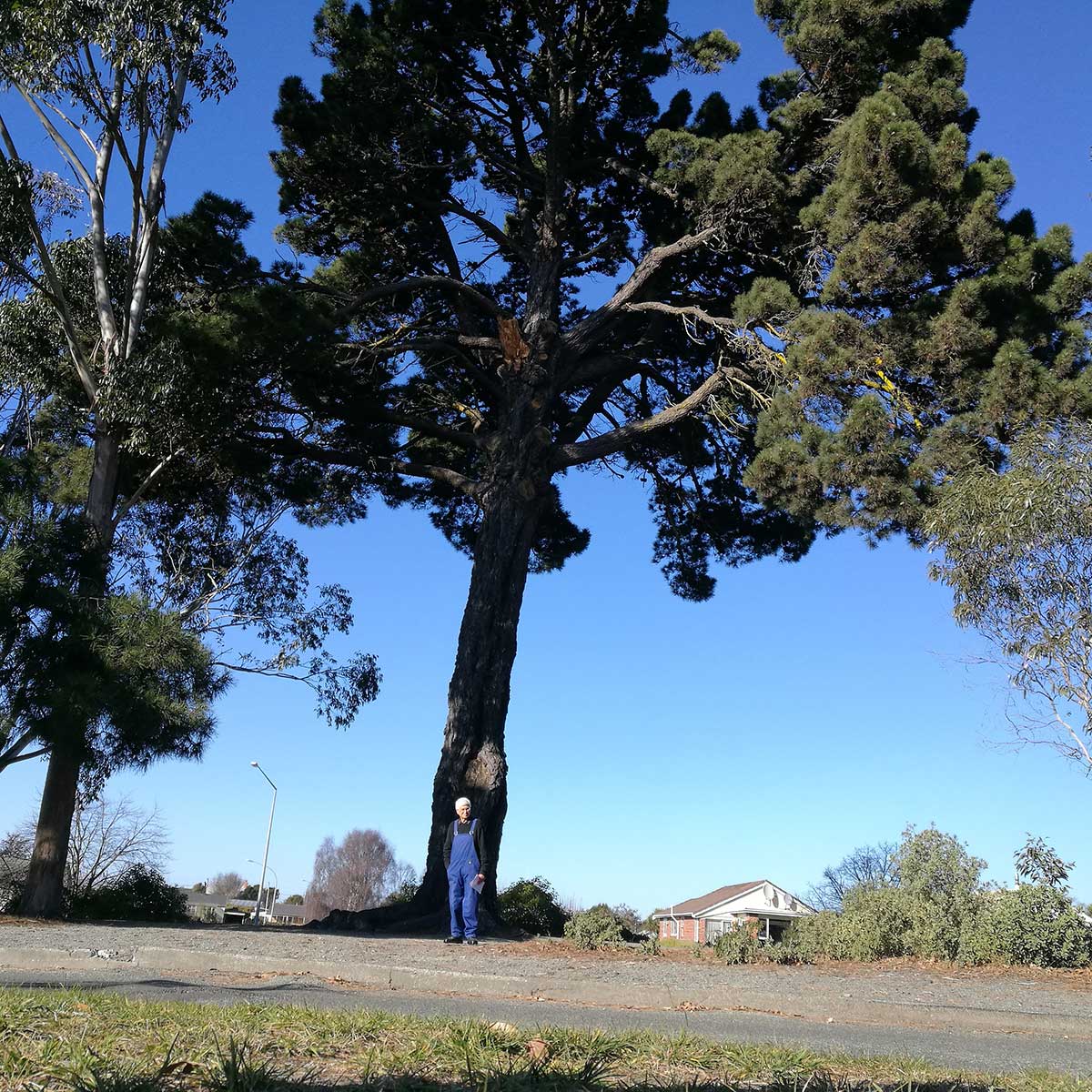
Photo By Roselyn Fauth
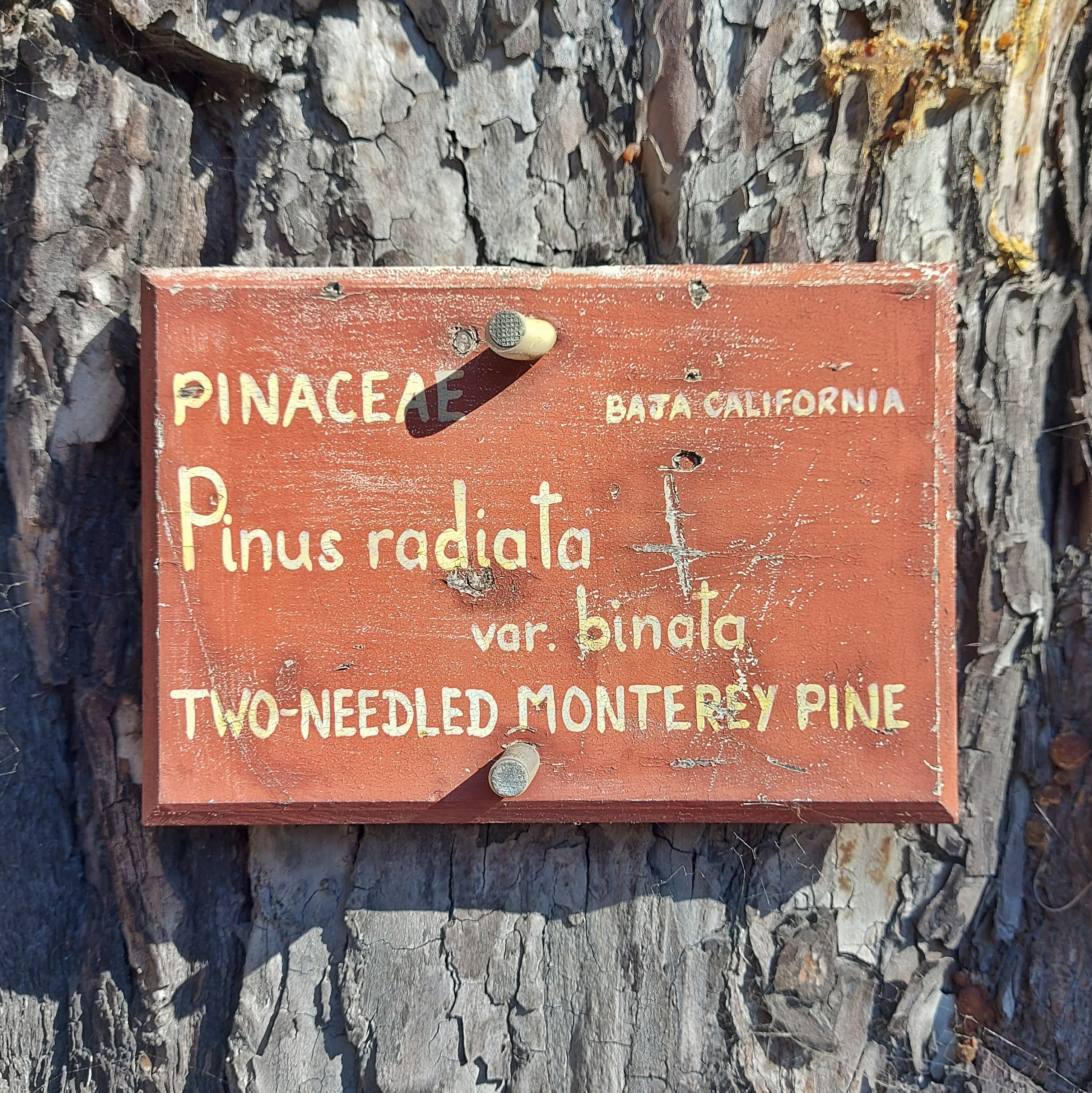
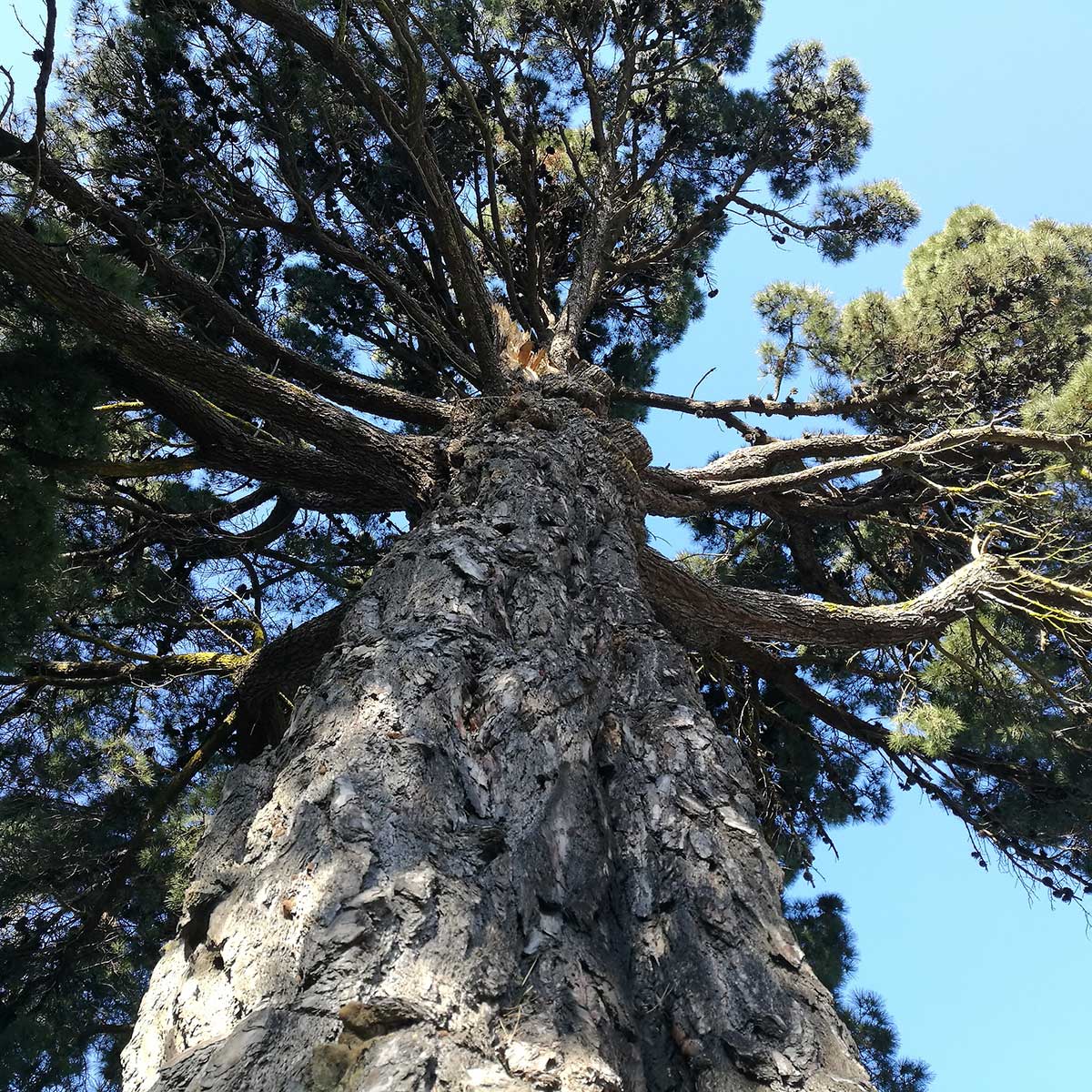
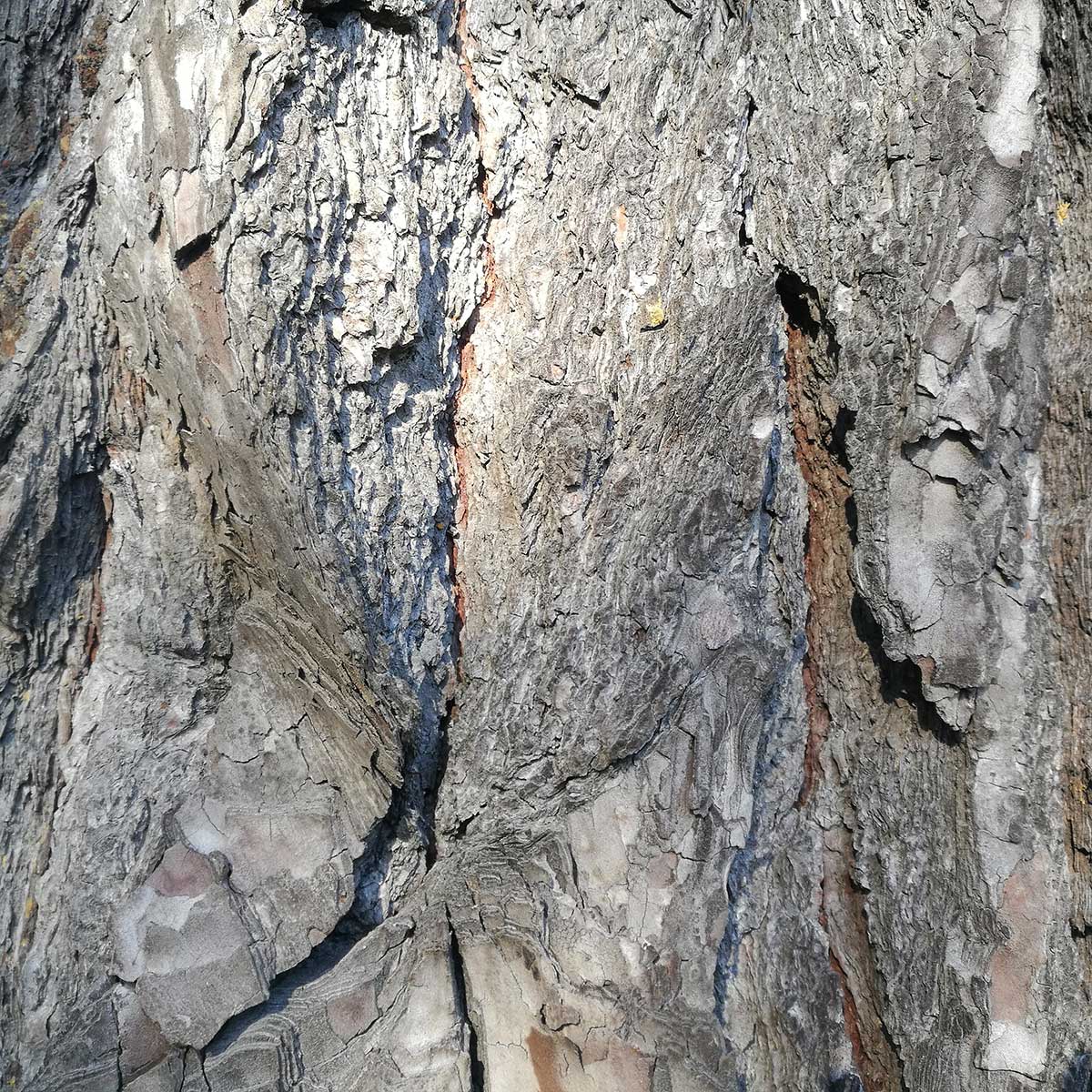
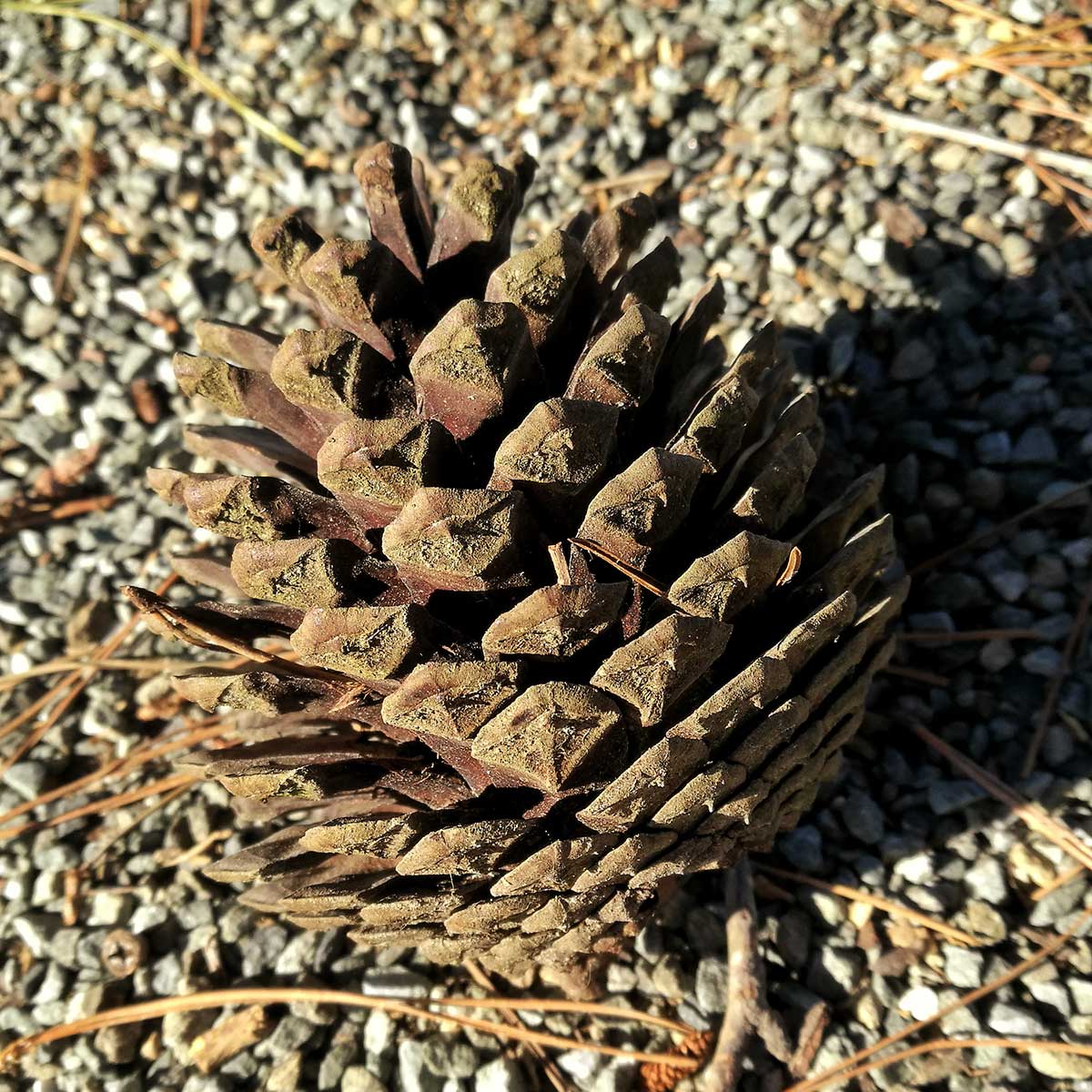
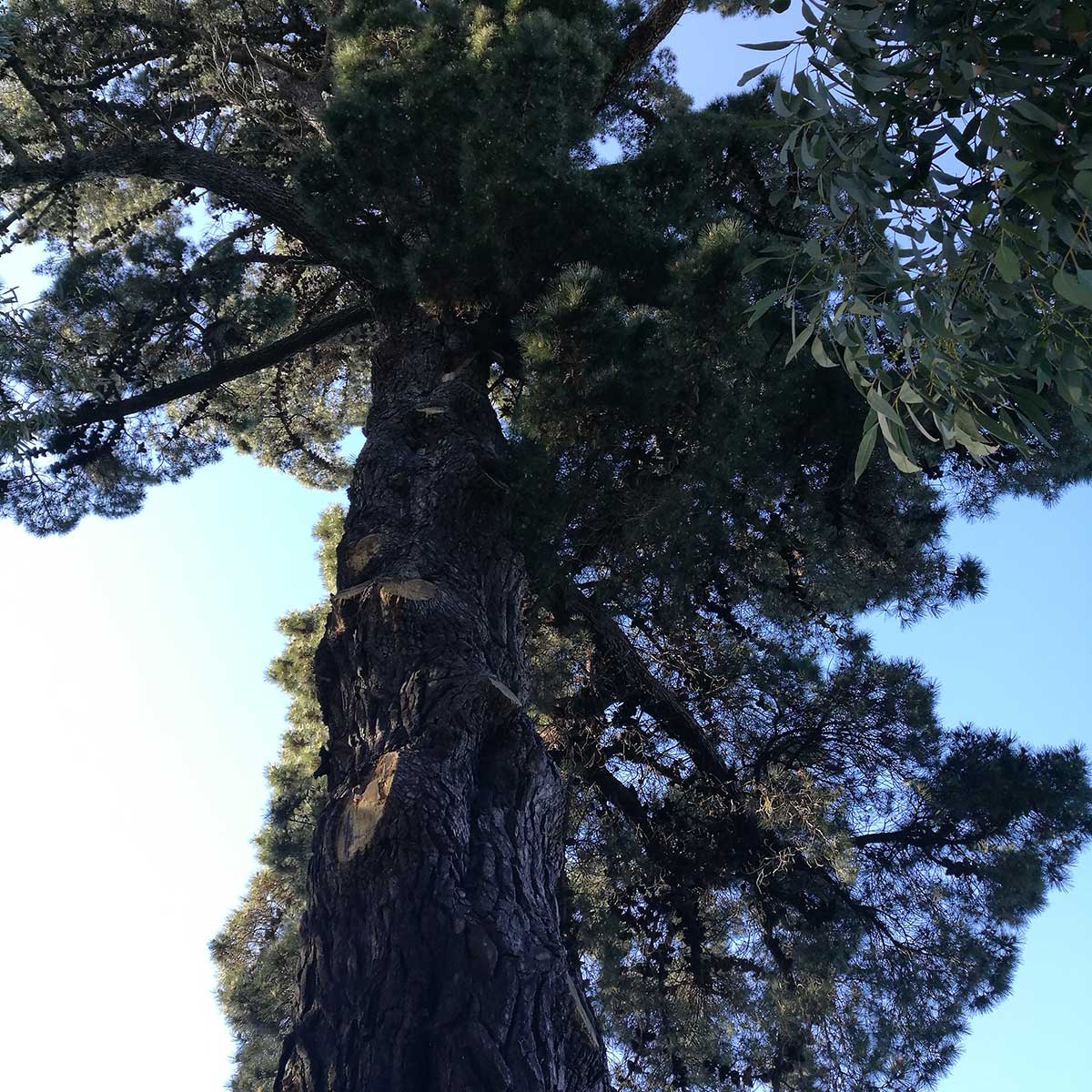
The 'Prisoner Pine' at the Timaru Botanic Gardens are one of two trees that were pointed out to me by the late Wayne McCay as being planted by prisoners when the gardens were being established. The majority of early planting was carried out with convict labour from the local Timaru Gaol and floral fetes were organized to raise money for development of The Gardens. PINACEAE. BAJA CALIFORNIA. Pinus radiata. var. binata. TWO-NEEDLED MONTEREY PINE. Pinus radiata is one the most domesticated of all forest trees. Monterey pine is a fast-growing evergreen conifer. - Photo Roselyn Fauth 2026
If Wayne McCay hadn't told me, I wouldn't have known that there are two enourmous trees on the Southern boundary of the Timaru Botanic Gardens that link to Timaru's goal and prisoners. Timaru's The Park became one of the countries oldest botanic gardens.
In 1864, 56 acres of open land on the Southern town belt in Timaru was set aside for the town’s future public park and by 1868 planting was underway. The Park took a long time to establish. By the early 1870s, parts were already planted with donations of trees, shrubs, flower roots, bulbs and seeds were sought from the public. Other areas of the reserce were laid down in grass.
In 1873, tenders were called for a cottage on the reserve and for fencing to help manage the reserve. Horses and cattle found wandering there were to be impounded. Mr William Hislop was appointed to present to the head gardener Mr W Wilson of Christchurch of the Timaru Park.
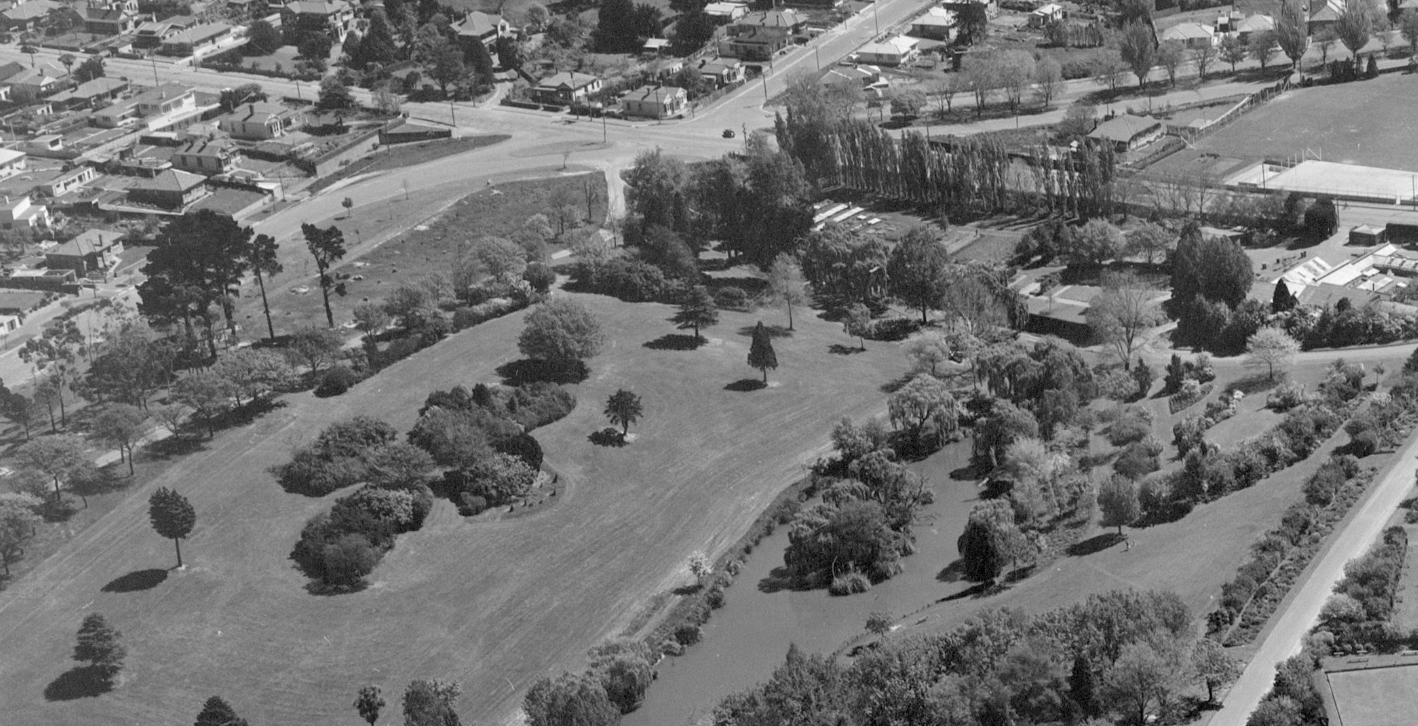
Prisoner Pines at Timaru Botanic Gardens Oct 1956 Whites Aviation Collection Alexander Turnbull Library PA-Group-00080
In February 1875, the Timaru Park Bye-Laws were published in the Canterbury Provincial Government Gazette. They said the domain was open from sunrise to sunset, that people had to use the gates, that anyone crossing the fences would be prosecuted as trespassers, and that visitors were to keep to the walks and “on no account” touch the trees, shrubs, or flowers. It might seem a bit over to the top to us today, but at the time The Park was precious. There was a huge effort to source seeds and plants from overseas, to bring them to Timaru, grow and establish them here. the gardens plants were not there for casual damage or taking.
One of the most important parts of that early park history is labour. The majority of the early planting was carried out with convict labour from the local Timaru Gaol.
Timaru's gaol was in use by 1866, and it remained part of the town’s landscape until the old reserve and buildings were transferred in 1913.
I have written a few blogs about the history of the Timaru Botanic Gardens, but I haven't delved into the history of our prison, or "gaol" as it used to be known. So here is a riveting read for your Sunday, about Timaru's prisoner pines. Well that was the plan until my hunting through papers past sent me on a prisoner escape side quest...
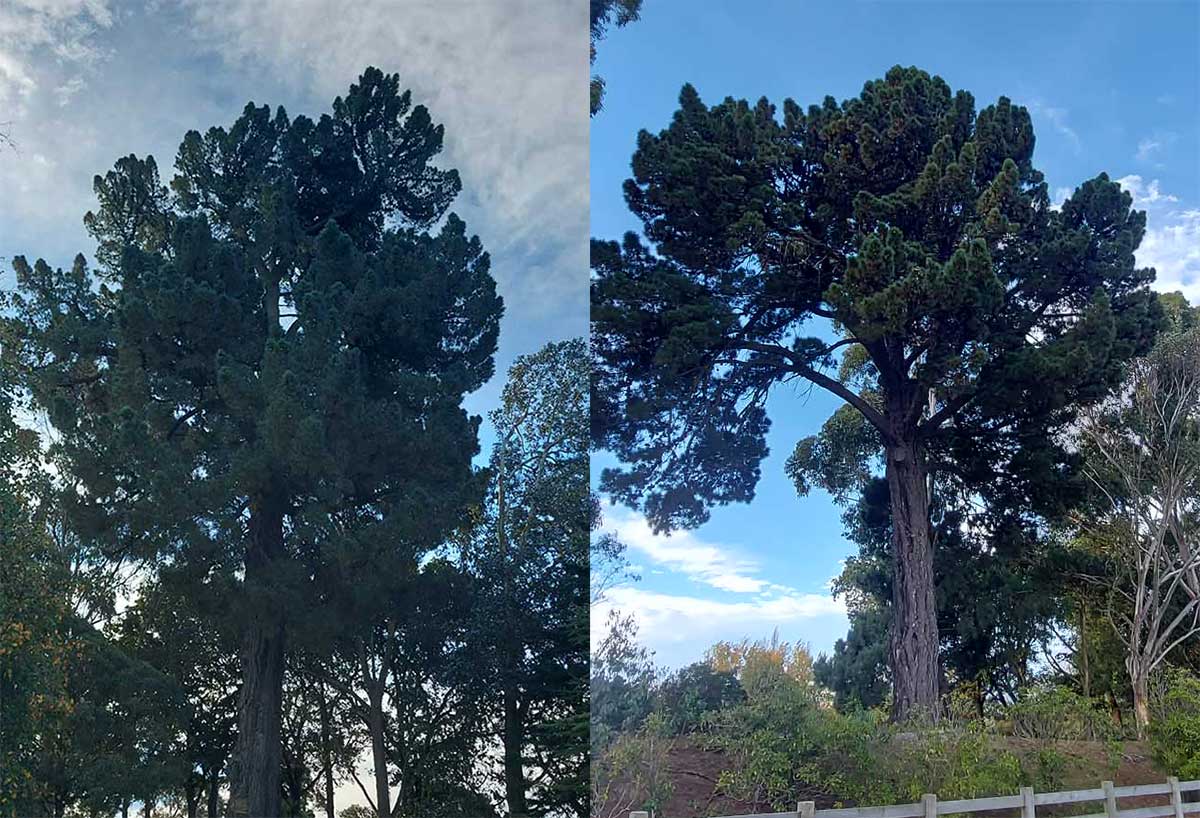
Prisoner Pines - there are two trees that Wayne pointed out to me that were planted by prisoners.
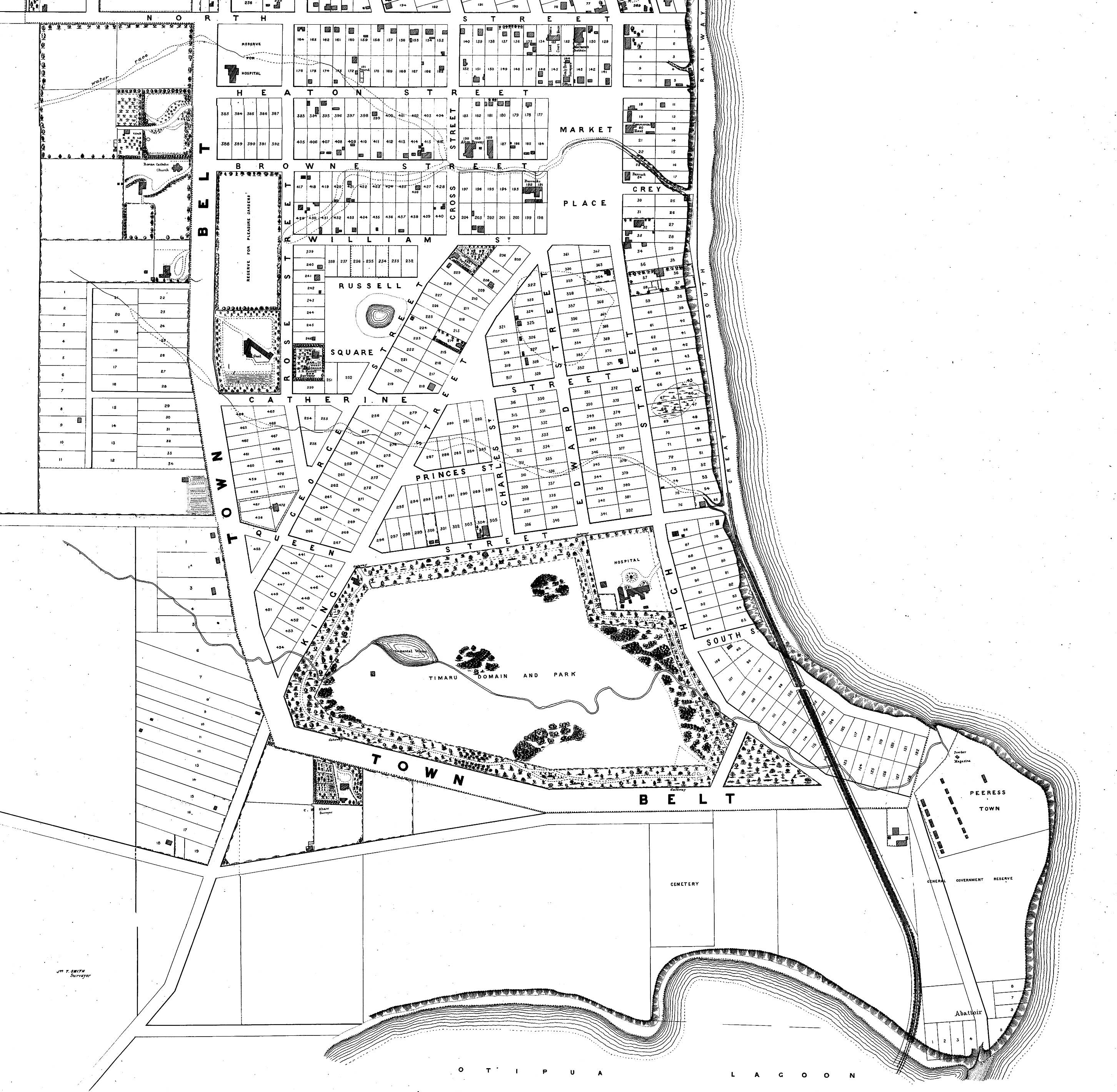
Section of a 1875 Survey Map - Plan of Timaru Townships Canterbury Courtesy of the Timaru District Council
Lets start with the goal
It used to be on Cragie Ave. The goal was long gone by the time I was growing up in Timaru. I knew this area as Century Swimming Pool. But back in the day, this area was described as the site of Timaru Gaol. A yellow corrugated iron building on the West Town Belt among trees, churches and villas.
There had been an earlier a building behind the police barracks used for a gaol with an appointed gaoler. The Timaru Herald reported the complaints and that the accommodation was meagre.
In 1909, the Minister of Justice said it was “only a police gaol” on three and a half acres of valuable land, and in 1913 the old gaol reserve and buildings were transferred to the Borough Council as part of the arrangement for a new police gaol.
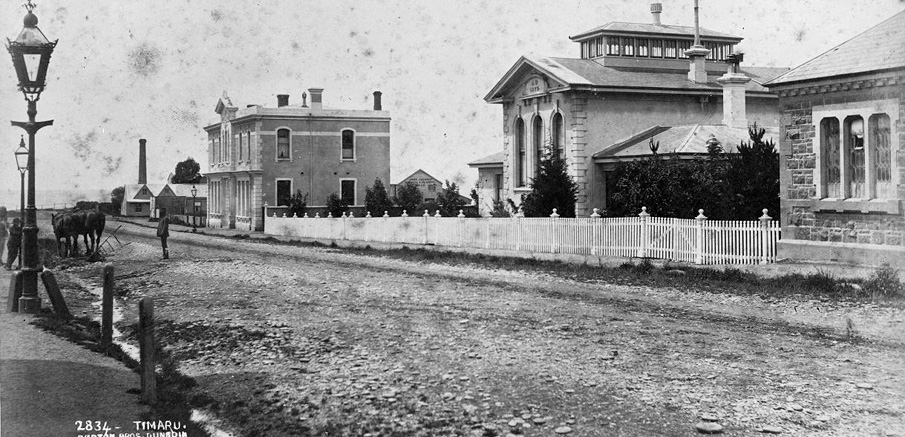
The Timaru Courthouse was a few blocks up on North Street, Timaru. Burton Bros. postcard. View of North St. showing from left Mechanics' Institute, Court House and Police Station, taken ca 1880s. Bollinger, Mrs, fl 1958 : Scenic photographs of New Zealand. Ref: PAoll-0808-01. Alexander Turnbull Library, Wellington, New Zealand. /records/3219877 | Alexander Turnbull Library, Wellington.
Timaru's Goal held ordinary local offenders, remand prisoners, and people caught up in sensational cases.
In 1875 a team of 18 prisoners were working on a Friday morning at the Timaru Parks reserve area known as the triangle. Back in those times prisoners could choose to stay in the gaol or work outside. Edmund Tucker applied to work outside. He was allowed out on a Friday morning until 8pm under the custody of the warden Reeston. The warden Reeston spent 10 minutes demonstrating a task for a prisoner to perform. It was when the warden did a head count he realised he was one short, and James Tucker had escaped. the group were marched to the gaol and the hunt was on to find the missing prisoner.
Tucker who was in prison awaiting trail for stealing horses, ran to a house at Peeress Town (very close to the Timaru Park Reserve.) He knocked on a few doors and then went into Mrs Andersons house. He was found by the sargent hiding under a bed. He had tried to abandon his prison uniform for blue trousers and a tweed coat, but hadn't had time to change out of his shirt with a marked borad arrow. Near by, his moleskin trousers were found with a broad arrow in the corner of the room and a cap with the same mark.
A Broad arrow is a symbol used traditionally in heraldry, most notably in England, and later by the British government to mark government property. The ownership mark that became associated with prisons because prison clothing, tools, bedding, stores, and other official supplies were often stamped with it. The symbol links back to the 14th century to mark things bought with the monarch’s money or held as government property. It was a criminal offense to reproduce the mark under the Public Stores Act 1875.
Thomas Eastbury saw the whole thing while working on his roof at Peeress Town, including watching the prisoners work at the triangle.
Under the Prison's Act in 1873, there was no provision for the punishment of a prisoner who had escaped from custody before conviction. Alexander and Amelia Anderson were charged with harbouring the prisoner, despite the fact that Alexander wasn't even home at the time, although it seems he left work early to pop home for a cup of tea... the other fishy detail in the news report was that Tucker put on his own clothes and it appears he had left them there some time back, Amelia had washed them. As for Amelia, well she was sentenced to a week in prison. Her husband pleaded to be allowed to pay a fine instead of being imprisoned, and so a fine was paid.
Turns out after more research Tucker's escape from gaol was not the only one, and that a guy Jonathan Roberts made the history books for his Timaru gaol prison break, and was recounted in a souvineer booklet of the Timaru Main School jubilee held in October 1924. https://aorakiheritage.recollect.co.nz/nodes/view/8887 I learned from this read the the prison warden was armed. And that the prisoners labour was also hoped to be used to chip tussocks and improve the school grounds for Timaru's Main School. The request was however refused.
I couldn't find anyone named Amelia Anderson buried at the Timaru cemetery. I wonder what happened to them. I wonder if this was the same Alexander Anderson who died a few years later in 1877 and was buried at the Timaru Cemetery aged 39. He was a Scotston of Otaio who died in Timaru?
A court report about harbouring an escaped prisoner includes evidence from James Tucker (Timaru Herald, 26 May 1875, page 3, “Resident Magistrate’s Court”),
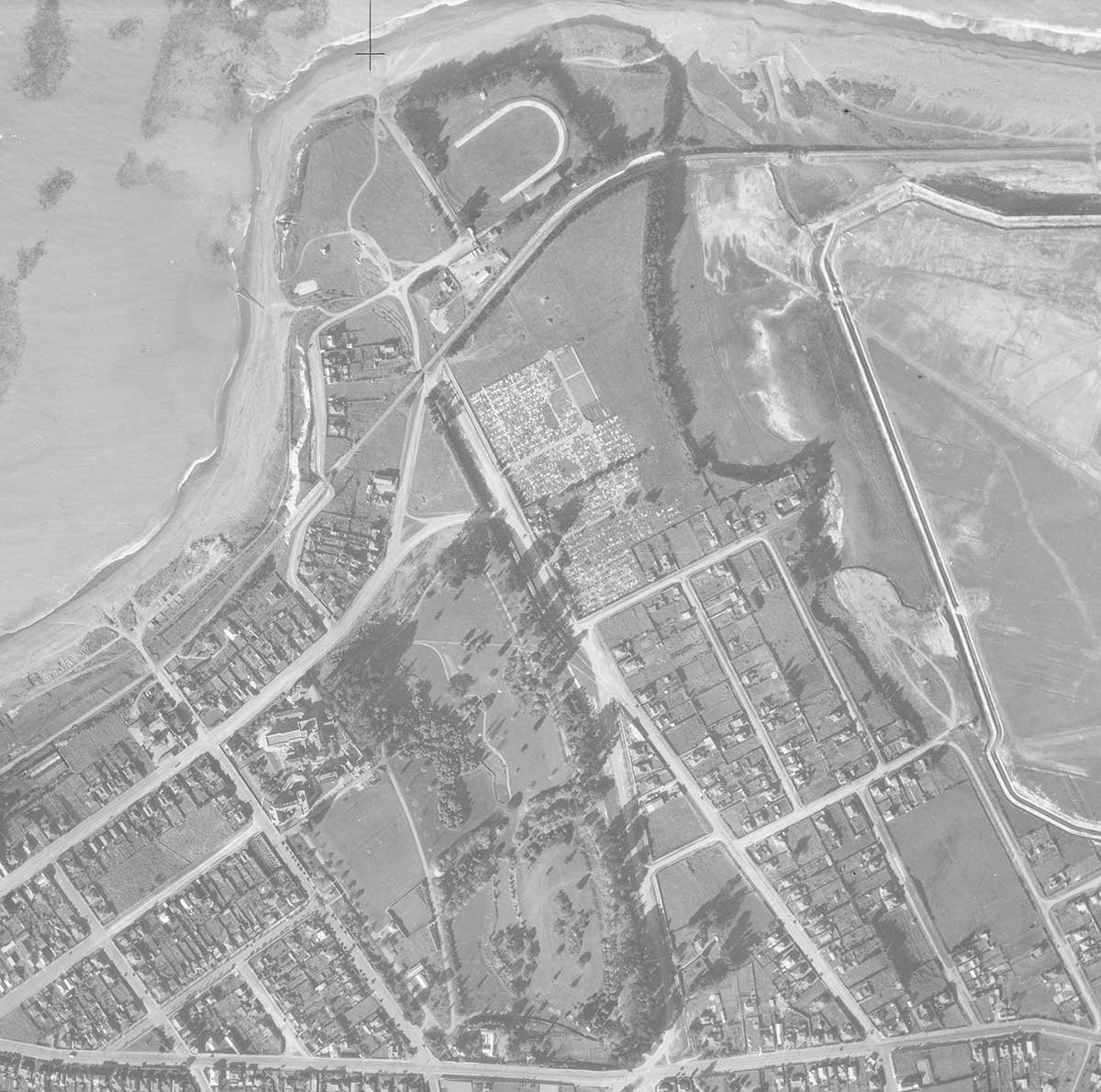
Site of the triangle and patiti point - 1938 Retrolens.
I would like to learn more about the gaols history in Timaru. I did find a reference that the original Timaru Gaol (now referred to as the old Gaol Reserve) was finally closed in 1912. - https://www.pressreader.com/new-zealand/the-timaru-herald/20080408/281964603437611
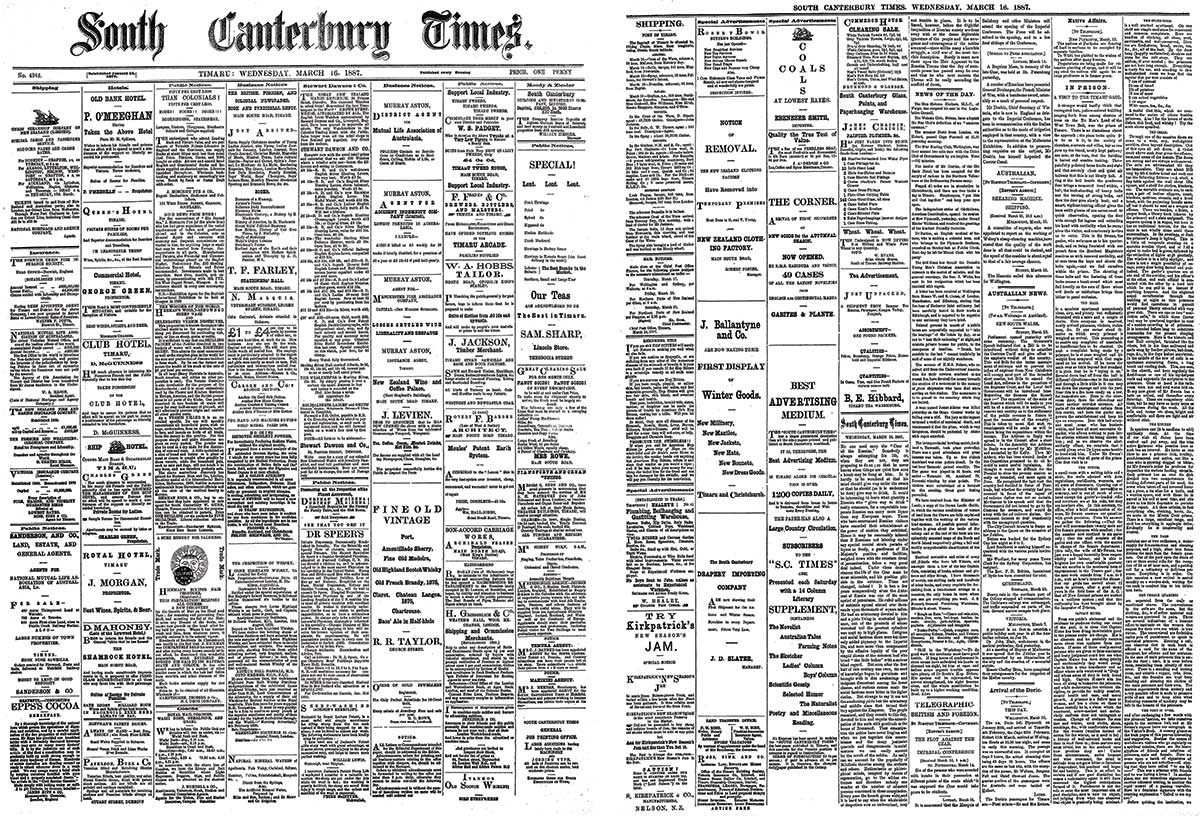
Article about a visit to the prison
https://paperspast.natlib.govt.nz/newspapers/SCANT18870316.2.12
IN PRISON.
South Canterbury Times, Issue 4342, 16 March 1887, Page 2
A stranger would hardly think that corrugated iron, yellow-colored building peeping forth from among clusters of trees on the No Man's Land of the West Town Belt, was the prison of Timaru. There is no dismalness about the approach; the place looks quite fit to be as it is, in the society of churches, convents and villas, but as one goes up the broad, neatly kept pathway one sees, at the turn, that the building is barred and sombre looking. Those painfully polished brass knobs and slabs and that severely clean and quiet air indicate that this is not liberty hall. A ring at the bell beside the ponderous door brings a measured tread within, a halt, the back-shooting of heavy bolts and the turning of strong locks, and then the door goes slowly back, and a smart, vigilant-looking official gives the keen swift glance of one accustomed to quick observation, opening the door wide enough for ingress and extending his hand with cordiality when he recognises the visitor, and courteously invites us to enter. This is Mr Swann, the gaoler, who welcomes us to his quarter-deck, and on being furnished with our permit from the Resident Magistrate receives us with renewed cordiality, and at once turns the keys and shoots the bolts again, and we find ourselves within the prison. The shooting of these bolts and the fastening of these locks causes a harsh sound which must fall heavily on the ears of those whose evil deeds or misfortune brings them hither to penal seclusion.
THE HALL
is a spacious apartment scrupulously clean, airy, and plainly but sufficiently furnished with a table and a couple of chairs. Here everyone is received, newly arrived prisoners, visitors, tradesmen, &c. In one corner stand the scales on which every prisoner is weighed on arrival. This proceeding is to enable any complaint of unsatisfactory or insufficient fare to be checked. On such a complaint being made by a prisoner, he is at once weighed and his weight then compared with that registered on his arrival. If he turns the scale ever so little beyond that standard, it is plain that he is "trying it on." Several doors lead off from the hall in different directions, one to the corridor, and through a little slide in it one may see down the passage and into the yard. Near this is a fire hose ready on a reel, for immediate use. Here is the store-room door, there the office-door and there another corridor entrance. All parts of the establishment radiate from this centre, and here the gaoler may govern the establishment and keep his eye on everyone. Into this hall everyone must come who has business within, and here all must encounter the gaoler, who allows nothing to pass into the arteries without its being shown to him; and as we observe the alert, soldierly officer, we conclude that it would given even Dr Lynn some trouble to hoodwink him. Under Mr Swann's guidance we visit all parts of the prison. Our first visit is to
THE OFFICE,
a small room with a writing table and a chair, the walls adorned with Acts, regulations, certificates, warrants, and all sorts of documents. Opening out of this is a cupboard which serves for an armoury, and is out of reach of every hand except the gaoler's, loaded rifles and revolvers are at his side, but they are nowhere else. In this sanctum, the office, after a brief examination of the arms, Mr Swann answers our questions with quick precision. From his answers we gather the following: That the gaol will accommodate twenty male and five female prisoners with comfort; that the number now confined is six males only; that the staff consists of the gaoler and one officer, with the matron in charge of the female department; (this lady, the wife of Mr Swann, has just now a happy immunity from responsibility and labour, and is able to brighten her own comfortable quarters) that six months is the maximum term of imprisonment in the Timaru gaol; that the men work outside from 7 a.m. to 5 p.m., with an hour's interval for dinner; that our guide has served about 12 years in prisons, after a good many years in the field force of the A.C.; that all New Zealand prisons are worked on a uniform system; and that this uniformity has been brought about by the Inspector of Prisons,
CAPTAIN HUME.
From our guide's statement and the evidence he produces during our round of the gaol, it is clear that Captain Hume has been doing incalculable good in the prisons under his charge. His is no sinecure and he probably receives more abuse than applause from outsiders. If some of those easily-moved persons who are given to false sentiment and hasty judgment could but see what Captain Hume has been doing quietly and unobtrusively they would recognise in him a true benefactor and an officer whose sole watchword is "Duty" and whose sense of duty is both broad and high. Captain Hume's aim has been all along to humanise the prisoners, and while maintaining the strictest discipline, to provide for bodily comfort, mental health and ease, and moral growth. A prisoner is a fellow man or woman, and has a claim on those in whose custody he is, a claim which the numbered, arrow-marked and melancholy uniform does not extinguish or weaken. Change of costume for summer and winter, neck cloths, shoes, stockings, &c., with comfortable dresses for the women (woollen instead of cotton for the winter, as it used to be); a library of well-selected books and time to read them in; these matters may seem trivial, but to the confined ones how precious they are! Under these circumstances, under humane and wise treatment, the mind in solitude does not grow bitter or ferocious or despondent, but penitent and hopeful and healthy. This is an effort to reclaim and if our gaol discipline becomes a reformatory agent it will have answered the highest anticipations formed of it. Punishment is not the sole or even the most important aim of gaol discipline, cure is now its object, and judging from what one observes that object is gradually being attained.
THE STORE-ROOM
is a well stocked apartment. On one shelf are simple medicines for occasional and common complaints. Here are bundles of clothing, all clean, neat, serviceable, and well-preserved. Here too are food-stores, bread, sugar, tea, &c., &c., all of the best. By the door hang (happily undisturbed) shackles and irons for the refractory. They are seldom, if ever needed; the prisoners are not here long enough. Everything is ready for use, and standing in this well-stocked room we hear that the regular diet per man consists of
7 ozs of oatmeal
24 ozs of bread
1lb of potatoes
12 ozs of meat
2 ozs mixed vegetables
1 oz sugar
With cocoa, tea, &c., &c.
A model diet this, which we commend to the notice of others besides prisoners. Alas! for the lovers of made dishes, rich food, and whisky! Try the scale above specified.
THE CELLS.
Through one of the massive doors we come to a wide, airy, well-lighted corridor, clean beyond description. Out of this open all cell doors. A ticket stuck above each door gives the offence, term, and name of the inmate. The doors are strong and are always well-secured. The cells are whitewashed till they are immaculate. They are about 10ft long by 4ft 6 inches broad and each one has the following fixtures: A stool, a flap table against the wall about 18in square, and a shelf for clothes, blankets, etc. The movable contents are, in each case, a pair of leather slippers, comb, blankets, mattress, utensils, and a hand brush, with the projecting handle sawn off lest it should be used as a weapon of offence. There are besides, a Bible, a prayer book, a library book (chosen by the prisoner) and a slate and pencil. The separate system is in vogue, but there it has no traditions or horrors, for the inmate is not wholly alone amid these surroundings. In the evenings, at dusk the prisoner's lamp is lighted. This is a little oil receptacle standing on a movable wooden tripod, and at 7.45 a signal to make bed is given, followed by the extinction of lights at 8 precisely. The window is in a lofty skylight, and there is not a single possibility of escape, every door being barred and padlocked. The gaoler's quarters are at one end of the corridor, and his officer's at the other, and each official is connected with the other by a loud bell which he can pull in an instant if anything happens. And the slightest sound reverberates through the building and night so that prisoners would find operations in pursuit of personal liberty attended with very great risk. There are one or two "association cells," in which three (never two) may be quartered together in case of a sudden crowding in of prisoners. It is intended before long to substitute hammocks for the present sleeping arrangements. Here is the historic cell that Hall occupied, furnished like the others, but in his time enlivened and made snug by feather pillows, bed-linen, rugs, &c., in the days before conviction. In the middle of the row of cells is an apartment containing forms, a long bench and reading desk. This, one sees, is the church, and here regularly the Archdeacon or one of his lay-helpers reads and expounds the scriptures to the prisoners. Close at hand is the bathroom with hot and cold water laid on. Every new guest of Mr Swann has a bath on arrival, and thereafter every Saturday. These are compulsory ablutions, but he may have as many more as he chooses during the week. All the cells and rooms are clean, bright and comfortable and there are light and air without stint.
THE KITCHEN
is spacious and (it is needless to add) spotlessly clean. At the time of our visit all dishes have been washed and put away, and the trim active prisoner who presides here as cook has an interval. He looks as one likes to see a prisoner look, healthy, good-humored and active, not like a man who is growing dogged or bitter. At Mr Swann's order he produces for inspection the various feeding utensils. Each prisoner has an oval tin dish divided into two compartments for holding different parts of his meal, the cover when taken off and reversed forming a plate, a tin slice for a knife, and a wooden spoon, and with these he is served to his cell at meal time, and sits down to his little flap-table to partake of the repast. All these articles, in fact everything else, clothing, boots, &c., are made in the Mount Cook prison. There is a large, excellent range, and cook has everything in apple-pie order. Evidently he is trustworthy and trusted.
THE YARD
contains one or two outhouses, a water-supply for fire-extinction and cleaning purposes, and a high, close iron fence dividing the male from the female quarters. Out of the yard open the doors of two or three casual cells for the reception of 24 or 48 hour men, and a padded cell for a refractory or delirious prisoner. Everything is in order. On this occasion a new arrival is seated moodily on a wooden slab, waiting for the cook to conduct him to his initiation bath.
THE FEMALE QUARTERS
are separated from the male as mentioned above. The conveniences in the cells are the same, but the clothing, &c., is of softer material and women are quartered in pairs. There are several indications of a humane effort to inculcate on the women that respect for their own sex which is true virtue. The unconvicted are forbidden under pain of punishment to speak to convicted prisoners. Entering a cell, one observes that in each bunk is affixed a card for the name of the occupant, her offence and her sentence. In the case of male prisoners this is outside the door, here, it is ever before them, reminding them silently of their error. There is a mending and ironing room, and outside a copper, tub, lines, &c., and the females are kept busy mending and cleaning the clothes of the male prisoners and their own. The matron superintends them entirely and every possible effort is made to promote pride of sex and to keep alive what flickering remnants of modesty may be left in the breasts of the prisoners.
THE VISIT IS OVER,
and after exchanging a few words with the pleasant matron, we take ourselves again to the entrance hall, and at Mr Swann's request leave our autograph in the Visitor's Book. A cursory glance at the back pages of this proves interesting and suggestive. Beside the names of well-known visitors who go regularly on a spiritual mission, there are the hieroglyphics of friends and relatives of prisoners, male and female. Here we come upon a batch of signatures of persons who are not nobodies, all stating that they have called "to see Mr ____." This was a prisoner with friends and he was having a levee! In another place, one sees tremulous signatures in another laboured writing, in another the rapid scrawl of a passing traveller. Here is a feminine signature with the touching explanation "Called to see my son."
Before quitting the institution, we have some further conversation with its intelligent head, on prison discipline. He proves to us unmistakeably out of the abundance of his practical knowledge of the subject, that in this matter the most enormous strides have been made of late years. It is sometimes objected that prisoners are pampered, and that bringing them before Magistrates to answer for breaches of prison discipline instead of dealing with them on the spot makes them insolent and weakens their custodians' power. But on looking more closely into this one finds that such is not altogether the case, and that if the door is opened for a time to insolence the evil will eventually cure itself with the very best results besides. The theory of gaol discipline now is "No personal violence, let the law Act." If a prisoner is insolent or insubordinate, he is not seized and bound and thrown, and made dogged and vicious perhaps. He is reported, tried, and punished according to law, calmly and judicially. This is calculated to keep up self-respect, that quality so precious, so indispensable to reform, and to imbue the prisoner with kinder ideas of others and of society. Society is not his enemy, all men are not in league against him; to instil this into a prisoner's mind is to half reform him in many cases.
We take leave of Mr Swann with the conviction that he is the right man in the right place, and that the gaol over which he presides is managed wisely and well. We did not see the prisoners, for they were out, and in truth we had no desire to see them, for the purpose of this sketch was not to feed any morbid appetite for items gathered from the observation of the sorrows and misfortunes of our fellow creatures, but to show the community how admirably the still necessary institution is managed, and on what admirable principle the prison system of the colony is based.
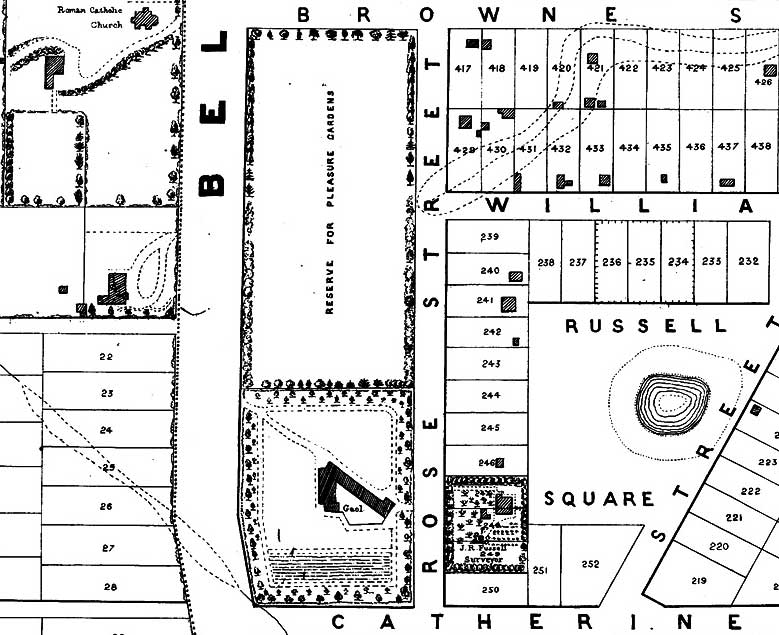
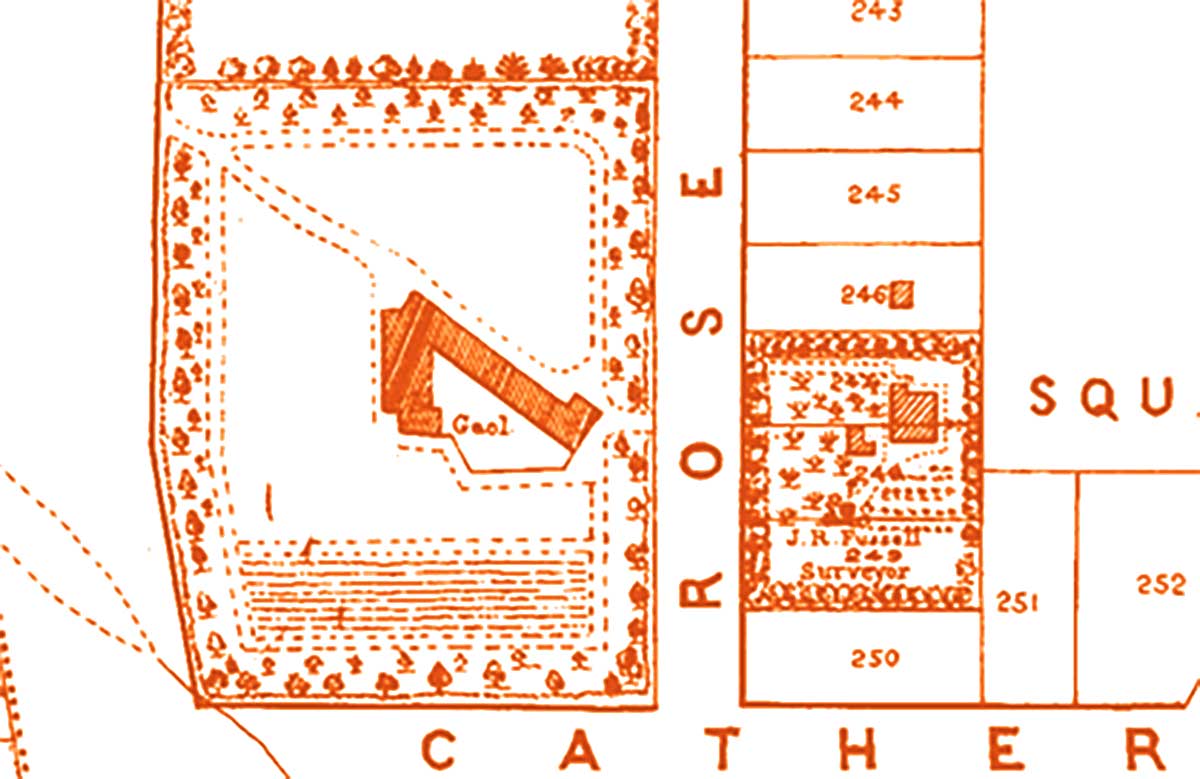
1875 Survey Map - Plan of Timaru Townships Canterbury Courtesy of the Timaru District Council
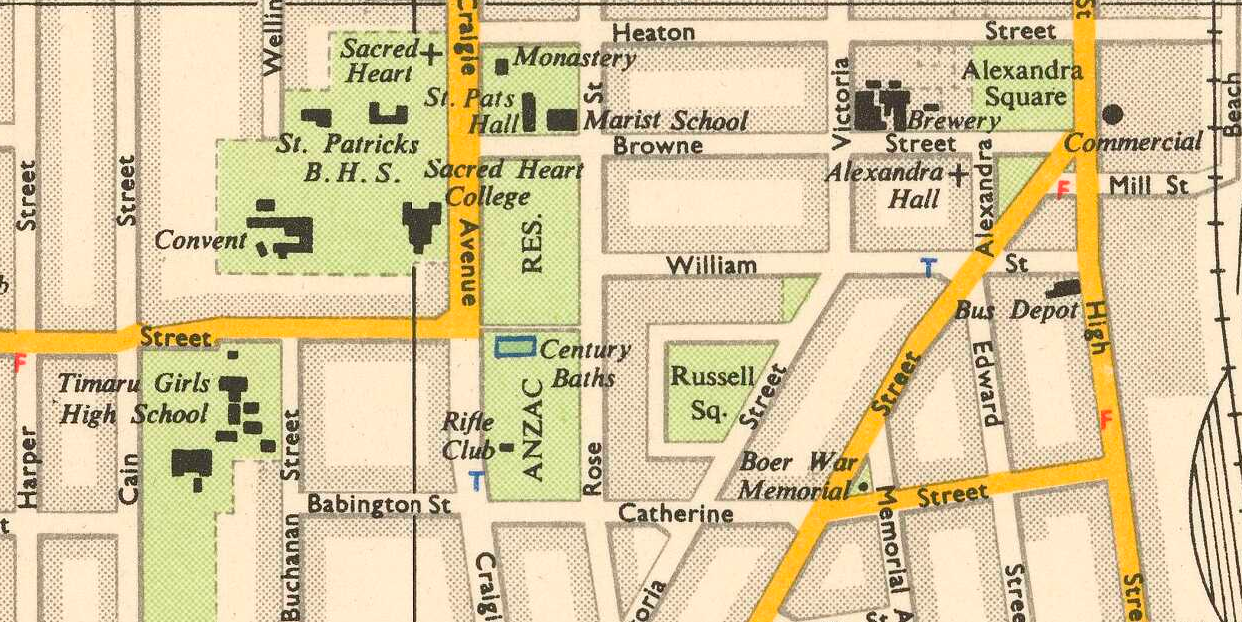
By 1953 the goal was off the map, and just the Rifle Club, Century Baths and the ANZAC square was in its place. [Wellington, N.Z.] : Lands & Survey Dept https://ndhadeliver.natlib.govt.nz/delivery/DeliveryManagerServlet?dps_pid=IE25248176 Sourced from LINZ. Crown Copyright reserved. This image may be used, copied and re-distributed free of charge in any format or media.
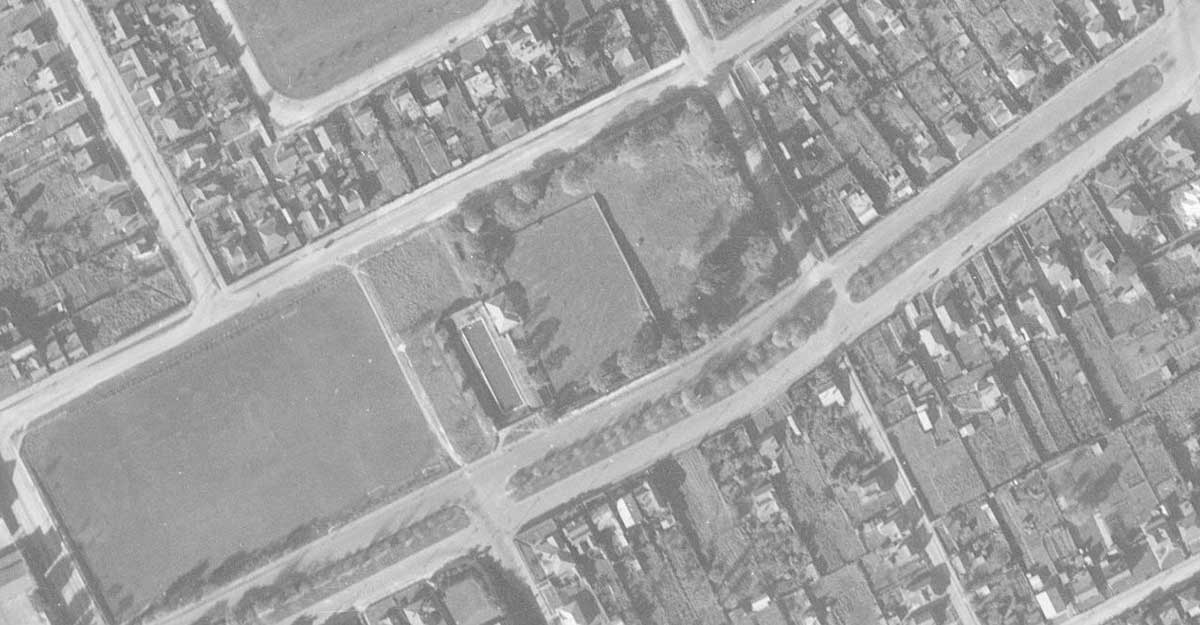
Site of the Timaru Gaol then swimming pool - 1938 Retrolens
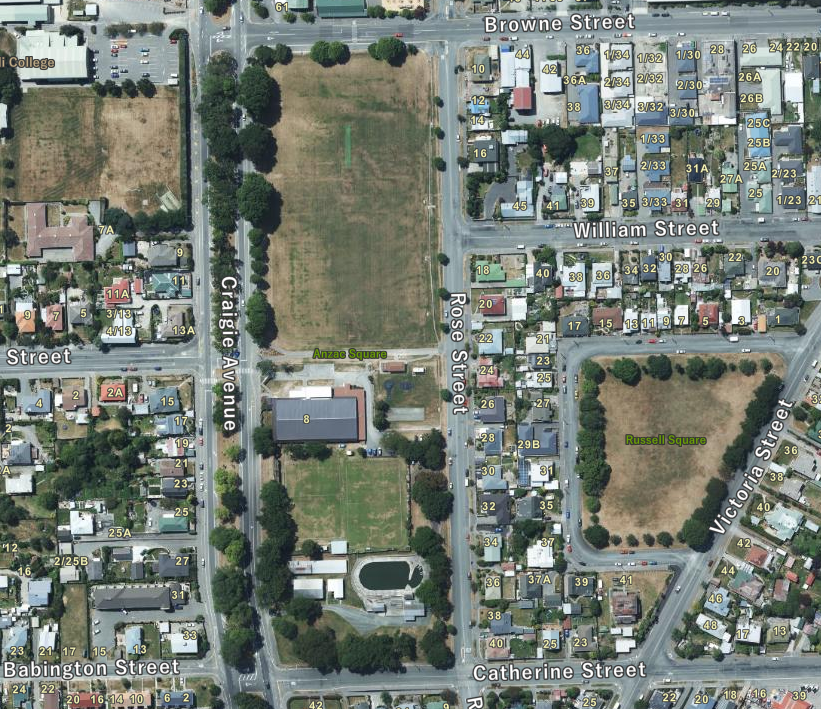
Te block in 2024 https://propertysearch.canterburymaps.govt.nz/property?propertyAddress=Anzac%20Square%20timaru
Contemporary newspaper reporting on Jonathan Roberts, the former bank clerk who escaped from Timaru Gaol in 1888.
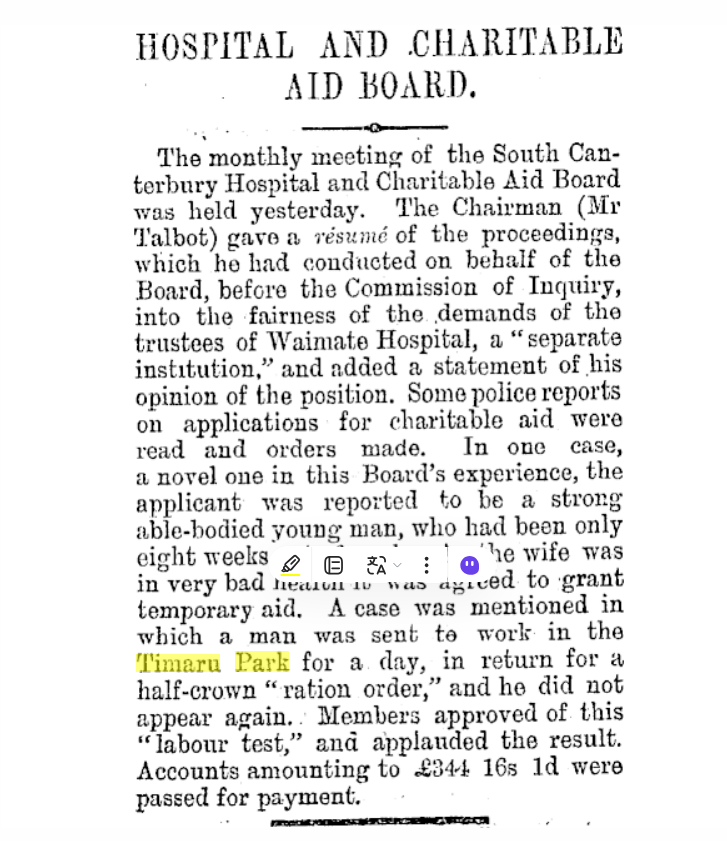
Prisoners were not the only ones who got their hands dirty. I was sad to read that a person who could not afford a health bill, agreed to a grant for temporary aid in return for work at the Timaru Park. At least it was just a day's work.
HOSPITAL AND .CHARITABLE AID BOARD. Lyttelton Times, Volume XCVIII, Issue 11428, 17 November 1897, Page 3 https://paperspast.natlib.govt.nz/newspapers/LT18971117.2.14
Side Quest: What was Peeress Town?
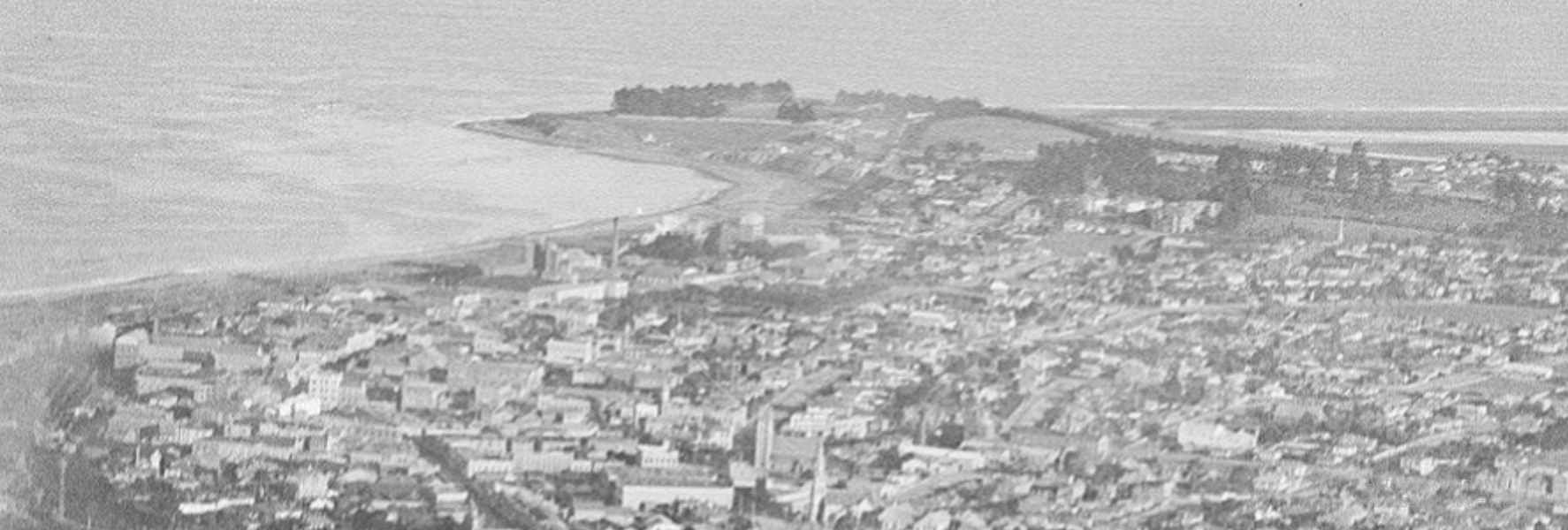
FDM-0690-G-TimaruFromTheAir-Caroline Bay harbour and town-DougMill-air transport and survey business from a hangar at Hobsonville Point between 1927-1937- Auckland Libraries Heritage Collections FDM-0690-G
Pātītī Point was set aside as a Military Reserve. At one point they thought a fort would be built there, and a iron smooth-bore 18-pounder cannon was placed there for the Volunteer Artillery formed in 1866 to practice on until the powder magzine was built. The area was also originally chosen for a quarantine ground. In 1875 the Government built a village of 22 sod huts to accommodate immigrants. Nearly 2000 arrived in South Canterbury that year.
The Peeress Town had a reputation as a rough immigrant temporary settlement of basic cob and sod huts on a government reserve at Pātītī Point, where conditions were poor and many residents were struggling financially.
300 Migrants arrived in Timaru on the ship Peeress in 1874.
The town was only supposed to be a temporary immigrant settlement at Pātītī Point, Timaru, for 24 immigrant families who arrived on the Peeress Ship After a difficult 118-day voyage from England, in 1874. The single girls were placed in the barracks in North Street, the single men in the old barracks on the Main road and the families in the drill shed on LeCren's terrace.
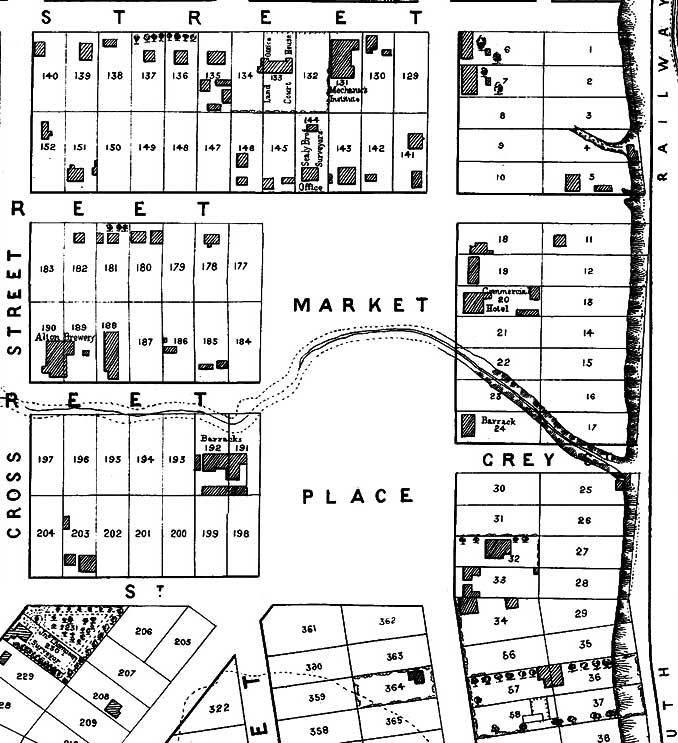
Barracks on a 1875 Survey Map - Plan of Timaru Townships Canterbury Courtesy of the Timaru District Council
South Canterbury needed workers. Big sheep runs needed breaking up. Roads, farms and early townships needed building. Patiti Point was Immigration officer Francis Le Cren arranged barrack accommodation and gave grants to twenty four families to build simple cob or sod cottages on the sunny slope above Patiti Point. With tussock, clay and plenty of willing hands, the cottages went up quickly. Soon a cluster of huts dotted the hillside. They called it Peeress Town, and by the late 1870s about one hundred people lived here.
The new residents came to Timaru after efforts by the Canterbury Provincial Council’s to bring more settlers into the region. The immigrants first lived in poor barracks, then built rough homes from cob and sod, which, despite being basic, were better than their earlier accommodation. Peeress Town was neither in the Borough of Timaru, or in the Levels Road District, so there was no local control on the area.
But the land that gave these families their first foothold also carried a risk they did not see coming. The families paid a shilling to stay there, which was a little more than free rent at the time, but far less than a usual rent sum. It was made clear that they were not allowed to buy their places, and many got behind on their weekly fee to live there. But with nowhere else to go, many families stayed on.
A shared well had been dug in the gully below the cottages. Over time, household wastewater from the sod houses seeped down the same slope. Gradually the well became contaminated. The effects were devastating. Typhoid and other diseases swept through the tightly packed settlement. What began as a hopeful foothold for new arrivals turned into a public health crisis.
Over time, some families made these cottages quite liveable, even though conditions were unhealthy and difficult. Sanitation was poor, disease such as typhoid was a problem, and some people in Timaru worried about crime and disorder.
Peeress town came to its demise when the government decided the land should remain a quarantine and military reserve, not become a permanent village. An order to clear Peeress Town was issued in August 1883 Residents were ordered to leave, the cottages were burned down, and the land was grassed over. This was to prevent prowlers and bad characters turning the area into their haunt. That was supposedly to bring Peeress Town to an end... however in an immigration officer inspected Peeress Town on 17 June 1886 and found that “a number of the cottages have been removed” but “eighteen families still remain there.” It seems from this newspaper report that some of the remaining families were comfortable in their little homes but five of the families were in receipt of charitable aid. One household the husband was in a lunatic asylum. There were cases of illness, and one widow with six children under 12 years of age. - https://paperspast.natlib.govt.nz/newspapers/THD18860713.2.15
Peeress Town is a suburb close to Patiti Point and has from time to time afforded shelter to some of the worst characters that ever infested Timaru. - Timaru Herald, 24 Aug 1883
The quarantine reserve was completely fenced and planted and temporarily incorporated with the Domain. The goal was to "furnish a picturesque feature to the town and supplying the public with an additional recreation ground."
Concrete huts were built at the Point in 1911 to house a fog signal for ships, and later removed. Rubbish used to be thrown over the cliff and the beach became the towns rubbish-tip. At one point it was reported as a unsightly heap of waste many chains in length. - https://paperspast.natlib.govt.nz/newspapers/THD19240611.2.78.14

Section of a 1875 Survey Map - Plan of Timaru Townships Canterbury Courtesy of the Timaru District Council
"Pātītī Point is located on the South Canterbury coastline at Timaru. Pātītī was a passenger on the Ārai-te-uru waka, which capsized off Matakaea on the North Otago Coastline. After the capsize, many of the passengers went ashore to explore the land. However, they needed to be back at the waka before daylight. Most did not make it, including Pātītī, and instead were transformed into many of the well-known landmarks of Te Waipounamu. In 1880, Hoani Kāhu from Arowhenua described Pātītī as “he kāinga nohoanga, mahinga kai, and he tauraka a waka”. - https://kahurumanu.co.nz/

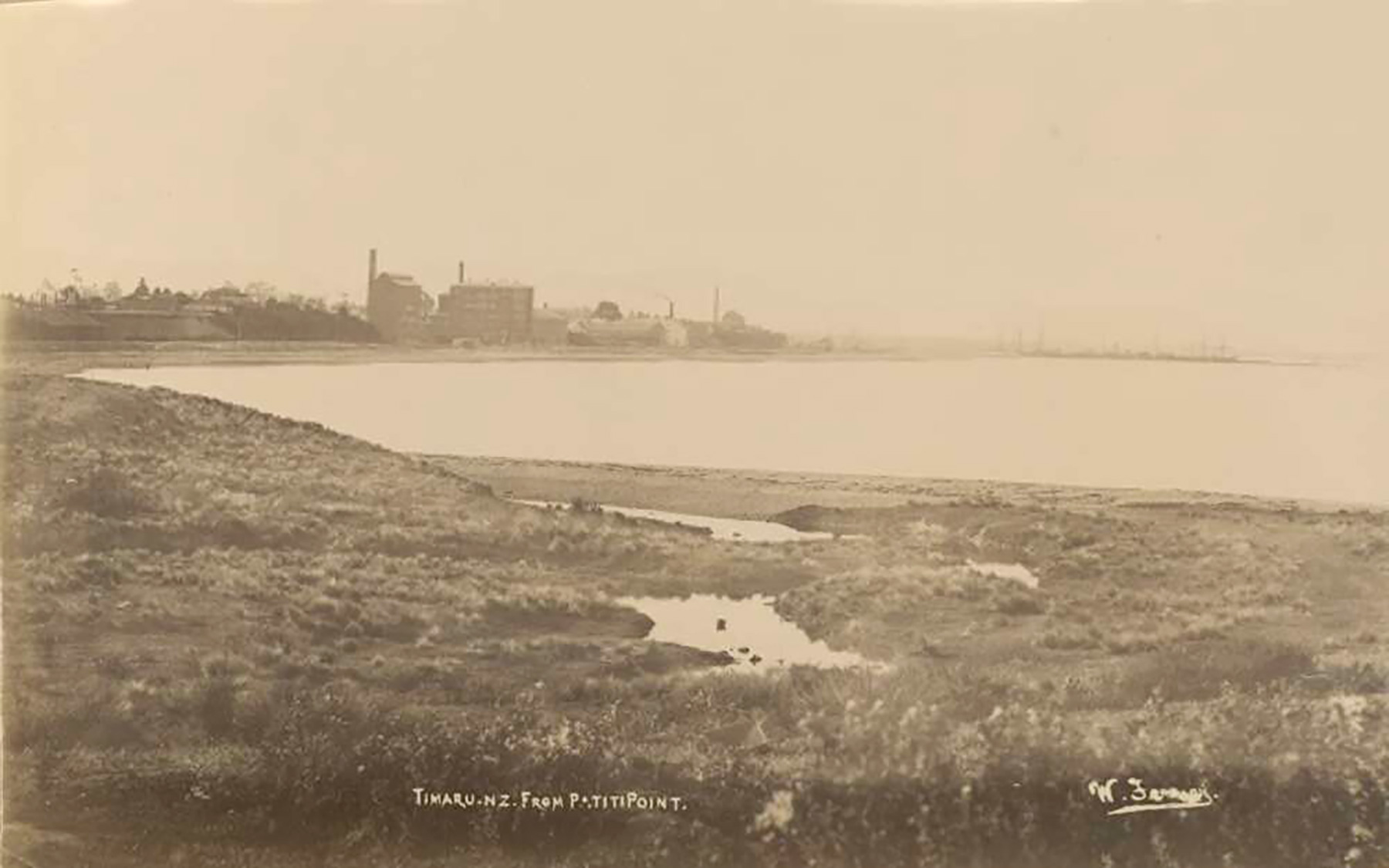
Timaru from Patiti Point1894-138616726 - 1-National Library of Australia - No Government Copyright Ownership
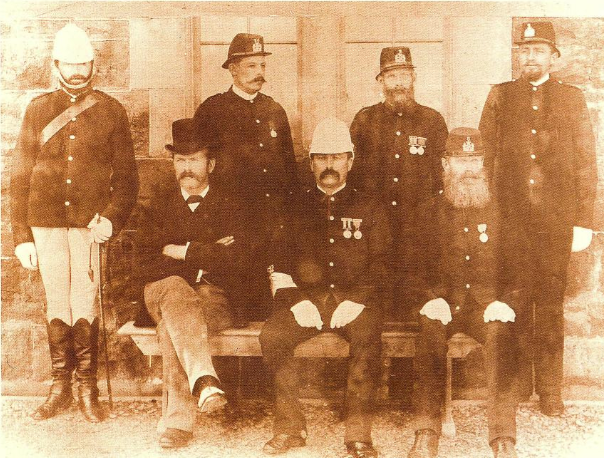
Timaru Police Station, 1889
This group portrait, taken outside the Timaru Police Station, is full of clues about colonial policing, uniform and rank. At centre is Sergeant-Major W. T. Mason, No. 57, wearing the four chevrons and crown of his rank. The mounted constable at left and Mason wear heavy white, badgeless helmets, while another officer wears the rear-skirted shako. Constable Tarrant, standing second from left, wears the New Zealand Police Long Service Medal. The two central figures wear both the police award and the campaign medal for the New Zealand Wars. The plain-clothes officer is identified in the original caption as Detective Thomas Livingstone. Even the fashionable beards tell a story, reflecting the military style of an earlier Victorian age.

There are many famous criminals that are recorded in the newspaper in connection to Timaru's Gaol.
The Cornish Bank Clerk Jonathan Roberts famously Broke Out of Timaru Gaol, was sent to a prison labour on a island near Lyttleton where he escaped, rumour has it he made it to Australia, changed his name, and then lived in South America where he became a prominent politician.
Thomas Hall was a high profile prisoner once held in Timaru Gaol. Hall was a well known Timaru commission agent from a prominent family, but in August 1886 he was arrested for attempting to murder his wife, Kate Hall, by poisoning her with antimony. Contemporary and later accounts say he had insured her life, persuaded her to make a will in his favour, and had begun administering poison after the birth of their child. He was arrested late on Sunday 15 August 1886 and, according to the gaoler’s evidence, was brought into Timaru Gaol on Monday 16 August. He remained there until 8 September 1886, when he was removed to Lyttelton Gaol after large numbers of visitors were said to be interfering with discipline at the Timaru prison. That means he appears to have spent about three weeks, roughly 23 days, in Timaru Gaol. He was later convicted on 19 October 1886 of attempting to murder his wife and was sentenced to life imprisonment.
People associated with the Gaol for more positive reasons
In my history hunting I came across a letter in the National Archives, appointing Fulbert Archer, who was already a Justice of the Peace, to act as a Visiting Justice for Timaru Prison on 29 December 1874. The letter was part of the Justice Department’s main inward correspondence.
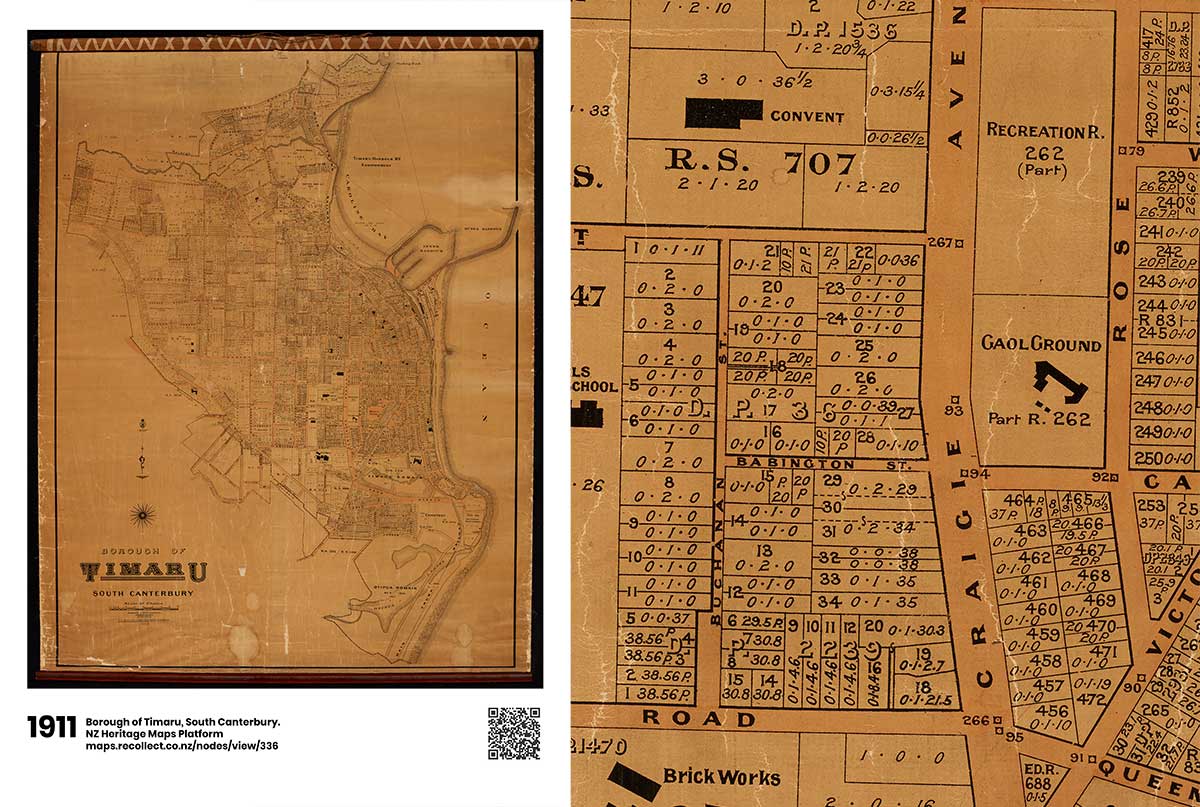
1911 Borough of Timaru, south Canterbury. NZ Heritage Maps. TIMARU-MAP_R25538727_01. Prisoners from Timaru Gaol were involved in the early planting and establishment of The Park, especially tree and shelter planting. 1887 South Canterbury Times description of the gaol is that the prison sat among clusters of trees on the West Town Belt, very close to the park area.
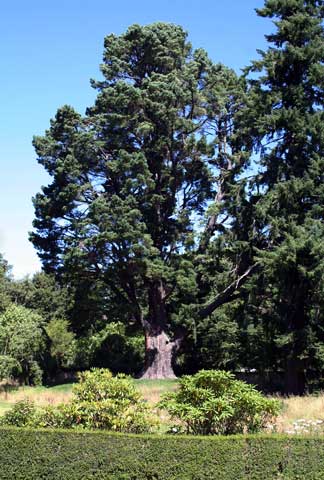
The oldest radiata pine in New Zealand is at Mt Peel Station, South Canterbury. This tree bears a plaque recording that it germinated from a seed in Sydney in 1856 and was planted at Mt Peel in 1859. Peter Berg, Radiata pine – Plantations in New Zealand, Te Ara – the Encyclopedia of New Zealand, https://teara.govt.nz/en/photograph/16831/radiata-pine-at-mt-peel-station Story by Peter Berg, published 1 March 2009.
Prisoner Pines - there are two trees that Wayne pointed out to me that were planted by prisoners.

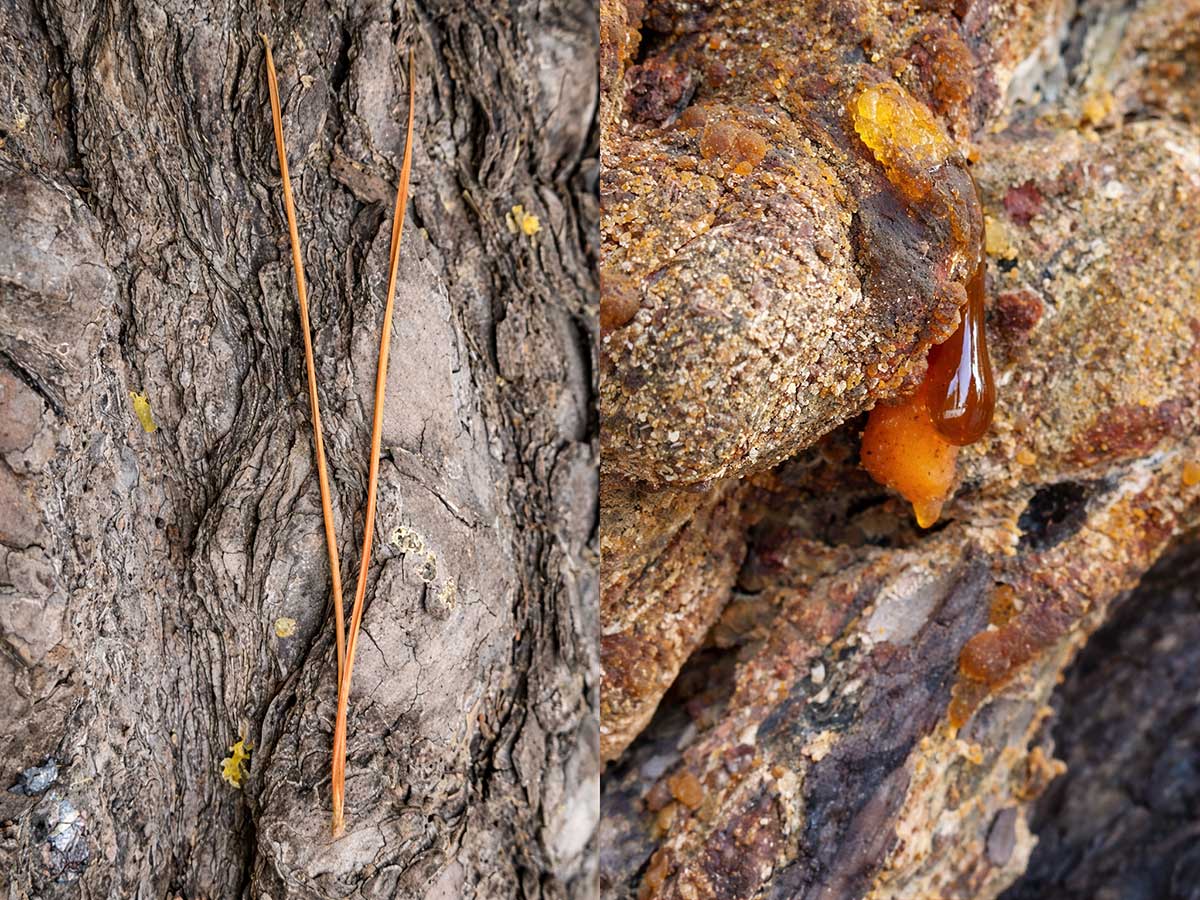
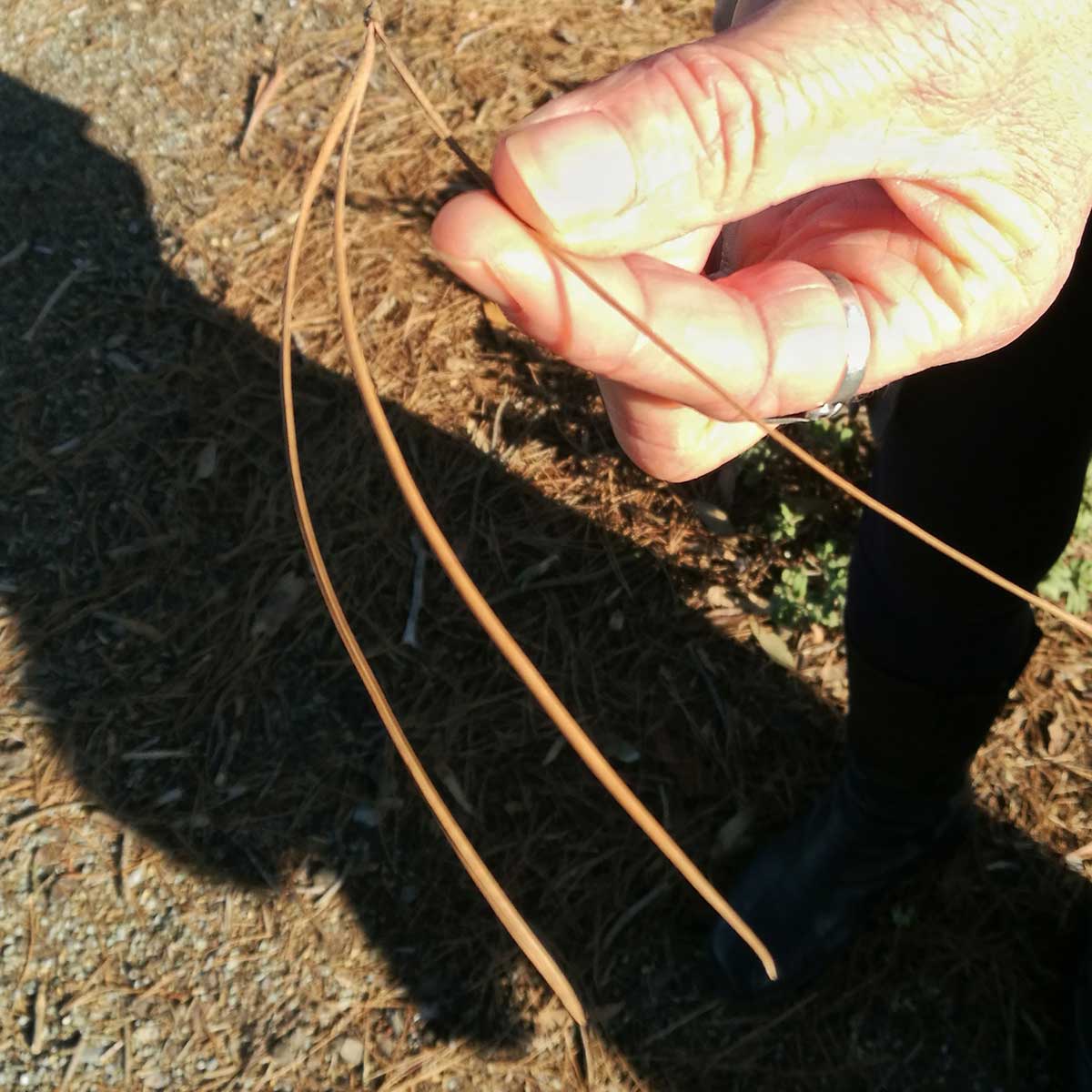
Binata refers to the needles being borne in pairs, which is why the label calls it “Two-Needled Monterey Pine.”. The mainland Monterey pine usually has needles in threes. - Photo Roselyn Fauth 2026
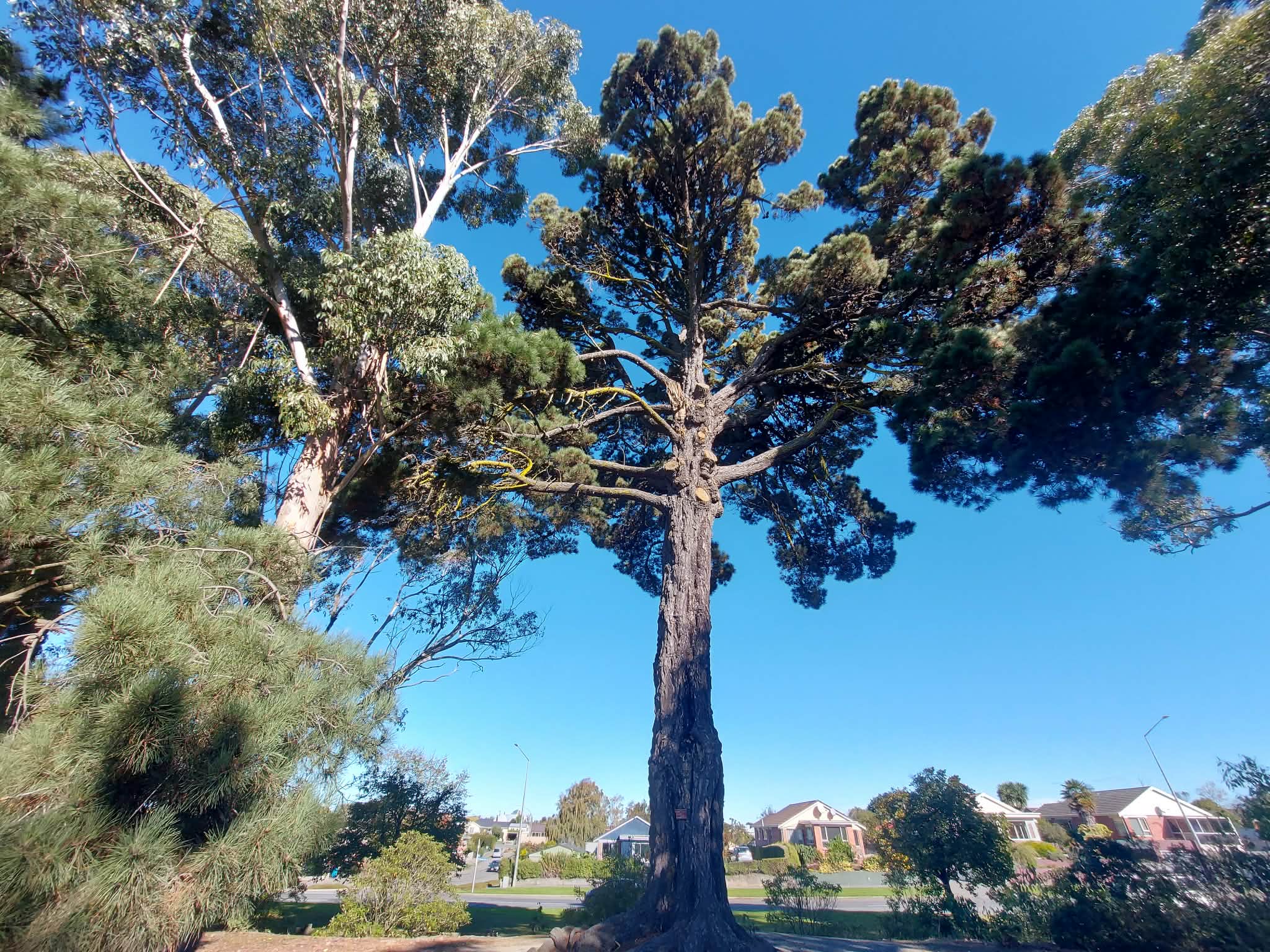
TIMARU Botanic Gardens Near the exit are two enormous Pinus Radiata trees that were planted many years ago by prisioners! Photo By Roselyn Fauth
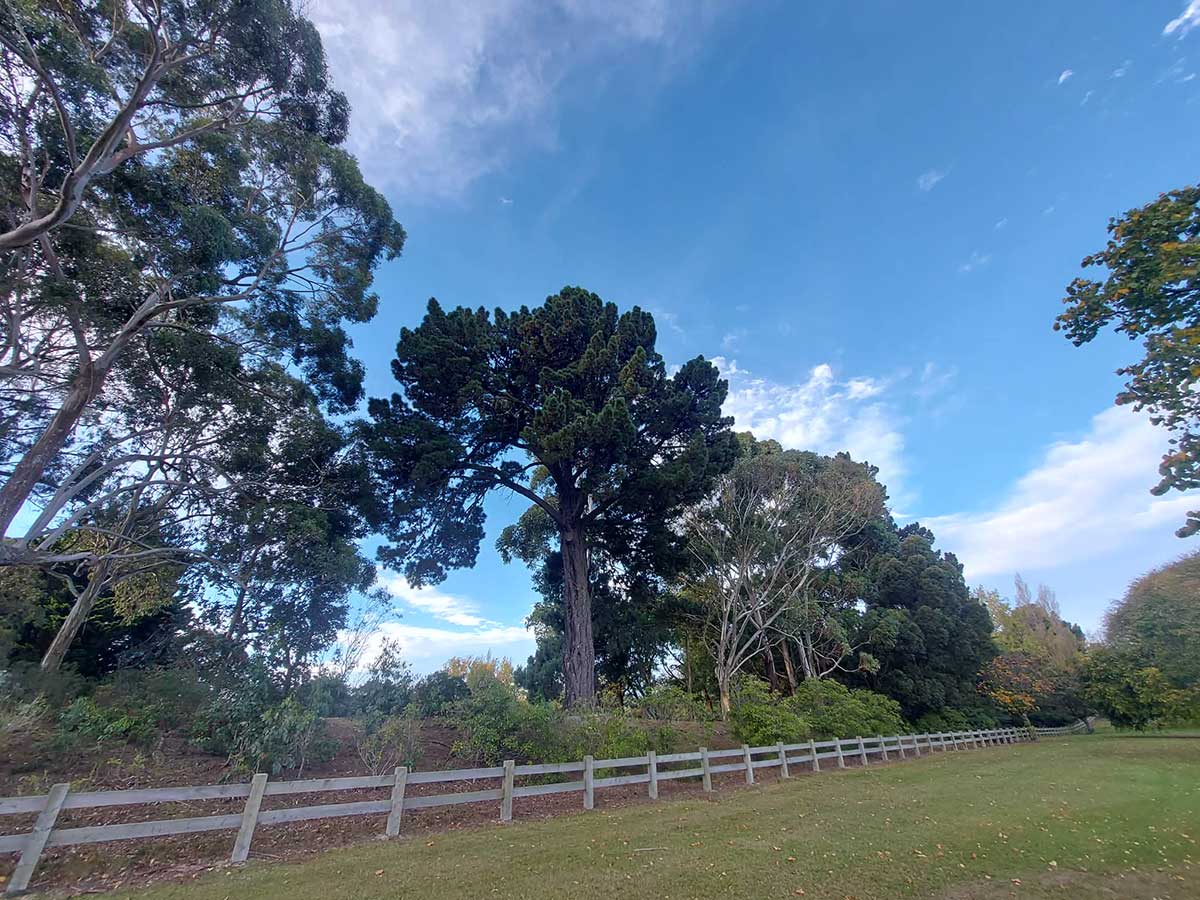
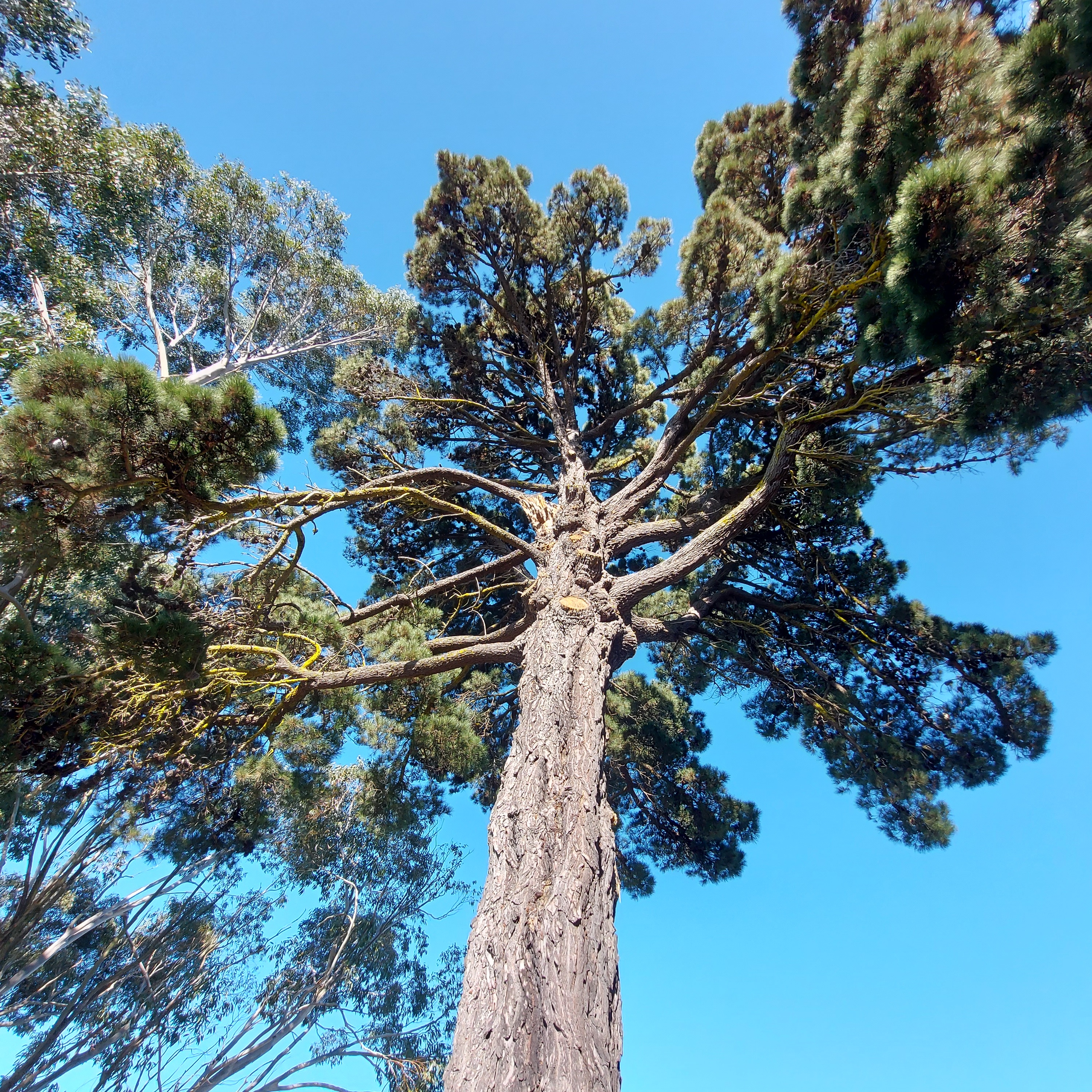
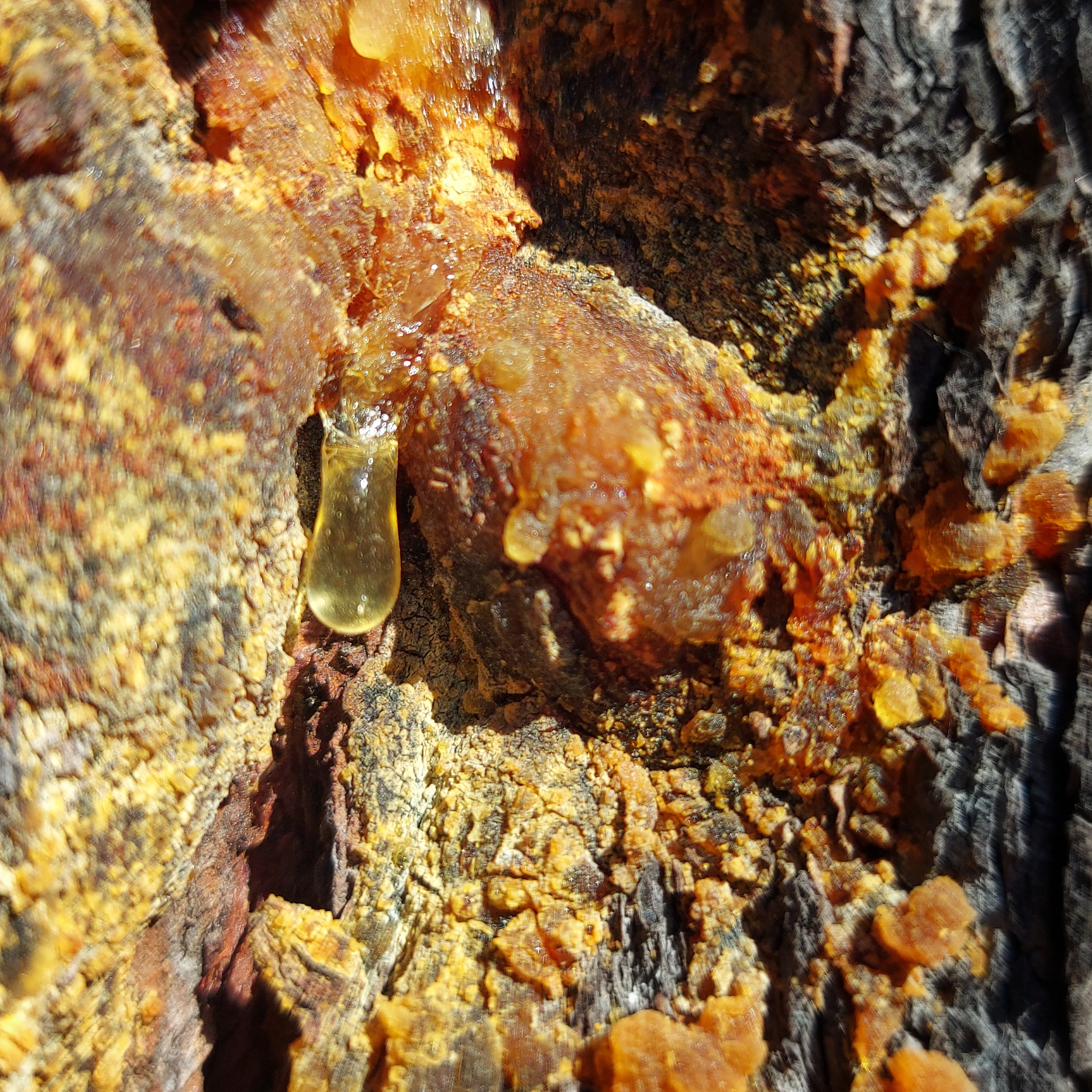
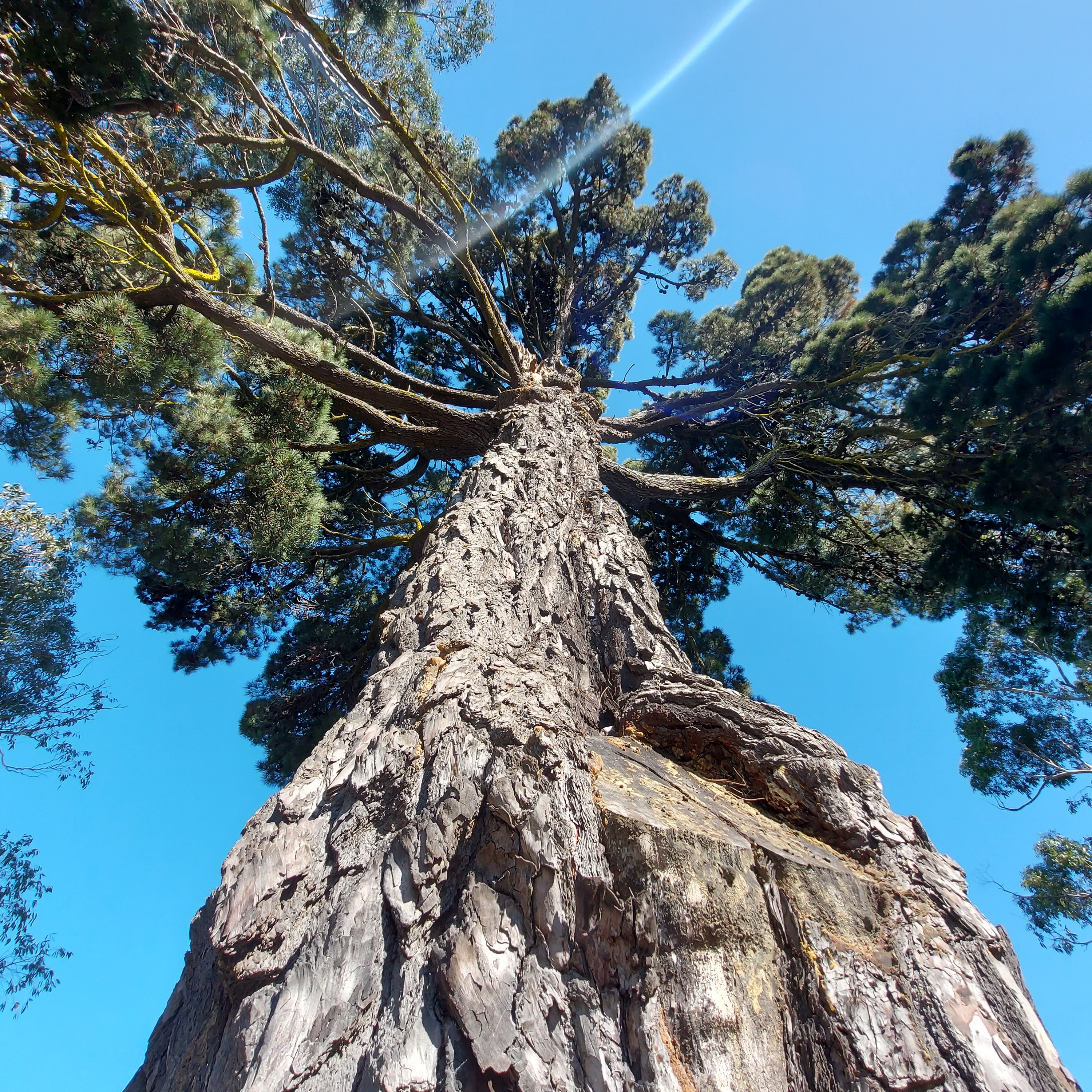
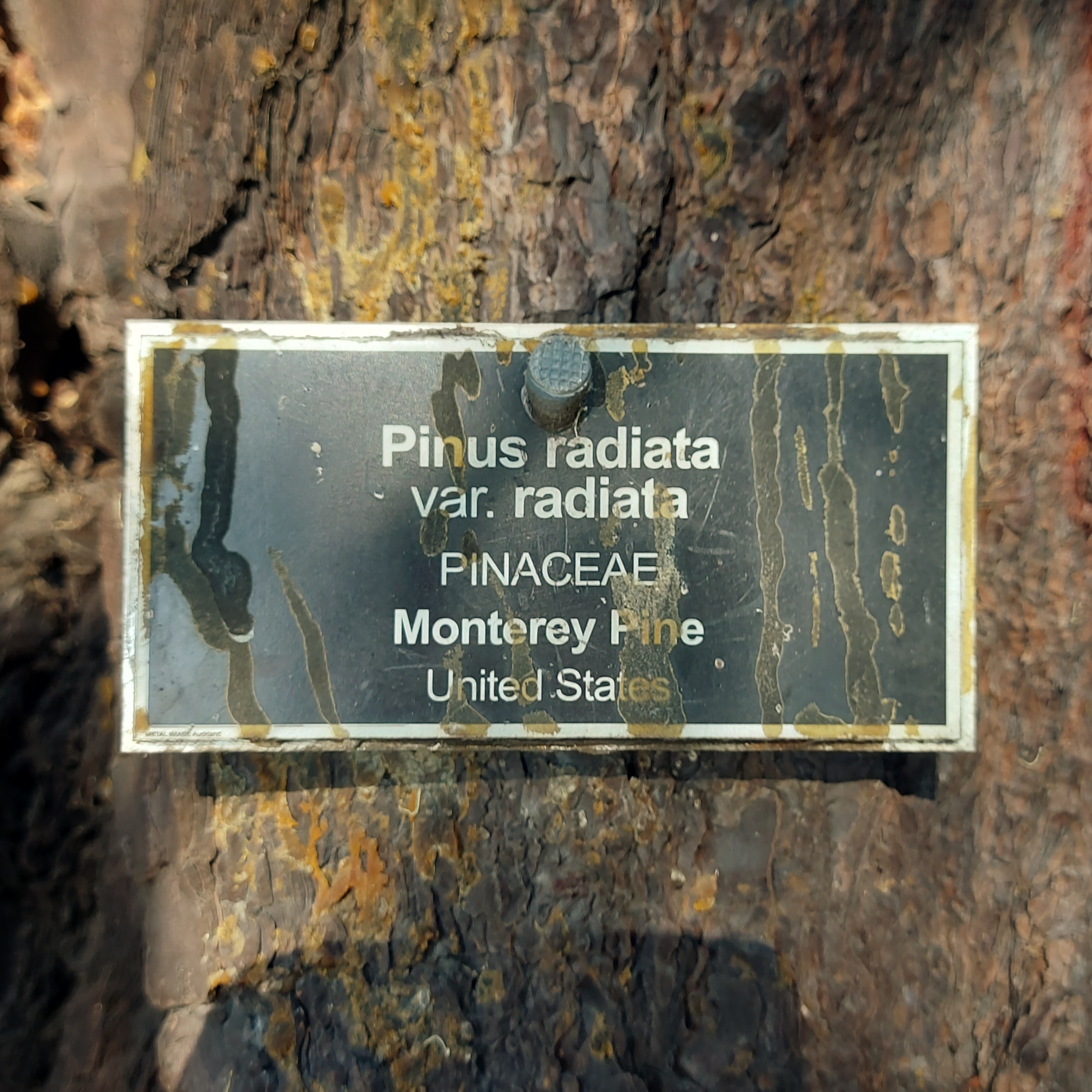
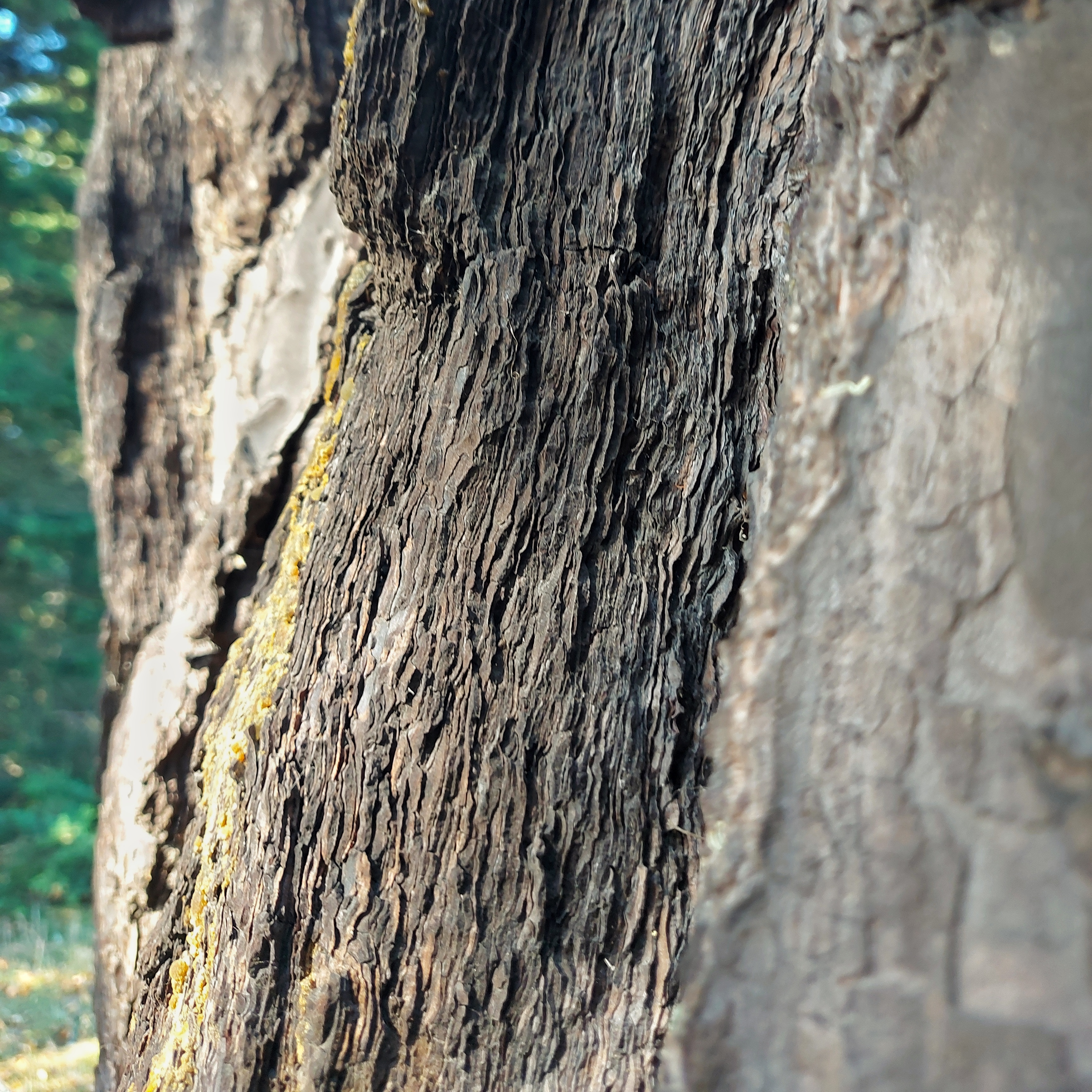
2023 Roselyn Fauth Pinus Radiata - Timaru Botanic Gardens
I have been told that a brick wall at the Timaru Hospital was built by prisoners, I will need to do some research to work out the details on this.
The Healing Heart of Timaru: A Short History of Timaru Hospital
By Roselyn Fauth

Timaru's first hospital emerged not from a grand governmental plan, but from the persistent advocacy of civic leaders like Belfield Woollcombe, responding to urgent health needs. Though modest in size and imperfect in location, the 1862 hospital marked the start of organized medical care in the region... a foundation that would grow into the Timaru Hospital we know today. I just assumed that nursing was a centuries old perfession, in today's deep dive, I have learned it is far more recent and through the work of the community we have saved many lives and improved the standard of care for those who became unwell, and in prevention too.
Belfield Woollcombe, a prominent local official (magistrate, registrar, customs officer, beachmaster, and immigration agent), formally appealed to the Canterbury Provincial Government for hospital facilities. To get up and running, Woollcombe hired a cob house with two rooms and four bedrooms at 16 shillings per week. Mrs. Simpson, wife of the clerk of works, agreed to serve as nurse for £50 a year. There were four beds, bedding, furniture, cooking gear, crockery which was inspired by the Christchurch hosptal. Dr Edward Butler was the first medical appointment as the Provincial Surgeon in December 1 1862. Woollcombe recommended Butler for the role of medical superintendent of the new hospital. View the photo Aoraki Heritage Record
I read somewhere that the first hospital was operating near the goal, close to Timaru's bacillca. The wooden hospital was built by the Canterbury Provincial Government at the corner of North Street and West Belt. It cost £443. The area was built on the edge of a swampy creek, and concerns over the dampness led to the search for a better site. Local committee formed: Included H. Belfield, T. W. Hall, and J. Beswick. Dr Duncan McLean temporarily took charge after Dr Butler resigned. 1865: Dr Christy appointed by the Provincial Government as the official hospital surgeon at £130/year, plus an additional £100/year as police medical officer.
There were a few scandals reported in the paper, in 1865 Dr Christy was accused of inefficiency and mistreatment, especially involving a German boy patient. A commission of inquiry was launched after public complaints and petitions. Outcome: The investigation exonerated Dr Christy, praised his work, and criticized the hospital’s poor siting in a “hollow” prone to flooding.
The hospital moved to govnerance, and the Hospital came under the control of the newly formed South Canterbury Hospital and Charitable Aid Board, ending exclusive provincial oversight.

The "Early Timaru Hospital" on Queen Street, Timaru, circa 1870. Depicts the Timaru's second hospital but the first on the Queen Street site. Construction of the bluestone building began in 1869 but the hospital was not occupied until 1870. South Canterbury Museum CN 1116.

The corner of the reserve for the Timaru Botanic Gardens was carved off for a new hospital.
A portion of land from the Timaru Botanic Gardens was subdivided to establish the current site of Timaru Hospital. This relocation provided patients and visitors with a serene environment conducive to rest and recuperation. timaru.govt.nz+1timaru.govt.nz+1top10.co.nz+2timaru.govt.nz+2wuhootimaru.co.nz+2
The hospital is situated in the Parkside suburb of Timaru, occupying the northeastern corner of the Botanic Gardens. This strategic placement integrates healthcare services with the natural beauty of the gardens, offering a tranquil setting for healing. en.wikipedia.org
The Timaru Botanic Gardens themselves have a rich history, having been established in 1864. Over the years, they have evolved into a space of national significance, recognized for their diverse plant collections and historical features. exploretimaru.co.nz
"The End of an Era, 1964–1989" by Eulla Williamson: This work details the final 25 years of the South Canterbury Hospital Board's administration of Timaru Hospital. timdc.pastperfectonline.com/library/2B993168
A History of Timaru Hospital by J.C. McKenzie, which traces the facility’s journey from its early days in 1864 through to the modern era. Get the book from Unicorn Books
In 1964, the hospital celebrated its centenary, marking 100 years of dedicated service. Local newspaper The Timaru Herald covered the milestone, illustrating how the hospital had become a state-of-the-art facility for the wider South Canterbury district. Read the centenary article on Aoraki Heritage
For much of the 20th century, the South Canterbury Hospital Board governed the hospital, guiding its strategic development and public accountability. This era came to a close in 1989, and the transition is beautifully documented in Eulla Williamson’s book The End of an Era, 1964–1989. Browse the title at South Canterbury Museum
The next chapter began in 2001, when the South Canterbury District Health Board (SCDHB) took over. This governance structure remained in place until the health reforms of July 2022, when all DHBs were disbanded and consolidated under Te Whatu Ora (Health New Zealand). Learn more about SCDHB on Wikipedia
Timaru Hospital has been home to trailblazing medical professionals. Among them was Helen Clyde Inglis, a pioneering nurse and activist, who trained and worked there in the early 20th century Read more about Helen Inglis Also notable is Dr. Eily Elaine Gurr, who began her medical career at Timaru Hospital as a house surgeon before advancing into maternity and midwifery. Read more about Dr. Gurr
Timaru’s medical heritage is well preserved thanks to the work of local historians and cultural institutions. Whether you're a curious local, a researcher, or a healthcare professional, you can explore further through these resources: A History of Timaru Hospital. The End of an Era – South Canterbury Museum Library. South Canterbury Museum
Sometimes it is easy to forget that Timaru that we know today is still relatively new, and much of establishing the new colony came down to the local community people stepping up to take leadership.
The legacy of people putting in the hard yards teamed with professionals and governance, has provided a higher quality of life in our region.
Probably like many of you, sometimes its not until a trip to A&E that we remember how many of our community are living with illness and physical challenges.
Back in 1850s, there was no government or universal health care here. Most sick people were looked after at home. Influx of immigrants increases hospital demand, and Timaru opened its first hospital in 1862, and that was thanks to the efforts of Belfield Woollcombe, the towns magistrate who moved here in 1858, who found a way to get Government support to make it happen.
The first public hospitals set up in New Zealand were in Wellington and Auckland in 1847, New Plymouth in 1848 and Dunedin and Whanganui in 1851. Christchurch followed in 1862.
Many hospitals were opened in the South Island during the gold rushes of the 1860s.
A wooden hospital was near the Bascilla on the edge of a swampy creek by the Canterbury Provincial Government at the corner of North Street and West Belt. Mrs. Simpson, wife of the clerk of works, agreed to serve as nurse for £50 a year. Dr Edward Butler was the first medical appointment as the Provincial Surgeon in December 1 1862. Local communities like Timaru were said to have a sense of civic pride in their hospitals, which were seen as a symbol of civilisation.
The nursing reform movement led by Florence Nightingale, which originated in Britain in the 1860s, was significant in the transformation of hospitals. It produced a new style of nurse who was efficient, obedient, clean, hard-working and sober. Nursing leaders (matrons) were posted around the British Empire and took ideas about cleanliness and discipline within hospitals with them. Auckland Hospital appointed its first matron in 1865, but it was not until 1883 that the Florence Nightingale-trained matron, Annie Crisp, transformed the hospital environment. She was an English-born nurse who established New Zealand's first school of nursing and served as superintendent of Auckland Hospital in New Zealand. She also established the Winnipeg Children's Hospital in Canada.

In 1939, Belgium issued a semi-postal stamp in honour of Nightingale in recognition of her work with the Red Cross when in Belgium.
Florence Nightingale was the founder of modern nursing and gave nursing a favourable reputation, and became an icon of Victorian culture, especially in the persona of "The Lady with the Lamp" making rounds of wounded soldiers at night. She is credited with professionalising nursing roles for women. Nightingale wrote Notes on Nursing (1859), The book was the first of its kind ever to be written.. She set up the first nursing school 1860.
Nursing was feminised – the trained male nurses who had previously dominated hospitals now mainly worked in mental hospitals. However, the orderlies who performed physical tasks such as moving patients around remained mostly male. To encourage respectable young women to become nurses, supervised nurses’ homes were set up on hospital premises.

Unknown artist, ILN Staff, after Unidentified contributor to The Illustrated London News - The Illustrated London News, 24 February 1855. Miss Nightingale, in the Hospital, at Scutari. Illustration for The Illustrated London News, 24 February 1855, page 176. original version
The Nurses Registration Act 1901 was the first legislation covering nursing training and registration in the world. This act formalised the hospital-based nature of nurse training through a system of apprenticeship, involving three years of training and a state examination. From the 1970s nurses were trained in tertiary institutions rather than in hospitals.

1956 Timaru Hospital - PA-Group-00080 Whites Aviation Ltd Photographs- nlnzimage
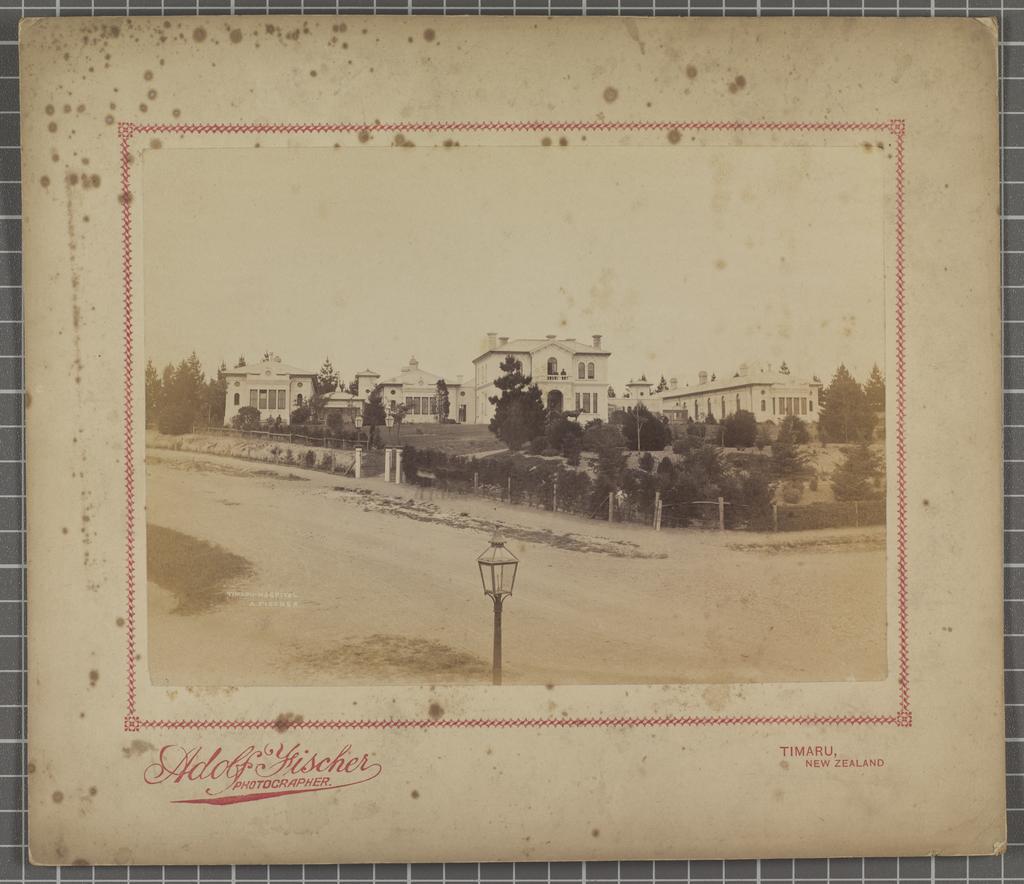
Fischer, Adolf, Timaru Hospital (1887-1899). Hocken Digital Collections, accessed 04/04/2026, https://hocken.recollect.co.nz/nodes/view/55672
There have been at least two public hospital sites in Timaru. An early hospital was once opposite what is now the Bascilla
Section of 1875 Map Plan of Timaru Townships Canterbury Courtesy of the Timaru District Council - the hospital and the Gaol
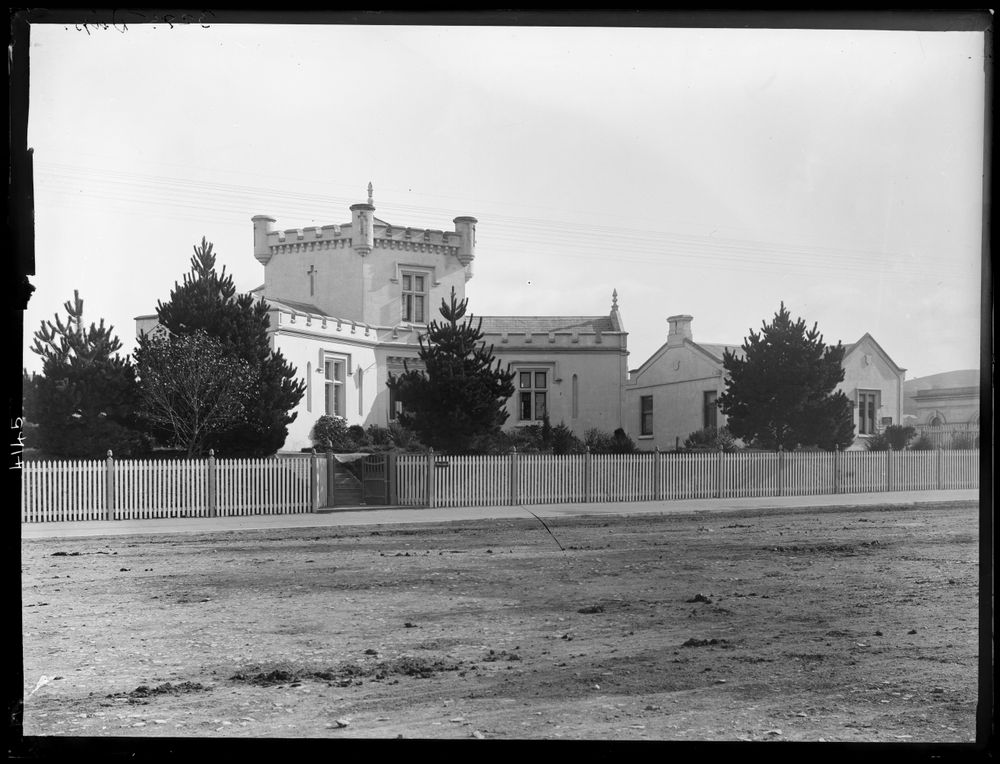
Oamaru Gaol, 1880s, Dunedin, by Burton Brothers. Te Papa (C.014145)