By Roselyn Fauth
I wasn’t looking for answers when I found this book. I was standing in the Eleanore Tripp Memorial Library in Woodbury, browsing slowly, the way libraries quietly invite you to do. Letting my eyes wander. Trusting that something might catch.
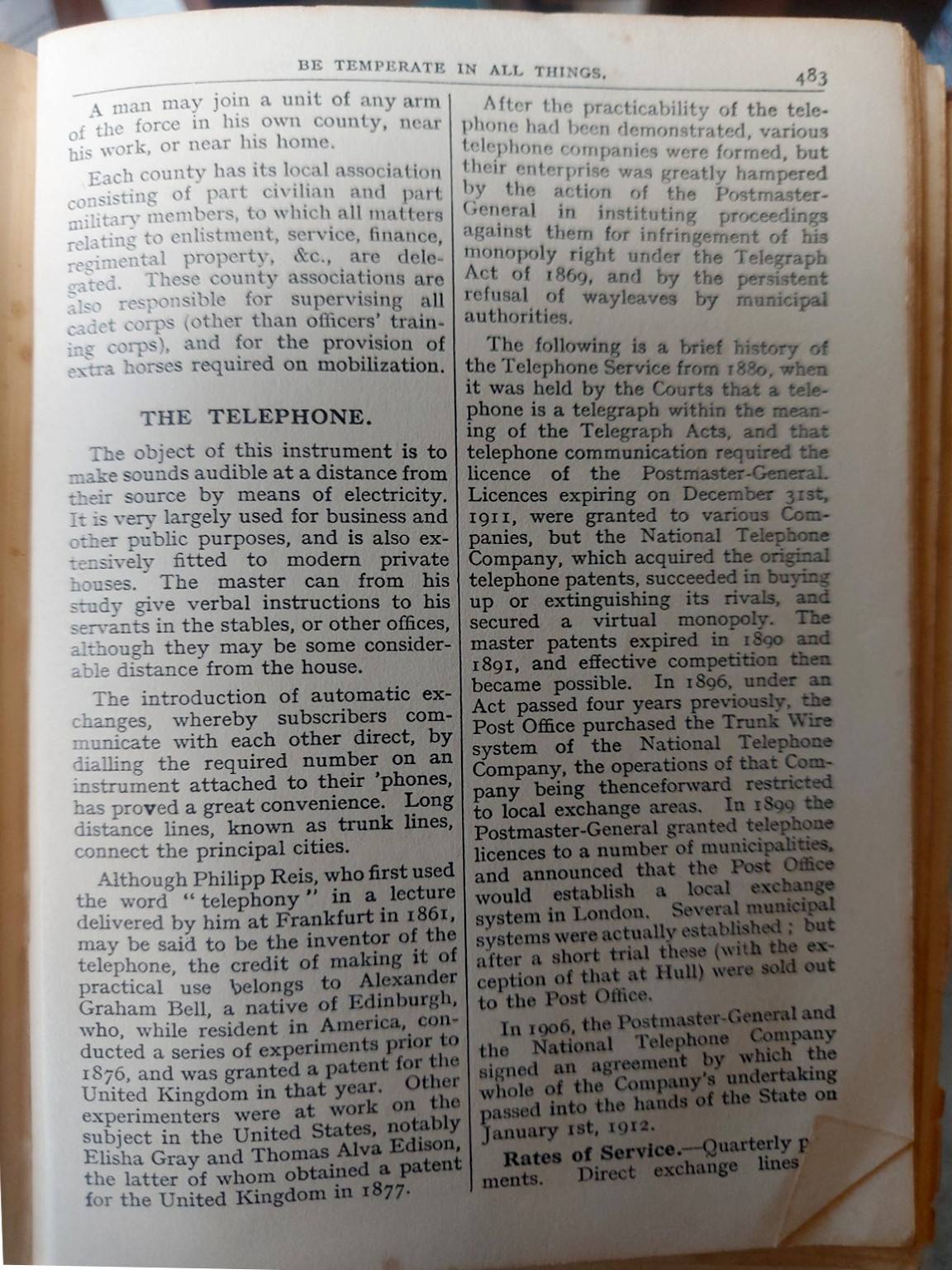
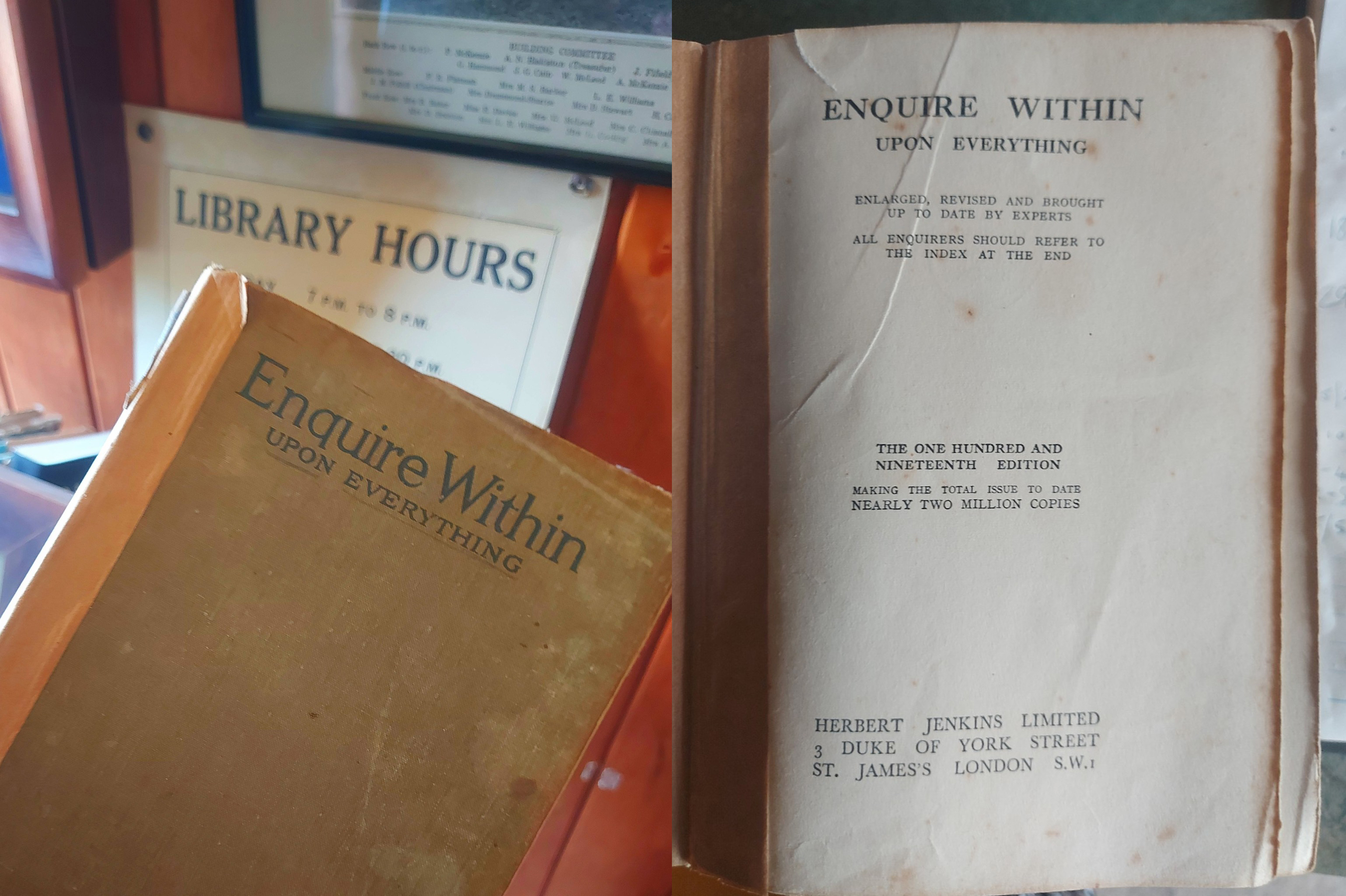
That’s when I pulled a thick, well-worn volume from the shelf. Its pages were yellowed and soft at the edges, clearly handled many times before but well cared for. Inside the cover, printed in confident capital letters, was a promise: ENQUIRE WITHIN UPON EVERYTHING. To be honest with you, it sounded a bit cheeky to think that everything could be bound in one books spine. But as I soon discovered, this book meant it quite literally. Here is my blog... on what sort of book this was...
The copy I was holding was the 119th edition, published in London in the 1930s. By then, nearly two million copies had been sold. The book itself first appeared much earlier, in 1856, compiled by Robert Kemp Philp during the Victorian era.
This wasn’t a novel or a textbook. It wasn’t political theory or moral philosophy. It was a household reference book. A practical guide for ordinary people navigating everyday life at a time when there was no Google, no legal aid, and no easy access to professional advice.
You didn’t read this book from cover to cover. You reached for it when something happened.
A marriage.
A birth.
A death.
A debt.
A problem you couldn’t afford to get wrong.
As I stood there leafing through it, I realised I wasn’t just holding a book. I was holding a tool.
Turning the pages felt like moving through a life. Initially I was just having a casual flick through. But as I turned the pages, I realised I wasn’t skimming isolated tips. I was moving through the arc of an entire life.
There were sections on marriage and divorce. On wages and debt. On bankruptcy and fraud. On children, guardianship, and welfare. On funerals, mourning, and burial. Even on new technologies like the telephone, explained carefully for households just beginning to encounter it.
This book didn’t tell you what should happen. It told you what would happen.
If you married.
If you separated.
If you earned money.
If you failed financially.
If you died without a will.
It was law and social expectation translated for the kitchen table.
I tried to resist reading it only with modern judgement. Instead, I asked myself what it would have felt like to rely on this book.
Then I noticed how often women appeared
I hadn’t set out to read this as a women’s rights text. That happened gradually, and then all at once.
Women appear everywhere in this book. Not loudly. Not heroically. But constantly.
Married women. Widows. Mothers. Women earning wages. Women managing households. Women responsible for children, funerals, debts, and paperwork.
What surprised me most was how much the book assumed women needed to know.
Even though women at the time had limited formal power, the book clearly expected them to understand the law. To comply with it. To navigate its consequences.
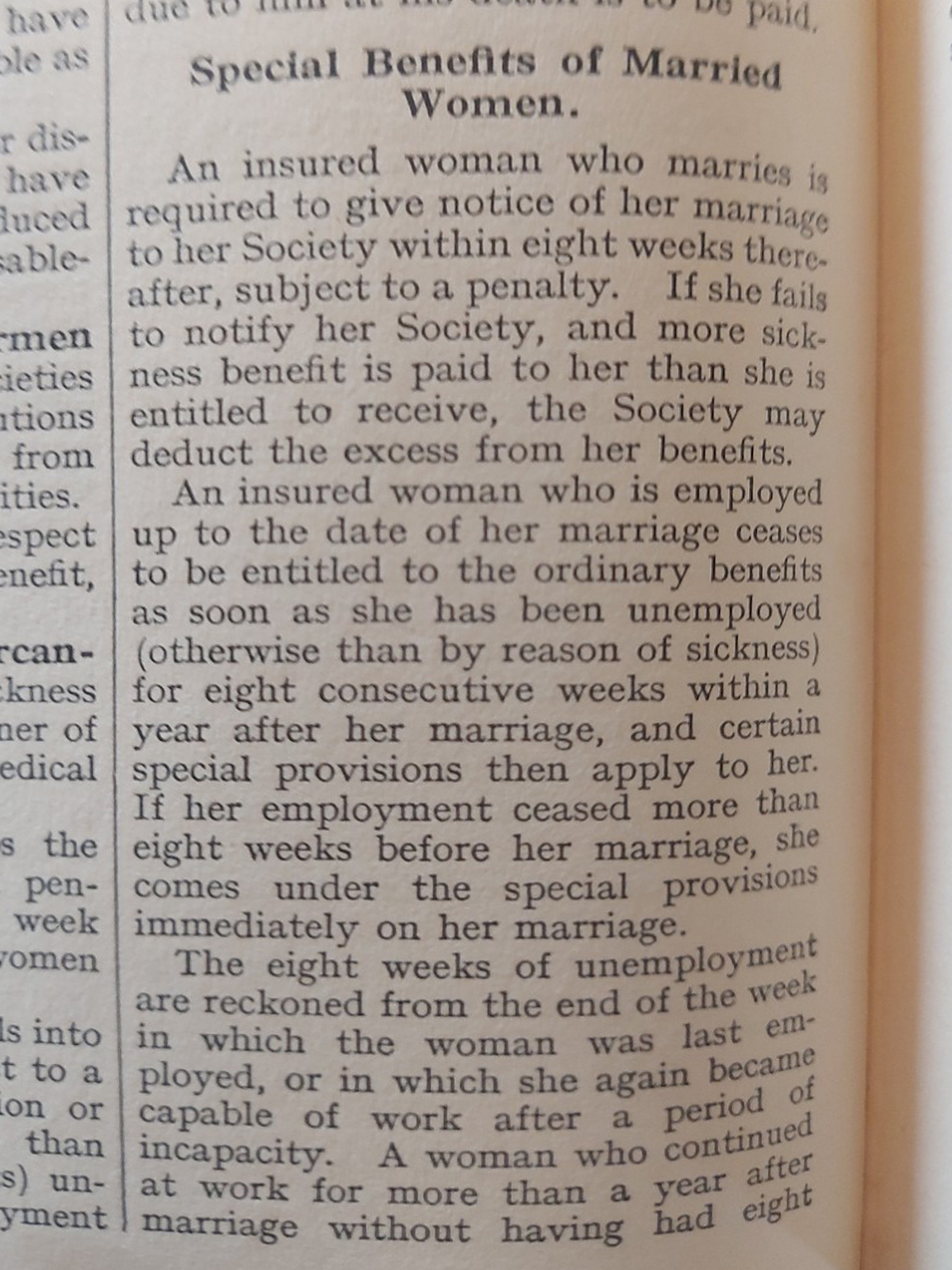
One small entry stopped me in my tracks. Under the heading Moneys paid to a Married Woman, the book states:
“The receipt of a married woman is a good discharge for any wages or earnings acquired or gained by her in any employment or occupation in which she is engaged separately from her husband.”
It’s just one sentence. Quiet. Almost easy to skip over.
But I couldn’t.
A little digging: married women and property
That line stayed with me, so I went looking for what sat behind it.
Before the late nineteenth century, English common law operated under a system known as coverture. Under coverture, a married woman had no separate legal identity from her husband. Once she married, she could not own property in her own name, enter contracts independently, or control her own earnings. Any wages she earned automatically became his.
Marriage, in legal terms, meant economic dependence.
I learned this by reading the legislation itself, alongside legal histories that trace how these rules operated in practice.
The Married Women’s Property Act of 1870 was the first significant crack in that system. It allowed married women to keep wages earned after marriage and to retain certain inheritances. It did not overturn coverture, but it softened it.
The Married Women’s Property Act of 1882 went further. It recognised married women as separate legal individuals. For the first time, a married woman could own property, enter contracts, keep all earnings, and sue or be sued in her own name.
Legal historians often describe the 1882 Act as a turning point in women’s legal history. But reading those reforms alongside Enquire Within made something very clear to me.
Changing the law and living with the law are not the same thing. That phrase “engaged separately from her husband” carries the weight of uncertainty. Rights existed. Certainty did not.
I found myself imagining a woman pausing over that sentence, wondering whether the money she earned was really hers, or whether it might disappear the moment something went wrong.
Divorce, custody, and inheritance: knowing the cost of leaving
The same quiet caution runs through the book’s sections on divorce.
Enquire Within explains the difference between judicial separation and absolute divorce, noting that separation did not dissolve the marriage or allow remarriage. Historically, divorce was inaccessible to most women. Even after reforms, the grounds were unequal, the process costly, and the social consequences severe.
Leaving a marriage was not liberation. It was a legal calculation.
The sections on children unsettled me even more.
Historically, children belonged to their father in law, not sentiment. Mothers were expected to care, but often lacked legal authority. Enquire Within reflects a transitional moment, where women are made responsible for welfare, compliance, and inspection long before they are recognised as equal decision-makers.
Inheritance law tells a similar story. The book notes reforms under the Administration of Estates Act 1925, which placed women and men on equal footing in succession. But it also makes clear how risky dying without a will could be.
Again and again, the message is the same.
Know the rules.
Or live with the consequences.
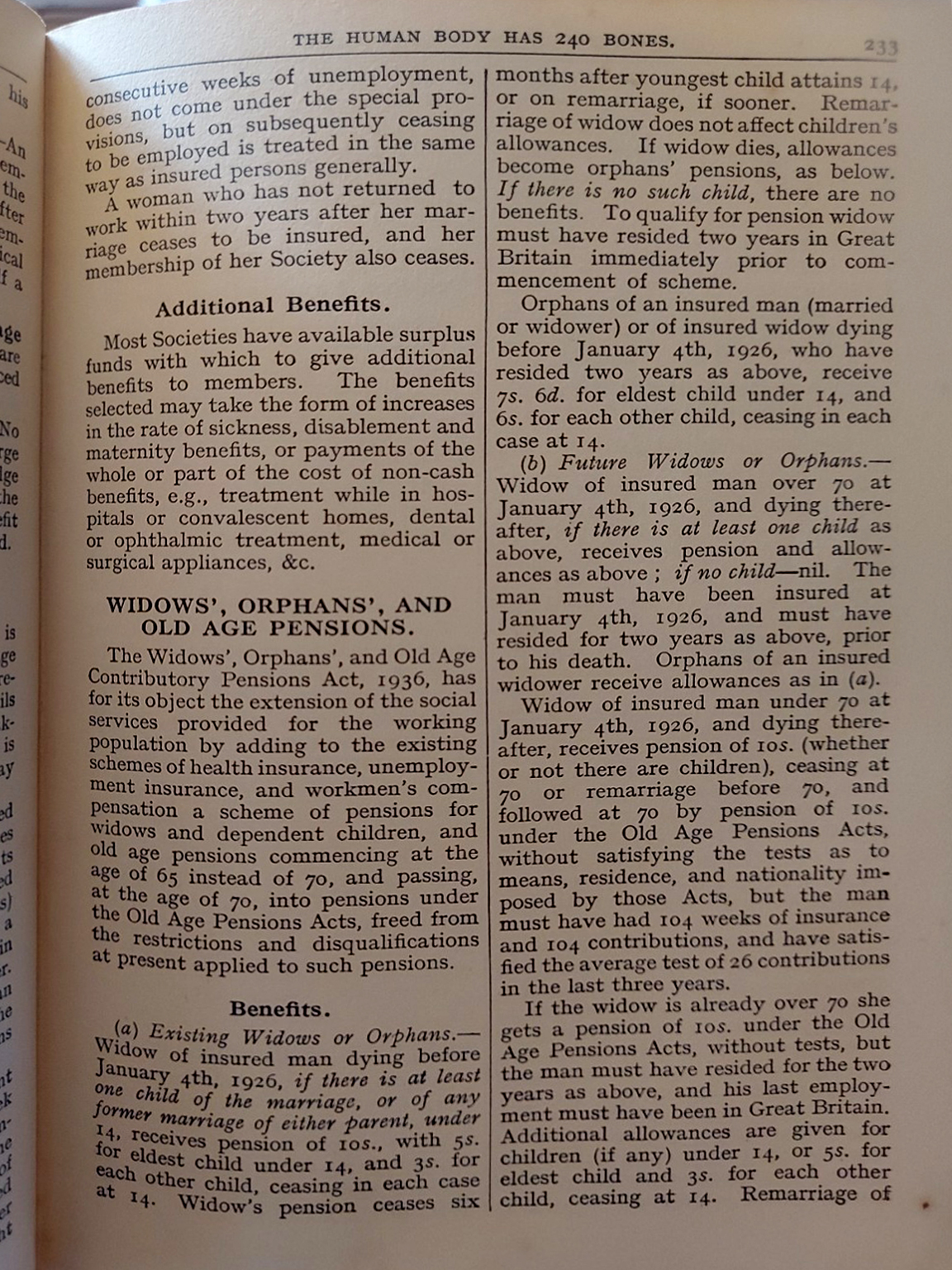
The pages I didn’t photograph
It’s worth saying that most of Enquire Within Upon Everything isn’t about law at all. Large sections of the book are devoted to recipes, household hints, cleaning methods, stain removal, preserving food, caring for clothing, and keeping a home running smoothly. I didn’t photograph most of those pages. Not because they weren’t interesting, but because they felt familiar in a different way. They reminded me of handwritten recipe books, passed-down tips, the kind of domestic knowledge that often lives in practice rather than print.
But there were a few pages I did photograph quickly, almost instinctively, so I could read them more carefully when I got home. They were the pages about wages. About marriage. About children. About death. About what happens when things go wrong. The recipes assume continuity, those pages assume disruption.
One set keeps life ticking along.
The other is there for when life tilts.
Seeing both between the same covers changed how I understood the book.
Side quest: what advice would be different for a woman today?
At some point, I found myself wondering what a book like this would look like if it were written now.
Today, it wouldn’t need to explain whether a woman is allowed to earn wages. Instead, it might quietly warn her to keep her own bank account, understand how caregiving affects retirement, document unpaid contributions, or know her rights before signing contracts.
The advice has shifted from permission to protection.
What surprised me most was not how different the advice would be, but how familiar its shape still feels.
Then:
Know the rules, or pay the price.
Now:
Know the system, or absorb the cost.
A working book, in a memorial library
I don’t know who owned this particular copy. I don’t know whose hands turned these pages most often.
But the wear suggests it wasn’t ornamental.
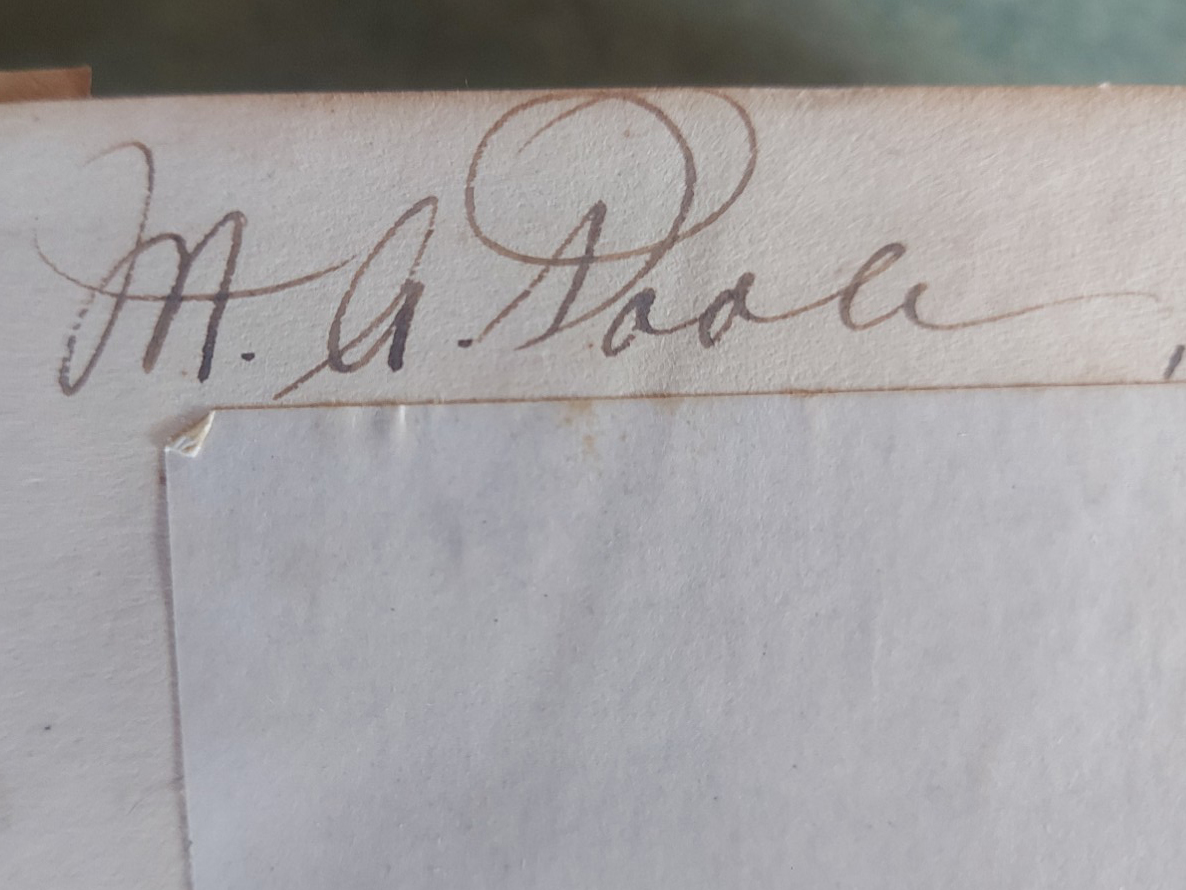
A bookseller’s label shows it travelled far. A handwritten name hints at ownership. The pages are softened, marked, handled.
This was a working book.
I photographed only a fraction of its pages. There were many more. Hundreds, in fact. Turning them felt like moving through an entire life, one rule and one consequence at a time.
Finding it in the Eleanore Tripp Memorial Library feels exactly right.
Memorial libraries preserve more than books. They preserve the tools people once relied on to get through ordinary life. Not the headline moments, but the moments that followed. The paperwork. The obligations. The quiet decisions made at a kitchen table.
What a flick through an old book taught me
I didn’t expect a flick through an old reference book to slow me down.
At first, Enquire Within Upon Everything felt like a curiosity. A glimpse into another time. A book full of recipes, cleaning tips, and practical advice for keeping a household running.
But looking closer changed that.
Pausing on a single sentence. Reading a paragraph twice. Asking why something was phrased so carefully. Letting myself wonder who needed this information most, and what it cost them not to have it.
That’s when the book began to teach me something deeper.
It taught me that women’s rights were not experienced as slogans or milestones, but as instructions. As rules to be learned. As boundaries to be navigated carefully. As knowledge that could protect you, or fail you, depending on how well you understood it.
It taught me how recent so many of our assumed freedoms really are. The right to earn and keep wages. To leave a marriage. To have a say over children. To inherit without condition. To exist in law as a person in your own right.
It also taught me how much labour women have always carried quietly. Not just physical work, but cognitive work. The work of understanding systems. Anticipating consequences. Holding households together through both the ordinary and the catastrophic.
What I take for granted today is exactly what this book made visible.
I take for granted that my wages are mine.
That I can sign my own name and be believed.
That I can leave if I need to.
That care is not the same as compliance.
Looking closely at this book made me realise that these aren’t just rights. They are protections. And protections only matter if we notice when they are weakened, unevenly applied, or quietly eroded.
What I now know is important to me is not just remembering where we’ve come from, but being attentive to what still needs guarding.
Access to clear information.
Economic independence.
Legal autonomy.
The dignity of care without punishment.
The right to safety, choice, and voice.
This small act of looking closely has shaped how I want to move forward.
To protect the gains that feel ordinary now.
To uplift stories that show how hard-won they were.
To endorse policies and practices that don’t assume knowledge as privilege.
To advocate for equity that is lived, not just written.
And to let this awareness inform my choices, my work, and my voice.
All that, from a flick through an old book on a quiet library shelf.
Sometimes learning doesn’t arrive as an answer.
Sometimes it arrives as a question you didn’t know you needed to ask.
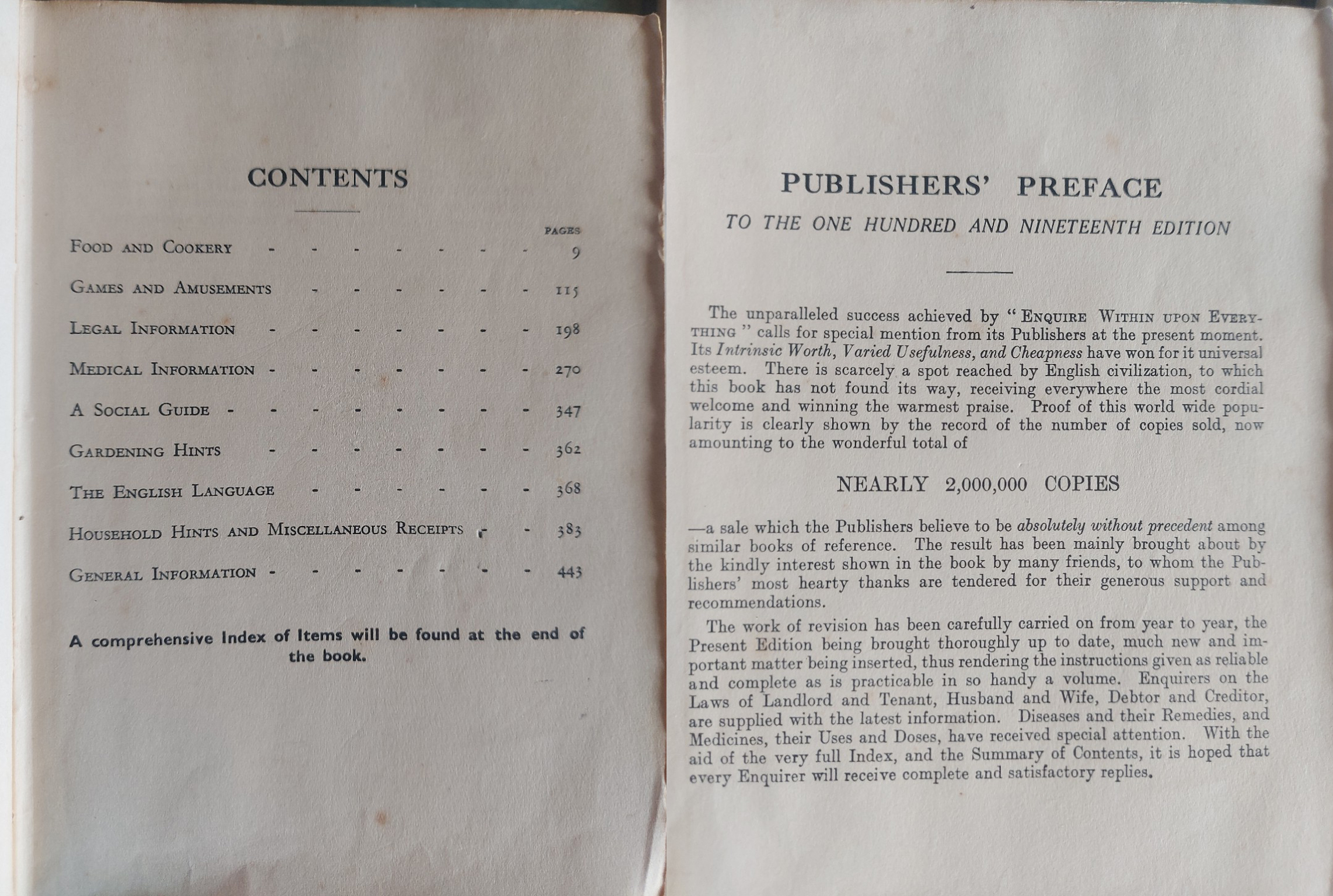
PUBLISHERS’ PREFACE
TO THE ONE HUNDRED AND NINETEENTH EDITION
The unparalleled success achieved by “ENQUIRE WITHIN UPON EVERYTHING” calls for special mention from its Publishers at the present moment. Its intrinsic worth, varied usefulness and cheapness have won for it universal esteem. There is scarcely a spot reached by English civilization to which this book has not found its way, receiving everywhere the most cordial welcome and winning the warmest praise. Proof of this world wide popularity is clearly shown by the record of the number of copies sold, now amounting to the wonderful total of NEARLY 2,000,000 COPIES —a sale which the Publishers believe to be absolutely without precedent among similar books of reference. The result has been mainly brought about by the kindly interest shown in the book by many friends, to whom the Publishers’ most hearty thanks are tendered for their generous support and recommendations.
The work of revision has been carefully carried on from year to year, the present Edition being brought thoroughly up to date, much new and important matter being inserted, thus rendering the instructions given reliable and complete as is practicable in so handy a volume. Enquirers on the Laws of Landlord and Tenant, Husband and Wife, Debtor and Creditor, are supplied with the latest information. Diseases and their Remedies, and of the Uses and Properties of Medicines, their names and doses, have received special attention. With the aid of the full Index, and the summary of Contents, it is hoped that every Enquirer will receive complete and satisfactory replies.
Contents page
CONTENTS
Food and Cookery ............ 9
Cakes and Amusements ........ 115
Legal Information ........... 198
Medical Information ........ 270
A Social Guide ............. 347
Gardening Hints ........... 362
The English Language ....... 368
Household Hints and Miscellaneous Receipts ..... 383
General Information ........ 443
A comprehensive index of items will be found at the end of the book.