

Street Art by Aroha Novak at Community House called Wall Flowers "After much googling and research at the library about the history of Timaru, Aroha decided to keep this particular composition simple but nostalgic “as a little girl, I loved the Mount Cook lily logo, and always wanted to travel on one of their planes”. It references the former Mount Cook Airlines logo of the Mount Cook lily, creating a wallpaper pattern on the side of the building. Novak said it was a nostalgic reference to the Mt Cook Airlines logo, which featured the Mt Cook lily." - Aroha Novak
Most people know Mount Cook Airline for its little white “lily” painted on the side of planes and trucks, but few realise that flower was not a lily at all, and even fewer know it was designed by a Timaru woman. In 1913, Jessie Wigley turned the alpine buttercup into a logo that would carry her family’s transport company from dusty roads to glacier ski-planes and international publicity. Her story is not just about tourism or branding. It is about a woman whose creativity gave New Zealand one of its most recognisable and iconic symbols.
I absolutely love the mural that the Timaru Civic Trust championed with Vibrant Timaru, that Aroha painted across the Community House wall. I have been helping the Trust to share the stories and meanings of their street art, and this is what I learned from a deep dive into the buttercup’s history hunt trail and the journey leading me to Jessie Wigley...
When David Lyall first discovered the buttercup in the 1800s, he collected only its leaves. For a decade the plant was believed to be a lily. Names have a way of sticking, even when they are wrong. And I think there is some synergy here with Women’s histories, who are are also often treated in the same way, misnamed or overlooked.
Jessie Wigley (nee Grant) (1883 - 1968) grew up at Aigantighe house on Wai-iti Road, Timaru. Her family built the town home while they were farming the Greys Hills Station. The MacKenzie and Timaru homes, nurtured her creativity and which she later helped gift to the city as its public art gallery.
In 1913 Jessie Wigley drew the buttercup into a circle and offered it as an emblem for her husband’s company. At first glance it seems like a simple motif, but it became a logo that travelled further than the flower itself. It appeared on motor coaches, on brochures sent overseas, and eventually on the tails of aircraft.

Mt Cook Lillie's - Photo Geoff Cloake
The company her emblem represented
In 1907 Jessie’s husband, Rodolph Wigley, drove the first motor car from Fairlie to Mount Cook. It took him an entire day. That single journey became the basis for a business. By 1912, he had expanded his service to link Mount Cook and Queenstown, two of New Zealand’s most important tourist centers.
The Mount Cook and Southern Lakes Tourist Company grew steadily. It operated a large fleet of cruiser coaches across Canterbury, the Mackenzie, and Otago, linking Christchurch, Timaru, Mount Cook, Pukaki, Tekapo, Ohau and Queenstown. Services reached as far as Ball Hut, Skippers Canyon, and the Coronet Peak ski field. By the 1960s the company also ran tour cars, two ski fields and a scheduled airline.
In November 1961 Rodolph’s son, Harry, launched Mount Cook Airline with a DC3 aircraft. Airfields were formed at Mount Cook and Te Anau and modern radio navigation aids were installed. At first flights ran three times a week between Christchurch, Mount Cook, Queenstown and Te Anau. By 1963 services had grown to six days a week, extending to Dunedin and Invercargill, and by 1964, they were daily.
Meanwhile, Harry was experimenting in the snow. In 1955 he and A. McWhirter fitted homemade skis to a small Auster aircraft and landed it on the Tasman Glacier. This was the world’s first successful ski plane landing. Soon a fleet of Cessnas based at Mount Cook and Fox Glacier was flying thousands of tourists every year. In just twenty minutes, travelers could leave the warmth of the Hermitage Hotel and find themselves standing in ankle deep snow at 6000 feet. The adventure received wide publicity, appearing in magazines, newspapers, films, and on television worldwide.
Through all of this Jessie’s emblem remained constant. It was painted on coaches, printed on brochures, worn on uniforms and enamel badges, and carried proudly on the tails of aircraft.
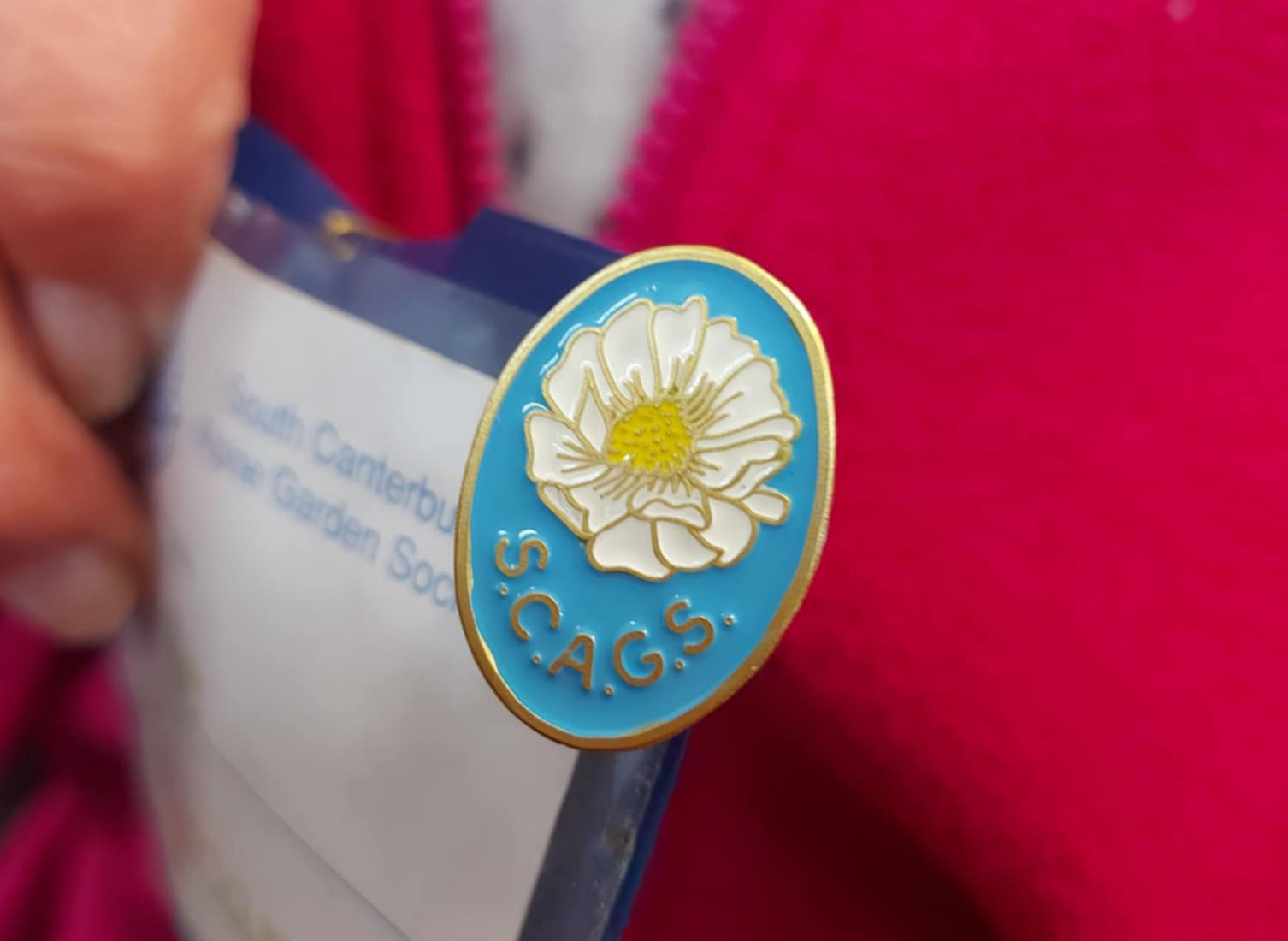
SCAGS South Canterbury Alpine Plants Society - Photo Roselyn Fauth
Jessie’s wider legacy
Jessie’s story was not limited to a logo. She also grew up at Aigantighe, the family home later gifted to Timaru as a public art gallery. That gift left a cultural legacy just as her emblem did in tourism. Both speak of her ability to take something personal and share it with a wider community. Aigantighe means “at home” in Gaelic. She decorated its interiors, later helped gift it to the city, and in doing so created Timaru’s public art gallery. The buttercup emblem and the gallery share a thread... both show Jessie’s instinct for taking something personal and turning it into something that the wider community can connect to.
Alongside transport, the Wigleys farmed. Jessie and Rodolph co-owned Huxley Gorge Station at the head of Lake Ohau with their son Sandy. It was rugged country, part of the family’s wider involvement in both land and tourism. I think the buttercup emblem tied these worlds together... mountain plant, farm station, and transport brand.
What Jessie taught me
I went looking for information about a mural and found a woman who created a bridge between mountains and city. The buttercup emblem Jessie designed has lasted longer than the company itself. It continues to be remembered today on restored vehicles and society badges.
Her story has shown me that design is more than decoration. It can be identity, memory, and legacy. Jessie’s buttercup reminds me that women’s creative work can shaped how regions were seen, however while the image is well known to many locals in South Canterbury, I am not sure if people realize the logos history and Jessie's 1913 connection to it - emblem that became the face of her family’s transport empire — from road coaches to an airline and ski-planes.
Standing in front of the mural on Stafford Street, I see more than a flower. I see Jessie’s hand in Emblem's graphic design was a big part of the transport history. As a graphic artist, it reminds me that the logos I create could have a lasting iconic impact, and to continue to create with purpose and meaning. I have enjoyed many walks into the glacial lake, experiencing the blocks of ice. It has been inspired by art, and now is a part of the Aigantighe Art Gallery in the form of a stained glass window. For me, this is a lovely nod to Jessie’s legacy to Aigantighe Art Gallery, her family home later gifted to the city, showing that her creativity spanned both transport branding and community art. She represents the often-overlooked role of women in shaping public identity
Jessie not only designed the emblem but also lived at Aigantighe, the homestead later gifted to Timaru as its public art gallery. Knowing that she helped to make that house a home makes her legacy feel even more tangible, weaving her story into both the transport history of Mount Cook and the cultural and artistic fabric of our city and region.
They married in 1911 and had three sons and three daughters. Their eldest son, Sir Henry Rodolph “Harry” Wigley (1913–1980), became the best known, a pioneering aviator who invented the ski-plane and later took over the Mount Cook Group, receiving a knighthood in 1976 for his services to tourism and aviation. Another son, Alexander Grant “Sandy” Wigley, worked alongside his father in expanding the company’s reach to the southern lakes and Queenstown and helped manage Huxley Gorge Station. Their third son lived more privately and is less often mentioned in published records. Of their daughters, Jessie Margaret Wigley (1916–2006) is recorded, while her two sisters also lived comparatively private lives. Together this family carried forward aspects of both the transport empire and the landholdings, with Harry in particular ensuring that the Wigley name became nationally recognised.
Reading that Jessie and Rodolph had six children makes me pause as a mum. It is one thing to design an emblem that became the face of a transport empire, but quite another to do so while raising three sons and three daughters in a busy household. I imagine the constant balancing act — children to feed, the company to support, a home to keep, and still finding the time and headspace to draw something as enduring as the buttercup circle. Her eldest, Harry, went on to change aviation, Sandy took on the high country stations, and the others contributed in quieter ways. As a mother myself, I know how much of our identity is tied up in our children’s paths, yet Jessie’s story reminds me that the work we create with our own hands also matters. It encourages me to see that being a mum and being a maker are not separate roles — both are legacies, and both deserve to be remembered.
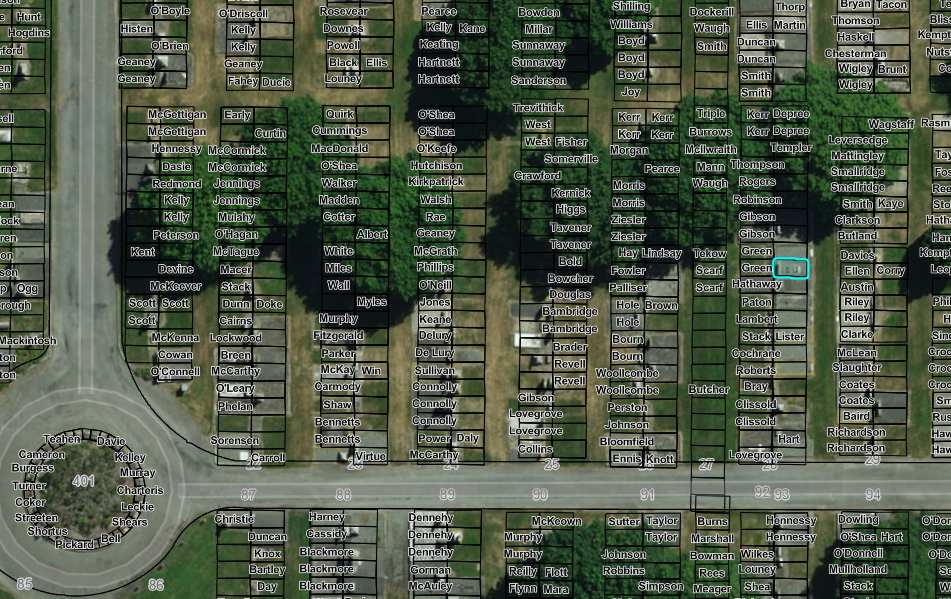
Jessie Christie Wigley (nee Grant) has a memorial at the Timaru Cemetery. Row 28, plot 169. She died aged 87 on 1 December in 1968.
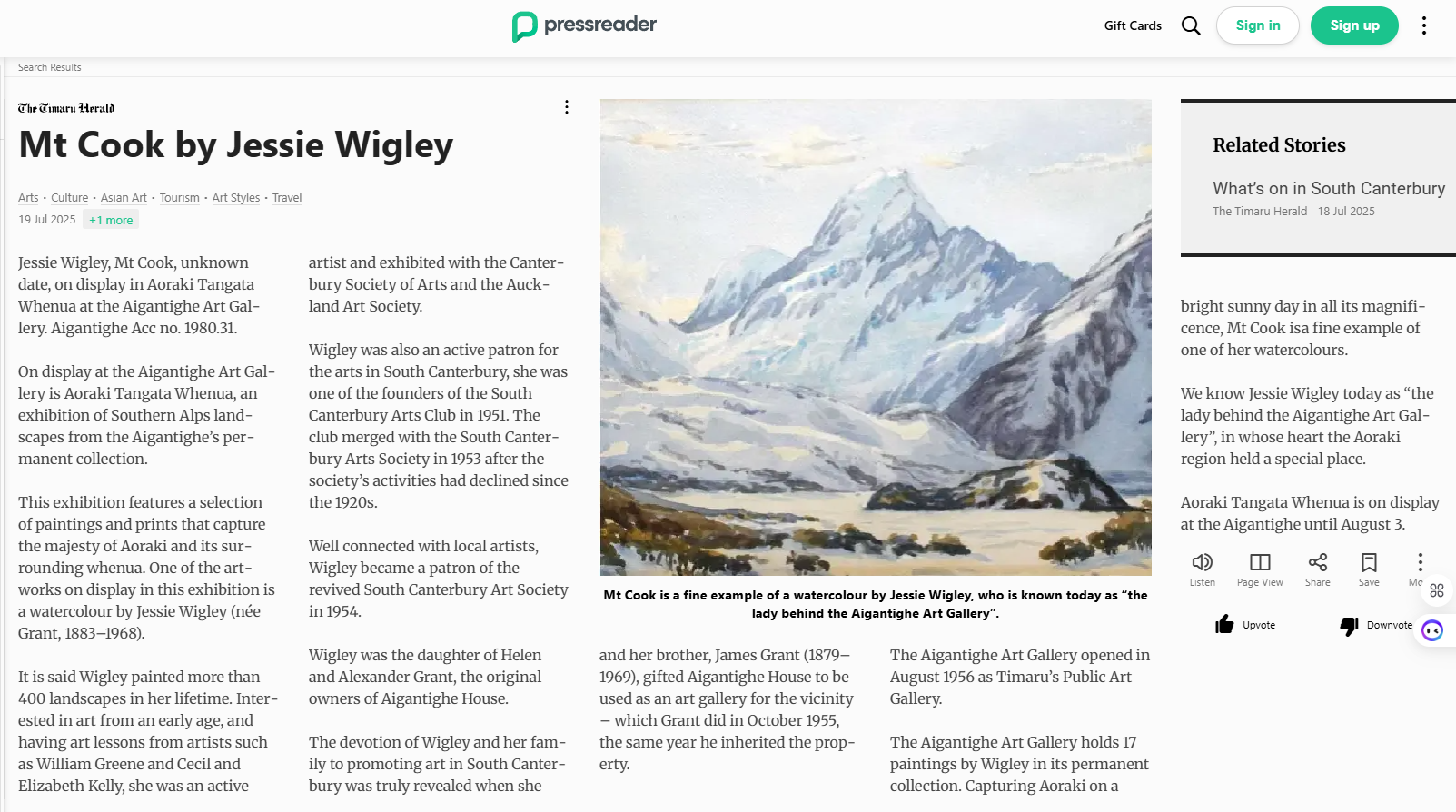
https://www.pressreader.com/new-zealand/the-timaru-herald/20250719/281535117022178
Side Quest: Who was Rodolph Wigley?
Rodolph Lysaght Wigley (1881–1971) was Jessie’s husband and is remembered as the father of Mount Cook tourism. Born in Fairlie, South Canterbury, he grew up in a family of runholders and carried the restlessness of a pioneer. In 1907 he drove the first motor car, a French-built Darraq, from Fairlie to The Hermitage at Aoraki Mount Cook. The road was so rough the journey took a full day, but it proved that motor transport could succeed where horse-drawn coaches struggled. From this bold experiment, he launched the Mount Cook Motor Company, offering regular services to the mountain. By 1912 his routes already linked Mount Cook with Queenstown, connecting two of the country’s most important tourist centres.
The company expanded into what became the Mount Cook and Southern Lakes Tourist Company, operating coaches across Canterbury, the Mackenzie, and Otago, with services stretching to Ball Hut, Skippers Canyon and Coronet Peak. Rodolph also promoted winter sports at Mount Cook, supporting skiing and climbing in the Mackenzie long before they became mainstream. His enthusiasm extended to aviation: in the 1920s he promoted flying in New Zealand, became a founder of the New Zealand Aero Club, and helped establish Mount Cook’s first airstrips. Though those early ventures did not last, they laid the foundation for his son Harry’s later success with ski-planes and Mount Cook Airline.
Rodolph’s achievements were recognised in his lifetime. In 1935 he received the King George V Silver Jubilee Medal for his services. By the 1960s, his company had grown into a household name, employing hundreds and carrying thousands of visitors each year into the alpine regions. He died in Timaru in 1971, aged 89, and is buried at Timaru Cemetery. Rodolph built the infrastructure and the reputation, but it was Jessie’s buttercup emblem that gave the company its enduring identity. Together their legacy still flowers in New Zealand’s tourism story.
- https://teara.govt.nz/en/biographies/3w13/wigley-rodolph-lysaght
https://www.canterburymuseum.com/explore/our-stories/pioneering-aviator
Obit. Timaru Herald. 29 April 1946: 4
Wigley, H. R. The Mount Cook way. Auckland, 1979
Wigley, H. R. Ski-plane adventure. Wellington, 1965
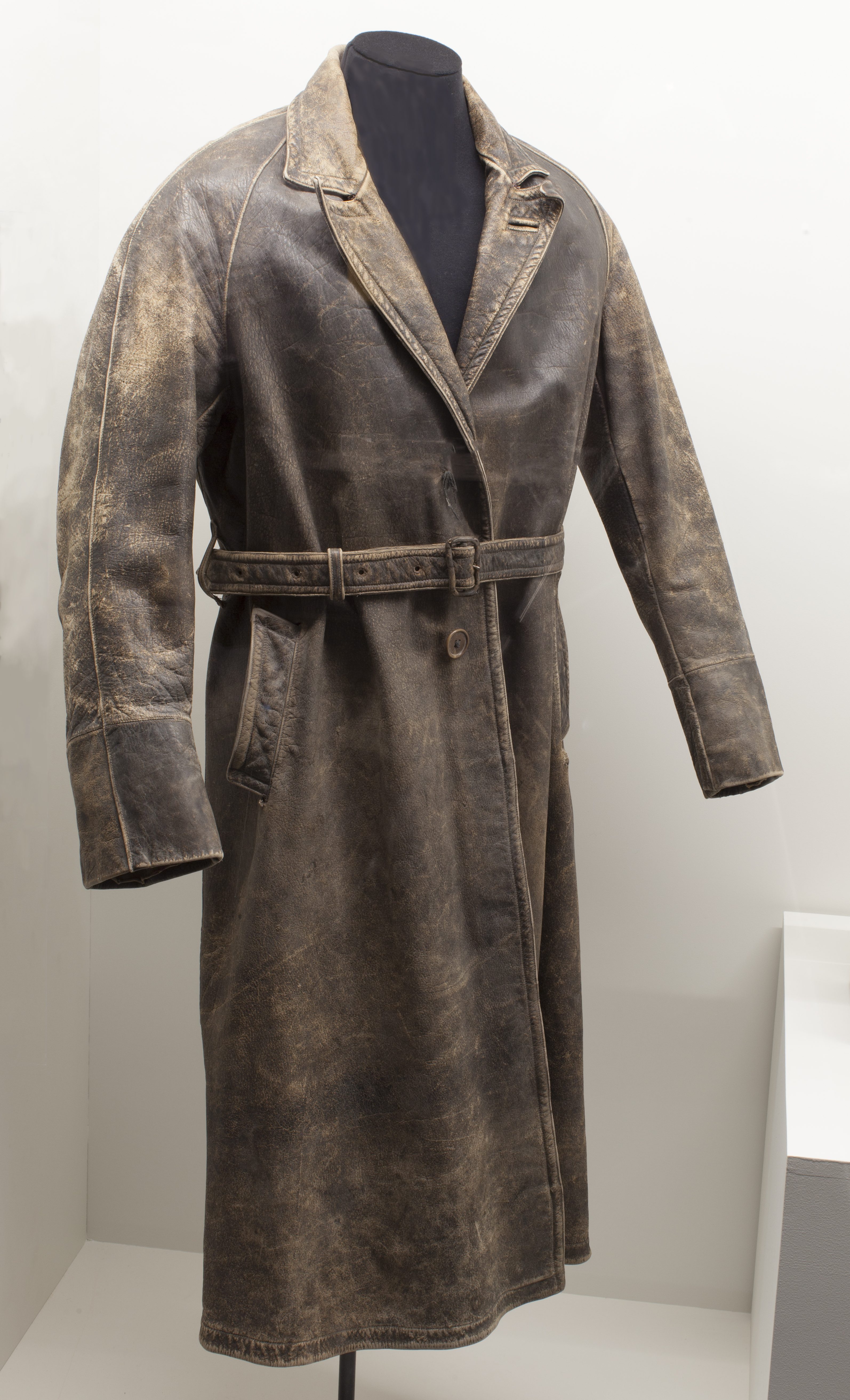
This long leather flying coat was worn by Mt Cook Airlines founder, Rodolph (‘Wigs’) Wigley, with a fur-lined flying helmet to keep warm in unheated aircraft.. After developing further into tourism with more transport routes, hotels and New Zealand’s first rental car business, he turned his attention to the skies and created the New Zealand Aero Transport Company in 1920. The company used surplus World War One aircraft and was the first in the country to transport passengers and freight. While he did not get his own pilot’s license until he was 55 years old, he was a passenger on many pioneering flights, including the first flight from Invercargill to Auckland, piloted by James Cuthbert "Bert" Mercer in 1921. Eventually, the company morphed into Mt Cook Airlines, which is now part of Air New Zealand. https://www.wuhootimaru.co.nz/help-hunt-history
Side Quest: How Do You Land on a Glacier?
In 1955 Jessie’s son, Harry Wigley, fitted skis to a small Auster aircraft and landed it on the Tasman Glacier. It was the first successful ski-plane landing in the world. Thousands of tourists soon followed, lifted from the warmth of the Hermitage Hotel to stand in snow at 6,000 feet. Jessie’s buttercup logo appeared alongside this new adventure, rooting the futuristic idea in the landscape.
Side Quest: Why Remember the Fairlie Flyer?
Before motor cars and buses, the Fairlie branch railway linked Timaru with the Mackenzie. It ran from 1875 until the 1960s, carrying goods, livestock and passengers. Locals nicknamed its service the “Fairlie Flyer”. Though Jessie’s family turned to road transport, the Flyer shows how vital these links were for opening up the high country.

First Motor Car at the Hermitage Hotel Mt Cook 1906. Note on back of backing card reads: "From left - J S Rutherford, Opawe; R H Rhodes, Blue Cliffs. Back seat - R L Wigley." Photographer unidentified. Part of Woodhouse, Airini Elizabeth, 1896-1989: Photographs of Timaru (A library client has questioned the date of this photograph, 23-August-2007. According to him the first cars to Mount Cook were a pair of De Dion 2 seaters. He suggests that this vehicle may well be one of the first service cars to make the the trip in 1907.)
Side Quest: Why is the Buttercup Such an Interesting Plant?
The Mount Cook buttercup, or Ranunculus lyallii, is not just beautiful, it is extraordinary. It is the world’s largest buttercup, growing more than a metre tall, with leaves so broad they can stretch to forty centimetres across. After rain, those leaves often hold pools of water, and trampers in the high country have been known to stop and sip straight from them. Its flowers, white with a golden centre, bloom in clusters that light up alpine slopes between 700 and 1500 metres.
But what makes it most interesting is its clever survival trick. Most plants have tiny breathing pores, called stomates, only on the underside of their leaves, where it is cooler and less likely to dry out. The buttercup often grows among rocks that heat up in the alpine sun. To adapt, it evolved stomates on both sides of its leaves. When the rocks warm the underside, those pores close and the upper ones take over, preventing water loss. As evening cools the rocks, the process reverses. It is a plant that knows how to read its environment and survive against the odds.
No wonder Jessie chose this flower as her emblem... it was not only striking to look at but also a symbol of resilience and intelligence, thriving where few others could.

Mt Cook Lillies at the Hooker Valley - Buttercup - Geoff Cloake
Here are ten fun facts about the Mount Cook buttercup, Jessie Wigley and the Mount Cook transport:
Not a lily at all – The Mount Cook buttercup (Ranunculus lyallii) was long called the Mount Cook lily because of its large, glossy leaves. Botanists later confirmed it is in fact the world’s largest buttercup.
World record leaves – Some leaves can grow up to 40 cm across, large enough to fill both hands.
Natural drinking cups – After rain, the leaves often hold pools of water. Trampers in the high country have been known to drink straight from them
A woman’s design – In 1913, Jessie Wigley designed the Mount Cook buttercup emblem for her husband’s transport company. It went on to become one of New Zealand’s most recognisable tourism logos
From mural to mountains – Today the buttercup blooms in Timaru’s CBD as part of Aroha Novak’s Wall Flowers mural, linking the port town with its alpine neighbour Aoraki
A logo that flew – Jessie’s buttercup emblem appeared not only on brochures and coaches but also on the tails of aircraft when Mount Cook Airline began flying in 1961
Tourism symbol – The buttercup was so closely tied to the company that it featured on uniforms, enamel badges and promotional posters sent overseas
Global publicity – When ski planes began landing on the Tasman Glacier in the 1950s, the adventure was filmed for Cinerama and television, with Jessie’s emblem appearing alongside it
From house to gallery – Jessie also grew up at Aigantighe, the Wigley family home later gifted to Timaru as a public art gallery, linking her story not just to transport but to the arts
A legacy in bloom – Although Mount Cook Airline was absorbed into Air New Zealand in 2019, Jessie’s buttercup emblem is still remembered and collected today, its simple design outlasting the company.
Here are 10 fun facts about Jessie Wigley that highlight her creativity, family connections, and legacy in Timaru:
Designer of an icon – Jessie Wigley designed the Mount Cook “lily” emblem in 1913, turning the alpine buttercup into one of New Zealand’s most recognisable tourism logos.
Artistic beginnings – She grew up at Aigantighe, her family homestead in Timaru. The name means “at home” in Gaelic, and the house later became the Aigantighe Art Gallery.
A gift to the people – Jessie played a key role in ensuring Aigantighe was gifted to Timaru as a public gallery, creating a cultural legacy for the city.
Link to tourism pioneers – Jessie was married to Rodolph Wigley, who founded the Mount Cook Motor Company, and was mother to Harry Wigley, who invented the ski-plane.
A woman in business branding – At a time when women’s work was often confined to the domestic sphere, Jessie’s design became the face of a company that spanned coaches, ski fields, and an airline.
Behind the scenes, ahead of her time – Jessie’s emblem shows that women were contributing to tourism and business in ways that were not always recorded or credited.
Art and transport intertwined – Her creative work linked Timaru’s identity to the mountains, showing how art can shape how a region is seen by the wider world.
Circle of resilience – The emblem she designed featured the buttercup in a circular arrangement, symbolising endurance and beauty in the harsh alpine environment.
A forgotten name – For decades, the emblem was widely recognised but Jessie’s authorship was almost lost to history. Only recently has her role been acknowledged.
Lasting influence – Jessie’s design has outlived the company brand itself. Even after Mount Cook Airline was absorbed into Air New Zealand, her buttercup remains remembered and collected today.

Aoraki Mt Cook - Photography by Geoff Cloake
Here are 10 fun facts about Mount Cook Airline that show its pioneering role in New Zealand tourism and transport:
From road to sky – Mount Cook Airline began as the Mount Cook Motor Company, founded by Rodolph Wigley in 1907 to take tourists by car to Aoraki. His son Harry later expanded the business into aviation.
First flights – The airline officially launched on 6 November 1961 with a Douglas DC-3, linking Christchurch, Mount Cook and Queenstown by air.
Alpine airfields – To make flights possible, the company built its own airstrips at Mount Cook and Te Anau, complete with radio navigation aids.
Rapid growth – Services started three times a week, but by 1963 flights ran six days and extended to Dunedin, Invercargill and Te Anau. By 1964 the airline was operating daily.
The ski-plane connection – In 1955, before the airline was officially formed, Harry Wigley made the world’s first ski-plane landing on the Tasman Glacier. This unique attraction later became part of the company’s air tourism.
From DC-3s to turboprops – The airline upgraded its fleet in 1968 with Hawker Siddeley HS-748 aircraft, offering greater comfort and reliability. In the 1990s these were replaced by ATR-72s.
Buttercup in the sky – Aircraft tails proudly displayed the emblem of the Mount Cook buttercup (often called the lily), designed by Jessie Wigley, connecting the airline visually to the mountain it served.
Southern reach – At its peak, the airline linked Christchurch with Mount Cook, Queenstown, Dunedin, Invercargill and Te Anau, helping to make the Southern Alps accessible to international visitors.
Part of Air New Zealand Link – Mount Cook Airline was gradually acquired by Air New Zealand during the 1980s and 1990s, eventually operating under the “Air New Zealand Link” brand.
Final flight – After almost 60 years of service, the Mount Cook Airline brand was retired in December 2019, with its operations fully absorbed into Air New Zealand.
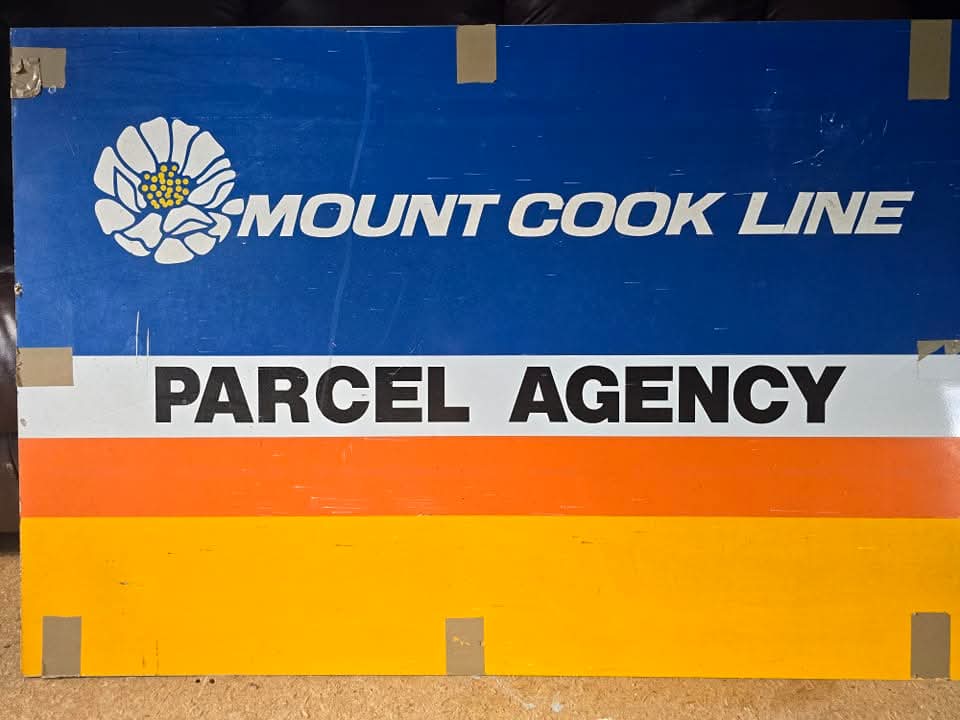
Mount Cook Line -Photo Roselyn Fauth
Timeline of the Mount Cook Business
1904 – Rodolph Wigley leaves Opuha Gorge Station and forms a traction-engine haulage and contract harvesting company with Samuel Thornley of Waitohi.
1906 – Drives a De Dion Bouton car from Fairlie to The Hermitage at Mount Cook, the first motor car to reach the hotel. Recognises the tourist potential of the journey.
1906 – Establishes the Mount Cook Motor Service with Darracq cars, thought to be the first bus business in Australasia and the first to carry mail.
1907 – The business goes bankrupt due to high running costs, but Rodolph keeps the assets.
1910 – Marries Jessie Christie Grant in Timaru; Jessie later designs the company’s buttercup emblem (1913).
1912 – Relaunches the Mount Cook Motor Company Limited.
1920 – Forms the New Zealand Aero Transport Company, the country’s first commercial air service using seven war-surplus aircraft.
1921 – Flies as a passenger with Captain J. C. Mercer on New Zealand’s first long-distance flight from Invercargill to Auckland.
1922 – Mount Cook Motor Company takes over the lease of the Hermitage Hotel at Mount Cook, enlarges and modernises it, and promotes skiing, skating, and guided climbing.
1923 – Rodolph, with guides, makes the first winter ascent of Aoraki Mount Cook.
1923 – NZ Aero Transport Company goes into liquidation after repeated mishaps, but its vision is later revived in other forms.
1928 – The road transport business is restructured as the Mount Cook Tourist Company of New Zealand, and becomes a public company.
1929 – A related company builds the Chateau Tongariro; Wigley also purchases hotels in Auckland, Rotorua and Queenstown.
1930 – By this year, the Mount Cook Tourist Company has become the largest tourism organisation in New Zealand.
1935 – Rodolph is awarded the King George V Silver Jubilee Medal for his services.
1944 – Mount Cook Motor Company’s lease of the Hermitage ends.
1945 – Rodolph hands over control of the company to his son Harry Wigley.
1946 – Rodolph dies in Dunedin, survived by Jessie and their six children.
1955 – Harry Wigley makes the world’s first ski-plane landing on the Tasman Glacier, expanding the company into alpine aviation.
1961 – Mount Cook Airline is founded, linking Christchurch, Mount Cook and Queenstown with scheduled DC-3 flights.
1976 – The company becomes the Mount Cook Group Limited.
2019 – After decades as part of Air New Zealand Link, the Mount Cook Airline brand is finally retired.
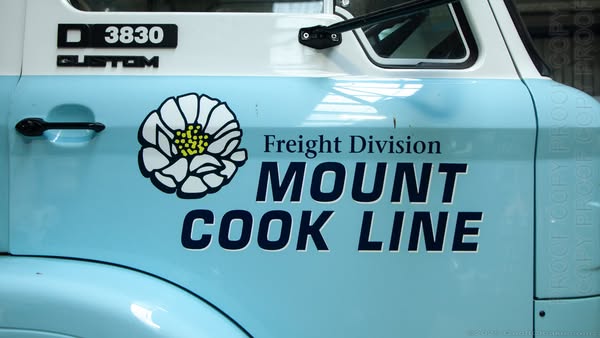
Freight Division Mount Cook Line - Photography By Geoff Cloake

Aroha Novak Community House Wall Flowers
Side Quest: Who was Jessie’s mother
Jessie Wigley’s mother was Helen Lindsay Grant, born Helen Banks in Edinburgh in 1854. She came to New Zealand as a child with her parents and siblings, first living in Dunedin and later on a farm near Balclutha. In 1878 she married Alexander Grant and they moved to the Mackenzie Country where they bought Grays Hills Station. Life there was tough and isolated, with mail arriving only once a week from a neighbouring station and supplies brought in once a year.
Helen was known as a strong rider. She would spend long days on her black Arab horse, crossing rivers, visiting neighbouring stations, or even heading off to dances. Stories about her tell of both courage and humour, like the time she threw her long riding skirt over a small spaniel to save it from being mauled by a pack of dogs.
Later, the family moved to Timaru and built Aigantighe on Wai-iti Road. This was where Jessie grew up, surrounded by a mother who was practical, brave, and artistic in her own way. After Alexander’s death in 1920, Helen lived on at Aigantighe for decades, eventually celebrating her 100th birthday there in 1954. She was well known in Timaru and was active in the Horticultural Society, which felt fitting for someone who had loved gardens all her life.
When I read about Helen, I see where Jessie’s own quiet strength and creativity might have come from. Helen built a life out of resilience and determination in the Mackenzie, then helped establish a family home that later became Timaru’s art gallery. Jessie, in turn, created the buttercup emblem that carried her family’s business across New Zealand and into the sky. Their legacies sit side by side — one on horseback, one with a pencil and a circle of petals.
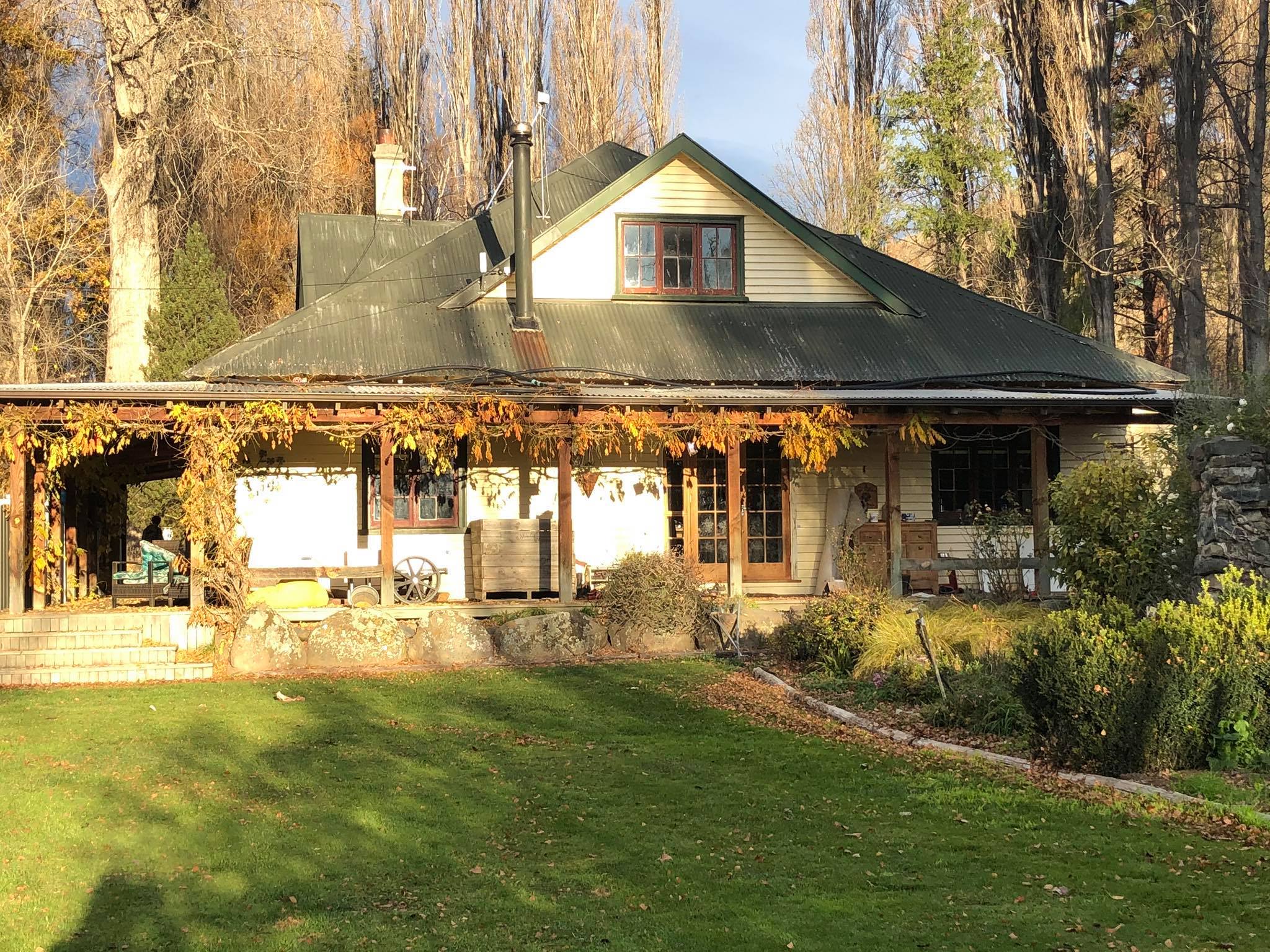
Gray's Hills Station House - Courtesy Sherie Whelan who raised her family on the station.
Side quest: Where did the Wigleys live?
The Wigleys’ lives shifted between the high country, Timaru, and the mountains. Rodolph was born at Opuha Gorge Station near Fairlie in 1881. After marrying Jessie Grant in 1910, they spent time at her family’s Grays Hills Station in the Mackenzie, and later at Huxley Gorge Station at Lake Ōhau with their son Sandy. Jessie’s roots were in Timaru, where she grew up at Aigantighe on Wai-iti Road, the house that became the Aigantighe Art Gallery and their main town base. From the 1920s they also lived for long stretches at the Hermitage Hotel at Mount Cook, which Rodolph’s company leased and expanded. In the end, the Wigleys’ homes spanned Opuha Gorge, the Mackenzie stations, Aigantighe in Timaru, and the Hermitage, reflecting their ties to land, town, and mountain.
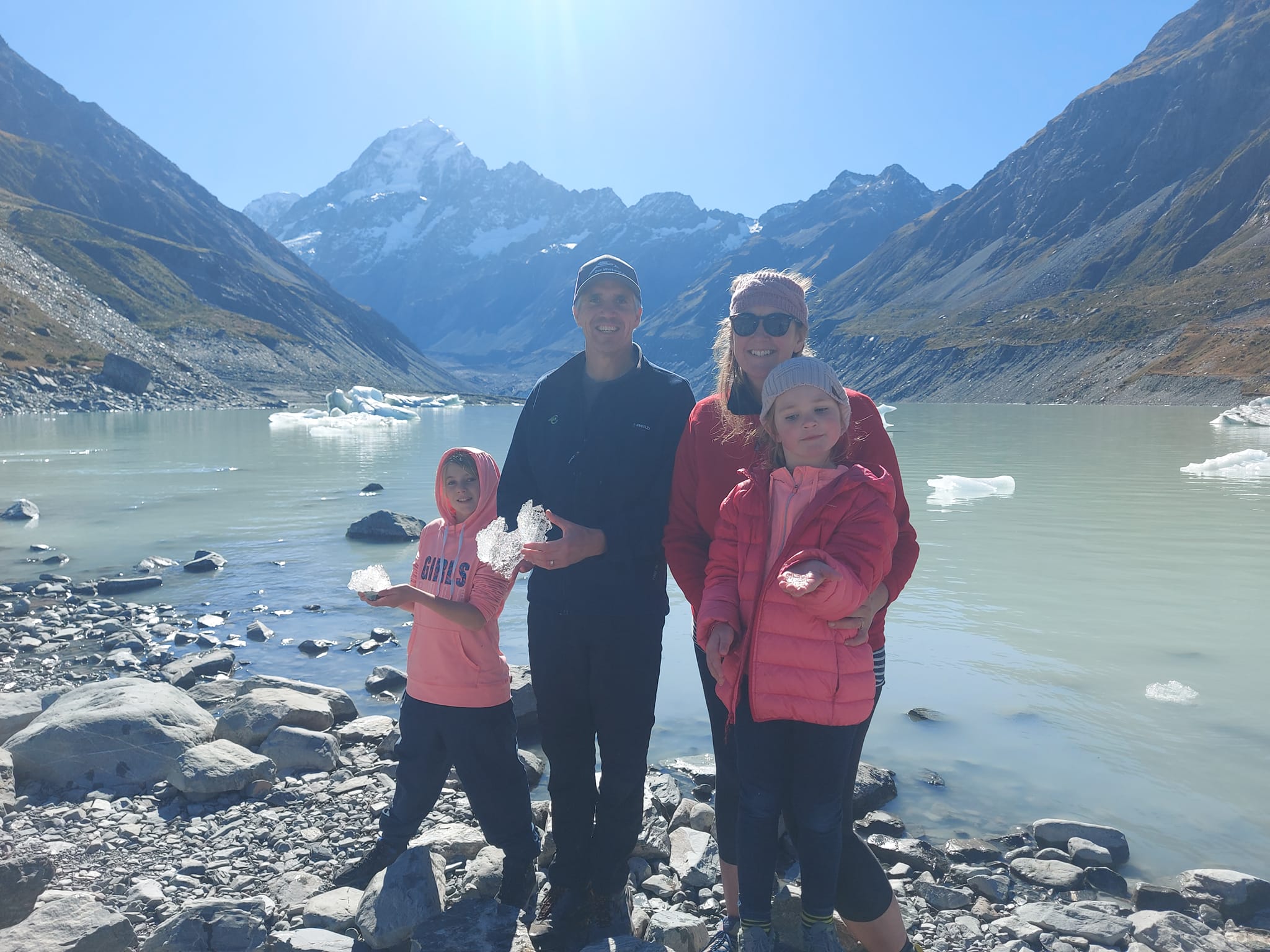
Fauth Family trip to Aoraki Mt Cook - at the glacial lake with ice
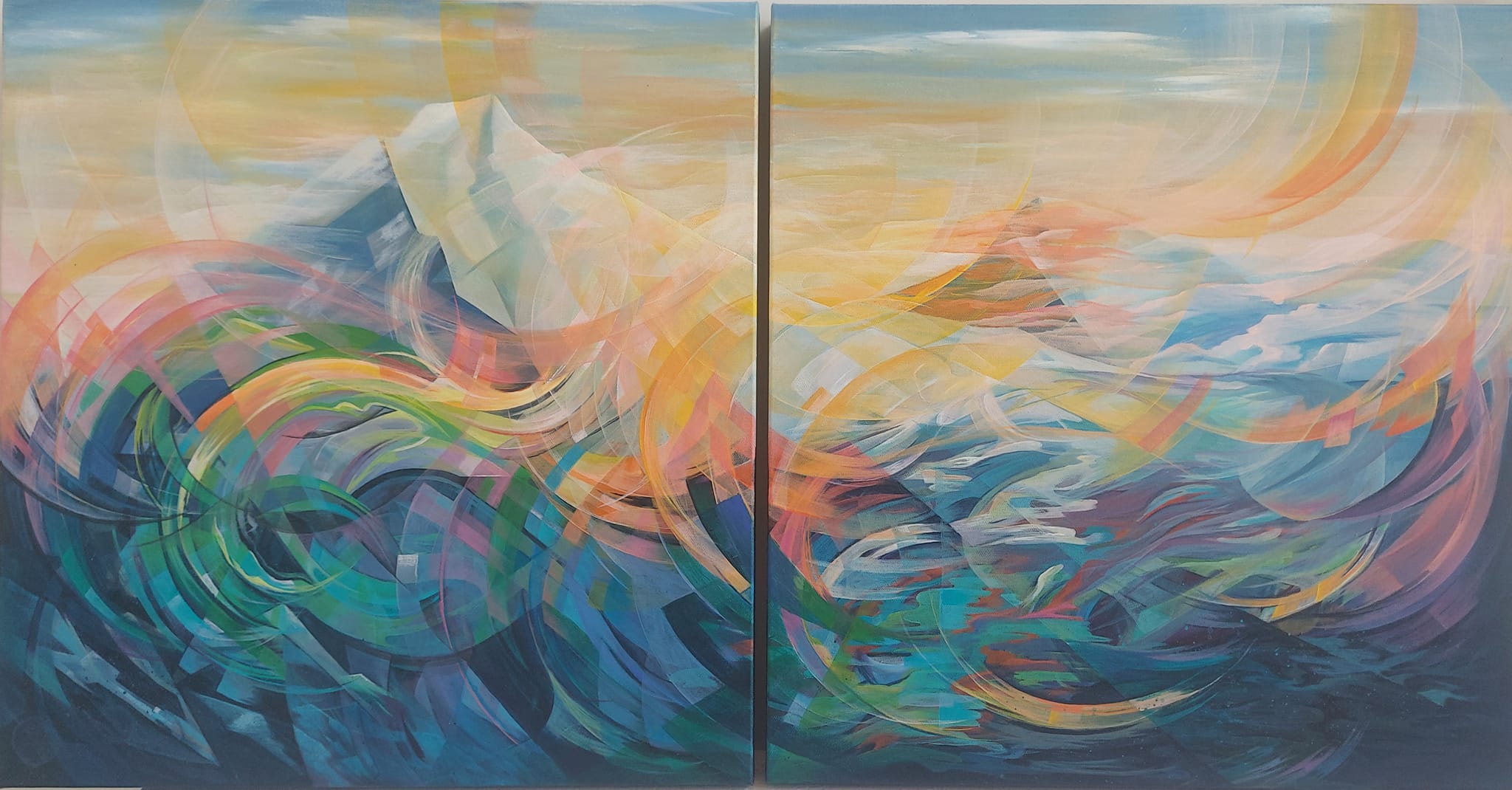
Roselyn Cloake. Aoraki Series 1. 2025. Acrylic on Canvas.
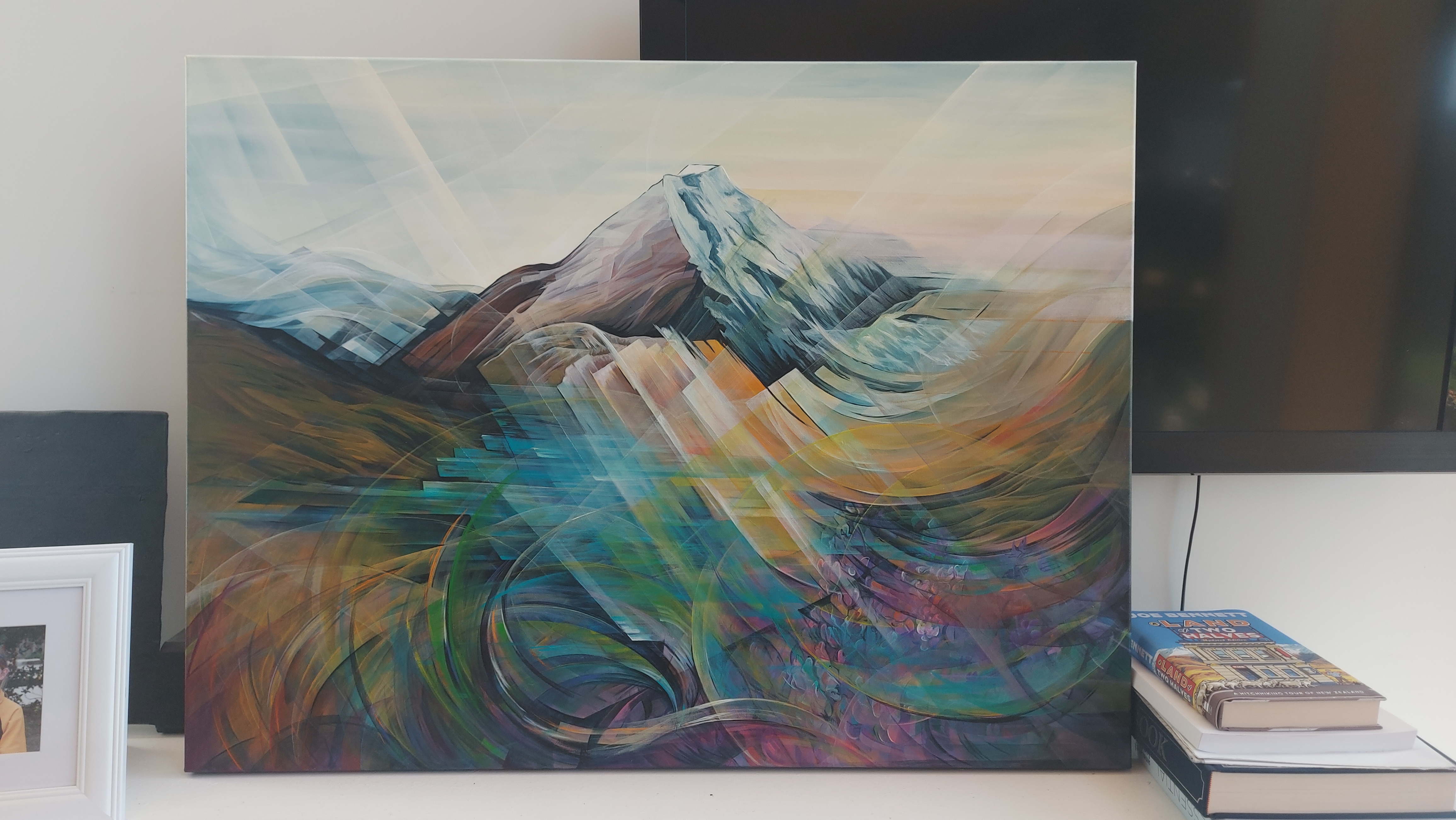
By Roselyn Fauth (nee Cloake), acrylic on canvas painting inspired by Aoraki Mt Cook... lifted, squeezed, worn down by shaking, wind, rain, ice, plants... while it's moved and sculpted by the elements and mammoth tectonic forces... even with everything thrown at it, it still stands tall and the sunrise brings a new day.
Roselyn Cloake. Aoraki Series 2. 2025. Acrylic on Canvas.

Aoraki adventure... from ice to glass...

Visit to Aoraki Mount Cook 2024
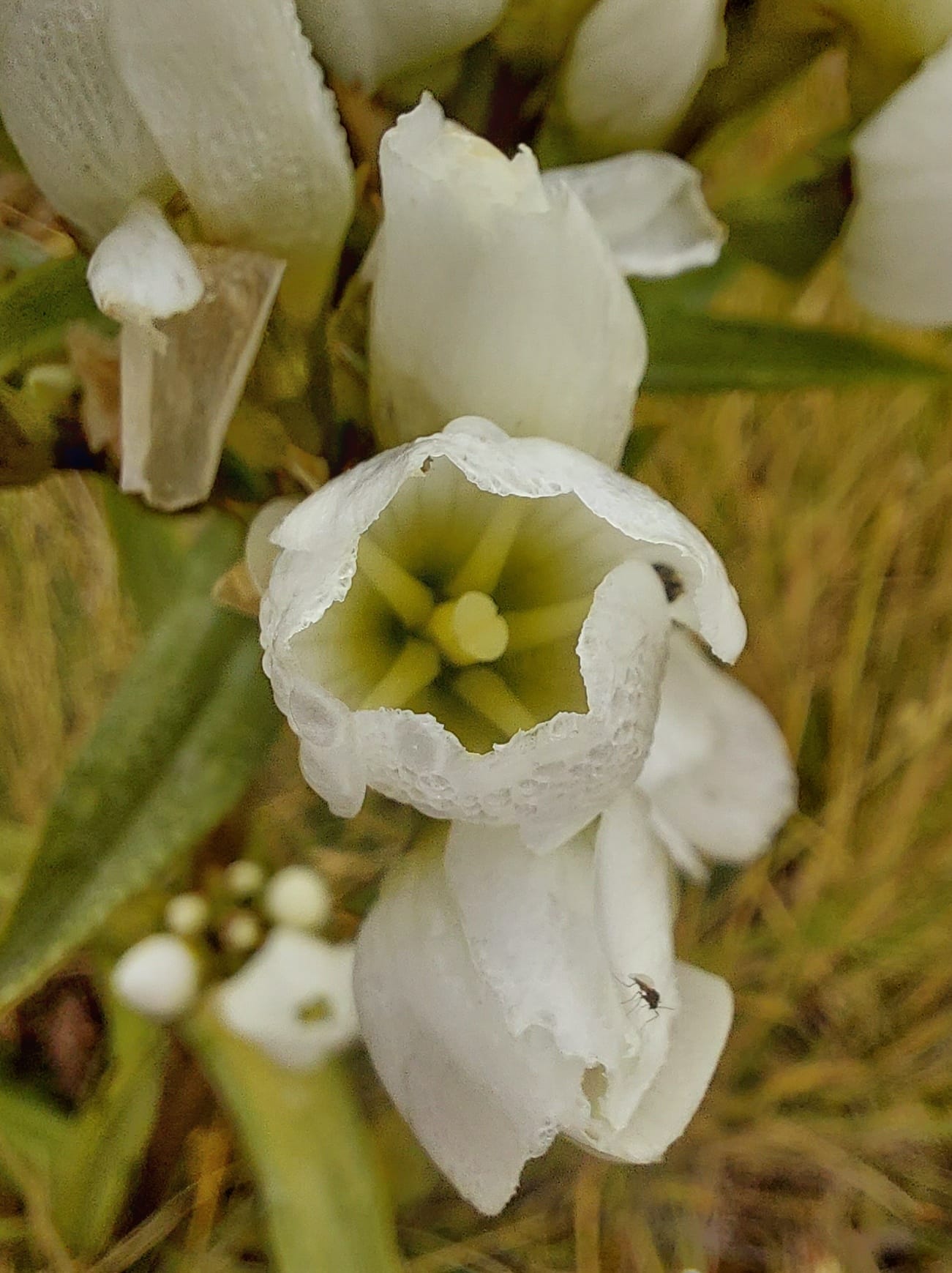
Mt Cook Lillies at the Hooker Valley - Buttercup Roselyn Fauth

Francine Spencer and Roselyn Fauth colaborating on the window design commission for the Aigantighe Art Gallery 2024 - Photo Roselyn Fauth

Fun Facts:
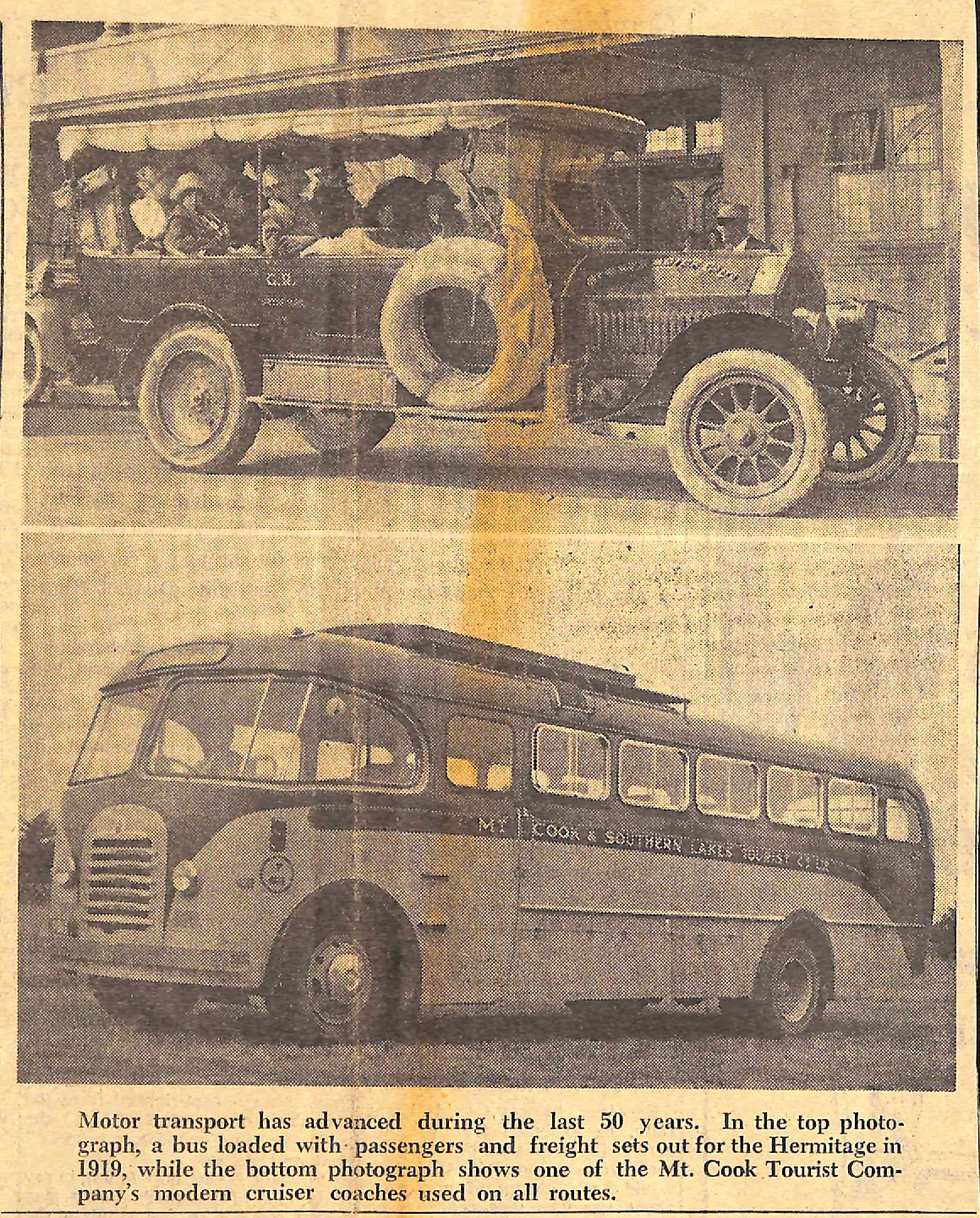
Today the Company founded by R. L. Wigley is headed by his son H. R. Wigley and under the name of the Mount Cook and Southern Lakes Tourist Company has expanded to include not only a large fleet of modern cruiser coaches but also a scheduled service airline, tour cars, ski-planes, and two ski fields.
The network of road routes connect and interconnect Christchurch, Mount Cook, Timaru, Lakes Pukaki, Tekapo and Ohau, and Queenstown with further subsidiary services from Mount Cook to Bail Hut, and from Queenstown to Skipper’s Canyon and Coronet Peak ski field.
Mount Cook Coachlines operate daily services excluding Sunday.
On 6th November, 1961, the Company introduced Mount Cook Airlines. This was a brave pioneering move to link the major point of entry of Christchurch with Mount Cook, Queenstown and Te an by a regular scheduled. air service.
A DC3 aircraft was purchased, radia aids installed, and at Mount Cook and Te Anau the Company formed its own airfields.
The pioneering airline operated a three-day a week service and slowly as the months passed. the passenger figures began to creep up. A reputation was beimg- established and overseas tourists were quick to recognise the many advantages of quick, comfortable air travel -to such remote but attractive regions.
By the end of the first year of operation it became obvious to the Company. that services would have tobe stepped up and extended for the 1963-64 season.
In July of 1963 the Company’s managing director, Mr H. R. Wigley, announced plans to increase the frequency between Christchurch, Mount Cook and Queenstown to six a week. On three days the service now extends. from Queenstown to Dunedin and on the other three days it extends from Queenstown to Te Anau and Invercargill.
By September, 1964, the service will be seven days a week.
Glamour turn in the Ccmpany’s operations is the ski plane adventure, operated by a subsidiary company, Mount Cook Air Services Limited.
In 1955 H. R. Wigley, accompanied by A. McWhirter, now the Company’s Transport Manager, made the first ski plane landing on the Tasman Glacier in a light Auster aircraft fitted with home-made skis.
A new thrill was available to the tourist—one that still remains virtually unique to New Zealand.
Today a fleet of sturdy Cessna aircraft are stationed at Mount Cook and at the Fox Glacier and day after day, winter and summer, fly the tourists in their thousands around the majestic alpine peaks, over giant glaciers and tumbling. ice falls making ski landings on one or more of the many high altitude safe snowfields.
Just-a brief twenty minutes from the warmth and luxury at The Hermitage Hotel, tourists can be standing in.ankle deep snow at 6000ft.
Seldom has a New Zealand tourist attraction received such. widespread world-wide publicity and acclaim. In dozens: of magazines and newspapers, in films, including Cinerama, and on TV screens the ski-equipped aircraft have been featured.
https://archive.org/details/this-is-new-zealand-timaru/page/n39/mode/2up?view=theater
Source List
Mount Cook Airline (Wikipedia – detailed history & logo) https://en.wikipedia.org/wiki/Mount_Cook_Airline
Jessie Wigley and the butterfly emblem (From “Can you find a Mt Cook ‘lilly’?” heritage walk page, confirming Jessie’s design role) https://wuhootimaru.co.nz/cbd-heritage-walk/465-can-you-find-a-mt-cook-lilly
Jessie Wigley’s profile at Aigantighe Art Gallery https://aigantighe.co.nz/Collection/explore-the-collection/jessie-wigley
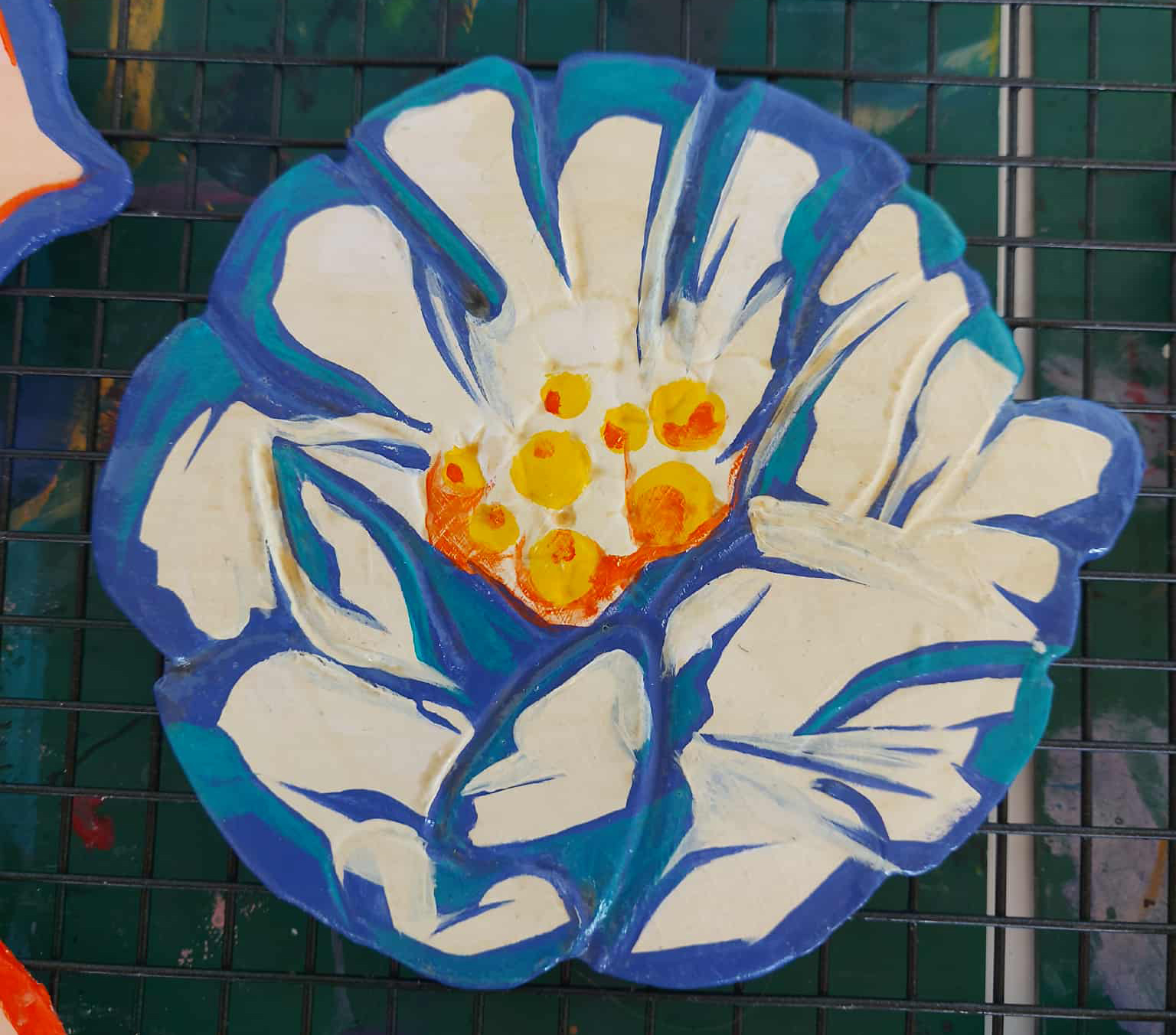
I have been experimenting with air dry clay to create art to hang on my wall
The Mount Cook buttercup (Ranunculus lyallii) is the world’s largest buttercup, found only in the alpine landscapes of Aoraki Mount Cook. Many know it as the “Mount Cook lily” from aircraft tails and travel posters – an emblem first drawn in 1913 by Jessie Wigley of Timaru. Jessie created the design for her husband Rodolph’s Mount Cook Motor Company, which grew from coaches to ski-fields, hotels, and eventually Mount Cook Airline. Her simple circle of petals became one of New Zealand’s most recognisable tourism symbols.
Jessie’s story is also Timaru’s story. She grew up at Aigantighe, the family home later gifted to the city as its public art gallery. That house has also been a home for me – a place where I grew up with art, and where for more than twenty years I have proudly volunteered and supported the gallery. I feel a special link to Jessie and her roots in both the Mackenzie and Timaru, knowing that her creativity shaped both New Zealand tourism and our local cultural life.
Her emblem still inspires new work today, from the Wallflowers mural by Aroha Novak in central Timaru to small handmade tiles like this one. The buttercup endures because it embodies resilience, beauty, and survival in harsh environments. Like the women who shaped our histories, it was once misnamed and overlooked, yet it remains a symbol of strength, creativity, and legacy.