

Waimataitai was my childhood stomping ground for me and my three siblings. I loved this school and used to imagine all the students who had come before us. Fortunately, I don’t remember the strap room, which ended just a few years before my time, but I do remember the smell of the books and many of my favourite teachers purfurme.
Mrs Pollard used to sit us on the mat for music sessions. I remember her feet pumping the piano pedals as we watched from below. We would sit up very straight, hoping to be chosen to massage her legs, which was apparently a real treat. I only did it once. That was enough. I can still feel the static in my palms after rubbing the stubble and pantyhose. She was great though. I loved her classes.Mr Zonevilee was a really fun teacher too, although I always held a quiet grudge as the only one in the class to never officially earn my pen licence. Mr Cluston had a reall show on her hands, I remember the day she almost lost the lot trying to wrangle the 42 students in her class. Fair enough.
I remember the school projector being rolled into the hall and a black-and-white film about a Chinese child being shown. I don’t remember much else about it, just the atmosphere. And I will never forget when Bronze Templeton’s dad brought his band to school. It was the loudest music I had ever heard.
The school was really big in the late 80s and 90s. I remember classrooms arriving on the backs of trucks and being placed by tall cranes. When the open plan classroom was introduced, my mum was frustrated, and rightly so. It was a complete fail. I remember Miss Balwyn, who I was convinced was a witch, threw a duster at the boy behind me and it hit me in the head.
By the time I finished at Waimataitai I was six foot tall. Only one teacher was taller than me, Mr Harding.
There were many fundraisers, epecially to raise funds for a new school hall. We recycled alumiuniunn cans, which my brother got right into, accidentally bringing an urn home from the beach, he thought that would earn him a heap of finders fee brownie points. We sold boxes of chocolates, and I am sure our family ended up buying quite a few.
When I look back now, I realise we were just another chapter in a much longer story. Waimataitai School first opened in 1882 in temporary rooms on Raitt Street, with just over 100 students. By the time the first permanent building opened in 1883, that number had already grown, and community volunteers had stepped in to help fund the construction. They even held a concert in the new schoolroom the very night it opened.
By the 1950s, Waimataitai had its own brass band, a growing sports programme and a school roll nearing 900. Portable classrooms were not new. They were being added even back then.
There is something special about a place that survives generations of students and change, with new buildings, new teachers and new rules, but still holds on to its sense of self. The school motto, Be Just and True, was as relevant in 1882 as it was in the 90s, and as it is today.
Between 1882 and 1957 12,000 students had passed through the school.
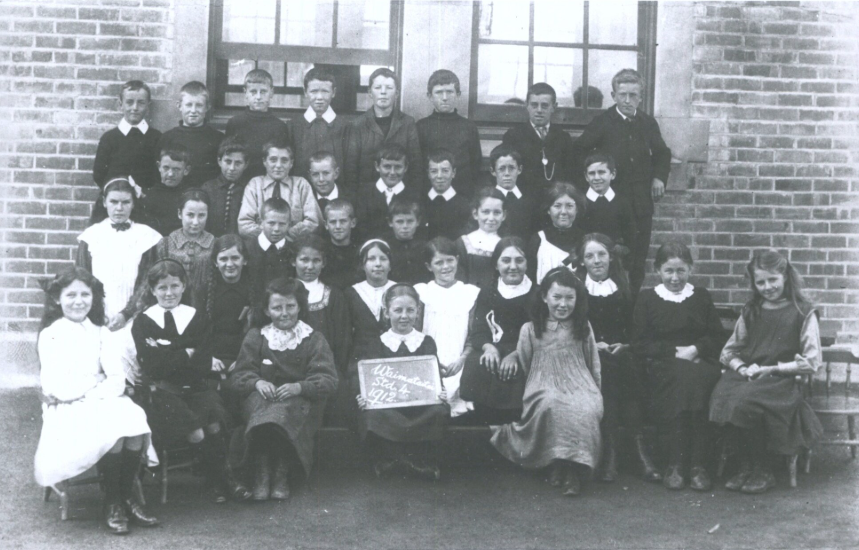
Waimataitai School, Standard 4 Class Photo (1912). Hocken Digital Collections, accessed 08/04/2026, https://hocken.recollect.co.nz/nodes/view/23727

Neil Cruden was the prinical while I was there. This is a photo of him in 16 July 1999. South Canterbury Museum 2012/186.2171
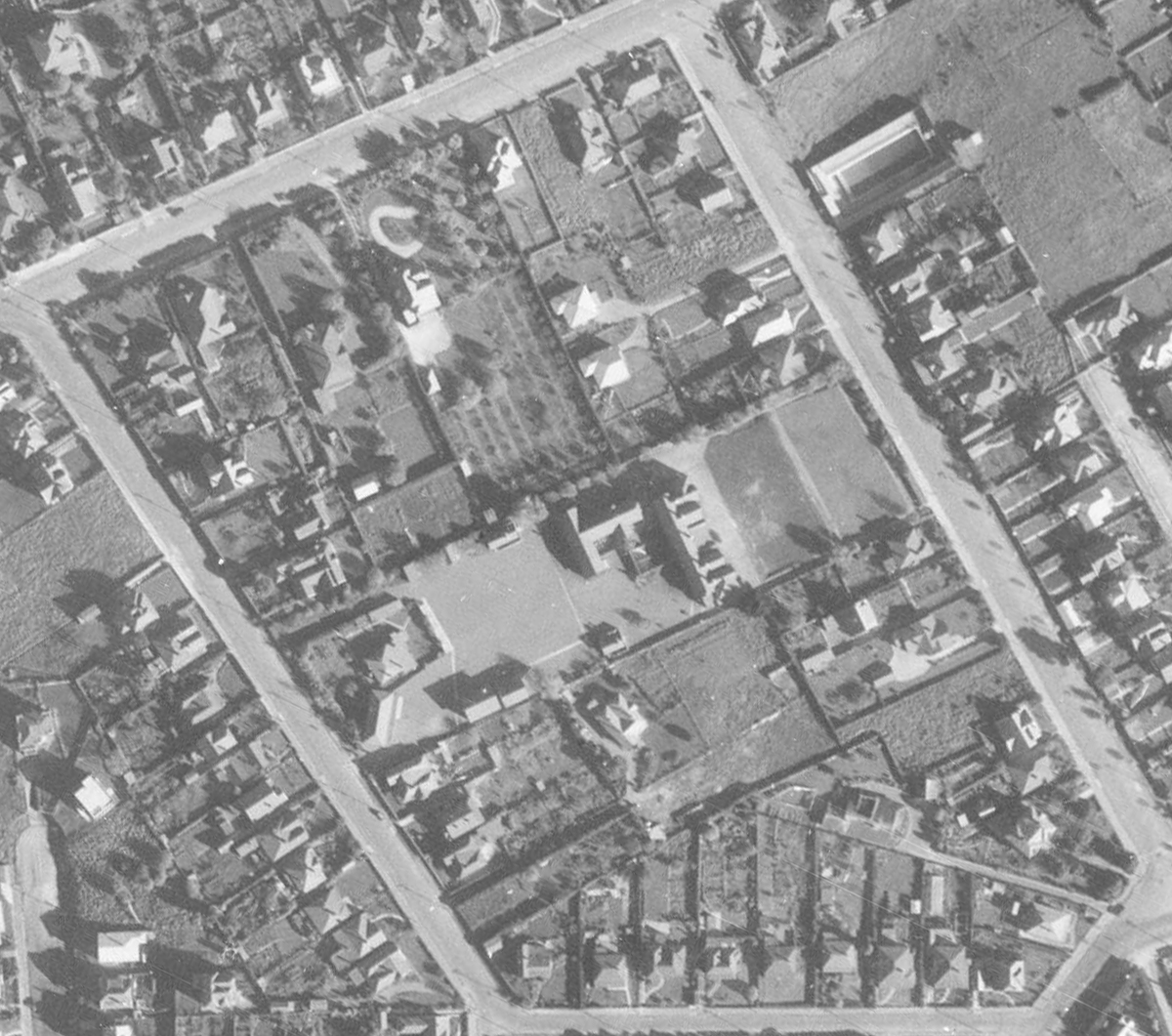
Then in 1938 - Retrolens
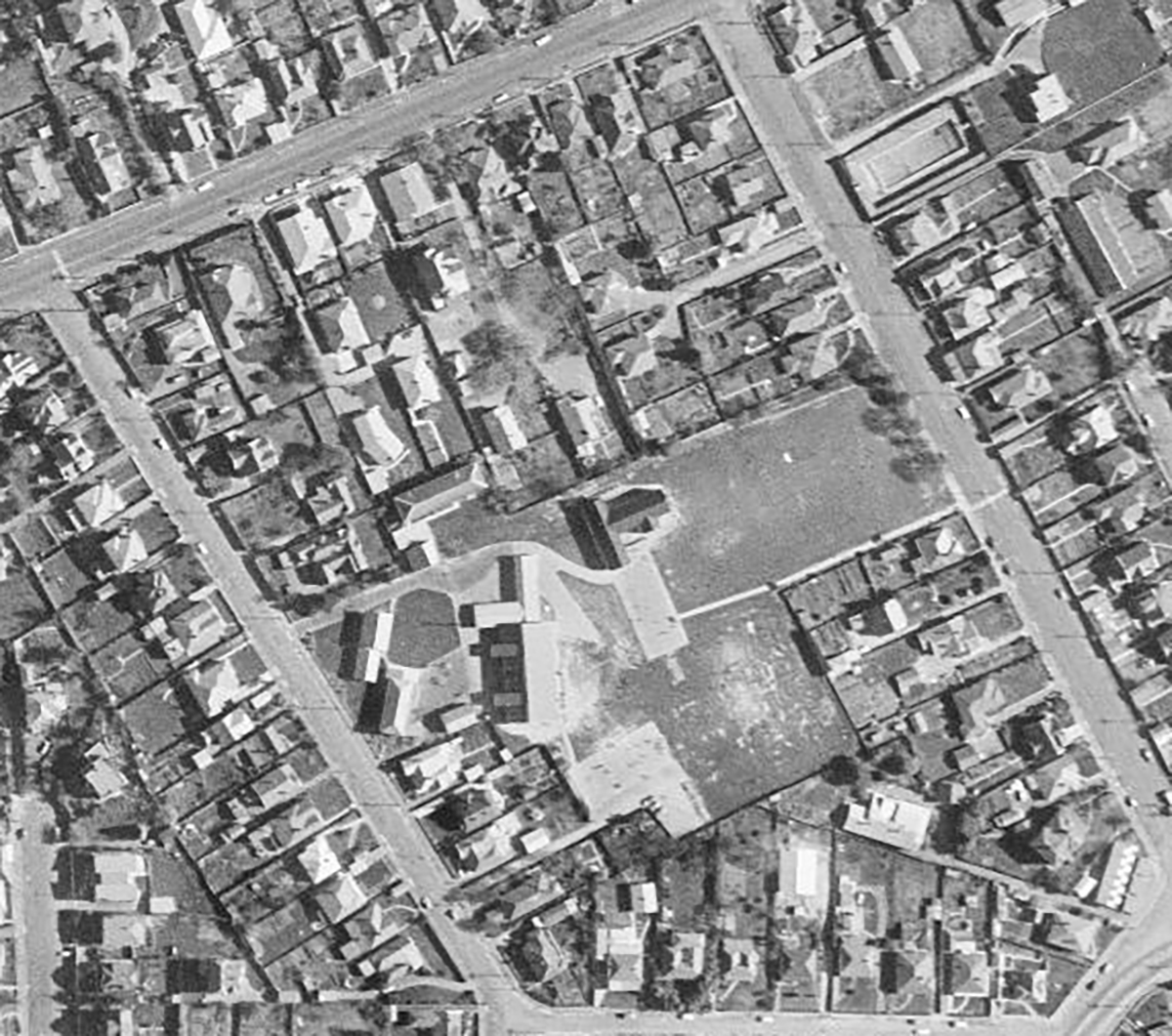
Waimataitai School and neighbourhood Block in 18/8/1967 - restrolens
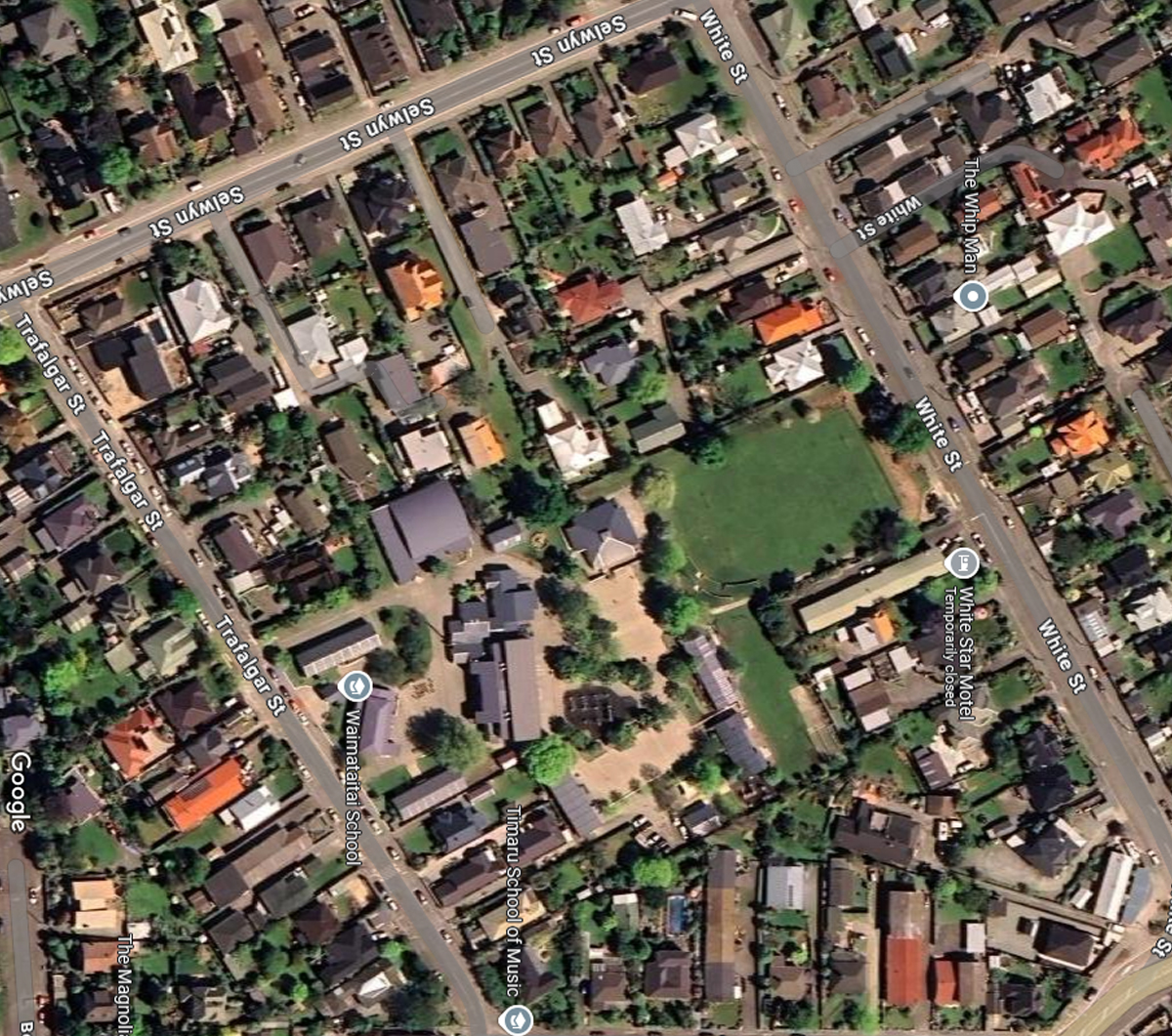
2025 - Google
Waimataitai School pupils and staff, posed on the steps of the main building, c. 1920s. The image captures the scale of the growing roll and the formal attire typical of school photography at the time. Source: Timaru District Libraries, PastPerfect Online digital archive. Accession No. CAFDF160-CF40-42FA-ADEE-528646349991. View original
Waimataitai School’s early classrooms and grounds, c. 1910s. This photograph shows the original timber buildings before later expansions, reflecting the modest scale of the school’s early infrastructure. Source: Timaru District Libraries, PastPerfect Online digital archive. Accession No. 4E7B03FF-1423-4C87-9425-282920484711. View original
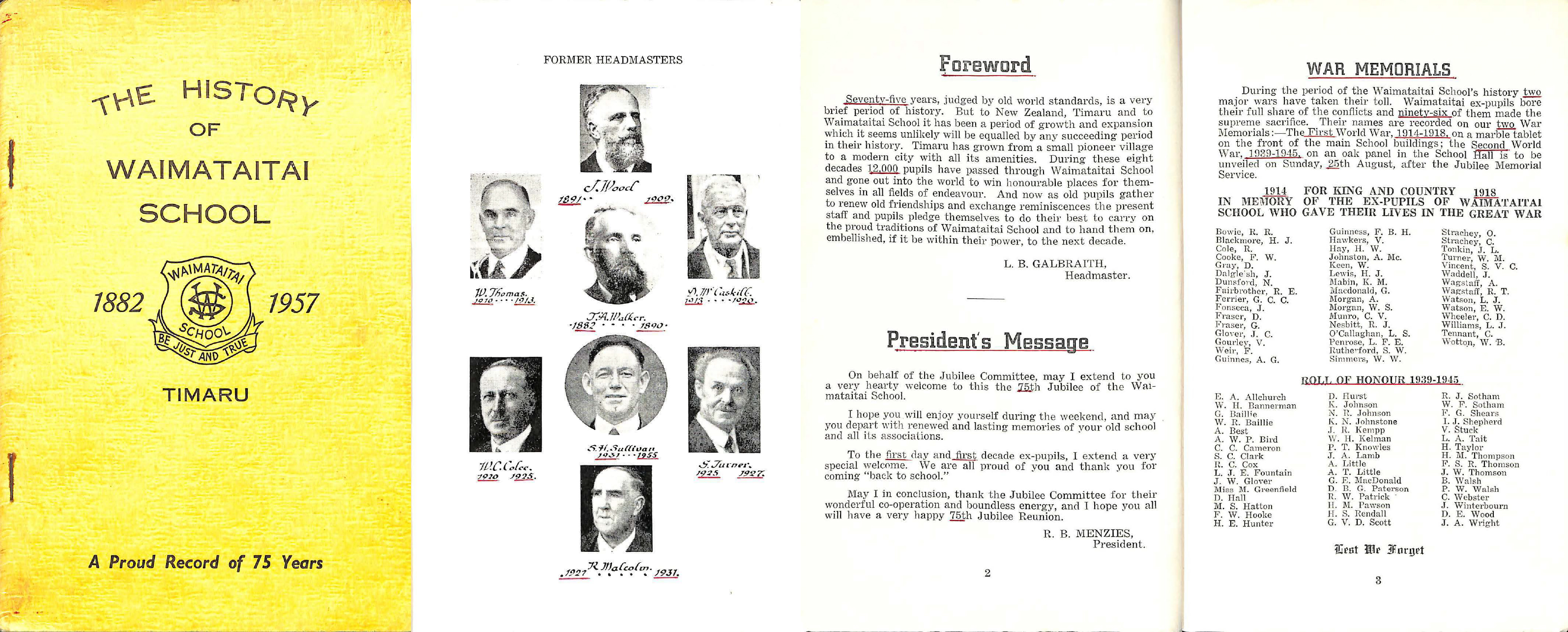
The History of Waimataitai School 1882-1957. Aoraki Heritage Collection, accessed 25/06/2025, https://aorakiheritage.recollect.co.nz/nodes/view/1617
The Founding of Waimataitai School
The initiative to establish a school at Waimataitai, then known as the Woollcombe’s Gully district, began on 11 June 1882. It was led by Mr Jabez Lukey, who hosted a meeting at his home where ten residents gathered to consider steps for securing better educational facilities for the area.
The men who met under Mr Lukey’s chairmanship were:
Messrs T. Pringle, J. Blackmore, W. Ivey, J. Bargfrede, T. Allen, T. Farrant, P. Philpott, W. Jeffnes, R. H. Bowie, and H. N. Hiskens.
A petition was sent to the Education Board requesting that a school be established at Waimataitai. This was met with opposition from the Timaru and Washdyke school committees, who argued that a new school was unnecessary. However, the Board decided to temporarily establish the school in rented premises on Raitt Street and appoint Mr T. A. Wilson as teacher. He opened the school on 14 August 1882 with 102 pupils.
Soon after, the roll increased beyond capacity, leading to further objections from the Timaru committee. Nevertheless, the Board refused to close the school, though it limited the roll to 60 and set a deadline for the community to provide a permanent building.
On 7 September 1882, another public meeting was held, and it was resolved to offer a personal guarantee to cover the cost of a new building. Tenders were invited in March 1883, and construction began soon after under contractor Mr C. Palliser. The building, which cost £1,000, included three classrooms and a headmaster’s office. The official opening took place on 10 October 1883, and that evening, a celebratory concert was held in the new building.
The school’s founding motto, adopted in the early years and still remembered by former pupils, was “Be Just and True.”
A Community Takes Action
The initiative to establish a school in what was then known as the Woollcombe’s Gully district came on 11 June 1882. Mr Jabez Lukey hosted a meeting at his home, where ten local residents gathered to consider how best to secure improved educational facilities for the growing community.
Under Mr Lukey’s chairmanship, the following men pioneered the effort:
Messrs T. Pringle, J. Blackmore, W. Ivey, J. Bargfrede, T. Allen, T. Farrant, P. Philpott, W. Jeffnes, R. H. Bowie, and H. N. Hiskens.
Their enthusiasm and dedication were evident. Just three weeks later, another meeting of fifteen householders, also chaired by Mr Lukey, presented data to the South Canterbury Education Board: 83 children aged five to twelve were living in the district between Māori Hill and Belfield Hill and would attend a local school. In addition, many younger children were expected to enrol in the near future.
The group recommended the purchase of 3½ acres of land on the north side of Woollcombe’s Gully, offered by Mr Luxmore at a cost of £350. The Education Board declared the area a separate educational district and approved the site, instructing its chairman to secure a three-month option on the land pending confirmation of a Government building grant.
A Temporary Start
In the meantime, the householders secured the use of Mr Rutherford’s house on Māori Hill—previously operated by Rev. Mr Brown as a private school—for temporary school use. They guaranteed a rental of £1 per week, which enabled the Education Board to provide a teaching staff.
The first Waimataitai School District Committee was elected at a public meeting a month later. Members were:
Mr J. Lukey (chairman), R. F. Barber, T. Pringle, J. Lewis, J. Blackmore, W. A. Hobbs, and R. H. Bowie.
The committee moved quickly, finalising arrangements to purchase Mr Rutherford’s house as the temporary school premises.
Opening Day: 14 August 1882
On Monday morning, 14 August 1882, excited children from across the new district gathered at the makeshift school. Mr T. A. Wilson, formerly of Ashburton, served as temporary head teacher, assisted by Miss Pearson of Timaru School, who was appointed as a pupil teacher.
The permanent headmaster position, which included a salary of £164 and a housing allowance, attracted fourteen applicants. Mr T. A. Walker of Wai-iti was ultimately selected for the role.
Within weeks of opening, demand exceeded expectations. Mr Walker’s first report in October 1882 noted a roll of 116 with an average attendance of 92. Conditions were overcrowded, forcing him to turn away children. The Education Board attempted to resolve the issue by limiting enrolment to 75, under threat of closure for non-compliance—much to the dismay of local families.
Building a Future
In response, householders debated adding a room to the temporary premises but, advised against it by Education Board Chairman Mr Belfield, instead supported a proposal from Mr J. Lewis. Under his scheme, local residents agreed to finance the construction of a permanent building, on the understanding that the Education Board would later reimburse contributors and take over the school once financially able.
Although some disagreement arose over the most suitable site for the new school, the community ultimately recommended purchasing land offered by Mr McAuliffe for £590. The Board, however, favoured another acre of land near Mr J. W. White’s home, priced at £390. The school committee committed to raising £1,000 to build a school adequate for the district’s current needs, with the condition that the Education Board would assume all financial obligations within three years.
The Building and Opening of the Permanent School (1883)
Although the Education Board initially approved the chosen site, it was financially unable to complete the land purchase in early 1883. Fortunately, by March, the Board succeeded in acquiring the section—which turned out to be larger than expected—for £40 less than originally quoted.
Plans and Preparations
The Board's architect prepared plans for a new school building designed to accommodate 400 pupils. The estimated cost was £1,000, but only a portion of the structure—a main room and three classrooms—would be built immediately.
A new school committee was elected at the first annual meeting in January 1883, comprising:
Messrs R. H. Bowie (Chairman), J. Lukey, J. Lewis, T. Pringle, T. Bargfrede, W. A. Hobbs, and J. Blackmore. Mr Lukey stepped down from the chair due to business pressures.
Unexpected difficulties arose when tenders were called for construction. The lowest bid came in at £1,000, exceeding the Board’s authorised spending by £200. After urgent representations from the committee, the Board agreed to increase the limit to £950. The contract was awarded to Mr C. Palliser.
Setbacks and Success
The project proceeded swiftly but not without trouble. The Education Board dismissed its architect during construction. In retaliation, the former architect took the signed agreement with the contractor, who then refused to cooperate with the incoming architects. The Board resolved the matter by declaring it would only release payments certified by its newly appointed architects. The missing agreement was quickly recovered once it was announced that legal proceedings would follow if necessary.
Opening Day: September 1883
By 15 September 1883, three classrooms (instead of the planned four) were completed. That evening, a celebratory concert was held in the largest room, with every available space packed.
At the time of opening, the school roll had reached 128 children. A permanent mistress and a second teacher were added to the staff.
Though the new building marked a significant milestone, the financial responsibilities of the school community were far from over. The parents and committee members continued to meet these obligations willingly. Notably, the committee members themselves stood as guarantors under a "joint and several" arrangement—an enduring sign of their commitment and belief in the importance of local education.
Expansion, Curriculum and Community Growth (1886–1900s)
Following its successful establishment, Waimataitai School continued to flourish. By 1886, the school roll had reached 230 pupils, placing significant pressure on the available space. That year, after a 12-month delay due to funding issues, a new infant room was finally added.
Over the next four years, the school endured some challenges. Mr R. H. Bowie, one of its original promoters and chairman, left in 1886 to visit England. Around the same time, Headmaster Mr T. A. Walker, who had ably led the school since its early days, departed to take up a position in Kumara.
For several months, Waimataitai operated without a permanent head teacher and struggled somewhat. But in May 1891, Mr John Wood was appointed, bringing fresh energy and direction. Under his capable leadership, the school grew into a progressive educational institution.
In 1892, the school was enlarged again to meet increasing demand, with another large classroom added. The following year marked another milestone with the introduction of a cookery class. The Education Board supplied the stove, and the local committee provided utensils and paid for the instructress.
By 1895, Waimataitai had again outgrown its facilities. The Education Board suggested sending excess children to the Main School in Timaru. This was met with strong resistance from local residents, who pushed for more space to be added instead. Their efforts succeeded, and in 1896 the school building was extended to the full size originally planned, providing space for 400 children.
Even so, overcrowding remained a problem. Standard IIIb had to be held in an open shed due to lack of classroom space. In response, the infant department was remodelled to create more room.
Enhancing School Life
In 1897, the school’s cultural life received a boost with the purchase of a piano. The funds were raised through a community bazaar organised by the women of the district. Not only was the piano fully paid for, but an additional £8 was donated to the school’s prize fund. That same year, Mr C. A. Wray generously allowed the committee to fence off a right-of-way from Trafalgar Street, improving access to the school grounds.
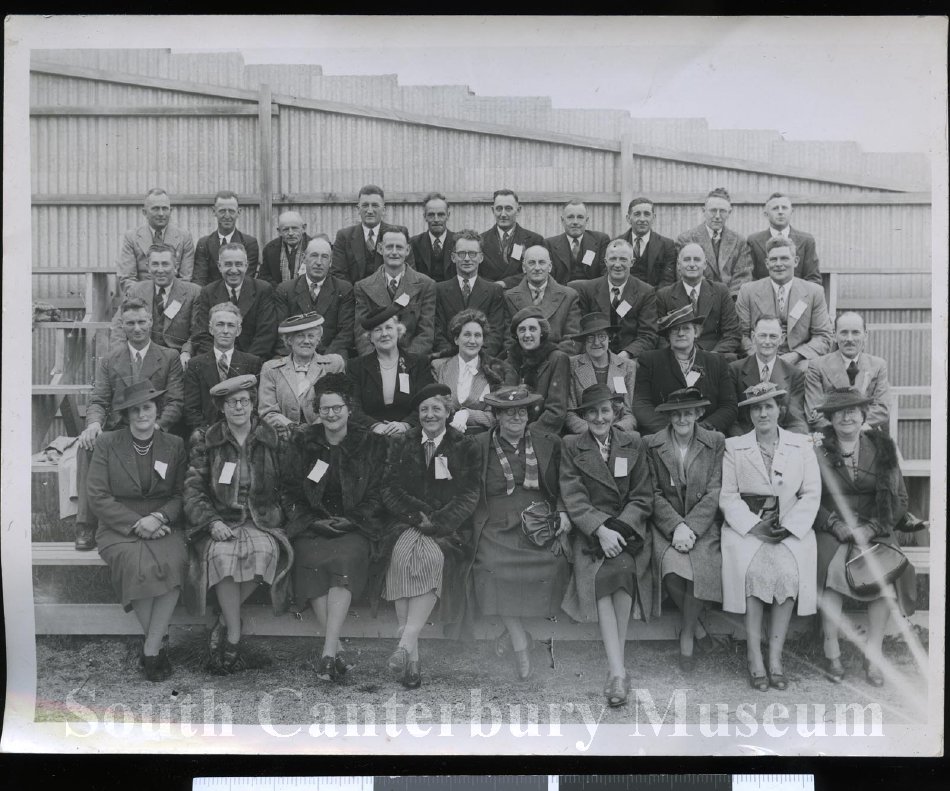
A portrait of past pupils from the 1902 to 1910 group attending Waimataitai School's 65th Jubilee in 1947. South Canterbury Museum collection. Accessed via PastPerfect Online. Accession No. 2023/024.055. View original
Cadet Corps and the Rise of Physical Education (1902–1909)
A new and important phase of school life began in 1902 with the formation of a cadet corps, an idea that had been under discussion for five years. The cadets made their first public parade on Coronation Day and were smartly turned out in uniforms that became a source of pride for the school. These uniforms were funded by community subscriptions, with Mr C. S. Fraser, the committee chairman, acting as treasurer.
Before the cadets were formally established, physical training had already taken a strong place in the school’s daily life. Boys were drilled with physical “jerks” and marching exercises led by Sergeant-Major “Long Tom” Jones, a veteran of Rorke’s Drift and a former committee member. Though he brought the stern manner of the barracks square, he adapted his commands to school life. His booming voice and no-nonsense attitude made boys quick to follow instructions, eager to avoid “looking silly” in front of their classmates. His death in 1909 marked the loss of a skilled instructor and beloved school figure.
In 1903, the introduction of the new “free place” system for high schools saw the end of Standard VII at Waimataitai. As a result, the roll dropped from 370 to 325. However, by 1909 enrolments were again on the rise and soon exceeded 400.
That same year, Headmaster Mr John Wood retired on superannuation. His long and valuable service was acknowledged with gratitude by pupils and parents alike.
Blending Work and Play: 1910–1912
In 1910, the school opened with a record attendance of 425 pupils. Leadership passed to Mr W. Thomas, who would later become rector of Timaru Boys’ High School. Mr Thomas placed special emphasis on recreation and helped lay the foundation for a strong sports culture. His example was followed by later headmasters, and over time Waimataitai gained a reputation as one of South Canterbury’s foremost schools on the sports field.
With the roll continuing to grow, the committee applied for a new infant room. Their initial request was denied, but they persisted, eventually securing approval with the help of Mr James Craigie, Member of Parliament for Timaru.
In March 1911, a new infant department was opened. Yet within a year it was already inadequate for the rising school population, which had climbed to 522 by July 1912. The committee made another appeal to the Education Board for more accommodation, but were again turned down.
Continued Growth and Change (1913–1931)
Following a visit to the school by the Rt. Hon. W. F. Massey in 1912, two additional rooms were added to the infant section and the existing rooms were remodelled. That year also marked an important change in school leadership. Mr W. Thomas, who had made a strong impression during his two-year term, resigned to become Rector of Timaru Boys’ High School. He was succeeded by Mr Donald McCaskill, under whose capable direction the school continued to thrive.
By 1915, the roll had reached 600, again creating accommodation problems. The Education Committee was invited to contribute £100 towards the £300 needed to erect temporary shelters. However, delays were caused by the abolition of the South Canterbury Education Board, and it was not until 1917 that the Government granted £500 for the erection of open-air classrooms. The Committee contributed the remaining £100.
In the years preceding the First World War, the school continued to develop its facilities. A library of 500 books was established, providing valuable learning resources for both pupils and teachers.
Mr McCaskill’s time at Waimataitai came to an end in March 1919 when he was promoted to the Inspectorate, severing another strong link with the school. He was succeeded by Mr W. F. Colee, who, in 1922, had 801 pupils under his leadership. This number was reduced to 712 the following year with the establishment of West School, to which some pupils were transferred.
Mr Colee held the position until 1924, when he left temporarily to undertake inspection work, and later became headmaster of Christchurch Normal School. In 1928, Mr G. A. Turner from Oamaru took over as headmaster. He introduced the prefect system, which was received with great success and contributed to the development of student leadership and responsibility.
Two years later, in 1930, Mr Turner resigned to become headmaster of Mornington School in Dunedin. The vacancy was filled by Mr R. Malcolm, formerly in charge of Temuka District High School. Mr Malcolm retired at the end of 1931 on superannuation.
He was succeeded by Mr S. H. Sullivan, who had previously served as first assistant at Waimataitai until 1923 and now returned as headmaster from Ashburton. His appointment was well received, combining academic strength with skill in sports and cultural instruction.
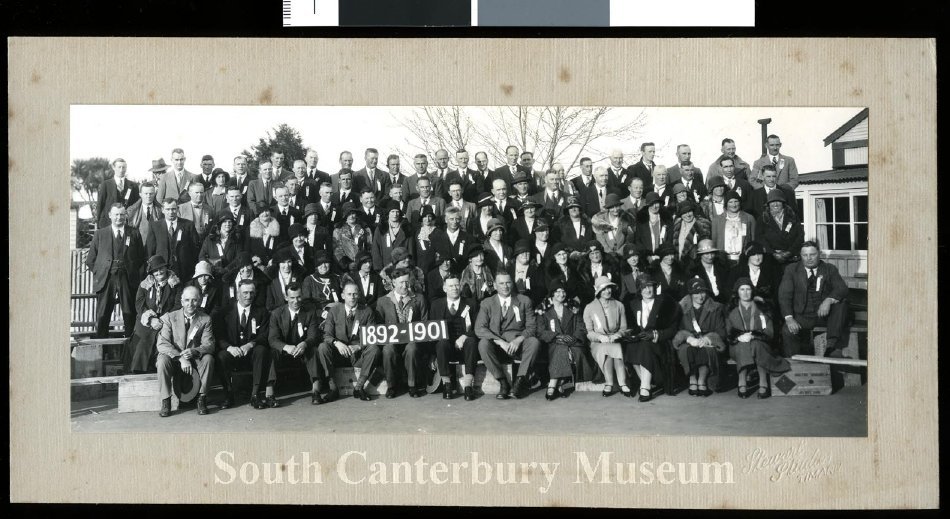
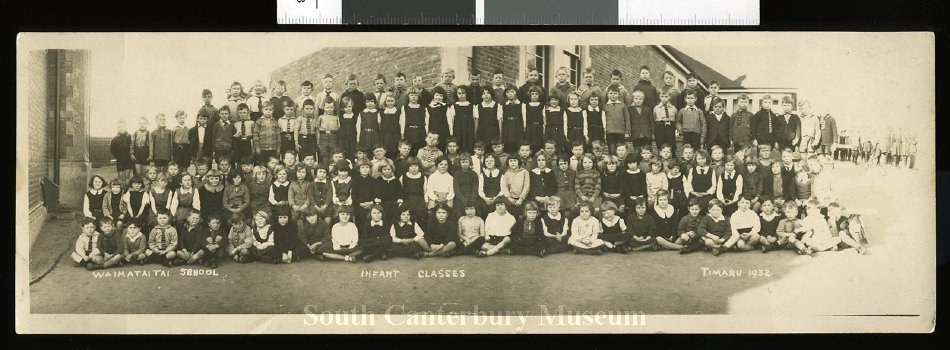
Waimataitai School Jubilee, 1892-1901 decade, 1932.. South Canterbury Museum 2011/046.18
Expanding the School Grounds (Early 1900s–1940s)
In the early years, the Waimataitai school grounds were barely more than an acre—steeply sloped, rough, and crowded. Yet it was on that uneven patch of land that generations of pupils found space to play and compete. A small area behind the building featured gymnastic equipment, including Roman rings, horizontal and parallel bars, and swings.
In 1894, an additional piece of land was leased from the Rhodes Estate to extend the grounds. However, overcrowding worsened each year until 1901, when the property of Mr Edmiston was purchased, including the house that stood between the school and Trafalgar Street.
Early in the 20th century, the school committee made a determined effort to provide proper playing fields by attempting to acquire adjoining properties. However, these efforts were blocked when the Education Board insisted the committee first secure the purchase money themselves. Despite this setback, the school found ways to enhance recreation. In 1907, a shooting gallery was built for the boys, and a croquet lawn was laid out for the girls.
Further progress came after 1910, under the leadership of Mr W. Thomas. Demonstrating personal commitment to sport and horticulture, he surrendered a large portion of the school-house grounds for garden plots and play areas. His actions sparked ongoing investment in recreational development, supported by successive headmasters.
In 1913, public agitation for more playground space led to extensive negotiations, but landowners' high asking prices for nearby “blind” sections caused the efforts to stall. By 1916, with the school roll at 600, calls to expand the playing area resumed. Although three sections west of the school were offered for £1,200, the Education Board deemed the cost too high.
Over the next three decades, rising pupil numbers made the extension of the grounds a necessity. In 1948, one acre on the east side of the school was purchased from Mr Lithgow. The following year, an additional 43 perches fronting Trafalgar Street were acquired for £3,000. At the time of writing, negotiations were underway to obtain a further acre. Once secured, this land would allow for the commencement of a modern building programme to replace many of the outdated school structures.
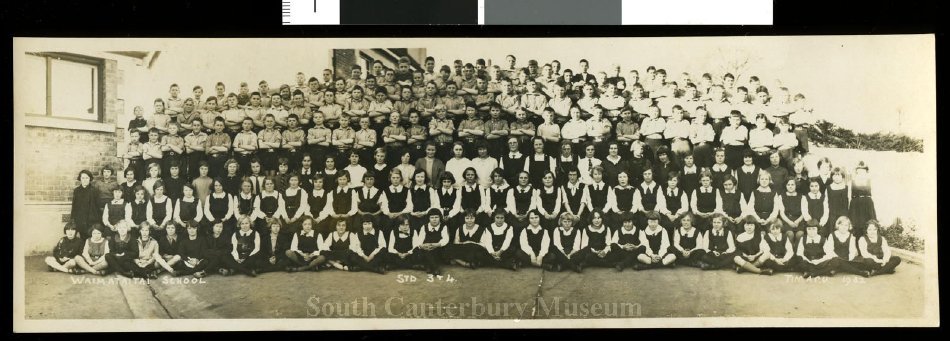
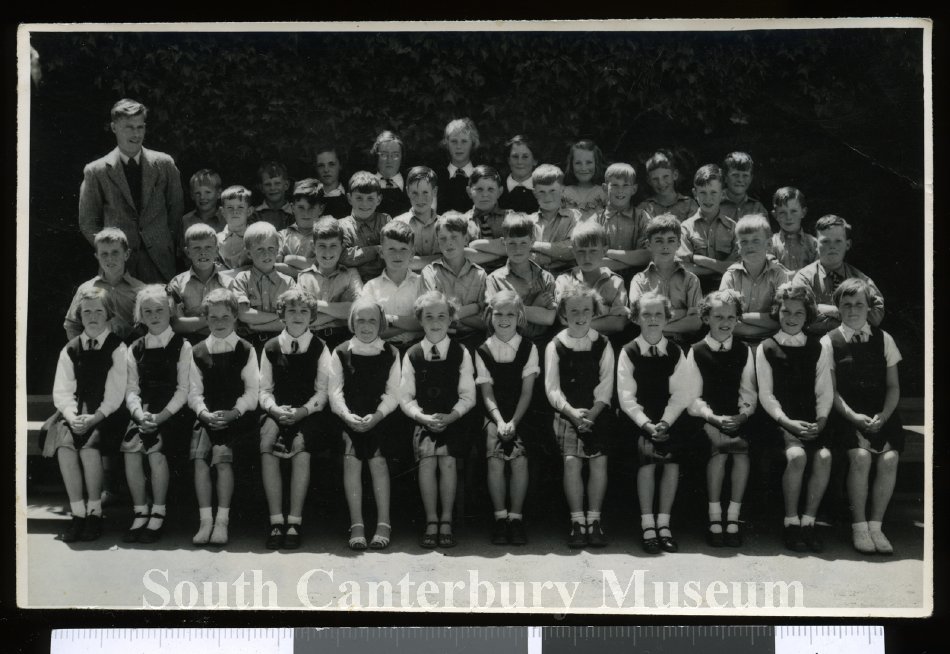
A group portrait of standard 3 and 4 pupils of Waimataitai School at the time of their Fiftieth Jubilee in 1932. South Canterbury Museum 2011/046.17
Modern Facilities and Post-War Growth (1930s–1950s)
In 1937, the open-air classroom block that would later house new entrants was built. This development allowed the school to remove a temporary marquee that had been serving—unsuitably—as a classroom. For many years, classes were also held in the School Hall, but with the erection of two prefabricated classrooms, the hall was finally freed up to serve its intended purpose.
A third prefab was promised by the Education Board to replace the old lean-to classroom.
One of the most significant developments of the post-war period was the construction of the School Hall in 1947. The building was created from three military recreation huts moved from Westerfield Military Camp. It quickly became an integral part of school life. The ability to gather the entire school in one space proved invaluable for building a strong sense of community.
The Hall also enabled the newly formed Parent-Teacher Association, established in 1955, to operate effectively. In its first two years, the Association contributed meaningfully to improving the understanding between parents and teachers. Regular attendees gained insight into the evolving nature of education. The group benefited from the thoughtful leadership of Mr L. K. Murray, who presided over its founding with tact and enthusiasm. His successor, Mr I. A. Johnson, continued the work in fine style.
Importantly, the Association focused solely on educational activities, with no emphasis on fundraising. Its operations were supported by contributions through the School Levy Fund. A fee of 2s 6d from each pound paid into the fund was allocated to the Association’s work. Instituted in 1955 at a rate of five shillings per family per year, the School Levy provided for sports equipment, classroom requisites not supplied by the Education Board, and other small items that helped the school run smoothly. Parental support for the fund was strong.
Sports and Spirit
In the early days, pupils were largely left to organise their own outdoor games and sports, relying on nearby paddocks. Despite the lack of facilities and structured coaching, they found immense joy in competition. Many early rugby matches were played in Woollcombe’s paddock—now Ashbury Park—and the first recorded contest with their greatest rivals, the Main School, took place around 1883 or 1889 in Philip’s paddock near Waimataitai.
Rugby was the dominant sport, although cricket was also played from an early date. As school numbers grew and physical education became more prominent, Waimataitai became known for its strong sporting spirit and participation.
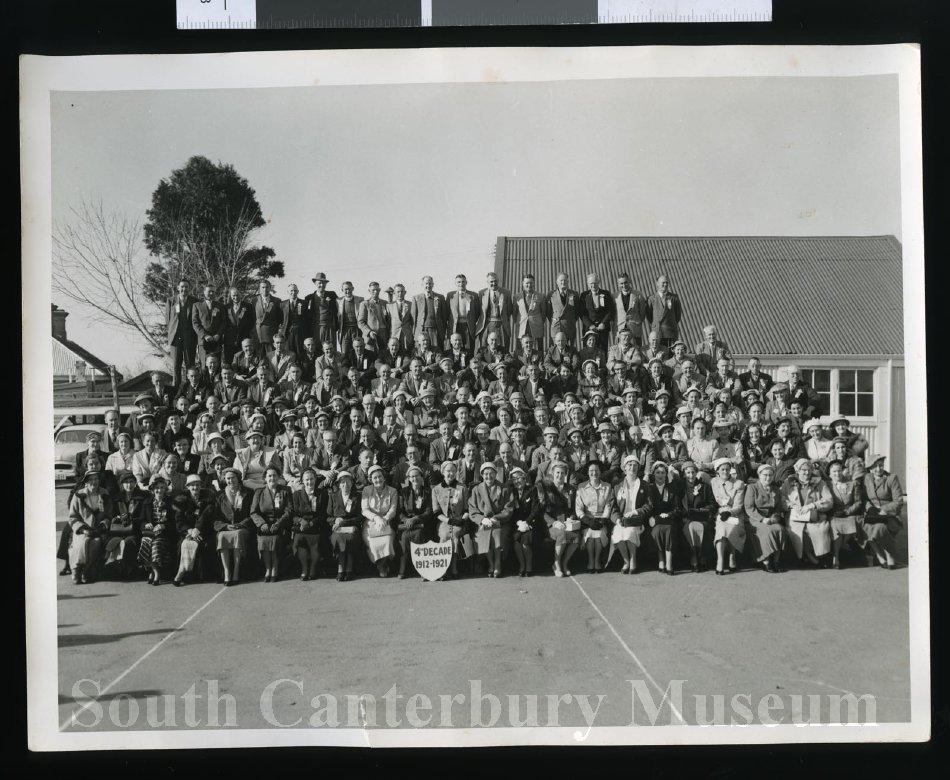
Waimataitai School Jubilee, 1957: 4th Decade 1912-1921. South Canterbury Museum 2016/141.31
1914–1918 Roll of Honour (World War I):
Bowie, R. R., Blackmore, H. J., Cole, R., Cooke, F. W., Grny, D., Dalgle'sh, J., Dumford, N., Fairbrnther, R. E., Ferrier, G. C. C., Fonseca, J., Fraser, D., Fraser, G., Glover, J. C., Gourley, V., Weir, F., Guinness, A. G., E. A. Allchurch, W. H. Bannerman, G. Baillie, W. R. Baillie, A. Best, A. W. P. Bird, C. C. Cameron, S. C. Clark, R. C. Cox, L. J. E. Fountain, J. W. Glover, Miss M. Greenfield, D. Hall, M. S. Hatton, F. W. Hooke, H. E. Hunter, Guinness, F. B. H., Hawkers, V., Hay, H. W., Johnston, A. Mc., Keen, W., Lewis, H. J., Mabin, K. M., Macdonald, G., Morgan, A., Morgan, W. S., Munro, C. V., Nesbitt, R. J., O'Callaghan, L. S., Penrose, L. F. E., Rutherford, S. W., Simmers, W. W., Strachey, O., Strachey, C., Tonkin, J. L., Turner, W. M., Vincent, S. V. C., Waddell, J., Wagstaff, A., Wagstaff, R. T., Watson, L. J., Watson, E. W., Wheeler, C. D., Williams, L. J., Tennant, C., Wotton, W. B.
1939–1945 Roll of Honour (World War II):
D. Hurst, K. Johnson, J. M. Johnson, K. N. Johnstone, J. R. Kempp, W. H. Kelman, P. T. Knowles, J. A. Lamb, A. Little, A. T. Little, G. E. MacDonald, D. B. G. Paterson, H. W. Patrick, H. M. Fawson, H. S. Rendall, G. V. D. Scott, R. J. Sotham, W. F. Sotham, F. G. Shears, I. J. Shepherd, V. Stuck, L. A. Tait, H. Taylor, H. M. Thompson, F. S. R. Thomson, J. W. Thomson, B. Walsh, P. W. Walsh, C. Webster, J. Winterbourn, D. E. Wood, J. A. Wright.
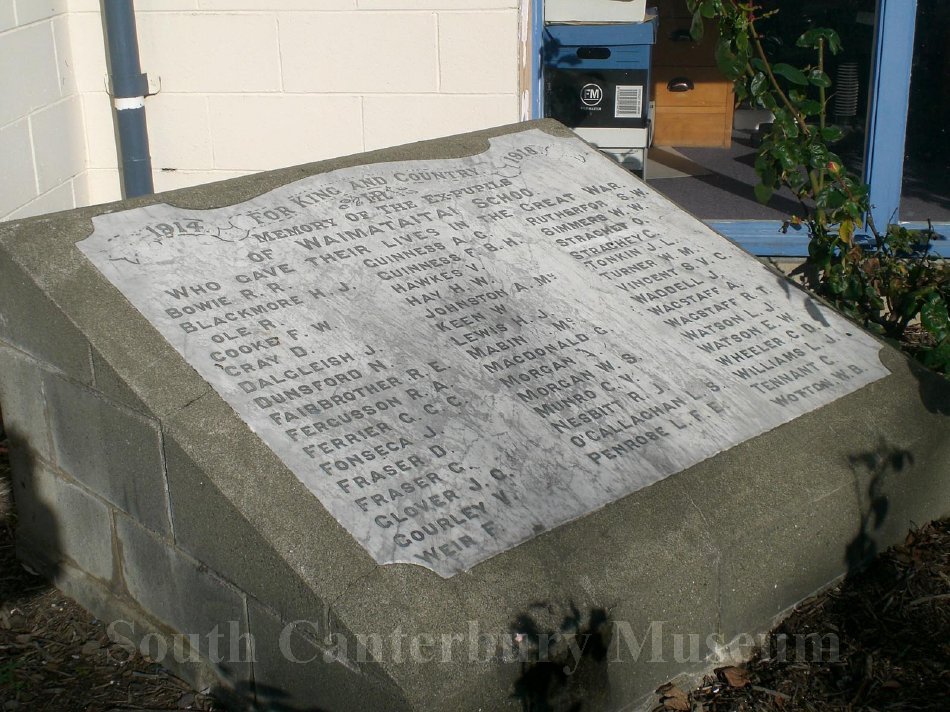
The war memorial plaque at Waimataitai School, photographed by Margaret Todd on 5 May 2007. South Canterbury Museum 2013/155.32
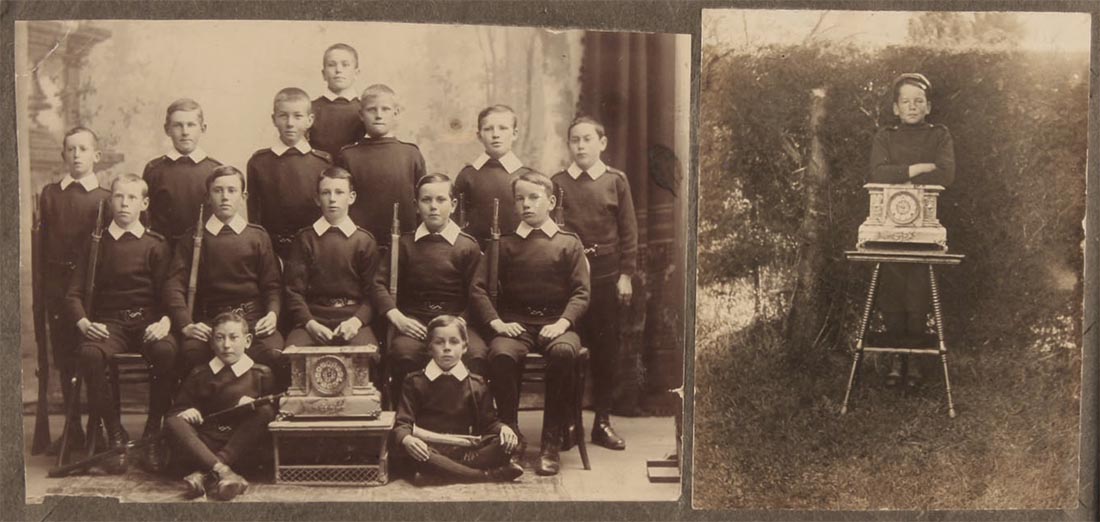
Stanley Ernest John Williams, born in Timaru on 20 November 1892, was a former pupil of Waimataitai School and a participant in its cadet programme, as seen in photographs from around 1905 and 1909. After his schooling, he trained as a dentist and enlisted in the New Zealand Army in 1915, initially serving with the Auckland Mounted Rifles. In 1917, he transferred to the New Zealand Dental Corps, where he attained the rank of Sergeant and served in Egypt and England. Following his return to New Zealand later that year, he resumed his dental practice and married Annie Ivy Reka Hilton in 1918. Williams continued his work as a dentist and dental mechanic until his death in Timaru on 13 July 1966. He is buried in the Timaru Cemetery and remembered as a representative example of Waimataitai students who went on to serve their country and community.
Source: South Canterbury Museum, Scroll profile Stanley Ernest John Williams.

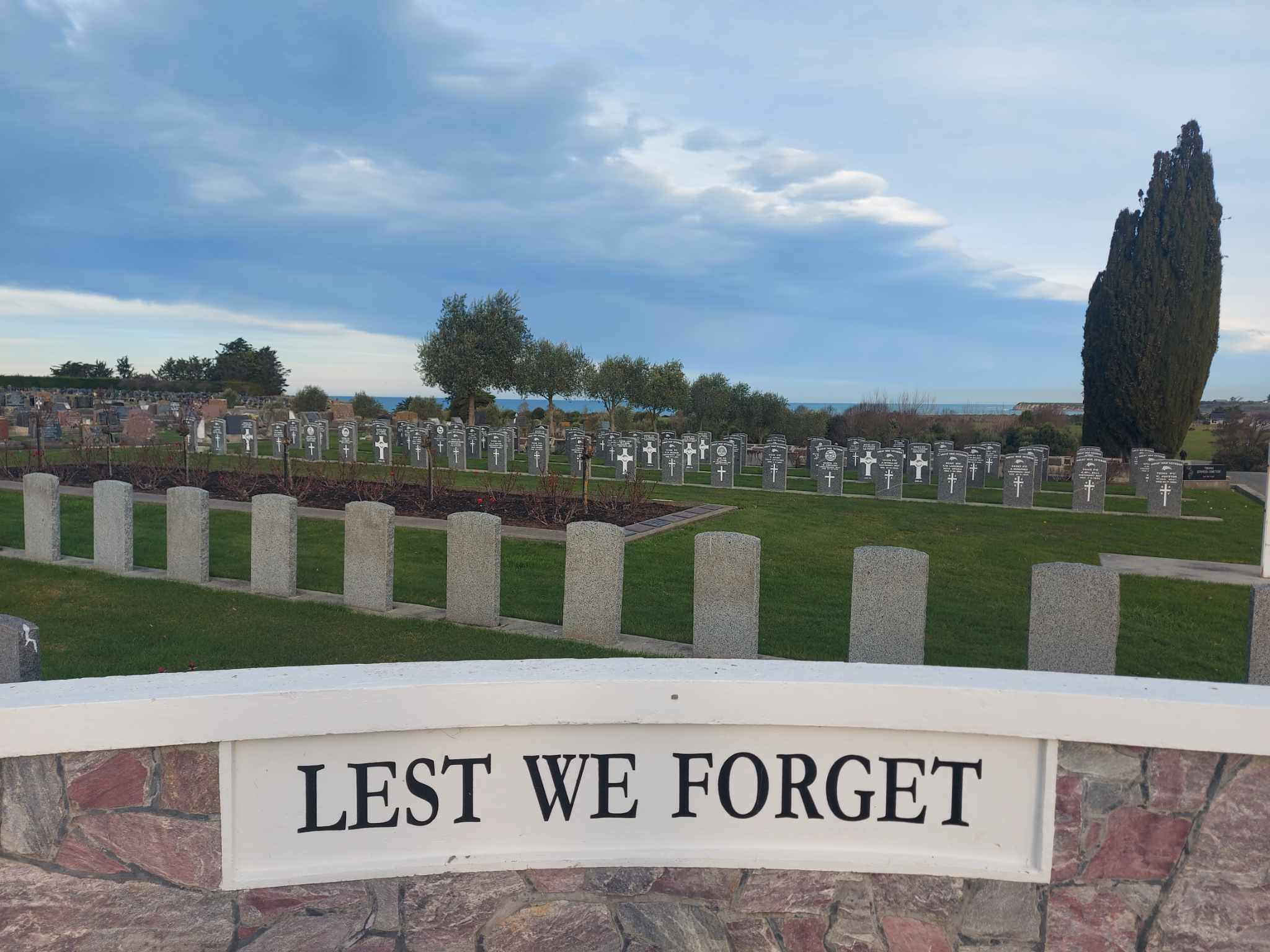
Lest We Forget - Timaru Cemetery - Roselyn Fauth 2025
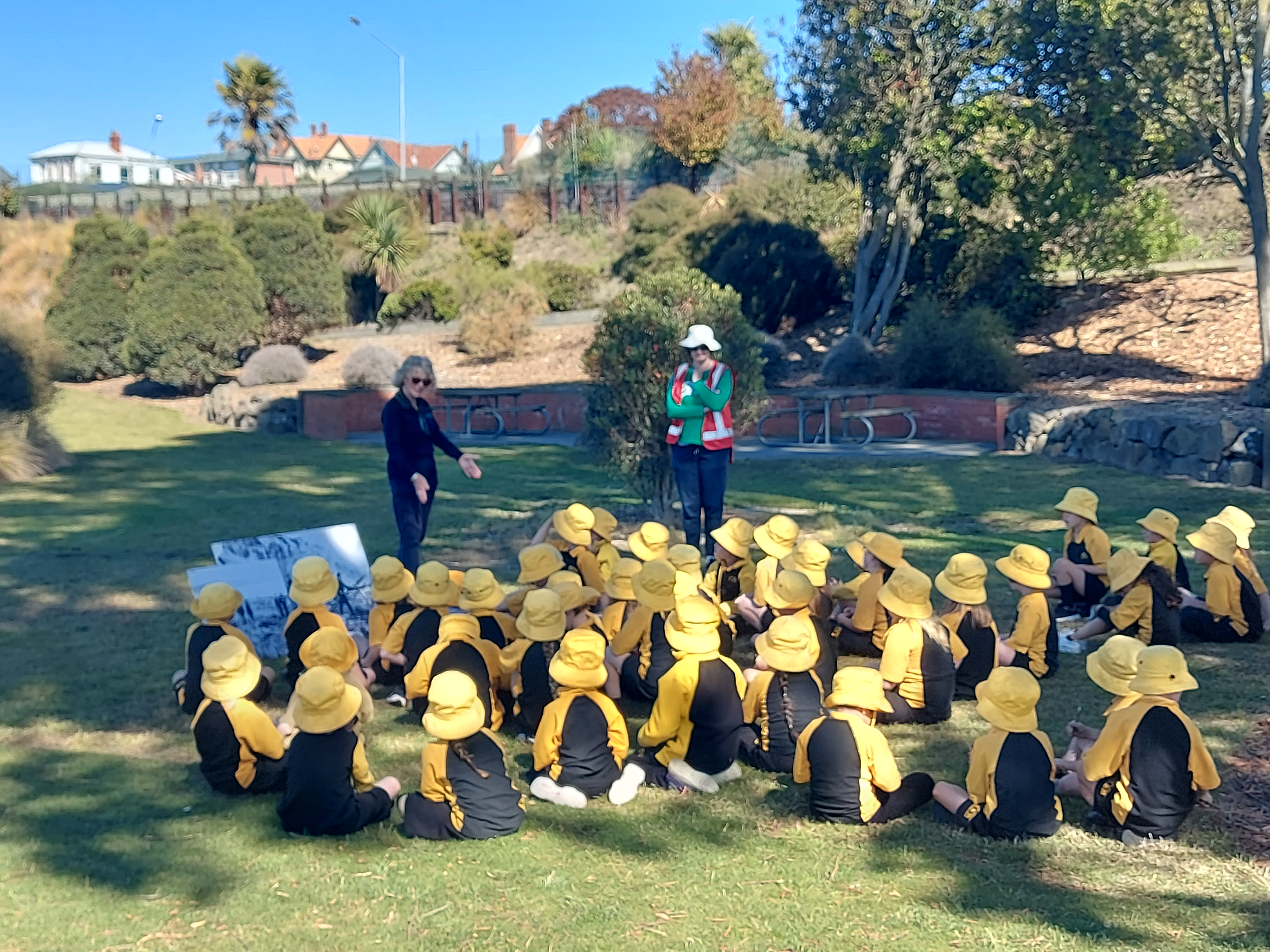
Waimataitai School class visit to learn about Timaru's history. Photo: Roselyn Fauth