
By Roselyn Fauth

Band playing in rotunda, Caroline Bay, Timaru, New Zealand, 1903-1907, by Arthur A. Ware Company. Purchased 1998 with New Zealand Lottery Grants Board funds. Te Papa (PS.002468) Bandstands reveal how towns gathered, celebrated, listened, remembered and made public space feel used and alive.
Timaru’s Lost and Living Bandstands: The Little Stages That Helped Towns Gather
I used to think of bandstands as pretty little leftovers... A roof, some posts, a raised floor, a bit of decoration. Nice to photograph. Easy to walk past. One of those things you notice for a second and then forget. But once you start looking properly, they become much more interesting.
Before speakers, sound systems, radios in every home, or music in our pockets, towns needed places where music could be heard. A bandstand lifted the musicians up, helped the sound travel, and gave people a reason to gather. It turned an ordinary park, square, domain, or seaside reserve into somewhere that felt like an occasion.
Across New Zealand, band rotundas became especially popular in the late nineteenth and early twentieth centuries. DigitalNZ’s Alexander Turnbull Library story, “An ornament to the town”, notes that more than 100 band rotundas were built in New Zealand from the 1890s to the 1930s. Wellington alone had nine.
That tells us something... these were not just decorative extras. They were civic choices. A bandstand said: this place matters. Music matters. Public space matters. People need somewhere to come together.
And Timaru had more than one...

A Brass Band (Timaru Municipal?) marching through the intersection of Stafford and Church Streets, Timaru, circa 1960s. In the background, a small crowd watches on from near the Old Bank Tavern and adjacent shops. 2014/072.08
Timaru’s bandstand trail
When we talk about Timaru’s bandstands, it is tempting to think only of the one still standing in the Botanic Gardens. But there is a wider local story.
There was a rotunda in Alexandra Square. There was one at Caroline Bay before the soundshell. The Botanic Gardens still has its Coronation Band Rotunda. Temuka Domain has its Municipal Band Rotunda.
Some are lost. Some are still with us. All of them help us understand how music once sat right in the middle of public life.
Alexandra Square: music in the town centre
Alexandra Square’s band rotunda opened in 1904. It was gifted by Charles Bowker, along with garden seats. The rotunda stood in a civic square, not beside the sea or tucked away in a garden. So its purpose was slightly different from a seaside or park rotunda. It helped make Alexandra Square feel like a proper town gathering place. Today the rotunda is gone, but the idea behind it is still worth noticing. Timaru was not only building roads, shops and services. It was also trying to create places where public life could happen.
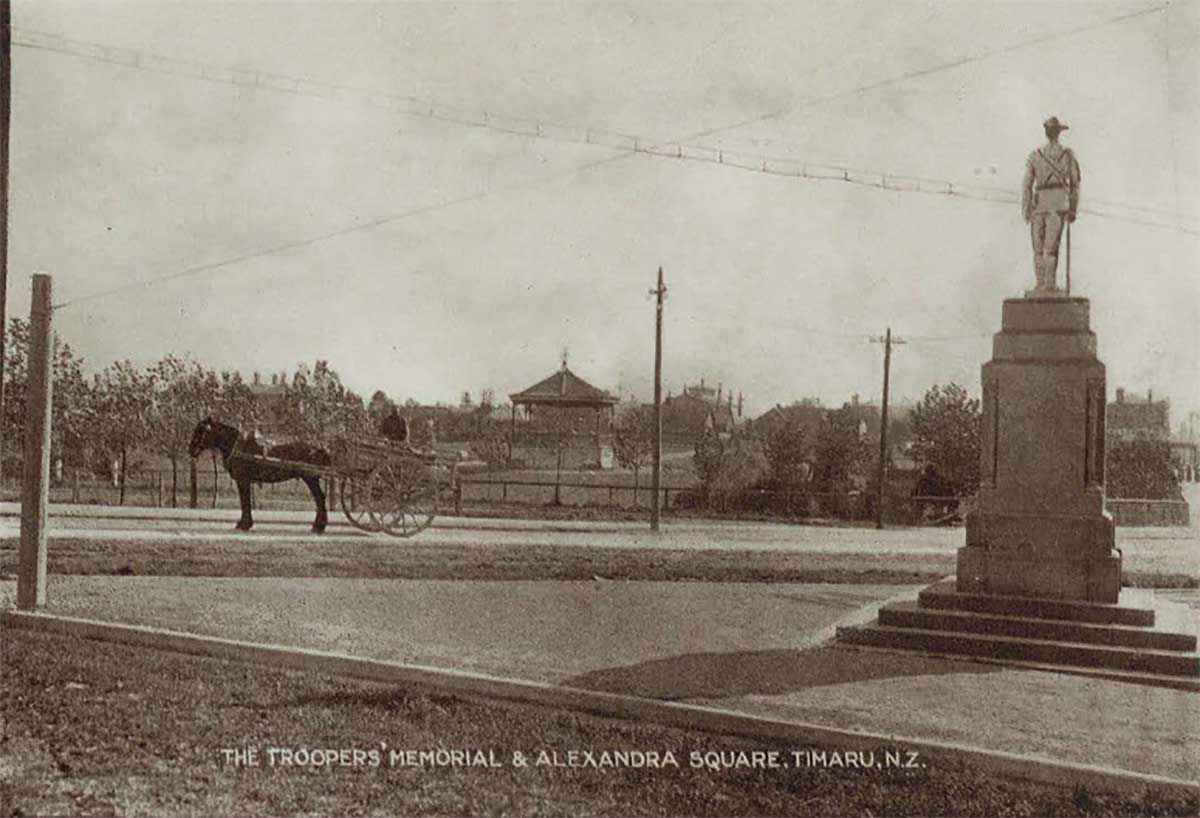
Official Guide: Timaru and surrounding districts. Aoraki Heritage Collection, accessed 10/05/2026, https://aorakiheritage.recollect.co.nz/nodes/view/8923
Caroline Bay: before the soundshell
Caroline Bay had its own band rotunda too. Before the soundshell, before the big summer carnival stage we know now, there was a smaller structure for outdoor music. Timaru District Council’s heritage assessment for the Caroline Bay Soundshell records that the Borough Council and Beautifying Association erected a band rotunda, caretaker’s cottage and tearooms as part of early improvements at the bay. The same assessment says the later soundshell replaced the rotunda in late 1936.
That replacement tells a bigger story how a rotunda suited the age of brass bands, promenading and open-air concerts. A soundshell belonged to a later world of larger public performances, projected sound, and Caroline Bay becoming a major events space. But the rotunda came first and was a hub where the locals and visitors at Timaru gathered at the bay.
That is important, because Caroline Bay itself was being transformed. It was not always the sandy public playground we know today. It had to be shaped, planted, promoted and imagined. Music was part of that. The band rotunda was one of the ways the bay became a place people went to, not just a place they passed.
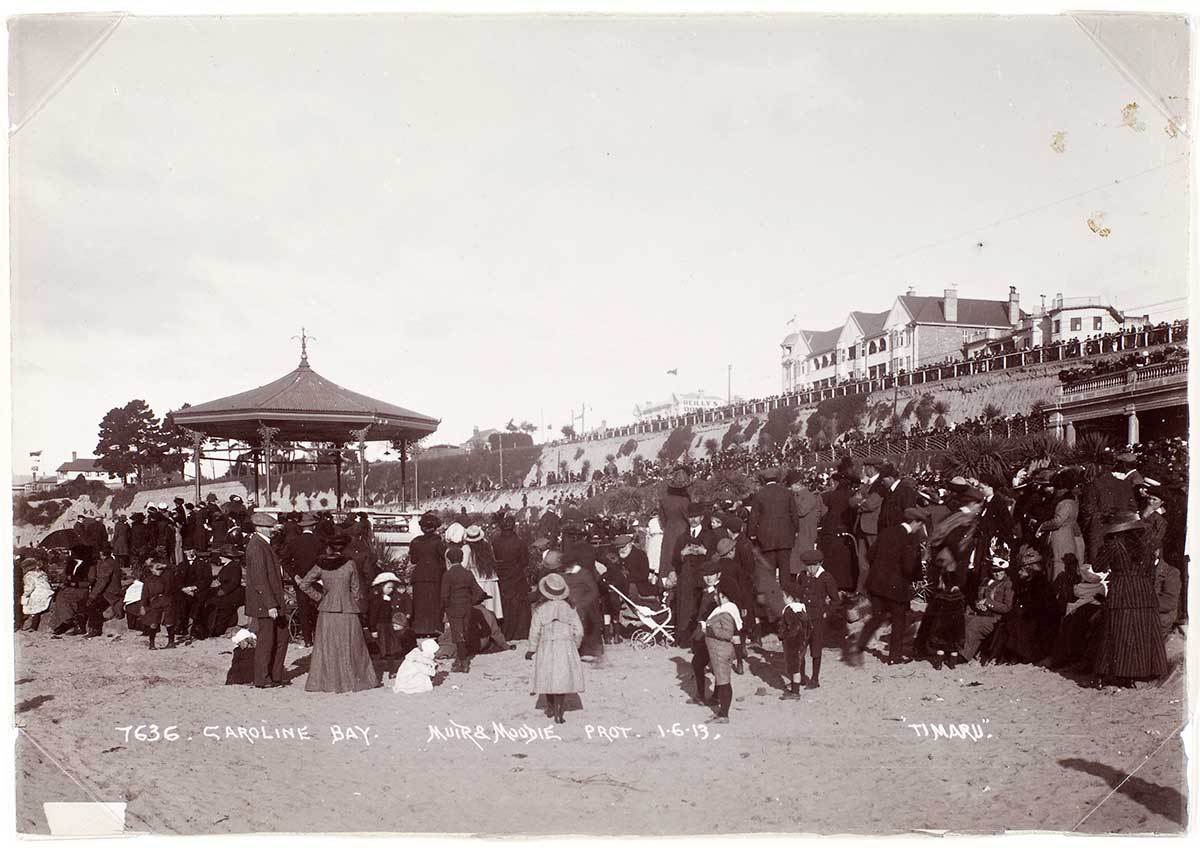
Caroline Bay, Timaru, 1913, Dunedin, by Muir & Moodie. Te Papa (O.001836)
Botanic Gardens: the one we can still visit
The Timaru Botanic Gardens rotunda is the one many of us know best because we can still go and stand beside it. It opened on 14 March 1912. A postcard record describes crowds gathered around while the Timaru Garrison Band, under Bandmaster Schnook, played the first tune. The plaque links the rotunda to the coronation of King George V and Queen Mary in 1911.
So this little structure is a few jobs at once...
It is a memorial, a music stage, a garden feature, a public gathering place. For me, it is a clue to what Timaru valued at the time. The Botanic Gardens were once known more simply as “The Park”. Over time, they became more formal, more planted, more designed. The rotunda helped make the gardens feel like a place for ceremony, recreation and civic pride. And because it is still there, it gives us something rare: a surviving piece of Timaru’s outdoor music history.
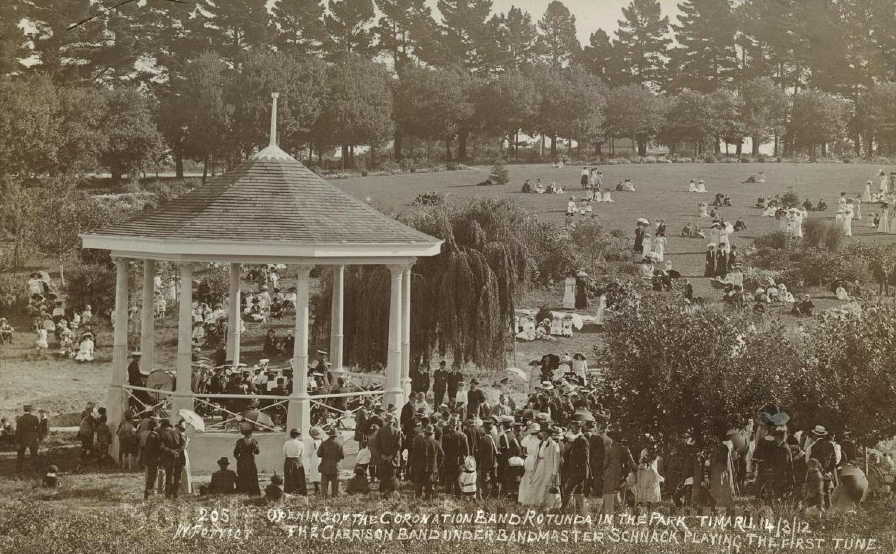
The opening of the Coronation Band rotunda in the Timaru Botanical Gardens in 14 March 1912. Crowds surrounding the rotunda watch as the Timaru Garrison Band, under Bandmaster Schnook, play the first tune. Bears a standard divided verso, postally unused, but with a brief message of good wishes.
Temuka: music, morale and community
Temuka’s Municipal Band Rotunda came later. The Timaru District Council heritage assessment records that the Temuka Domain band rotunda opened on 8 December 1940. It had originally been considered as the town’s 1940 Centennial project, but was instead erected by the Temuka Municipal Band. The same report notes that Temuka’s brass band had been formed in 1880.
By the time the rotunda opened, the world was at war. The heritage assessment records that the Temuka Municipal Band farewelled local men leaving for service in October 1939 and hosted a provincial band contest in March 1941 to raise funds for the wartime patriotic fund.
So Temuka’s rotunda was not just about pleasant Sunday music in the park. It was also about farewell, Morale, Fundraising, Patriotic duty, Community life in a difficult time.
That gives it a different feeling from the earlier Edwardian rotundas. It still belongs to the same tradition of public music, but the moment around it had changed.
Why did towns build these little stages?
Why go to the trouble of building a special little stage in a square, garden, domain or seaside reserve?
The practical answer is easy: bands needed somewhere to play. A raised platform helped musicians be seen and heard. The roof gave some shelter. The shape helped gather sound and attention.
But I think the deeper answer is be because they wanted people to gather, encourage people to meet in parks, bring human life to the botanical one, have a space for civic occasions in public spaces, not just inside halls or churches or private homes.
After I published my wee seried on Timaru's Music in the park, I spied a blog by Jeremy de Korte’s bandstand. He too has done a lot of research, through 'Band Blasts from the Past' and 'Australasian Band Stands'. This shows that this was not only a Timaru story. Bandstands and rotundas appeared across Australia and New Zealand, attached to brass band culture, civic pride, public parks, commemoration, fundraising and community identity.
That wider research helps us see Timaru’s rotundas as part of a much larger pattern.
Charles Bowker giving a rotunda and seats.
The Garrison Band playing at the Botanic Gardens.
Caroline Bay shifting from rotunda to soundshell.
Temuka’s band playing through wartime farewells and patriotic fundraising.
These are not just structures. They are gathering points.

Greymouth band rotunda
What replaced the bandstand?
Maybe today we gather around different things like playgrounds, sports feilds, markets, temporary stages, and larger perminant ones like the Caroline Bay Soundshell... and dare I say it... phones...
This raised the question of what do we build when we want people to come together?
Public life does happens when the community gets together to fund and build visions. Then the rest of us have to show up. As community members, when you see a public event advertised, remember the people behind the event working hard to create it for you. Make sure you support the organisers, and make the events a success. They are so important for our community, they bring us together. And if you don't support and turn up... the motivation and the events will cease.
So next time you pass the Botanic Gardens rotunda, stand near the Caroline Bay Soundshell, walk through Alexandra Square, or visit Temuka Domain, pause for a moment... before wifi and spotify playlists were in our pockets, these were the places where sound rose into the open air and a town gathered around it.
A little roof on posts... are a big reminder that communities are made in public.
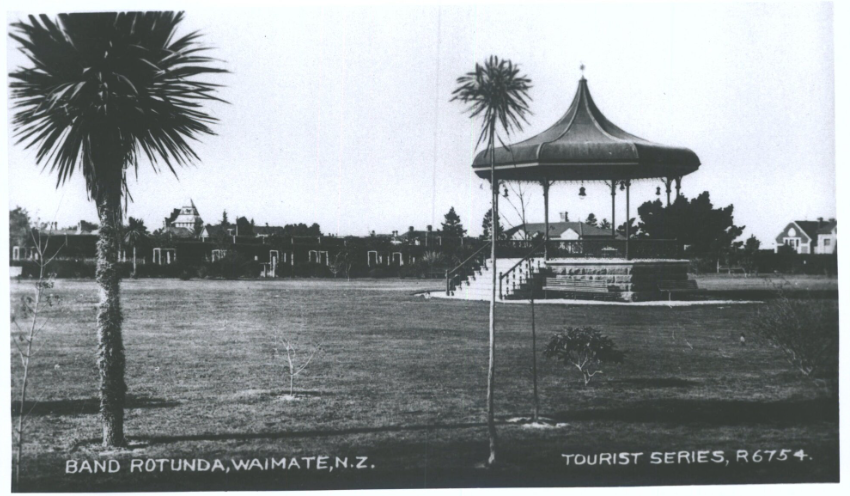
Band Rotunda, Waimate, N.Z.. Hocken Digital Collections, accessed 28/04/2026, https://hocken.recollect.co.nz/nodes/view/26751
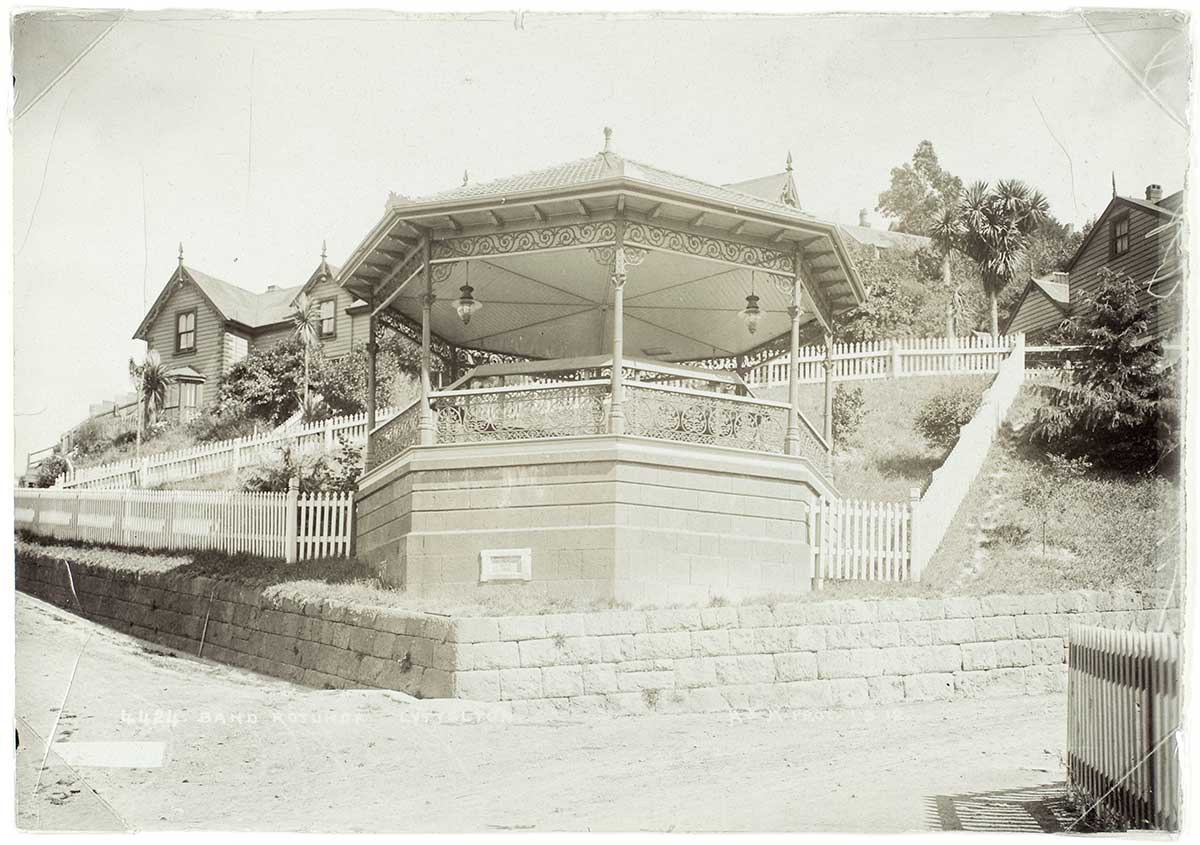
Band Rotunda, Lyttelton, 1912, Lyttelton, by Muir & Moodie. Te Papa (O.000859)
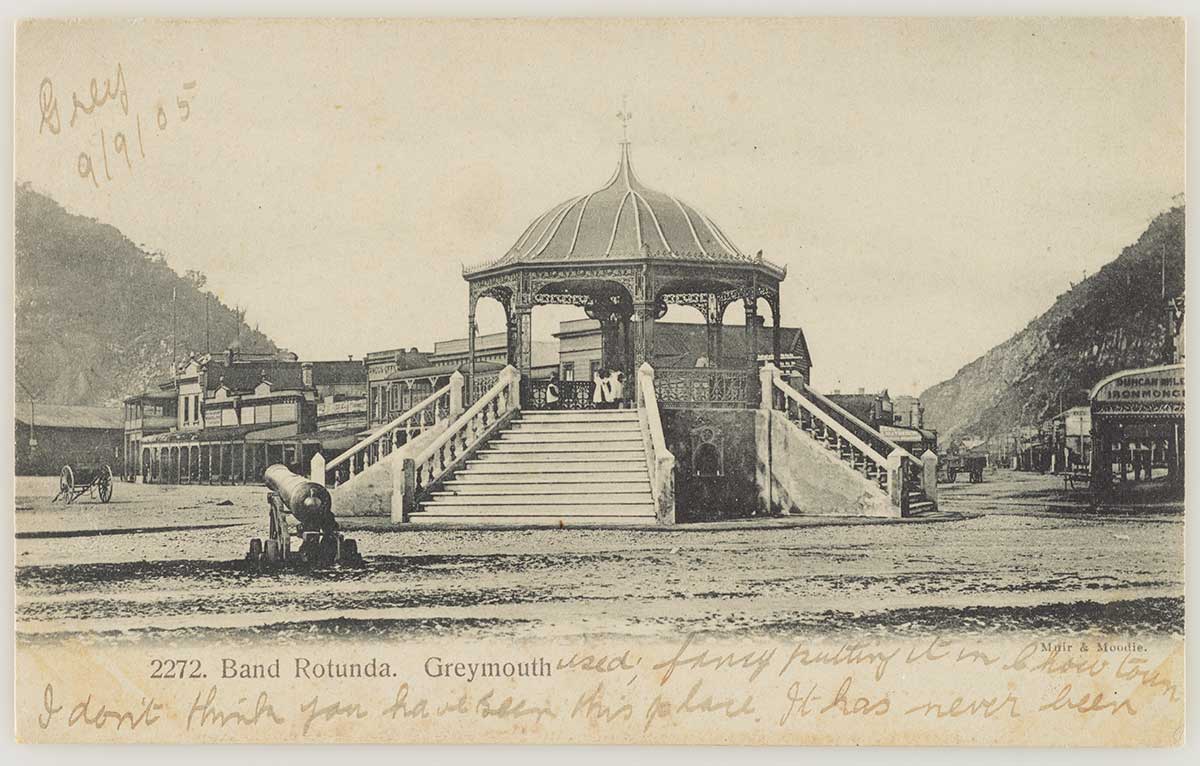
Band Rotunda, Greymouth, 1904, Greymouth, by Muir & Moodie. Purchased 1998 with New Zealand Lottery Grants Board funds. Te Papa (PS.001198)

Postcard: With Love from Greymouth : Band Rotunda, Greymouth, 1905. (Source: Jeremy de Korte Collection)
References: Dixon, B. (1910). With Love from Greymouth : Band Rotunda, Greymouth [Postcard]. B. Dixon, Bookseller, Greymouth, N.Z.
Posted in Band Rotunda, Band Stands & Rotundas. Tagged Band Rotunda, New Zealand, Greymouth, West Coast
Postcard: With Love from Greymouth : Band Rotunda, Greymouth, 1905. (Source: Jeremy de Korte Collection)
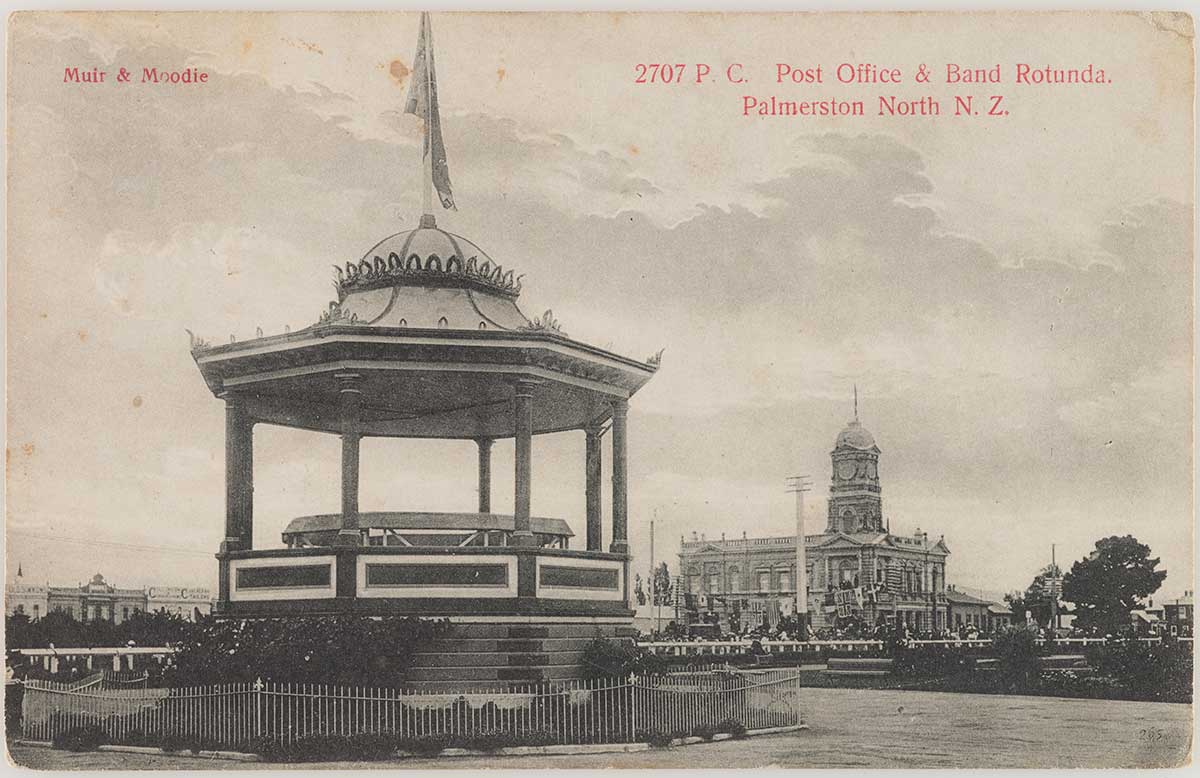
Post Office and Band Rotunda, Palmerston North, New Zealand, 1904-1915, Palmerston North, by Muir & Moodie. Purchased 1998 with New Zealand Lottery Grants Board funds. Te Papa (PS.001813/02)
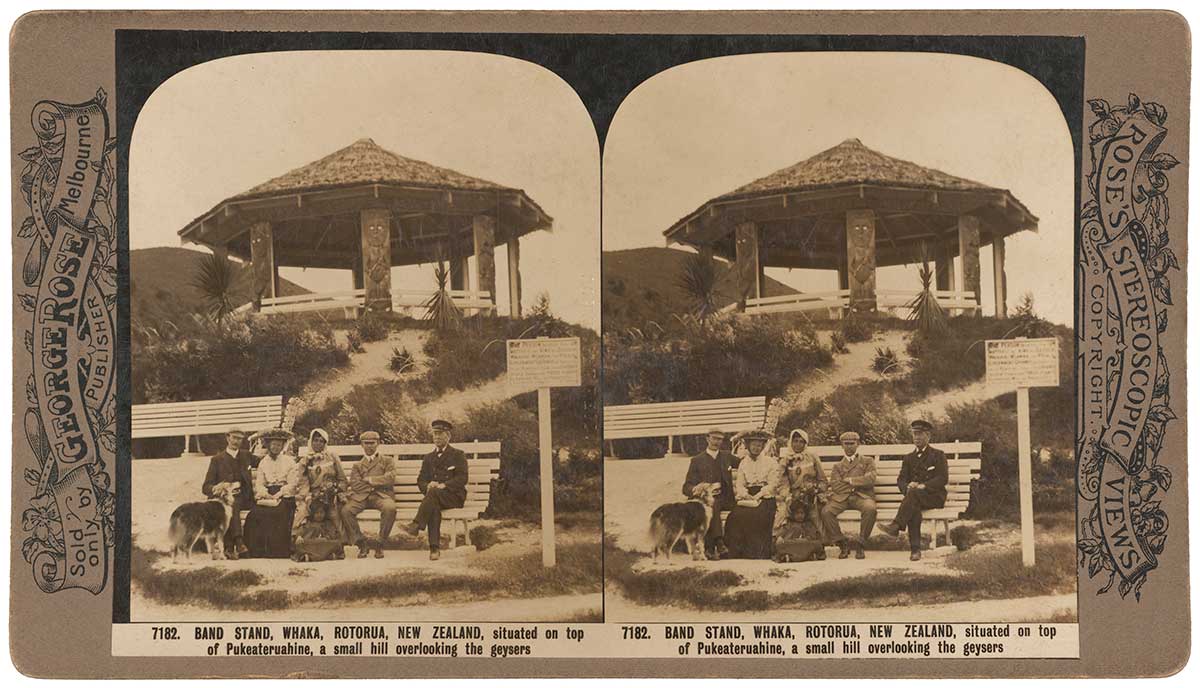
Band Stand, Whaka, Rotorua, New Zealand ..., circa 1900, Melbourne, by George Rose. Purchased 1991. Te Papa (O.004834)
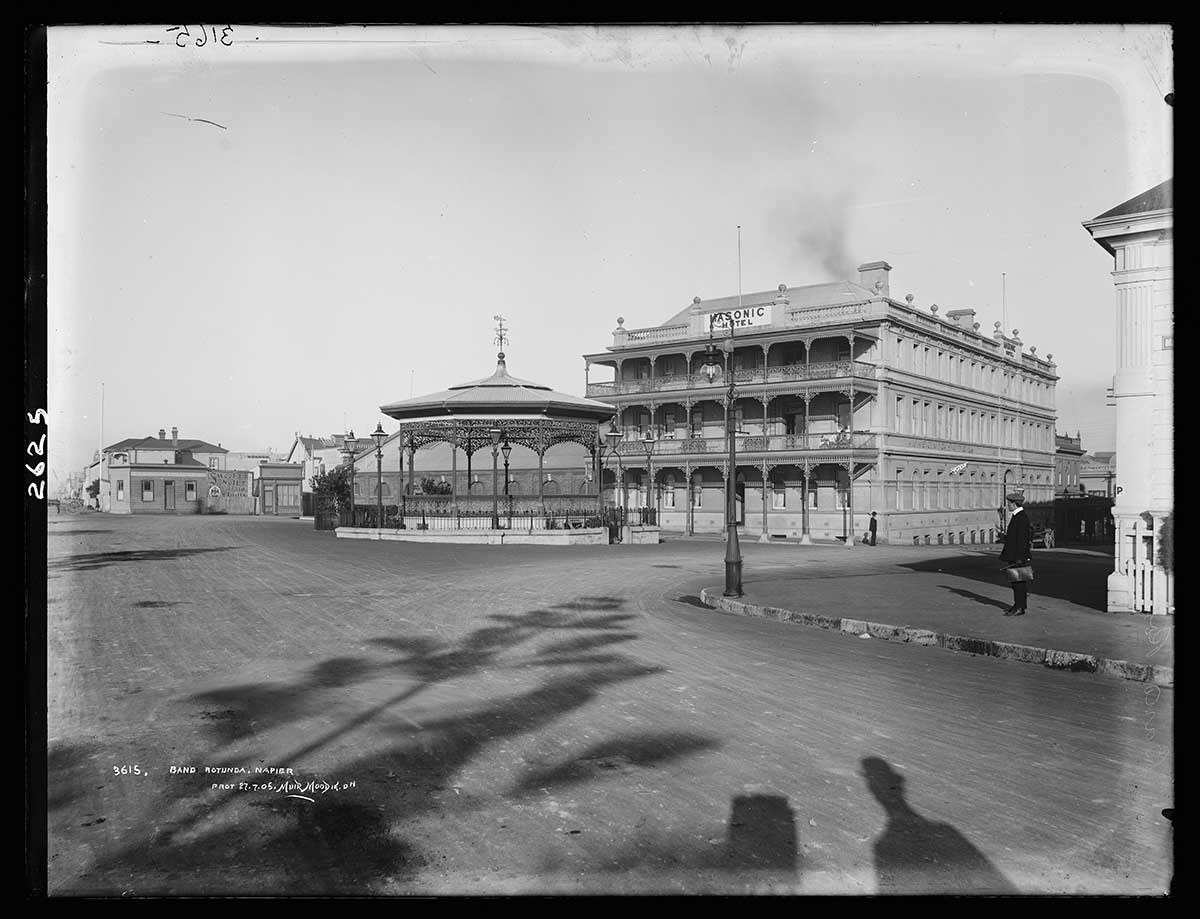
Band rotunda, Napier, circa 1905, Dunedin, by Muir & Moodie. Te Papa (C.012625)
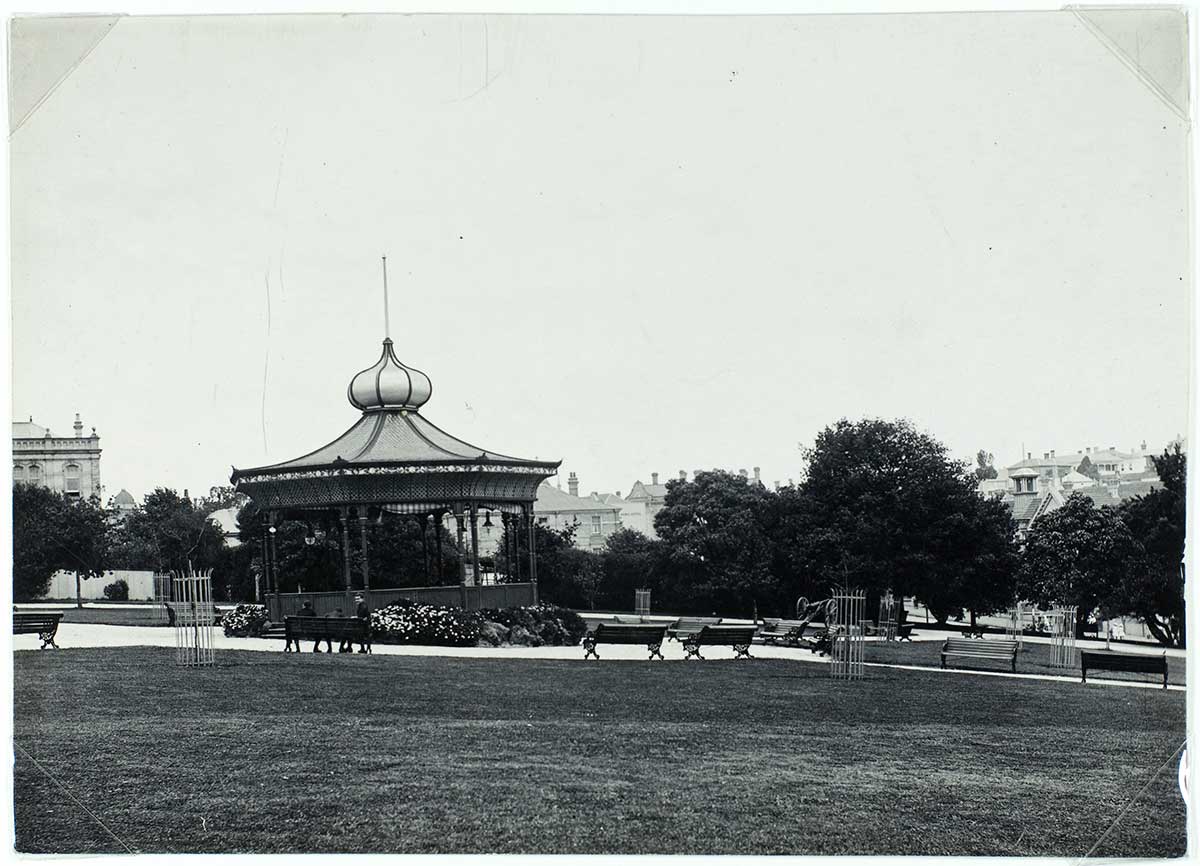
Albert Park, Rotunda on left, Auckland, circa 1912, Auckland, by Muir & Moodie. Te Papa (O.001718)
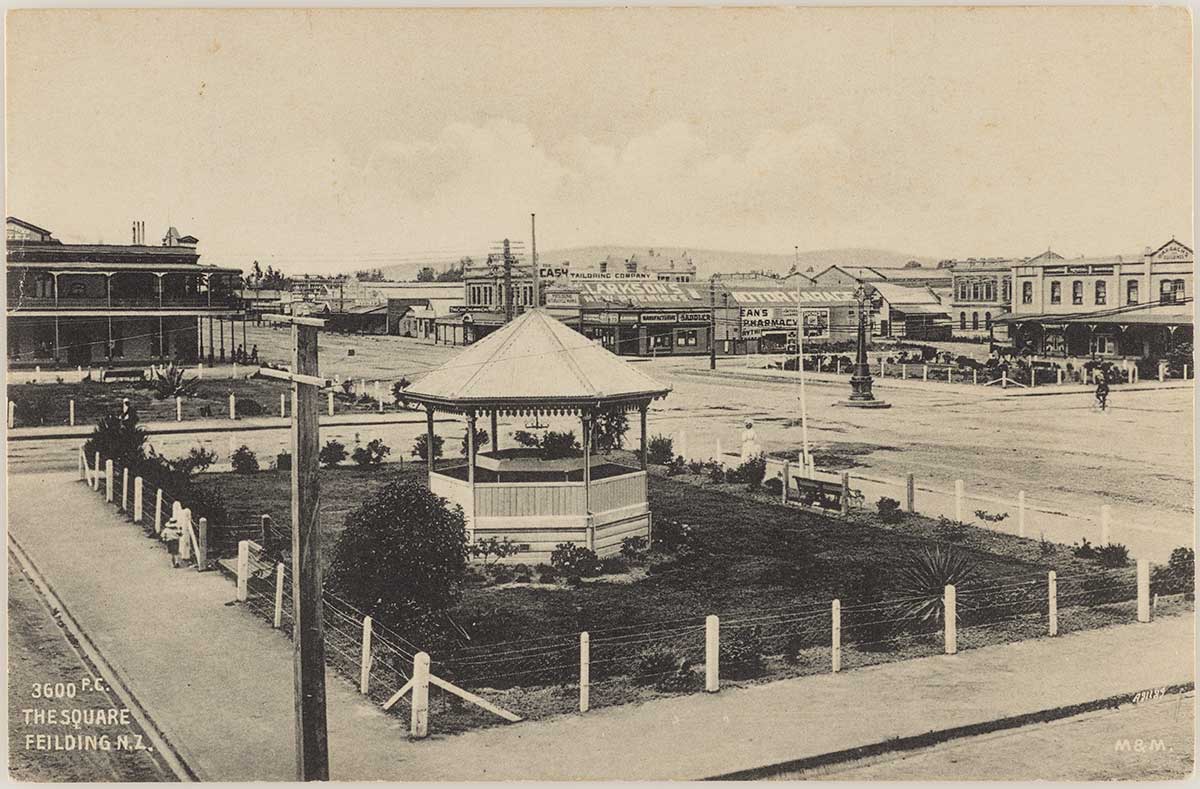
The Square, Feilding, New Zealand, 1909, Feilding, by Muir & Moodie. Purchased 1998 with New Zealand Lottery Grants Board funds. Te Papa (PS.001656)
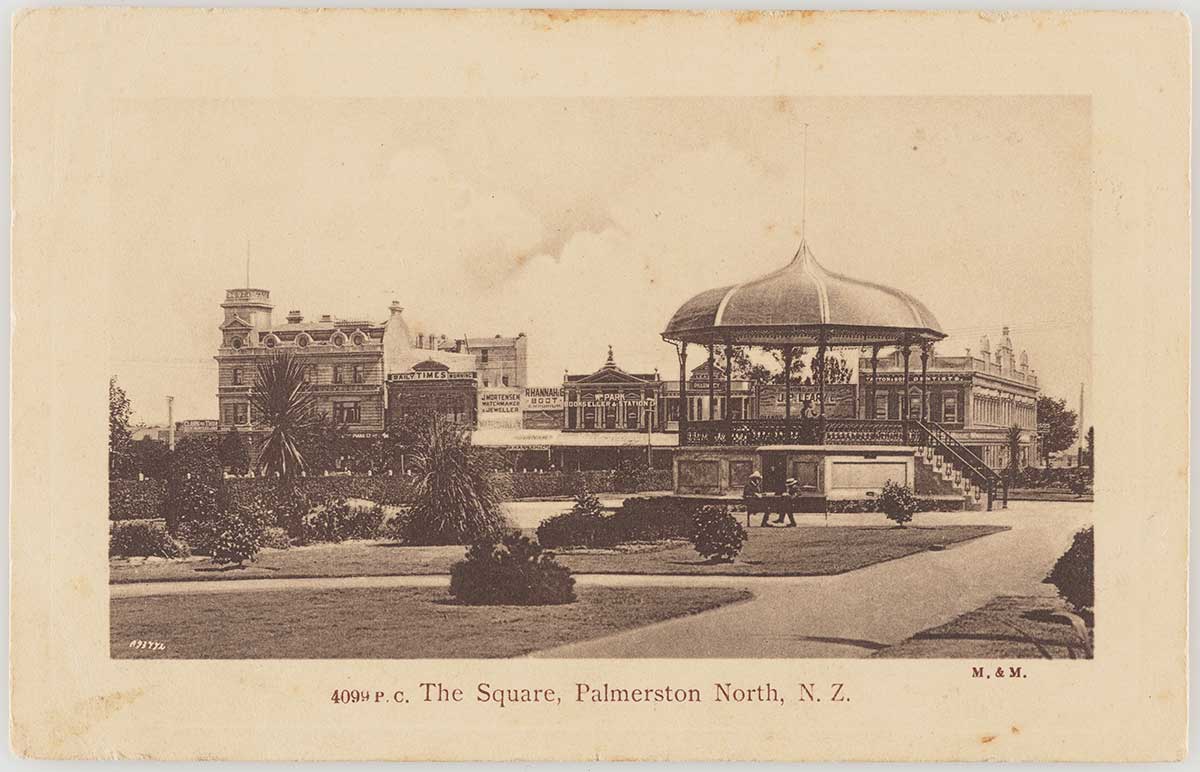
The Square, Palmerston North, New Zealand, 1909, Palmerston North, by Muir & Moodie. Purchased 1998 with New Zealand Lottery Grants Board funds. Te Papa (PS.002158)
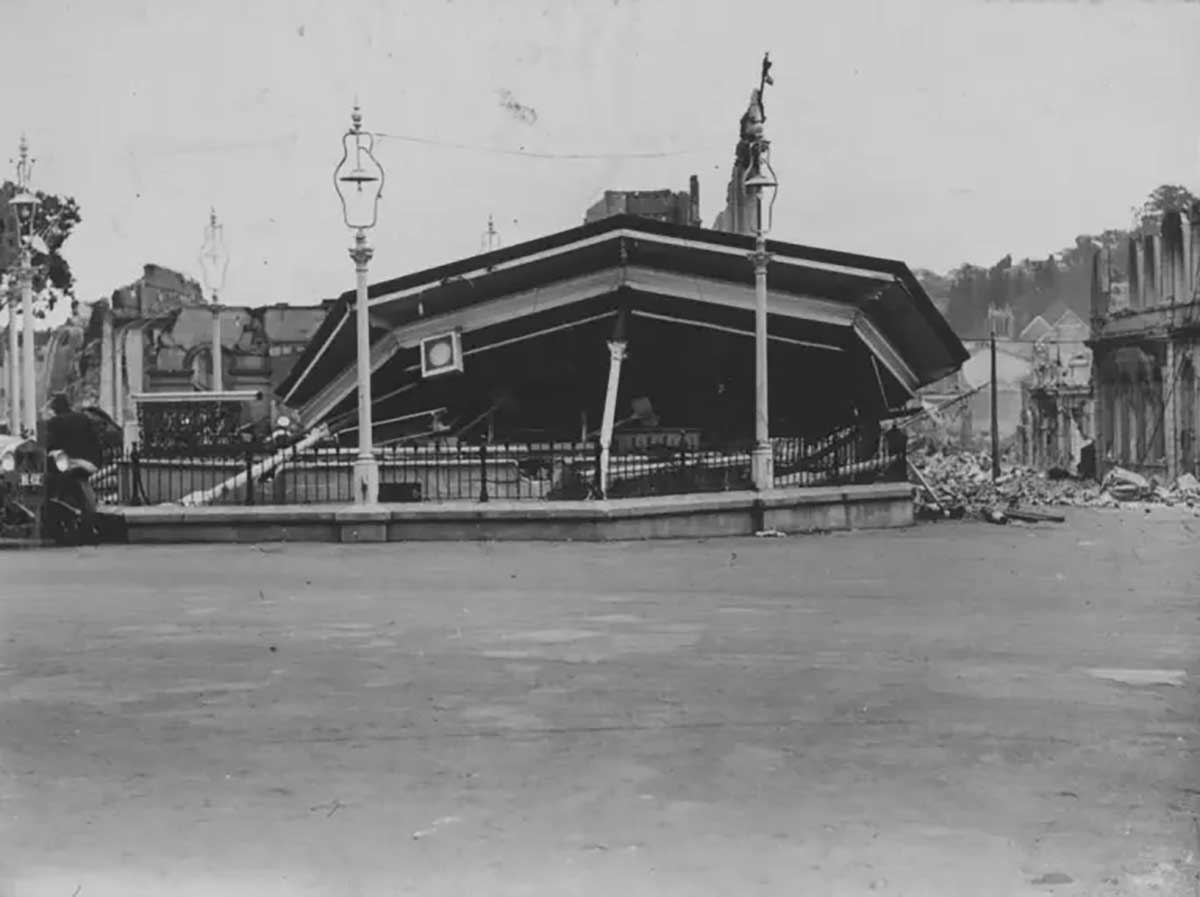
Photograph: A photograph of the band rotunda on Marine Parade in Napier taken after the Hawke’s Bay earthquake on 3 February 1931. The structure collapsed as a result of the quake.
(Source: Collection of Hawke’s Bay Museums Trust, Ruawharo Tā-ū-rangi, 2039 [gifted by Pam Tong]: 84129)
References: Band Rotunda, Napier. (1931). [Black and white photograph glued into an album on black card]. [84129]. Hawke’s Bay Museum, Collection of Hawke’s Bay Museums Trust, Ruawharo Tā-ū-rangi, 2039. https://collection.hawkesbaymuseum.com/objects/84129/band-rotunda-napier
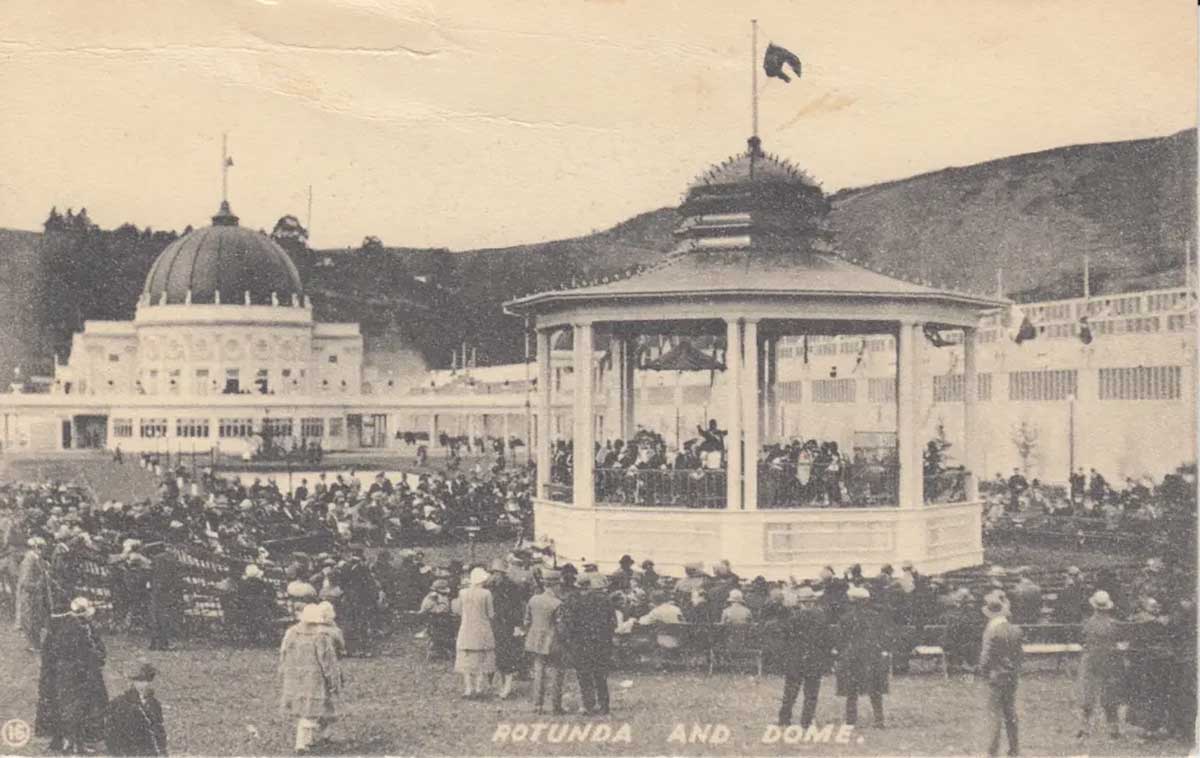
Postcard: Rotunda and Dome, 1925. (Source: Jeremy de Korte Collection)
Reference: Neill, H., & Neill, G. K. (1925). Rotunda and Dome [Postcard]. [New Zealand and South Seas International Exhibition]. Hugh & G. K. Neill, Dunedin, N.Z. Posted in Band Rotunda, Band Stands & Rotundas. Tagged Band Rotunda, Dunedin, New Zealand, New Zealand and South Seas International Exhibition, Otago
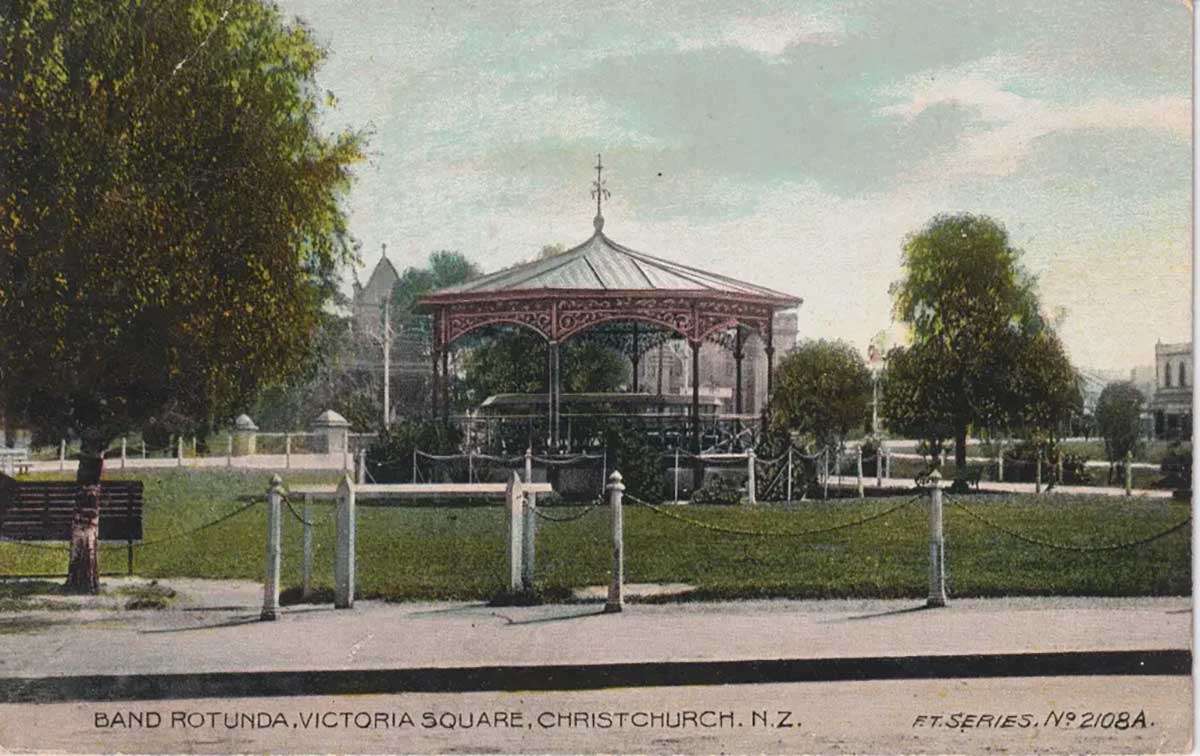
Postcard: Band Rotunda, Victoria Square, Christchurch, N.Z. (date unknown). (Source: Jeremy de Korte Collection)
References: Fergusson, T. (n.d.). Band Rotunda, Victoria Square, Christchurch, N.Z. [Postcard]. [F.T. Series. No. 2108A]. Fergusson Ltd., Christchurch, N.Z. Posted in Band Rotunda, Band Stands & Rotundas. Tagged Band Rotunda, Canterbury, Christchurch, New Zealand, Victoria Square
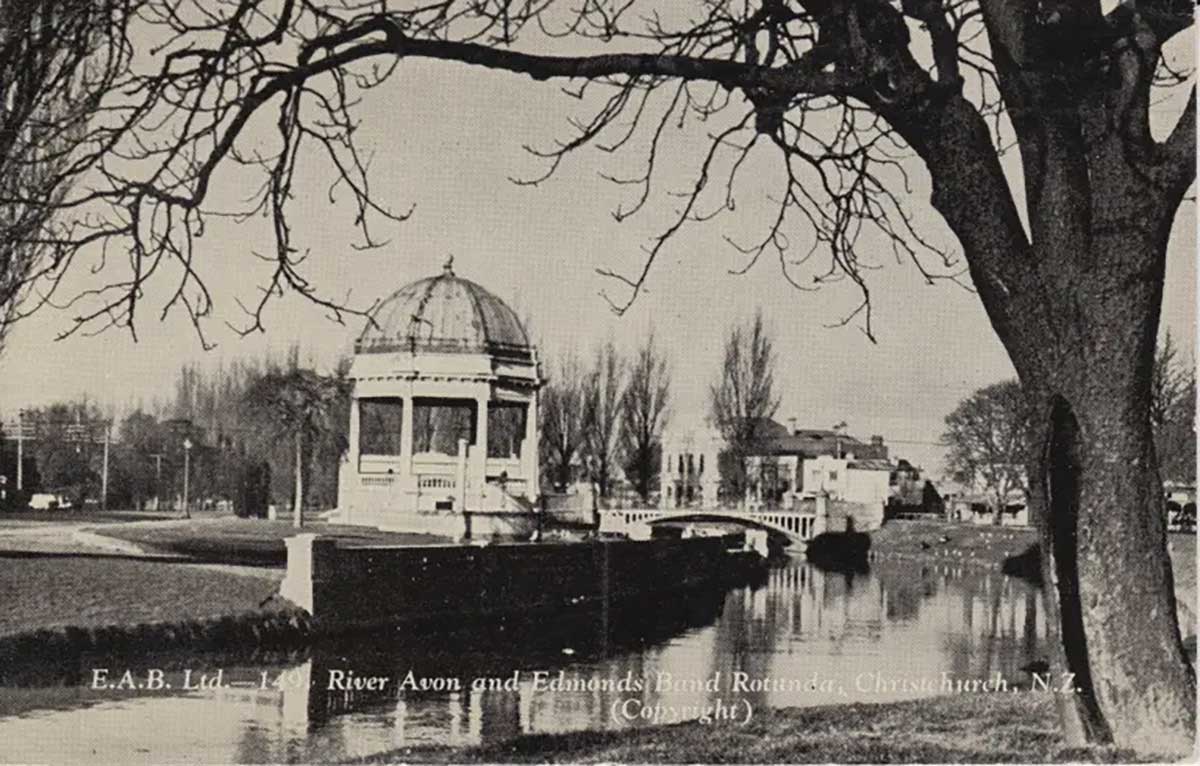
Postcard: River Avon and Edmonds Band Rotunda, Christchurch, N.Z. (date unknown). (Source: Jeremy de Korte Collection)
References: E.A.B. Ltd. (n.d.). River Avon and Edmonds Band Rotunda, Christchurch, N.Z. [Postcard]. [149]. E.A.B. Ltd, Christchurch, N.Z.
Posted in Band Stands & Rotundas, Band Rotunda. Tagged Band Rotunda, Canterbury, Christchurch, New Zealand
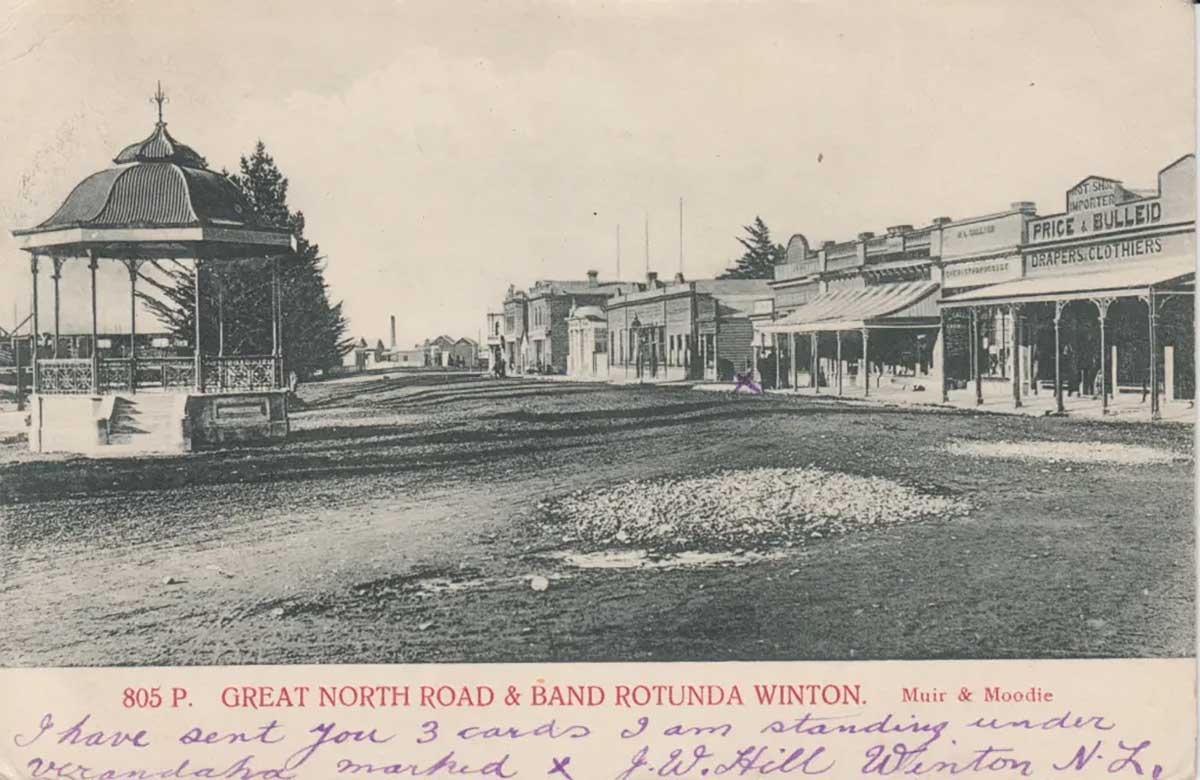
Postcard: Great North Road & Band Rotunda Winton, 1906. (Source: Jeremy de Korte Collection)
References: Muir & Moodie. (1906). Great North Road & Band Rotunda Winton [Postcard]. [805 P.]. Muir & Moodie, Dunedin, N.Z.
Posted in Band Rotunda, Band Stands & Rotundas. Tagged Band Rotunda, New Zealand, Southland, Winton
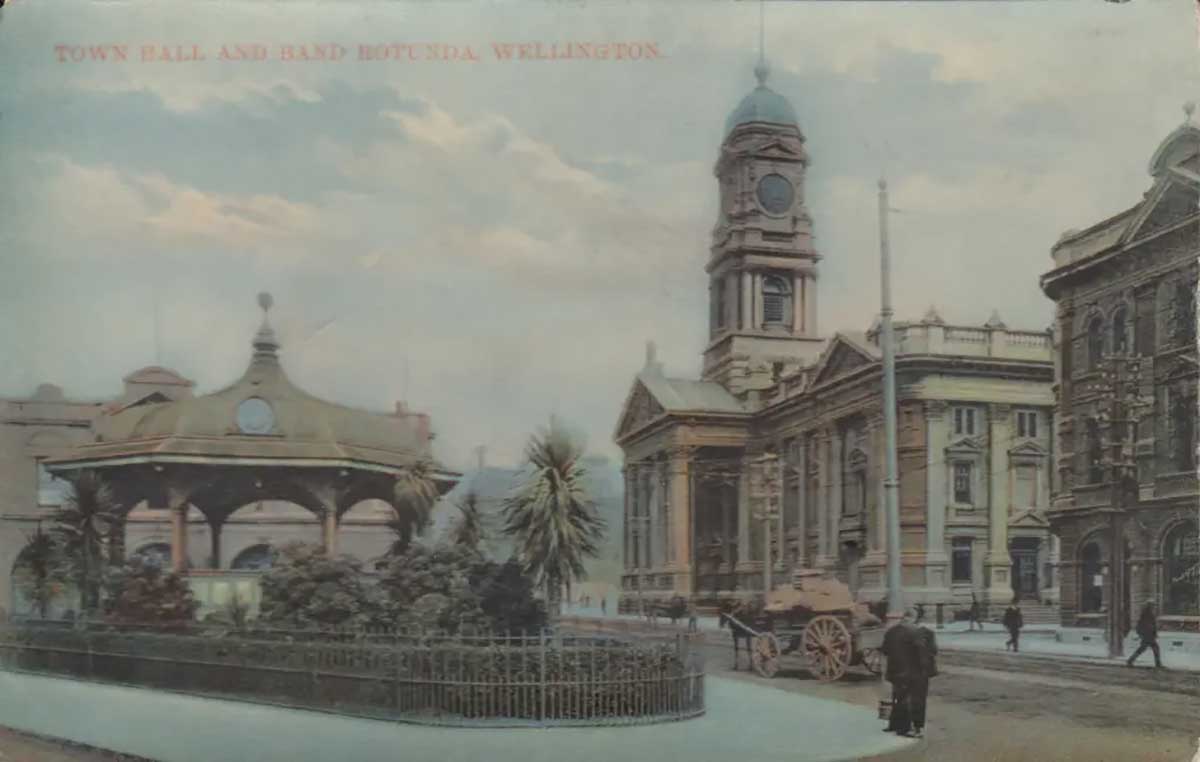
Postcard: Town Hall and Band Rotunda, Wellington, 1912. (Source: Jeremy de Korte Collection)
References: Universal Postcard Co. (1912). Town Hall and Band Rotunda, Wellington [Postcard]. Universal Postcard Co., Dunedin, N.Z.
Posted in Band Rotunda, Band Stands & Rotundas. Tagged Band Rotunda, New Zealand, Wellington